

The Complete Guide to Treating Keratosis Pilaris with Glycolic Acid Body Stick
Everything you need to know about treating keratosis pilaris (KP) - what causes those stubborn bumps, why scrubbing fails, and how glycolic acid smooths skin in as little as 7 days.
Author
askINKEY skincare advisor
Published
23 April, 2024
Time to read
15 minutes
Keratosis pilaris, commonly called “chicken skin”, is one of the most widespread skin conditions in the world. It shows up as clusters of small, rough bumps, usually across the upper arms, thighs, buttocks and sometimes the cheeks. If you have run your hand over the back of your arm and felt something closer to sandpaper than skin, you already know what it feels like. The good news is that effective keratosis pilaris treatment is far simpler than most people expect, and it does not involve scrubbing.
Here is the most important thing to understand before anything else: keratosis pilaris is genetic, it is completely harmless, and it has nothing whatsoever to do with hygiene. You did not cause it. You cannot wash it away. No amount of extra showering, scrubbing or exfoliating gloves will change the underlying reason it exists. KP is a quirk in how your skin produces and sheds a protein called keratin, and it is inherited in exactly the same way as your eye color or your height.
What you can change is how your skin looks and feels. The right approach - chemical exfoliation with glycolic acid, paired with consistent daily hydration - is clinically proven to deliver smoother skin in as little as 7 days. Not by force, but by chemistry.
This guide covers everything worth knowing. We will explain what actually causes those bumps at a follicle level, why the instinct to scrub them off backfires, the science of how glycolic acid dissolves them instead, a complete step-by-step body routine you can start tonight, how to tell KP apart from body breakouts, and clear answers to the questions people search for most.
So what is actually causing these bumps?
What Is Keratosis Pilaris and What Causes It?
To understand keratosis pilaris, you need to understand keratin. Keratin is a tough, fibrous structural protein, and it is one of the fundamental building blocks of your body. It forms your hair. It forms your nails. And it forms the outermost protective layer of your skin, the stratum corneum, which acts as your barrier against the world.
Under normal circumstances, keratin does its job quietly and invisibly. Skin cells are produced in the deeper layers of the epidermis, gradually fill with keratin as they migrate upward, flatten out, and eventually shed away from the surface in a continuous, unnoticed cycle. Your skin is constantly renewing itself, and the used-up cells simply fall away.
In keratosis pilaris, that shedding process does not run smoothly. Instead of releasing cleanly from the surface, keratin accumulates and hardens around the opening of the hair follicle, forming a small, firm plug. That plug blocks the follicle. And that plug is the bump.
This is the single most useful mental image you can hold onto: each individual bump of keratosis pilaris is a tiny plug of hardened protein sitting inside a hair follicle. Sometimes there is a fine hair trapped underneath it, coiled and unable to break through to the surface, which is why some people notice what looks like a dark dot at the center of the bump. The bump is not dirt. It is not a blocked pore full of oil. It is not an infection. It is structural protein that has built up where it should have shed away.
Where Keratosis Pilaris Shows Up on the Body
KP has favorite locations, and they are remarkably consistent from person to person. The outer upper arms are by far the most common site, which is why so many people first notice it as roughness across the backs of their arms. The fronts of the thighs are the second most common area. Buttocks are frequently affected. Some people get it on their forearms, calves or upper back. In children in particular, it can appear on the cheeks, where it can look like a persistent flush of small bumps.
One of the hallmarks of KP is symmetry. If you have it on your right upper arm, you almost certainly have it on your left, in a comparable pattern and concentration. This bilateral symmetry is one of the clearest signals distinguishing KP from breakouts, irritation or an allergic reaction, all of which tend to appear unevenly and unpredictably.
The color of the bumps varies significantly depending on your skin tone and how much inflammation is present. On lighter skin tones, KP often appears as small flesh-colored or pinkish-red bumps, sometimes with a general reddish cast to the surrounding skin. On medium and deeper skin tones, the bumps more often appear brown, dark brown or grayish, and post-inflammatory pigmentation can make the affected patches look noticeably darker than the surrounding skin. The underlying condition is identical in every case. Only its appearance shifts.
Why Some People Get Keratosis Pilaris and Others Do Not
KP is largely genetic. It runs in families with striking regularity, and if you have it, there is a strong chance a parent or sibling does too. The American Academy of Dermatology describes keratosis pilaris as a common and harmless skin condition, noting its tendency to run in families and its frequent association with dry skin and certain other skin conditions.
There are a few well-recognized factors that make KP more likely or more visible:
- Family history. This is the dominant factor. KP is inherited, and having a close relative with it substantially increases your likelihood of having it too.
- Dry skin. People with naturally dry skin experience KP more often and more visibly. Dryness impairs the skin’s ability to shed cells efficiently, which encourages plugs to form and makes existing bumps feel rougher.
- Eczema and atopic conditions. KP is frequently seen alongside eczema, and people with atopic tendencies including asthma and hay fever report it more often.
- Age. KP commonly appears or intensifies during childhood and adolescence, peaks in the teens and twenties, and often softens gradually as people move through their thirties and beyond.
- Season. Winter is when most people notice their KP at its worst. Cold outdoor air holds less moisture, indoor heating strips humidity from the environment, hot showers feel irresistible, and the cumulative effect is drier skin and more prominent bumps. Many people find their KP quiets down noticeably in summer.
Cleveland Clinic notes that keratosis pilaris is extremely common, affecting a large share of the population and being especially prevalent among children and young adults. It is not a rare condition or an unusual one. It is one of the most ordinary things a person’s skin can do.
The Myth Worth Dismantling
Because KP looks textured and feels rough, a lot of people quietly assume they are not cleaning themselves properly. They shower more often. They scrub harder. They use hotter water. And the condition either stays exactly the same or gets visibly worse, which then reinforces the sense that they must be doing something wrong.
Let us be completely clear. Keratosis pilaris is not caused by poor hygiene. It is not caused by anything you eat, anything you wear, or anything you failed to do. It is not contagious - you cannot pass it to a partner or catch it from a towel. It is not dangerous, it will not develop into anything serious, and it does not require medical intervention. It is a keratinization pattern encoded in your genes, and its presence says nothing about how you look after yourself.
The nickname “chicken skin” comes from the visual resemblance to the plucked, goosebumped texture of poultry skin. It is a memorably unflattering description, and it is the phrase most people search for before they learn the clinical name. It describes the appearance accurately enough, but the important thing is what it does not describe: nothing about KP indicates anything wrong with your health.
Because KP is harmless, treating it is entirely a choice about comfort and texture rather than a medical necessity. Plenty of people live with it happily and never think about it. Others find the roughness bothersome, dislike how it looks in short sleeves, or are irritated by the dryness and occasional itch that come with it. Both positions are completely valid. If you want smoother skin, it is very achievable - as long as you go about it the right way.
Which brings us to the mistake almost everyone makes first.
Why Scrubbing Keratosis Pilaris Makes It Worse
When you feel rough bumps on your skin, the instinct is immediate and almost universal: get them off. Scrub them. Buff them. Sand them down until the skin feels smooth again. It is a completely logical response - roughness feels like something sitting on top of the skin, so removing what is on top of the skin should solve it.
This instinct sends people straight toward the harshest tools available. Loofahs. Stiff exfoliating gloves. Gritty body scrubs with crushed shells or large sugar granules. Dry brushing with firm bristles. Pumice. Occasionally, and most damagingly, fingernails and tweezers used to pick individual bumps out one by one.
None of it works. And understanding exactly why it does not work is the key that unlocks the whole solution.
You cannot scrub away a plug that sits inside the follicle. But you can dissolve it.
The Depth Problem
Physical exfoliation works on the surface, and only on the surface. When you drag an abrasive material across your skin, you are knocking loose the flattened dead cells sitting on top of the stratum corneum. That is genuinely useful for general dullness and surface flakiness.
But the keratin plug causing a KP bump is not sitting on the surface. It is packed inside the follicular opening, extending down into the follicle itself. A loofah cannot reach into a hair follicle. Neither can a sugar scrub, an exfoliating mitt, or a stiff brush. They pass over the top of the plug, abrading the skin around it, while the plug itself stays exactly where it is.
You can scrub the surrounding skin until it is pink, raw and stinging, and the structural cause of the bumps remains completely untouched. That is the frustrating reality that keeps people cycling through scrub after scrub, convinced they simply have not found an aggressive enough product yet.
Why It Actively Backfires
Failing to help would be one thing. Unfortunately, aggressive physical exfoliation tends to make KP look and feel worse, and it does so through a mechanism worth understanding.
Your skin barrier is the outermost layer of skin cells held together by a matrix of lipids, and it has two jobs: keeping irritants out and keeping water in. When you repeatedly scrub with abrasive tools, you damage that barrier. The lipid matrix is disrupted, and the barrier becomes leaky.
A compromised barrier loses water to the environment faster than it should. That is transepidermal water loss, and it is what leaves skin feeling tight, dry and rough within hours of over-exfoliating. Dry skin is one of the primary aggravating factors for keratosis pilaris. It impairs efficient cell shedding, which encourages exactly the kind of keratin accumulation that forms plugs in the first place.
So the sequence runs like this:
- Rough bumps prompt aggressive scrubbing.
- Scrubbing damages the skin barrier.
- The damaged barrier loses moisture and skin becomes drier.
- Dry skin worsens keratinization and makes existing bumps rougher and more visible.
- Rougher, more visible bumps prompt more aggressive scrubbing.
It is a genuinely self-defeating cycle, and an enormous number of people are stuck somewhere inside it. The harder they work at it, the worse the outcome, which understandably feels like a personal failure rather than a strategy problem.
There is an inflammatory dimension too. Friction against skin triggers redness and irritation, and KP already has an inflammatory component in many people, with a reddish halo around the bumps. Adding mechanical irritation on top intensifies that redness, so the affected area looks angrier and more noticeable than before. On deeper skin tones, repeated irritation carries an additional consideration, because inflammation can trigger post-inflammatory hyperpigmentation, leaving darkened patches that persist long after the irritation itself has settled.
On Picking
Picking deserves its own mention because it is so common and so counterproductive. When you can feel a discrete plug under your fingertip, extracting it is tempting in the same way popping a spot is tempting. But squeezing, scratching or digging at a KP bump does not remove the underlying tendency to form plugs. It damages the follicle and the skin around it, and it substantially increases the chance of leaving a mark, a scar or a patch of darker pigmentation where a temporary bump used to be.
The bump would have been managed with consistent chemical exfoliation. The pigment mark can take many months to fade. It is a poor trade.
The Difference Between Force and Chemistry
Exfoliation itself is not the problem. Exfoliation is genuinely the foundation of KP management. Harvard Healthdescribes gentle exfoliation combined with moisturizing as the core of self-care for this condition. The problem is exclusively the method.
There are two fundamentally different ways to exfoliate. Physical exfoliation uses friction and abrasion to dislodge surface cells mechanically. Chemical exfoliation uses acids to break down the bonds holding dead cells together, so those cells release naturally without any scrubbing at all.
For keratosis pilaris, the distinction is decisive. Chemical exfoliants are liquids and solutions. They flow into the follicular opening and work on the plug where it actually is, rather than skating across the top of it. They dissolve the adhesive bonds binding compacted keratin together, allowing the plug to break down and clear. They do this without friction, without abrasion and without the barrier damage that makes everything worse.
If you want to go deeper on the distinction between the two approaches across the whole body, our complete guide to exfoliating body skin breaks down when each method makes sense and how to build exfoliation into a body routine without overdoing it.
None of this means your instinct was foolish. Scrubbing rough skin is an entirely reasonable thing to try, and virtually everyone with KP has tried it. It simply happens to be the one approach that the anatomy of the condition rules out. Put the loofah down, and let chemistry do what force cannot.
The specific chemistry that does it best has a name.
The Science of Glycolic Acid for Keratosis Pilaris
Glycolic acid is the most researched and most effective option available for keratosis pilaris, and the reason comes down to a single physical property: size.
Glycolic acid belongs to the alpha hydroxy acid family, commonly abbreviated to AHA. AHAs are water-soluble acids, most originally derived from natural sources, that work by loosening the bonds between dead skin cells on and near the skin’s surface. The family includes lactic acid, mandelic acid, malic acid, tartaric acid and citric acid. Glycolic acid, derived originally from sugar cane, is the smallest molecule of them all.
That matters enormously. In skincare, molecular size determines how effectively an ingredient can move into the skin rather than sitting on top of it. A small molecule penetrates more readily and reaches deeper than a large one at equivalent concentrations. Glycolic acid’s compact size means it does not just treat the surface. It gets into the follicular opening where the keratin plug is packed, and it works on the plug directly.
Translated into practical terms: glycolic acid can reach the exact place a loofah cannot.
How It Actually Dissolves the Plug
Skin cells are held together by protein bonds called desmosomes, which act like biological rivets fastening adjacent cells to one another. In healthy skin turnover, enzymes gradually dismantle these bonds so cells release and shed on schedule. In keratosis pilaris, that release process is inefficient in the follicular area, and cells stay bonded together in a compacted mass rather than shedding away.
Glycolic acid breaks those bonds. It weakens the desmosomal connections holding compacted keratin together, so the plug loses its structural integrity and disperses rather than sitting in place as a firm bump. No abrasion, no friction, no force. The plug is not scraped off. It is taken apart.
There is a second benefit that emerges with consistent use. Regular glycolic acid application encourages a faster, more efficient rate of cell turnover in the treated area. That means new plugs form less readily and less densely, because the skin is shedding on a healthier schedule rather than letting keratin accumulate. This is why consistency matters so much with KP, and why results build over weeks rather than arriving all at once. You are not just clearing the plugs present today. You are shifting the conditions that let them form.
Glycolic acid also has a hydration benefit that is easy to overlook. It is a humectant, meaning it attracts and binds water. Given that dryness is a primary aggravator of KP, an exfoliant that supports hydration while it exfoliates is particularly well matched to this condition.
Where Glycolic Acid Sits Among the Acids
It helps to know how glycolic acid compares with the other exfoliating acids you will encounter, because the differences directly determine what each one is good for.
AHAs including glycolic acid are water-soluble. They work on the surface and in the follicular opening, targeting dead cell buildup, texture and dullness. This makes them the natural fit for keratosis pilaris, where the problem is keratin rather than oil.
BHAs, principally salicylic acid, are oil-soluble. That lets them travel through sebum into the pore lining itself, which makes them the right tool for oil-driven congestion and breakouts rather than keratin plugs.
PHAs, or polyhydroxy acids, are the largest molecules of the three. Their size means they penetrate less deeply and work more gently, exfoliating at the surface with minimal irritation risk, which makes them exceptionally well suited to frequent or daily use.
If you want the full breakdown, our guide to acids in skincare explains each category and how to combine them safely. For a direct head-to-head on the two most commonly confused options, glycolic acid vs salicylic acid covers which suits which concern - a distinction that becomes important later in this article.
The Hero Product: Glycolic Acid Exfoliating Body Stick
Understanding the mechanism is one thing. Applying it to the backs of your own arms two or three times a week, reliably, for months, is another. Format is what makes the difference between a good ingredient and a routine you actually stick to.
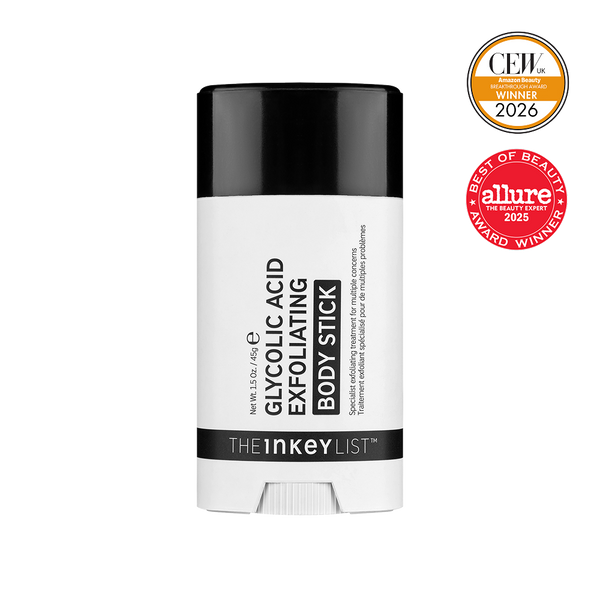
The Glycolic Acid Exfoliating Body Stick, $20, is formulated with 10% glycolic acid and built specifically for body application. It is clinically proven to deliver smoother skin in as little as 7 days.
That claim deserves a note on honesty. Seven days is what the clinical testing supports, and it reflects how quickly glycolic acid can begin breaking down existing keratin buildup. It is a genuine result, not a marketing round number. It is also not a promise that every person’s KP will vanish inside a week. Individual results vary with severity, skin type and how consistently the product is used. What you can reasonably expect within a week of correct use is skin that feels noticeably smoother to the touch, with continued improvement as you keep going.
The 10% concentration is a deliberate choice. Body skin, particularly on the outer arms and thighs, is generally more resilient than facial skin and tolerates a more active concentration well. Ten percent is meaningful enough to work efficiently on stubborn keratin buildup while remaining appropriate for regular twice-to-three-times-weekly use on the body.
The stick format solves the practical problems that cause people to abandon body exfoliation:
- It reaches awkward places. The backs of your upper arms are difficult to treat evenly with a liquid on a cotton pad. A stick glides straight over the area with control.
- It is precise. You apply active ingredient exactly where the bumps are, rather than dispersing it across skin that does not need it.
- It is not messy. No drips, no soaked pads, no product running down your arm.
- It requires no rinsing. Apply it to clean, dry skin after showering, let it absorb, and continue with your day.
- It travels. A solid stick does not leak in a bag, which matters for a condition that needs consistency to stay managed.
Use it two to three times weekly on the areas that need it. Do not apply it to broken skin or to skin you have just shaved, since freshly shaved skin has had its surface disrupted and will be more sensitive to an active acid. If your skin is on the sensitive side, begin with twice a week and build from there as your tolerance establishes.
Now that the mechanism is clear, here is how to put it into practice.
How to Get Rid of Keratosis Pilaris
Let us start with the honest answer, because you deserve one before you spend money on anything.
There is no permanent cure for keratosis pilaris. It is a chronic, genetic condition, and no product on the market can rewrite the way your skin is coded to handle keratin. Any brand promising to eliminate KP forever is not being straight with you.
Here is why that is genuinely better news than it sounds. KP is one of the most manageable skin conditions there is. With the right ingredients used consistently, the bumps soften, the texture smooths out, the redness settles and the roughness recedes. People who manage their KP properly often go long stretches without thinking about it. The condition remains, technically, but its visible and tactile impact can become minimal.
The distinction is between cure and control. You are not eradicating something. You are maintaining something, the same way you moisturize dry skin continuously rather than curing it once. Once you accept that framing, the whole thing becomes far less frustrating, because you stop searching for a miracle and start running a system that works.
The Three-Part Framework
Effective KP management rests on three actions. Every credible approach comes back to these.
-
Exfoliate chemically to dissolve existing plugs. This is the active step that addresses the bumps you can feel right now. Glycolic acid breaks down compacted keratin inside the follicular opening. Two to three times weekly is the target frequency for body skin - enough to keep clearing buildup, not so much that you overwhelm your barrier.
-
Hydrate daily to prevent the dryness that worsens KP. This is the supportive step, and it is the one people skip. Dry skin sheds inefficiently and forms plugs more readily, so hydration is not a luxury add-on. It is half the strategy. Daily moisturizing keeps skin supple, calms the itch and dryness that come with KP, and creates conditions in which fewer new plugs form.
-
Stay consistent, because results fade when routines stop. KP management is ongoing. Stop exfoliating for six weeks and the keratin will build back up, because the genetic tendency producing it has not gone anywhere. This is not a flaw in the approach. It is simply the nature of managing a chronic condition, and it is exactly why an easy, low-friction routine beats an elaborate one you abandon by March.
The American Academy of Dermatology’s treatment guidance reflects this same combination, emphasizing exfoliation alongside consistent moisturizing as the practical foundation of care.
How to Get Rid of Keratosis Pilaris on Arms
The upper arms are the headquarters of keratosis pilaris. If you only have KP in one place, this is almost certainly it, and the outer upper arm is where most people first notice the texture.
Arms have a specific practical challenge: you cannot see the back of your own upper arm properly, and you cannot easily reach it with a soaked cotton pad without making a mess. This is precisely why the stick format matters here more than anywhere else on the body.
The arm protocol is straightforward:
- Shower normally and pat the area dry. Skin should be clean and dry before you apply the acid.
- Glide the Glycolic Acid Exfoliating Body Stick over the affected area, sweeping across the outer and back surfaces of the upper arm. Both arms, since KP is symmetrical. Cover the whole textured zone rather than dotting individual bumps.
- Let it absorb for a minute before dressing.
- Repeat two to three times weekly, on non-consecutive days.
- Moisturize daily, including on the days you do not exfoliate. This is the step that keeps skin soft and stops the dryness cycle restarting.
- Do not scrub in between. Resist the urge to check progress with a loofah.
Expect the texture to feel different within the first week. Visible improvement in redness and pigmentation typically takes longer, generally several weeks, because color changes resolve more slowly than texture does. Both improve with continued use.
The Supporting Habits That Make a Real Difference
Products do the heavy lifting, but a handful of everyday habits meaningfully affect how your KP behaves. Most cost nothing.
Turn the shower temperature down. Hot water strips lipids from the skin barrier and leaves skin drier than it started. Lukewarm water cleans just as effectively without the moisture cost. For many people with winter KP flares, this single change is noticeable.
Keep showers shorter. Prolonged exposure to water, particularly hot water, is dehydrating rather than hydrating. Ten minutes is plenty.
Moisturize while skin is still damp. Apply your body moisturizer within a few minutes of getting out of the shower, while skin still holds surface moisture. You are sealing that water in rather than applying product to already-dried skin, and it makes a measurable difference to how hydrated skin stays through the day.
Choose gentler cleansers. Harsh, heavily foaming body washes can strip the barrier. Since barrier integrity is central to KP, what you clean with matters.
Run a humidifier in winter. Indoor heating dries the air dramatically. Adding humidity back reduces the moisture your skin loses to the environment, and people with winter KP flares often find it helps.
Avoid tight synthetic fabrics on affected areas where you can, particularly for extended wear. Friction and trapped heat can aggravate already-irritated follicles.
Do not pick. Worth repeating, because it is the habit most likely to leave a lasting mark.
Building In the Daily Hydration Step
The exfoliation half of the equation is covered by the Body Stick. The hydration half needs its own product, used far more frequently.
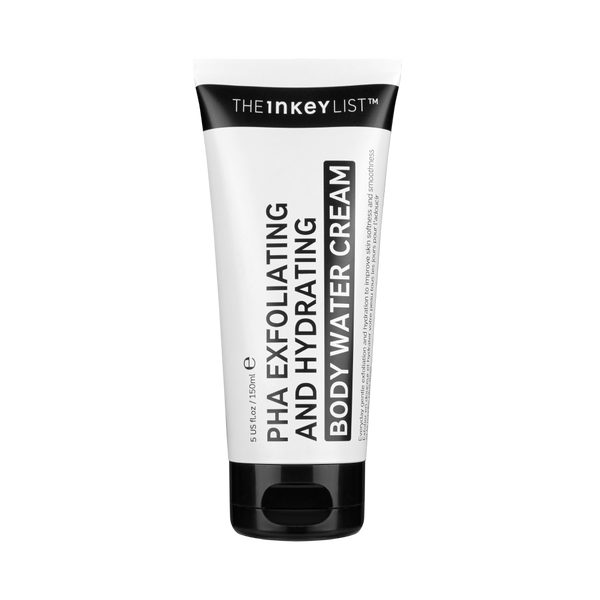
The PHA Body Water Cream, $15, is designed for exactly this role. It is a lightweight daily body moisturizer with gentle PHA exfoliation built into the formula, which means it hydrates and provides mild ongoing surface renewal at the same time. It has a water-cream texture rather than a heavy balm, so it absorbs quickly and does not leave you waiting around before getting dressed - a genuinely important detail for a product that needs to be used every single day to work.
We will cover exactly how it fits alongside the Body Stick in the routine section shortly.
If you are combining glycolic acid with other actives elsewhere in your routine and wondering what plays well together, our guide on whether you can use niacinamide and glycolic acid together covers one of the most common pairing questions.
Notice what is absent from all of this: force. No abrasive tools, no scrubbing, no aggressive intervention. Consistent, gentle chemistry applied reliably over time outperforms intensity every time with KP. The people who get the best results are not the ones working hardest. They are the ones who found a routine simple enough to maintain.
Before we assemble that routine, there is one check worth running, because a significant number of people treating KP are actually dealing with something else.
Body Breakouts vs Keratosis Pilaris: How to Tell the Difference
Bumps on the body get lumped together in people’s minds, and keratosis pilaris and body acne are constantly mistaken for one another. The consequence is real: someone with breakouts buys a KP product, or someone with KP buys a breakout product, and neither gets results because the underlying causes are entirely different and so are the ingredients that address them.
Two minutes of self-assessment saves months of frustration.
What Keratosis Pilaris Feels and Looks Like
KP has a distinctive signature once you know what to look for:
- Small and uniform. The bumps are consistently tiny and roughly the same size as each other across the affected area.
- Rough and dry to the touch. The classic description is sandpaper, or gooseflesh that will not settle.
- Painless. KP bumps do not hurt. They may itch when skin is dry, but pressing on one does not produce tenderness.
- Not inflamed in the way spots are. There may be surrounding redness, but individual bumps do not swell or come to a head.
- Clustered and symmetrical. Dense patches across outer upper arms and front thighs, mirrored on both sides of the body.
- Persistent. KP does not appear and clear in cycles. It is broadly stable, worsening in winter and easing in summer.
What Body Breakouts Feel and Look Like
Body acne behaves quite differently:
- Variable in size. A mix of small clogged pores, larger inflamed spots and sometimes deeper nodules.
- Often tender or painful. Inflamed breakouts hurt when pressed. This is one of the clearest distinguishing signals.
- Genuinely inflamed. Redness, swelling, and spots that can come to a head.
- Located where oil glands are dense. Back, chest, shoulders and the nape of the neck.
- Asymmetrical and cyclical. Breakouts appear in patterns that shift over time rather than mirroring neatly.
- Can leave marks. Post-inflammatory pigmentation or scarring is common after inflamed lesions heal.
Different Causes, Different Chemistry
The reason the two need different products comes back to what is blocking the follicle.
In keratosis pilaris, the blockage is keratin - hardened structural protein accumulating around the follicular opening. There is no significant oil component and no bacterial involvement. It is a shedding problem.
In body acne, the blockage involves oil, dead skin cells and bacteria together. Sebaceous glands produce excess sebum, it mixes with dead cells to clog the pore, bacteria proliferate in that environment, and the immune system responds with inflammation. That inflammation is what makes breakouts red, swollen and sore.
This is where solubility becomes the deciding factor.
Glycolic acid is water-soluble. It works beautifully on the surface and in the follicular opening, dismantling the bonds between compacted keratin cells. Perfect for KP.
Salicylic acid is oil-soluble. That property lets it dissolve into sebum and travel down into an oil-clogged pore, clearing congestion from within. It also has anti-inflammatory properties that help calm the redness and swelling of active breakouts. Perfect for acne.
Using a water-soluble acid on an oil-clogged pore, or an oil-soluble acid on a keratin plug, is simply the wrong tool. Our salicylic acid guide covers how BHA works in more depth, and if breakouts are your primary concern, our acne resource hub is the broader starting point.
For Breakouts: Salicylic Acid Cleanser
If your assessment points toward breakouts rather than KP, the Salicylic Acid Cleanser, $15 for 150ml, is the relevant product. It contains 2% salicylic acid, helping to clean skin and reduce acne and blackheads.
Its practical advantage for body use is that it works on more than just the face. Chest, back and shoulders are all standard application areas, and being a cleanser, it rinses off, which makes covering larger surfaces straightforward. It deep-cleans pores without stripping skin, which matters because over-drying skin in pursuit of clearer skin tends to backfire.
If breakouts across your back are the main issue, our back acne resource covers the causes and management approaches in full. And if you have noticed your back breakouts tracking with your menstrual cycle, our guide to what causes back acne in females covers the hormonal drivers specifically, since patterns that repeat monthly usually have an internal explanation rather than a topical one.
When You Have Both
Plenty of people have KP and body breakouts simultaneously, and there is no contradiction in that. They are unrelated conditions with unrelated causes, and having one does not protect you from the other.
The typical presentation is KP across the outer upper arms and thighs, with breakouts on the back, chest or shoulders. Because the affected zones are usually different, the fix is simple: treat each area with the ingredient suited to it. Glycolic acid on the KP zones. Salicylic acid on the breakout zones. Hydration everywhere.
That is not two competing routines. It is one routine with region-specific steps, which is exactly what we are building next.
Your Complete Body Routine for Keratosis Pilaris
Everything so far has been the reasoning. This is the routine. It has three steps, uses three products, and takes under five minutes on the days you do all of it.
Step 1 - Cleanse
Start in the shower with clean skin. Use lukewarm water rather than hot, and keep it reasonably brief.
If you have body breakouts on your chest, back or shoulders, this is where the Salicylic Acid Cleanser, $15 for 150ml, comes in. Use it on those zones, and on your face if you want to. Its 2% salicylic acid is oil-soluble, so it penetrates into pores to deep-clean congestion without stripping skin, helping to reduce acne and blackheads.
If you do not have body breakouts, skip this product and cleanse with whatever gentle body cleanser you normally use. Not everyone needs a salicylic acid step, and there is no benefit to adding actives your skin has no use for.
Whatever you use, do not reach for a loofah or exfoliating glove on your KP areas. Hands are fine.
Step 2 - Exfoliate, Two to Three Times Weekly
Get out of the shower and pat your skin dry. The Body Stick goes onto clean, dry skin.
Glide the Glycolic Acid Exfoliating Body Stick, $20, over every area where you have bumps. Backs and outsides of the upper arms. Fronts of the thighs. Buttocks. Anywhere that feels rough. Cover the full textured area with an even sweep rather than trying to target individual bumps.
The 10% glycolic acid gets to work breaking down the bonds holding keratin plugs together. It works cumulatively over consecutive uses, so the improvement compounds rather than arriving in a single dramatic moment.
A few rules for this step:
- Two to three times weekly is the target. Not daily. Over-exfoliating compromises your barrier, and a damaged barrier makes KP worse.
- Use it on non-consecutive days. Give skin a recovery day in between.
- Start at twice weekly if your skin is sensitive or new to acids, and build up as tolerance establishes.
- Never on broken skin. Cuts, cracks or irritated patches need to heal first.
- Not on freshly shaved skin. Shaving disrupts the surface, and applying an active acid immediately afterward will sting. Leave at least a day between shaving and exfoliating the same area.
- Let it absorb before dressing.
Step 3 - Moisturize, Every Single Day
Apply the PHA Body Water Cream, $15, daily. Every day, including days you do not exfoliate. This is the step that determines whether the whole routine works, and it is the one people quietly drop first.
Apply it while your skin is still slightly damp from the shower to lock in surface moisture. Its water-cream texture is light and absorbs fast, so you are not standing around waiting or dealing with a greasy film under clothing. That matters more than it sounds, because a daily product only works if it is pleasant enough to use daily.
Beyond hydration, it contains gluconolactone, a PHA, which provides gentle ongoing surface exfoliation and helps calm the itching and dryness that aggravate KP.
Why PHA Is the Right Daily Partner to Glycolic Acid
The pairing of a weekly glycolic step with a daily PHA step is deliberate, and understanding why makes the routine make sense.
PHAs are the largest molecules in the exfoliating acid family. Where glycolic acid’s small size lets it penetrate into the follicle and work on plugs directly, a PHA’s larger size means it stays at the surface. That sounds like a limitation, and for tackling stubborn keratin plugs it would be. But it is precisely what makes PHAs suitable for daily use. Surface-level action means dramatically lower irritation risk, which is why PHAs are the go-to option for sensitive and reactive skin.
PHAs are also humectants. Gluconolactone attracts and holds water in the skin, so it hydrates while it gently exfoliates. For a condition where dryness is a core aggravating factor, an exfoliating ingredient that also draws in moisture is unusually well matched.
So the two acids divide the labor. Glycolic acid, two to three times a week, does the deep work of dissolving existing plugs. PHA, every day, maintains gentle surface turnover, keeps skin hydrated, calms itch, and holds the ground the glycolic acid gained. Neither works as well alone. Exfoliating without hydrating leaves skin dry and prone to forming new plugs. Hydrating without exfoliating leaves existing plugs untouched.
For a deeper look at the ingredient itself, our explainer on what gluconolactone is covers how this PHA behaves in a formula, and the science behind the PHA Body Water Cream goes into the formulation decisions in detail.
What to Expect, and When
Realistic expectations keep people consistent, so here is an honest timeline.
Days 1 to 7: Skin begins to feel smoother to the touch. The Body Stick is clinically proven to deliver smoother skin in as little as 7 days, and texture is the first thing most people notice changing. Visually, things may look largely the same.
Weeks 2 to 4: Texture improvement becomes more established and more even. Bumps feel less pronounced. Any dryness-related itching typically settles as the daily moisturizing step takes effect.
Weeks 4 and beyond: Best results come from sustained consistency. Redness and pigmentation, which resolve more slowly than texture, gradually improve over this period. Affected areas look more even overall.
Ongoing: Results maintain only while the routine continues. Stop, and keratin gradually rebuilds, because the genetic tendency behind it has not changed. Keep going, and the improvement holds. This is maintenance, not a course of treatment with an end date.
If progress feels slower than you hoped, check three things before changing products: are you exfoliating consistently two to three times weekly, are you moisturizing genuinely every day, and have you stopped scrubbing entirely? The overwhelming majority of disappointing results trace back to one of those three.
One Note on Sun Exposure
Chemical exfoliation can increase your skin’s sensitivity to UV. When you are exfoliating regularly and any of the treated areas will be exposed - upper arms in short sleeves, thighs in shorts - apply a broad-spectrum sunscreen to those areas. This is standard practice with any AHA and protects both your skin and your results, since UV exposure can worsen the pigmentation you are working to even out.
That is the entire routine. Cleanse, exfoliate two to three times weekly, moisturize daily. Three products, three steps, no scrubbing.
The Bottom Line on Managing Keratosis Pilaris
Keratosis pilaris is genetic, harmless and extremely common, and it has nothing to do with how well you look after yourself. Scrubbing cannot fix it, because the keratin plugs causing the bumps sit inside the follicle where abrasion cannot reach, and the irritation from scrubbing tends to make things worse. What does work is chemistry: glycolic acid to dissolve the plugs, paired with daily hydration to soften skin and prevent the dryness that aggravates the condition. KP is managed rather than cured, and that is genuinely good news, because management works reliably when you stay consistent with it. Clear guidance, proven ingredients, real results.
Start Your Smoother Skin Routine
You now know exactly what your skin needs, so here is the easiest way to begin. Start with the Glycolic Acid Exfoliating Body Stick, $20, two to three times weekly on your bumpy areas, and pair it with the PHA Body Water Cream, $15, every day - clinically proven smoother skin in as little as 7 days. If you are also dealing with breakouts on your chest, back or shoulders, add the Salicylic Acid Cleanser, $15, to your shower step. Free delivery on your first order.
Frequently Asked Questions
Got a question?
Our askINKEY team are a friendly bunch of skincare experts with deep product knowledge and zero judgement. Whether you're an ingredient obsessive or just starting out, we'll make it make sense. No question too big. No question too small. We Give A Care, Every Day.


