



What Causes Crepey Skin? Causes, Treatment and Prevention
Crepey skin is not the same as wrinkles. Here is what actually causes it, where it shows up first, and what genuinely helps.
Author
askINKEY skincare advisor
Published
06 March, 2026
Time to read
18 minutes
Crepey skin is skin that has become thin, finely lined and loose, with a texture similar to crepe paper. It usually covers a broader area than a single wrinkle does, and it often looks slightly slack or crinkled when you move or stretch it. It is not the same thing as wrinkles, and that distinction matters, because the two develop differently and respond to different things.
This article answers what causes crepey skin, where it tends to appear first, and what genuinely helps improve it. We will cover the six main causes, the areas most affected including the neck, arms, under eyes, legs and chest, the ingredients with real evidence behind them, a morning and evening routine you can actually follow, honest timelines for results, and answers to the questions people ask most.
One thing worth setting straight before we start. Crepey skin can be visibly improved and its progression can be slowed, but it cannot be erased with skincare. Everything below is written with that in mind.
Understanding the difference between crepey skin and wrinkles is the starting point, so that is where we will begin.
What Crepey Skin Actually Is, and How It Differs From Wrinkles
Crepey skin has a distinctive look once you know what you are looking for. The skin appears thin and finely lined, with a papery quality to the surface. It sits loosely rather than snugly. It affects a whole area rather than forming a single defined line, so you tend to notice it across a stretch of the neck, the inner arm or beneath the eyes rather than in one fixed position. It becomes more obvious when the skin is stretched, pinched or moved, and it shows up far more clearly in raking side light than in flat overhead lighting. That is why so many people first notice it in a car mirror or a changing room rather than in their own bathroom.
Wrinkles behave differently. A wrinkle is typically an individual crease, and it usually sits in a specific, predictable location. Many wrinkles form along expression lines, in the places where your face has folded the same way thousands of times: across the forehead, between the brows, at the outer corners of the eyes. They are localized. They have edges. You can point at one.
Crepey skin is not a line. It is a change in the overall quality and thickness of the skin across a wider area. That is the cleanest way to hold the difference in your head, and it explains something that confuses a lot of people: you can have crepey skin without deep wrinkles, and you can have deep wrinkles without any crepiness at all. They are not two stages of the same process. They are two different things that happen to the same organ.
Wrinkles are lines. Crepiness is a change in the skin itself.
The Structural Difference, Explained Simply
The reason these two look different is that they come from different places structurally.
Wrinkles are largely about repeated folding combined with a loss of volume and support underneath. Fold a sheet of paper in the same place enough times and the crease stays. Take away some of the support beneath the surface and the crease deepens.
Crepiness is about the skin becoming thinner and losing its elastic recoil. It no longer springs back the way it used to. Stretch it and it takes a moment longer to settle. That delay, repeated across an entire area, is what produces the fine crinkled texture people describe as crepe paper.
Two proteins sit behind all of this, and they are worth defining clearly now because they run through the rest of this article.
Collagen is the protein that provides structure and firmness. Think of it as the scaffolding that gives skin its thickness, density and support. When collagen declines, skin gets thinner and less firm.
Elastin is the protein that provides stretch and the ability to snap back. Think of it as the elastic in a waistband. When elastin is degraded, skin still stretches, it just does not return as crisply. That is the recoil problem, and it is the defining feature of crepey skin.
Hold onto both of those definitions. Almost everything that follows is a variation on what happens to collagen and elastin over time, and what you can realistically do about it.
Crepey Skin Is Not Only an Aging Concern
It is easy to assume crepiness arrives on a schedule, but it does not always. It can appear earlier in people with significant cumulative sun exposure, because UV is hard on both proteins we just described. It can appear on skin that is very dry or persistently dehydrated, where a poorly hydrated surface exaggerates fine crinkling regardless of what is happening structurally underneath. It can also become more noticeable after periods of rapid weight change, when the skin’s surface area adjusts faster than its elastic recoil can keep up with.
None of that is a warning. It is simply useful information, because it tells you which of the causes might be most relevant to you, and therefore which of the fixes is likely to make the biggest difference. If dryness or dehydration is part of your picture, our guide to dehydrated skin explains how dryness and dehydration differ, which is a genuinely important distinction and one that changes what you should be reaching for. If you suspect dehydration is playing a role, these seven signs of dehydrated skin are worth reading before you change anything in your routine.
A Simple Way to Check Your Skin’s Elasticity
There is a low-tech check you can do in about five seconds.
Gently pinch the skin on the back of your hand or on the inner forearm, hold it for a moment, then release it and watch how quickly it settles back. Skin with good elastic recoil drops back almost immediately and smoothly. Skin with reduced elasticity settles more slowly, and you may see fine crinkling appear as it releases and then gradually smooth out.
That is the everyday marker of reduced elasticity. It is not a diagnosis and it is not a scoreboard. It is a way of seeing, in real time, what elastin actually does, and of establishing a rough baseline so that in three months you have something to compare against. Skin that is simply dehydrated on the day will also settle a little more slowly, which is another reason hydration comes so early in the treatment plan later on.
Now that we have established what crepey skin is, let us look at the biological and environmental reasons it develops in the first place.
What Causes Crepey Skin
There is no single cause. Crepey skin is what happens when several gradual processes overlap, some of them internal and unavoidable, others external and very much within your influence. Here are the six that matter most.
Collagen Declines From Your Mid Twenties
Collagen production falls by roughly 1% per year from the mid twenties onward. That number sounds almost trivially small, and in any given year it is. You will not notice a 1% change in anything about your skin.
The point is that it compounds. A decade of 1% is not dramatic. Two decades of it, layered on top of everything else in this list, is when thinning and reduced firmness become visible. This is the quiet, invisible part of the process, and it is why crepiness often seems to appear suddenly when in reality it has been building for years.
It is worth saying clearly: this is normal biology, not damage. Nothing has gone wrong. But it does explain why prevention started earlier is prevention that works better, and why supporting collagen is a long game rather than a fix. This is also the point where peptides enter the conversation, since peptides are short chains of amino acids that help support the skin’s own firming and smoothing processes. You will see one named Matrixyl 3000 appear a few times later in this article.
Elastin Production Essentially Stops After Puberty
This is the single most useful fact in this entire article, and most people have never heard it.
Your body produces very little new elastin after puberty. Not less elastin. Very little. The elastin you have as an adult is, broadly speaking, the elastin you keep.
Sit with that for a second, because it reframes the whole topic. Collagen declines, which means there is a production line still running, just more slowly, and there are things you can do to support it. Elastin is different. There is essentially no production line to support. Protecting what you already have matters enormously more than trying to replace it, because replacing it is not really on the table.
This is precisely why crepiness behaves differently from wrinkles, why elastic recoil is the thing that changes, and why the next cause on this list carries so much weight.
UV Exposure Is the Single Largest Accelerant
Cumulative UV exposure is the biggest external driver of crepey skin. Not the only one, but the biggest by a clear margin.
UV degrades existing collagen and elastin in the dermis, the deeper layer of skin where both proteins live. Collagen can be partially supported and rebuilt over time. Elastin, as we just covered, is not meaningfully replaced. So UV damage to your elastin network does not get undone. It accumulates, quietly, across decades of ordinary daylight.
This explains something you can verify on your own body right now. Crepiness tends to appear first on the areas that receive the most daily, unthinking sun exposure: the neck, the chest, the forearms and the backs of the hands. Not the areas you deliberately expose on a beach twice a year. The areas that are simply out in the world every single day, through car windows, on walks, during a coffee run, in short sleeves from April onward. That is why daily broad-spectrum sun protection is the highest-leverage habit in this entire article, and why we cover SPF and how sun protection works as its own topic.
Chronic Dehydration and Transepidermal Water Loss
Transepidermal water loss sounds technical. In plain terms, it means this: water is constantly moving up from the deeper layers of your skin toward the surface, where it evaporates into the air. That process is normal and continuous. The question is how much escapes.
When skin cannot hold onto enough water, the surface looks thinner, duller and more finely lined. Crucially, this happens whether or not anything has changed structurally underneath. Dehydrated skin exaggerates the appearance of crepiness, sometimes substantially.
There is good news buried in that. Because dehydration is a surface-level, reversible problem, correcting it produces the fastest visible improvement of anything discussed in this article. It is not a structural fix and we will not pretend otherwise, but it is real, it is visible, and it happens in days rather than months. Our full explainer on dehydrated skingoes deeper into why some skin types lose water faster than others.
A Compromised Moisture Barrier
Your moisture barrier is the skin’s outer defense layer, built largely from lipids including ceramides. Picture it as mortar holding a brick wall together. When the mortar is intact, water stays in and irritants stay out.
Plenty of ordinary things weaken that mortar: over-exfoliating, harsh cleansing, water that is too hot, cold weather, indoor heating and air conditioning. When the barrier is compromised, water escapes faster and irritants get in more easily.
This does two things at once, and both are unhelpful. First, it worsens the appearance of crepiness, because a leaky barrier means a persistently dehydrated surface. Second, and this is the part people miss, it makes skin less tolerant of exactly the active ingredients that would otherwise help. Retinoids on a compromised barrier are a rough experience.
That is why barrier repair comes first in the treatment section, before anything else. It is not the exciting step. It is the one that makes the other steps work. If you want the full picture, we have a dedicated guide to ceramides and what they actually do.
Repetitive Mechanical Stress
The last cause is purely physical. Repeated folding, stretching and pressure on the same area of skin contributes over time, especially where the skin is already thin.
A few everyday examples. Sustained downward head tilt while looking at a phone or a laptop folds the neck in the same place for hours a day. Consistently sleeping on the same side compresses the face and chest for a third of your life. Repeatedly rubbing or pulling delicate skin, particularly around the eyes during makeup removal, applies real mechanical force to the thinnest skin on your body.
None of this is anyone’s fault and none of it requires a lifestyle overhaul. It is simply worth knowing, because a few small adjustments cost nothing and the areas involved are precisely the ones that tend to crepe first.
The Six Causes at a Glance
- Collagen production declines by roughly 1% per year from the mid twenties
- Elastin production essentially stops after puberty, so existing elastin is what you keep
- Cumulative UV exposure degrades both proteins and is the largest external accelerant
- Chronic dehydration and transepidermal water loss thin and dull the surface
- A compromised moisture barrier lets water escape and reduces tolerance for actives
- Repetitive mechanical stress from folding, compression and rubbing adds up over time
These causes do not affect the whole body evenly. Some areas show crepiness years before others, and knowing which is which tells you where to focus first.
Where Crepey Skin Shows Up First
Crepey skin follows a fairly predictable geography. The areas that go first share a profile: thinner skin, fewer oil glands, high sun exposure and a long history of being skipped in your routine. Here is how each area behaves, and what to do about it.
Crepey Neck and Tech Neck
The neck is usually first, and there are four good reasons for that.
The skin on the neck is roughly 40% thinner than facial skin, so there is simply less of it to begin with. It has fewer oil glands, which means it holds onto moisture less effectively than the face does. It is in near-constant motion, turning, tilting and swallowing all day. And it is very commonly left out of both skincare routines and sun protection, so it receives years of UV exposure with none of the care that stops at the jawline.
Then there is tech neck, which is the term for the horizontal lines and loss of firmness that develop from sustained downward head tilt while looking at phones and laptops. It is not a gimmick term. Hold your head at a fixed downward angle for several hours a day, every day, and the skin folds in the same horizontal bands repeatedly. Combine that mechanical folding with skin that is already thin, dry-prone and unprotected, and the neck becomes the fastest-changing area on most people’s bodies.
The fixes for tech neck are refreshingly practical. Raise your screen toward eye level so your head sits neutral rather than tipped forward, whether that means a laptop stand, a stack of books or simply holding your phone higher. Take periodic breaks from a fixed downward position. And extend every facial product you already use down over the neck and the decolletage, which costs you nothing and takes about four extra seconds. Tech neck is not selective about who it affects, and it is worth noting that neck care belongs in everyone’s routine, which is one of the points we make in our men’s skincare routine guide too.
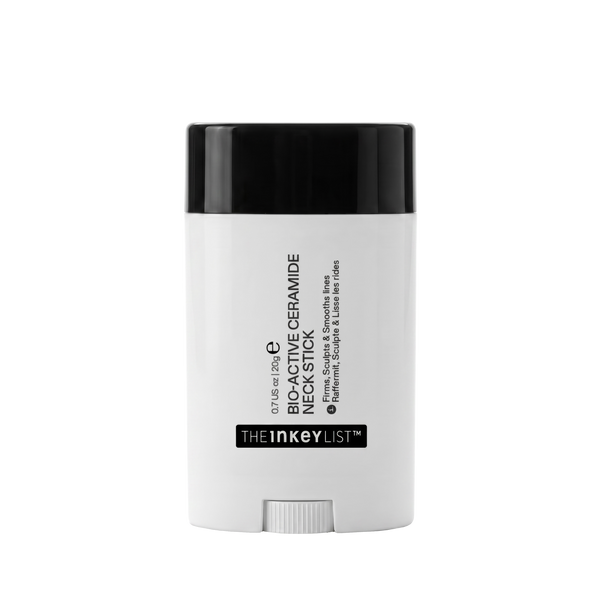
If you want something built specifically for the area, the Bio-Active Ceramide Neck Stick ($17) targets neck lines, crepey skin and loss of firmness with Bio-Active Ceramides, and its lightweight stick format lifts, smooths and sculpts the neck and decolletage in 14 days.
More usefully, here is what to look for in any neck firming product, whether or not it is ours. You want barrier-supporting lipids such as ceramides, because the neck loses water quickly. You want humectants to hold hydration at the surface. You want a format you will genuinely use daily, since consistency on the neck is the thing most people fail at. And you want something that spreads easily over a large, mobile area without dragging the skin.
Crepey Skin on Arms
Arms are the area people ask about most and treat least, so this section gets the space it deserves.
The upper arms and forearms crepe relatively early for a combination of reasons. The skin there is thinner than on the torso, particularly on the inner upper arm, where it is noticeably delicate. The outer forearms receive substantial incidental UV exposure year after year, through driving with an arm resting near the window, walking, gardening and months of short sleeves. That exposure is unglamorous and unmemorable, which is exactly why it accumulates unchecked. Arms are also very rarely included in a daily skincare routine, and almost never included in daily sun protection. And the area is naturally prone to dryness, since it has fewer oil glands than the face and gets stripped by soaps and hot water.
So what causes crepey skin on arms is really four things stacked: thinner skin, quiet cumulative UV, chronic dryness, and near-total absence from your routine.
Now the honest part. Crepey skin on arms usually responds more slowly than facial skin does. Body skin turns over more slowly than facial skin, so the same active ingredient works on a longer timescale. On top of that, body skin is almost always treated far less consistently: most people moisturize their face twice a day and their arms when they remember. Slower biology plus patchier application equals a longer wait. If you go in expecting facial timelines you will conclude it is not working and stop right before it starts.
If you are looking for the best lotion for crepey skin on arms and legs, the useful answer is not a brand ranking. It is a short list of what should be in the formula and how you should apply it.
- Humectants to draw water in. Hyaluronic acid is the best known, and it works by attracting and holding water at the surface, which immediately softens the look of fine crinkling.
- Ceramides to rebuild the barrier and hold that water in. Humectants pull water in, ceramides stop it escaping. You want both, because either one alone is doing half a job.
- Emollients for comfort and smoothness, which improve how the skin feels immediately and make you more likely to keep using the product.
- A texture you will actually apply every day, because on the body, adherence beats formulation almost every time.
The application detail that matters most: apply onto slightly damp skin, straight after showering, ideally within a couple of minutes of towelling off. Damp skin gives humectants water to grab and meaningfully improves absorption. It also solves the habit problem, because you are already standing there.
Two more things. Use more product than feels necessary, since arms are a large surface area and a thin film does very little. And extend your daily sun protection to your forearms and the backs of your hands during any months you wear short sleeves, because that incidental exposure is the part of the equation you can still change.
The principles that work on the face work on the body. The limiting factor is almost always consistency and quantity, not the formula.
Crepey Skin Under Eyes
The under eye area is the thinnest skin on the body. It has very few oil glands, so it holds moisture poorly. It is in near constant motion from blinking and expression, tens of thousands of movements a day. And it is routinely pulled, dragged and rubbed during makeup removal, which is entirely avoidable mechanical stress applied to the least resilient skin you own.
Put those together and it is unsurprising that crepey skin under eyes is one of the earliest changes many people notice.
For daytime, the Caffeine Eye Cream ($14) combines Caffeine, Matrixyl 3000 and Albizia Julibrissin Bark Extract. It is clinically proven to reduce under eye bags and dark circles from first use, and 95% see smoother skin.
For night, the Retinol Eye Cream is the alternative to reach for if fine lines around the eyes are your focus. It uses 0.3% Vitalease Retinol in a slow-release form, with Glycerin and Shea Butter to keep the formula comfortable on delicate skin. If you want to compare the options side by side, the full eye treatments collection is the place to browse.
The technique matters as much as the product here. Apply with your ring finger, which is the weakest finger and therefore applies the least pressure, and tap gently along the orbital bone rather than dragging or rubbing inward. Use a small amount. And when removing makeup, press and hold rather than scrubbing, then wipe in one direction. You cannot undo years of tugging, but you can stop adding to it tonight.
Crepey Skin on Legs
Legs follow a similar pattern to arms with a few differences of their own.
Leg skin is frequently very dry, and it is regularly exposed to hot showers and stripping body washes that remove the lipids holding the barrier together. The skin on the shins and just above the knees is thinner and has less underlying fat to support it, which is why crepiness often shows there first. Legs also receive real UV exposure through the warmer months, more than most people account for.
Rapid weight change can affect how loose leg skin appears too, since the elastic recoil we described earlier does not adjust as quickly as the underlying volume does.
The guidance mirrors the arms almost exactly. Apply your moisturizer to damp skin straight after showering. Choose something with ceramides to rebuild the barrier alongside humectants to hydrate. Turn the shower temperature down, which sounds minor and is not, because hot water strips lipids efficiently. And be patient, because body skin improves slowly and legs are typically the slowest area of all.
Chest and Decolletage
The chest and decolletage combine three of the causes from the previous section in one place.
The skin is thin, similar in character to the neck. It receives heavy cumulative sun exposure through open necklines, year after year, in a spot that rarely gets sunscreen. And it experiences nightly compression from side sleeping, which is what produces the vertical lines many people notice in the mirror first thing in the morning and watch fade over the following hour. When those lines stop fading as quickly as they used to, that is elastic recoil changing.
The practical guidance is simple. Extend your facial products down over the chest rather than stopping at the collarbone, and include the area in your daily sun protection without exception. The Neck Stick is designed to cover the decolletage as well as the neck, so if you are already using it, take it lower than you think you need to.
Now that we have mapped where crepiness appears, let us get into what actually improves it, ordered by what to do first.
How to Get Rid of Crepey Skin: What Actually Works
Before any product recommendations, an honest reset.
Crepey skin can be visibly improved, softened and slowed. It cannot be fully reversed with topical skincare, because elastin is not meaningfully replaced once it is lost. What skincare can genuinely do is restore hydration, rebuild the barrier, support collagen, improve the appearance of texture and prevent further damage. That is a meaningful list, and the results are real. It is just not the same thing as turning back a clock.
Skincare can visibly improve crepey skin and slow it down. It cannot erase it, and anyone telling you otherwise is selling something.
Here is the sequence, in priority order. The order matters more than most people expect, because each step makes the next one work better.
Start With Barrier Repair
Barrier repair comes first for two reasons. A compromised barrier worsens the appearance of crepiness directly, by letting water escape and leaving the surface dehydrated and finely lined. And it reduces your skin’s tolerance for the active ingredients that would otherwise help, which means starting with retinoids on a struggling barrier tends to end in irritation and abandonment.
Fix the foundation, then build on it.
The Ectoin Hydro-Barrier Serum ($17) is built for exactly this stage. It combines 2% Ectoin, which strengthens the barrier while hydrating, with 2.5% Hyaluronic Acid and a 1% Barrier Blend of three ceramides. It repairs a compromised skin barrier in 15 minutes*, and it is clinically proven to improve skin bounce and smoothness in 7 days*.
It is also formulated to suit sensitive, dry or irritated skin, which matters more than it sounds. A significant number of people arrive at crepey skin having already over-treated their skin with too many actives at once. If that is you, this is the step to sit on for a few weeks before adding anything else.
Rehydrate, Properly and Consistently
Hydration delivers the fastest visible change of anything in this article. Plumping the surface immediately softens the appearance of fine crinkling, which is why skin can look noticeably better within days even though nothing structural has changed yet.
The Hyaluronic Acid Serum ($13) uses 2% Multi-Molecular Hyaluronic Acid, which holds up to 1000x its weight in water, alongside Matrixyl 3000 Peptide to help plump, firm and smooth. In testing, 82% agreed their skin felt firmer, smoother and more elastic after 4 weeks**, and 86% agreed it was quick absorbing, lightweight and non-tacky**. It also contributes to an improved skin barrier by reducing water loss*.
One application detail is worth more than any product swap: hyaluronic acid works best applied to damp skin and sealed with a moisturizer. A humectant works by holding onto water. Apply it to bone-dry skin in a dry room with nothing layered on top, and it has less to hold and less protection from evaporation. Damp skin below, moisturizer above. That is the whole technique.
For the sealing step, the Bio-Active Ceramide Moisturizer ($22) is clinically proven to firm, plump and reduce 6 signs of aging in 28 days*. It uses Bio-Active Ceramide NP to visibly firm, smooth and strengthen the skin barrier, 5% Gransil Blur to instantly blur the look of fine lines, and Shea Butter to comfort and soothe.
Add a Retinoid
Once the barrier is stable and hydration is consistent, a retinoid is the next most valuable addition.
In plain terms, retinoids support skin renewal and help improve the appearance of texture and fine lines over time. The phrase “over time” is doing real work in that sentence. Retinoids are not a fast ingredient, and the people who get results are the people still using them at week twelve.
There are two options depending on where you are starting from.
The Starter Retinol Serum ($15) is a gentle, slow-release retinol that smooths fine lines in 7 days*. It is built for sensitive skin and for retinol beginners, and the slow-release format is what makes it tolerable for people who have reacted badly to retinoids before.
The Advanced 0.2% Retinal Serum is the step up. It is clinically proven to work 11x faster than standard retinol***, with visible anti-aging results in just 1 week*.
If you are unsure which of the two suits you, our guide to retinol vs retinal breaks down the difference properly.
Three pieces of practical guidance apply to both. Retinoids are evening only. Start with two to three nights a week and build up as your skin tolerates it, rather than going nightly from day one. And patch test first, which takes a couple of minutes and saves you a genuinely unpleasant week.
Use Vitamin C in the Morning
If retinoids are the evening workhorse, Vitamin C is the morning counterpart.
The 15% Vitamin C + EGF Serum uses 15% Ascorbyl Glucoside to brighten and target the look of sun damage, paired with 1% Epitensive EGF, which supports skin renewal and helps boost elasticity.
Ascorbyl Glucoside is a stable form of Vitamin C. That stability is the reason it tends to be gentler than pure forms while still doing the job, and it is a sensible choice if you have found stronger Vitamin C formulas irritating in the past.
The logic of putting it in the morning is straightforward. Cumulative UV exposure is the largest accelerant of crepey skin, and sun damage is what you are trying to address. A daytime Vitamin C step is the natural partner to daytime sun protection, working on the appearance of damage already there while protection limits what gets added.
Protect With Daily Broad-Spectrum Sun Protection
This is the highest-leverage habit in this entire article, and it is not close.
Here is the reasoning laid out plainly. UV is the single largest external driver of crepey skin. UV degrades elastin. Elastin is not meaningfully replaced once it is lost. Therefore every day of unprotected exposure is a small permanent subtraction from a finite resource, and every day of protection preserves what you have.
A daily broad-spectrum sunscreen is the tool for that job. Use it every day, not only on obviously sunny days, and all year round rather than seasonally, since UVA exposure is not limited to summer or to clear skies.
Just as importantly, extend it beyond your face. The neck, the chest, the forearms and the backs of the hands are the exact areas identified earlier as showing crepiness first, and they are the exact areas most commonly missed. If you apply sunscreen only where you apply makeup, you are protecting the area least at risk and skipping the areas most at risk. Our SPF guide covers how sun protection works in more detail.
Readers often want to know which specific vitamins help, and that question deserves a direct answer of its own.
What Vitamin Helps Crepey Skin
The two topical vitamins with the strongest evidence behind them for crepey skin are Vitamin C and Vitamin A derivatives, better known as retinoids.
That is the short answer. Here is what each one actually contributes.
Vitamin C
Vitamin C brightens, helps target the look of sun damage and supports the skin’s renewal processes. Since UV exposure is the largest accelerant of crepiness, an ingredient that addresses the visible signs of sun damage is well matched to the problem.
In the 15% Vitamin C + EGF Serum covered in the previous section, 15% Ascorbyl Glucoside handles the brightening and sun damage side, while 1% Epitensive EGF supports skin renewal and helps boost elasticity. Elasticity is the specific quality that crepey skin has lost, which is what makes that pairing relevant here rather than just generally useful.
Vitamin A Derivatives
Retinol and retinal are both Vitamin A derivatives. Both support skin renewal and help improve the appearance of texture and fine lines. The practical difference is speed: retinal is the faster-acting of the two, which is why the Advanced 0.2% Retinal Serum carries the 11x faster than standard retinol claim***, while the Starter Retinol Serum is the gentler, slower entry point.
If you are choosing between them, the deciding factor is usually your skin’s history with actives rather than how quickly you want results. Our full retinol guide covers the category properly.
Topical and Dietary Are Not the Same Thing
This is a clarification worth making explicitly, because the search results for vitamins and skin blur the two constantly.
Everything in this section refers to topically applied vitamins: ingredients formulated into products and delivered directly to the skin, where they are designed to work. That is a different question from what you eat. A balanced diet and adequate water intake support overall skin health generally, and that is as far as this article will go on the subject. We are not making dietary, supplement or nutritional recommendations, and you should treat any skincare content that does so with healthy skepticism.
A Note on Sequencing
Vitamin C sits in the morning routine. Vitamin A derivatives sit in the evening routine.
That separation is about getting the best from each rather than about the two being incompatible. Vitamin C pairs logically with daytime sun protection, and retinoids are evening ingredients by convention and by formulation. Splitting them across the day is simply the cleanest way to run both without either getting in the other’s way.
Layering questions are the most common follow-on from here, and what not to mix with retinol is the best starting point if you are building a routine with several actives in it.
If niacinamide is already in your lineup, using niacinamide with retinol answers that specific pairing question directly.
Knowing which ingredients help is one thing. Assembling them into a routine that survives a real, busy day is another, so let us build one.
Your Morning and Evening Routine for Crepey Skin
Here are two routines you can start tomorrow. Each step explains what to do and why it earns its place, because a routine you understand is a routine you stick with.
If you want the fundamentals of routine order rather than this specific concern, our skincare routine guide and our walkthrough on how to build your skincare routine cover the general principles.
Morning Routine
-
Cleanse gently. Use lukewarm water, never hot, and avoid anything that leaves your skin feeling tight or squeaky. That tight feeling is the sensation of a stripped barrier, and over-cleansing directly undermines every other step below.
-
Apply Hyaluronic Acid Serum to damp skin. Do not dry your face fully after cleansing. Apply Hyaluronic Acid Serum while the skin is still slightly damp, because a humectant needs water available to hold onto. This is the most commonly missed detail in any hydration routine and it materially affects your results.
-
Apply 15% Vitamin C + EGF Serum. Next comes Vitamin C + EGF, for brightness, support against the look of sun damage and help boosting elasticity. Give it a moment to settle before the next step.
-
Seal with Bio-Active Ceramide Moisturizer. Bio-Active Ceramide Moisturizer locks in the hydration underneath and supports the barrier. Extend it down over the neck and decolletage every single time. Those areas need it more than your face does.
-
Apply Caffeine Eye Cream. Use a small amount of Caffeine Eye Cream around the eyes, tapped in gently with your ring finger along the orbital bone. Tap, do not drag.
-
Finish with a daily broad-spectrum sunscreen. Apply generously to the face, neck, chest and any exposed arms or hands. This is the step that protects everything the other five steps are working on, and it is the single most valuable habit for crepey skin. Our SPF guide explains why daily use matters more than seasonal use.
Evening Routine
-
Cleanse to remove sunscreen, makeup and the day’s buildup. Evening cleansing has more work to do than morning cleansing. Be thorough but still gentle, and keep the water lukewarm.
-
Apply Ectoin Hydro-Barrier Serum to damp skin. Ectoin Hydro-Barrier Serum handles barrier repair and hydration overnight, which is when skin does much of its recovery work. Damp skin again, for the same reason as the morning.
-
Apply your retinoid. Either Starter Retinol Serum or Advanced 0.2% Retinal Serum, depending on your experience level. Start with two to three nights a week and increase as your skin tolerates it. Rushing this is the most common reason people give up on retinoids. If you are wondering how it fits alongside your hydrating steps, hyaluronic acid and retinol together answers that.
-
Apply Retinol Eye Cream if you are using it. Retinol Eye Cream targets fine lines around the eyes overnight. One important caveat for beginners: do not introduce a retinoid on your face and around your eyes in the same week. Add one, let your skin settle, then add the other.
-
Seal with Bio-Active Ceramide Moisturizer. The same moisturizer as the morning, doing the same job. Over a retinoid it also helps keep the formula comfortable, which improves the odds you keep using it.
-
Apply Bio-Active Ceramide Neck Stick. Finish with the Bio-Active Ceramide Neck Stick along the neck and up over the decolletage. The stick format makes this a five second job, which is precisely the point, since the neck is the step people skip.
For Arms, Legs and Body
Keep it simple. Apply your body moisturizer to damp skin straight after showering, before you leave the bathroom. That is when absorption is best and when the habit is easiest to maintain, because you are already in the right place at the right time. Use more product than feels necessary and cover the whole area rather than the patch that bothers you most.
One Honest Note on Consistency
A simple routine followed every day beats a complex routine followed sporadically. Every time.
If six steps feels like too many, cut it to three: cleanse, hydrate, protect in the morning, and cleanse, treat, moisturize at night. A three-step routine you complete 300 days a year will outperform a nine-step routine you manage twice a week. Build the habit first, then add to it.
With the routine in place, the obvious next question is how long any of this actually takes to work.
How Long Does It Take to See Results
Here is a realistic timeline across four horizons. Individual results vary with age, skin type, sun exposure history and consistency, and body areas move more slowly than facial areas, so treat these as a guide rather than a promise.
At 2 Weeks
The changes you see first are hydration-led. Skin feels more comfortable, looks less dull, and fine crinkling appears softened because the surface is better hydrated and light reflects off it more evenly.
This is also where the Neck Stick’s 14 day claim for lifting, smoothing and sculpting the neck and decolletage sits.
Be clear-eyed about what this stage represents. It is largely surface-level improvement, not structural change. That does not make it unreal, because a better hydrated surface genuinely looks better, but it is the fastest and most reversible of the improvements. Stop, and it goes.
At 4 Weeks
This is where the verified results cluster.
At four weeks, 82% agreed their skin felt firmer, smoother and more elastic using the Hyaluronic Acid Serum**. The Bio-Active Ceramide Moisturizer is clinically proven to firm, plump and reduce 6 signs of aging in 28 days*.
Practically, what you tend to notice at this point is that texture becomes more consistent across an area rather than patchy, and skin holds its hydration better between applications. That second part is the barrier work paying off, and it is a better indicator of progress than any single morning in the mirror.
At 8 to 12 Weeks
This is when retinoid results become genuinely visible in the appearance of texture and fine lines.
It is also the point where consistency separates results from no results, and this deserves saying bluntly: the people who stopped at week three never reach this stage. They did not fail to respond to the ingredient. They stopped before the ingredient had done its work. Retinoids operating on skin renewal cycles need cycles to operate across.
This is also roughly when body areas such as arms and legs typically start showing change, later than the face, for the reasons covered earlier. If your arms look no different at week four, that is expected rather than discouraging.
Consistency beats intensity. The people who see results at twelve weeks are the ones who were still going at week four.
At 6 Months and Beyond
Past six months, the right frame is maintenance and trajectory rather than transformation.
The realistic outcome is skin that looks smoother, better hydrated and more even in texture, with the progression of crepiness slowed by consistent sun protection and ongoing barrier care. You are influencing the slope of the line, not resetting it.
And to restate plainly what we said at the start: topical skincare cannot fully reverse crepey skin, because elastin is not meaningfully replaced once lost.
That is not a deflating note to end on, though. The improvements available here are real, visible and worth maintaining. Better hydration, a stronger barrier, smoother texture and slower progression add up to a meaningful difference over years, and the habits that get you there are small ones repeated often. If browsing helps, our anti-aging collectiongroups the relevant products together.
Let us finish with the questions readers ask most.
The Takeaway
What causes crepey skin is rarely one thing. It is declining collagen from the mid twenties, elastin that is not replaced after puberty, cumulative UV exposure, chronic dehydration and a compromised moisture barrier, usually working together over years.
The honest outcome is this: crepey skin can be visibly improved and meaningfully slowed with barrier repair, consistent hydration, a retinoid, Vitamin C and daily broad-spectrum sun protection. It cannot be erased, and you should be wary of anyone who says otherwise.
If you take two things from this article, make them these. Apply daily sun protection to every exposed area, not just your face, because that is what preserves the elastin you still have. And choose consistency over intensity, because a simple routine you actually follow will always outperform an ambitious one you abandon in week three.
Clear guidance, proven ingredients, real results. That is the whole approach.
Ready to build your routine? Explore our complete anti-aging collection to find the products mentioned throughout this article, or browse the anti-aging sets if you would rather start with a ready-made routine.
Footnotes
* 4-week independent clinical study of 22 people under dermatological control.
** 4-week independent consumer study of 22 people under dermatological control.
*** Refers to the clinically proven claim that Advanced 0.2% Retinal Serum works 11x faster than standard retinol.
Frequently Asked Questions
Got a question?
Our askINKEY team are a friendly bunch of skincare experts with deep product knowledge and zero judgement. Whether you're an ingredient obsessive or just starting out, we'll make it make sense. No question too big. No question too small. We Give A Care, Every Day.


