

Retinol vs Tretinoin vs Adapalene: What’s the Difference?
Retinol, tretinoin and adapalene are all retinoids, but only one of the three is available over the counter. Here's where each one sits and what it does.
Author
askINKEY skincare advisor
Published
12 September, 2026
Time to read
18 minutes
Retinoid is the family name. Retinol, retinal, adapalene and tretinoin are all members of that family, sitting at different points on a scale of strength and accessibility.
Retinol, retinoid, tretinoin, adapalene and retinal get used online as though they all mean the same thing. They do not. They are related, they work through the same final pathway in your skin, and they deliver overlapping benefits, but they differ in strength, in how fast they act, in how likely they are to irritate, and in whether you can buy them at all without seeing a doctor.
This guide sorts that out. By the end you will be able to place every one of these molecules on a single strength ladder, you will understand how tretinoin and retinol genuinely differ at the level of what your skin has to do with them, and you will know exactly which ones need a prescription in the US and which do not. That includes a full comparison of how tretinoin and retinol stack up against each other, because that is the question most people arrive with.
One piece of honest framing before we start. Some of the ingredients in this article are cosmetic skincare you can buy today. Others are medicines that only a doctor can prescribe. Adapalene sits in an interesting middle position in the US, where the 0.1% gel is available over the counter. We are going to tell you plainly which is which, including where our own products sit, and where they do not.
The whole category makes sense once you can see the family tree. So let us start there.
What Is a Retinoid? The Family Name for the Whole Group
A retinoid is any vitamin A derivative used on the skin. Retinol is one specific type of retinoid. So all retinols are retinoids, but not all retinoids are retinols. That single sentence resolves most of the confusion people have with this category, and it is the reason “retinoid vs retinol” is not really a versus question at all.
All retinols are retinoids. Not all retinoids are retinols.
Think of it the way you would think about citrus. Citrus is the category. Lemon is one fruit inside it. Nobody asks whether they should buy citrus or lemons, because the question does not make sense once you understand the relationship. Retinoid and retinol work exactly the same way. Retinoid is the umbrella term covering every vitamin A derivative used on skin. Retinol is one particular molecule sitting underneath that umbrella, alongside several others.
So why does everyone get this wrong? Largely because the beauty industry created the confusion and then lived with it. “Retinol” became the consumer-facing shorthand for anything vitamin A related, because it was the member of the family that got famous first and it was the one people could actually buy. Marketing departments used it loosely, social media picked up the looseness, and the line between cosmetic skincare ingredients and prescription medicines blurred in the process. The American Academy of Dermatology draws the distinction cleanly, and it is worth reading if you want the clinical framing alongside ours.
The family splits into two branches that matter enormously in practice.
- Cosmetic retinoids. These are regulated as cosmetics, not medicines, and you can buy them without seeing anyone. This branch includes retinyl esters such as retinyl palmitate, retinol itself, and retinal, also called retinaldehyde.
- Pharmaceutical retinoids. These are regulated as drugs, developed and tested as medicines, and generally require a prescription. This branch includes tretinoin and adapalene, with the important US exception covered later in this article.
Underneath both branches sits one principle that explains almost everything about how these molecules behave. Your skin can only actually use vitamin A in one final form, called retinoic acid. That is the form that binds to receptors inside your skin cells and triggers the changes you are after. Every other retinoid has to be converted into retinoic acid before anything happens, and the number of conversion steps required is what separates a gentle ingredient from a powerful one. Some molecules need several conversions. Some need one. Some need none at all, because they arrive as retinoic acid already.
Retinal deserves a brief mention here because it sits between retinol and the prescription tier, needing only a single conversion step. We have written about how it compares to retinol in detail over on retinol vs retinal, so we will not repeat that comparison here.
That conversion principle is the hinge the whole category turns on, and we will unpack it properly when we get to tretinoin. First, let us arrange the family in order.
The Retinoid Strength Ladder: Where Each One Sits
Every retinoid can be placed on a single ladder, ordered by how many conversion steps stand between the molecule and the retinoic acid your skin actually uses. Fewer steps means faster and more powerful. It also means more likely to irritate. This is the mental model that makes the entire category navigable, and once you have it, any retinoid you encounter can be slotted into place.
Here is the ladder, from gentlest to strongest.
- Retinyl esters. Retinyl palmitate, retinyl acetate and similar molecules sit at the bottom. They are the furthest from the active form and need the most conversion steps to get there. That makes them the gentlest option available, and also the slowest to produce visible change. You will often find them in products aimed at very sensitive skin or in formulas where vitamin A is a supporting player rather than the headline.
- Retinol. The best known cosmetic retinoid by a wide margin. Retinol converts inside the skin, is generally well tolerated when introduced sensibly, and is available without a prescription anywhere. It has decades of research behind it and remains the default starting point for most people.
- Retinal, or retinaldehyde. One conversion step away from the active form, which is why it works faster than retinol. It sits meaningfully higher on the ladder while remaining a cosmetic ingredient. If you want the direct head-to-head, our retinol vs retinal guide covers it.
- Adapalene. A synthetic retinoid, designed in a laboratory rather than derived from the vitamin A pathway in the usual way. It arrives already active, so no conversion is required. It behaves differently from everything below it on this ladder because it was created as a medicine, and it gets a full section of its own further down.
- Tretinoin. Retinoic acid itself. Nothing to convert, because it is already the exact form your skin uses. That is precisely why it is the strongest option here, why it works fastest, and why it is prescription-only.
A systematic review of topical retinoids on PubMed backs the relationship between conversion distance and relative potency, and it is a useful reference point if you want to see how the clinical literature ranks these molecules.
Now the honest part, and the part a lot of brands skip. Climbing the ladder generally buys you faster results. It also buys you a higher chance of irritation, and irritation is the single most common reason people give up on retinoids entirely. A stronger molecule that leaves your skin red, tight and flaking for a month is not outperforming a gentler one you actually keep using.
Stronger is not automatically better. The right rung is the one your skin tolerates consistently.
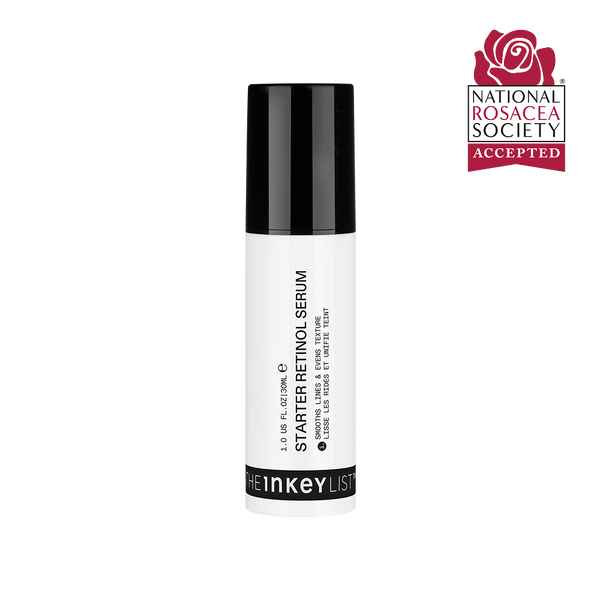
So where do our own products sit? Honestly, and deliberately, in the cosmetic tier. Our Starter Retinol Serum at $15.00 uses an encapsulated slow-release Dual-Retinoid Complex of 1% Granactive Pro+ and 0.01% Retinal. The encapsulation matters because it releases the actives gradually rather than all at once, which is how you get results without the disruption. It is clinically proven to smooth fine lines from 7 days without irritation, based on a 4-week clinical study with 30 participants, and 95% of participants experienced zero irritation or redness. It is 2x more effective than standard retinol in a 4-week in vitro study, and it is suitable for sensitive and rosacea-prone skin.
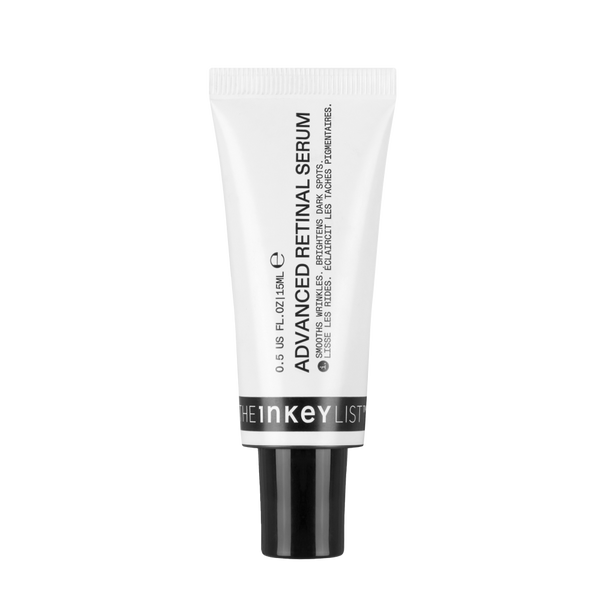
For people who have already built tolerance, our Advanced 0.2% Retinal Serum at $22.00 sits higher on the ladder. It contains 0.2% retinal, works 11x faster than standard retinol, and is formulated for confident, experienced retinoid users rather than beginners.
What neither of those products is, and what we are not going to pretend otherwise about, is a substitute for a prescription retinoid. Prescription retinoids are stronger. That is not a marketing inconvenience we need to talk around, it is simply how the ladder works. Our products are a different tier of the same family, built to be used consistently rather than endured. If you want to see the full span of what is available without a prescription, our retinol collectioncovers the range.
With the ladder established, we can tackle the comparison most people came here for.
Tretinoin vs Retinol: The Full Comparison
This is the comparison that generates more confusion than any other in skincare, so it gets the depth it deserves. Tretinoin and retinol are relatives, they end up doing the same job inside your skin cells, and yet the experience of using them is genuinely different. Here is everything that actually separates them.
Is tretinoin a retinol?
No. Tretinoin is not a retinol. Tretinoin is retinoic acid, the active form of vitamin A that your skin can use directly, with no conversion required. Retinol is a precursor that your skin has to convert into retinoic acid before it does anything. They are both retinoids, but they are different molecules at different points on the ladder.
People conflate the two constantly, partly because both get described as “vitamin A” and partly because the results they produce overlap. But the distinction is not academic. It determines how fast each one works, how much irritation to expect, and whether you can buy it at all.
How they work: the conversion step
Both molecules finish in the same place. Retinoic acid binds to retinoic acid receptors inside the nucleus of your skin cells, which are the docking points that vitamin A derivatives evolved to activate. Once bound, they signal the cell to change its behavior: to turn over more quickly, to shed built-up surface cells more readily, to produce more collagen, and to regulate oil production more evenly. That is the mechanism behind every benefit any retinoid claims.
The difference is the journey.
Retinol takes a two-step route. Applied to the skin, enzymes convert retinol into retinal. A second conversion turns retinal into retinoic acid. Each step loses a little potency along the way, which is why a given percentage of retinol is not equivalent to the same percentage of tretinoin. Nowhere close, in fact.
Tretinoin skips the journey entirely. It is retinoic acid on arrival. There is no conversion, no enzymatic bottleneck, no gradual ramp.
Here is the part that reframes how most people think about this. That conversion process is not a design flaw in retinol. It is a buffer. Your skin converts roughly as much as it can handle at a given moment, which naturally moderates the intensity. You get a controlled release of activity instead of a concentrated hit. With tretinoin, there is no buffer, because there is nothing left to convert. The full effect arrives immediately.
That is why tretinoin acts faster and more powerfully, and it is the same reason it is more likely to irritate. Speed and irritation are not two separate properties that happen to travel together. They are two consequences of the identical fact: no conversion step.
Results and how long they take
Both molecules are used for overlapping concerns: fine lines, uneven tone, rough texture, congestion and acne. Where they diverge is in intensity and timeline.
Cosmetic retinoids are a months-long commitment if you are measuring by visible change to fine lines and pigmentation. Texture and smoothness tend to improve first, often noticeably earlier than lines soften. Tone and marks generally take longest, because you are waiting on cell turnover to gradually replace pigmented cells. Anyone promising dramatic transformation in a fortnight from an over-the-counter retinol is selling you something.
Our own Starter Retinol Serum at $15.00 is clinically proven to smooth fine lines from 7 days without irritation, in a 4-week clinical study with 30 participants. That is an early smoothing result, and we are careful to describe it as exactly that rather than stretching it into a claim about deep wrinkles or pigmentation.
Prescription retinoids typically work faster, and tretinoin in particular has an unusually long clinical track record, having been prescribed by dermatologists since the 1960s. For acne specifically, tretinoin is a well established prescription treatment. We are not going to invent timelines for a medicine we do not make, though. If you want specifics on what tretinoin can do and how quickly, the American Academy of Dermatology is a better source than any brand, including us, and a doctor or dermatologist who can see your actual skin is better still.
One point worth holding onto: the research consistently shows that consistent use over time matters more than starting potency. A retinoid abandoned after three weeks delivers almost nothing regardless of how strong it was.
Side effects and what to expect
Every retinoid can cause dryness, flaking, sensitivity and redness, and the likelihood increases the higher up the ladder you go. This is normal, it is well documented, and it is not a sign that something has gone wrong.
With stronger retinoids, particularly prescription ones, there is an adjustment phase often called retinization. During this period skin frequently looks and feels worse before it looks better. Redness, visible peeling and a tight, sunburn-like sensitivity are all common. It can last a few weeks or stretch considerably longer depending on the person and the strength involved. It catches people off guard, because the products promising smoother skin are the same ones making their skin flake in week two.
Gentler cosmetic retinoids tend to produce a much milder version of this, and encapsulated slow-release formats are specifically designed to minimize it. In our Starter Retinol Serum’s 4-week clinical study, 95% of the 30 participants experienced zero irritation or redness. But “gentler” is not “guaranteed comfortable,” and individual skin varies.
A quick word on purging, which is the temporary flare some people experience when turnover accelerates. It is a real and separate phenomenon from irritation, and we cover it properly in our guide to skin purging.
Sun sensitivity deserves its own line, because it is the one people skip. Retinoids make skin more sensitive to UV. That is true across the entire family, cosmetic and prescription alike, and it is not optional advice. Daily broad-spectrum SPF is essential when you are using any retinoid, both to protect newly turned-over skin and to avoid undoing the improvements you are working for. Apply it every morning, regardless of season or weather, and reapply during extended time outdoors.
Whichever rung of the ladder you are on, patch test before you commit. It takes a couple of days and saves a great deal of regret, and our guide on why you need to do a patch test explains how.
Can you get tretinoin without a prescription?
No. Tretinoin is prescription-only in the US, and in the UK, and in most markets worldwide. There is no over-the-counter version, no cosmetic equivalent sold under a different name, and no legitimate route to it that does not involve a doctor or dermatologist.
If you think tretinoin might be right for your skin, that is a conversation with a doctor or dermatologist who can assess your skin, your history and your goals, then prescribe an appropriate strength. Tretinoin is typically dispensed in concentrations such as 0.025%, 0.05% and 0.1%, and the choice between them is a clinical decision, not a shopping one.
That covers the molecule most people have heard of. Now for the one most people are confused by.
Is Adapalene a Retinol? What Adapalene Actually Is
No, adapalene is not a retinol. Adapalene is a retinoid, specifically a synthetic third-generation retinoid, and it is a different molecule from retinol entirely. It arrives in an already active form, which means that unlike retinol it does not need to be converted by your skin before it starts working.
That single distinction explains most of what makes adapalene behave the way it does. But there is something more interesting going on underneath.
Adapalene was engineered in a laboratory rather than derived from the natural vitamin A pathway, and it was designed with a specific goal: to bind selectively to certain retinoid receptors in the skin rather than activating all of them indiscriminately. Think of it as a key cut for particular locks instead of a master key. The practical consequence is that adapalene is generally better tolerated than its position on the strength ladder would lead you to expect. It is chemically stable too, including in sunlight, which is unusual in this category.
It is prescribed and sold as an acne treatment, working by preventing the formation of the clogged pores that precede visible breakouts, while helping existing ones clear. You will most often encounter it under the brand name Differin, which is simply the brand under which adapalene is sold, mentioned here purely so you can connect the two names when you see them used interchangeably online.
Adapalene vs retinol
Adapalene is a medicine. Retinol is a cosmetic ingredient. That is the foundational difference, and everything else follows from it.
Adapalene is active on application, while retinol must be converted by your skin across two steps before anything happens. Adapalene is regulated as a drug, which means defined strengths, standardized formulations, clinical trial requirements and an official label with directions and warnings. Retinol is formulated as skincare, with the goal of gradual cosmetic improvement to tone, texture and the appearance of fine lines, and it appears across an enormous range of concentrations and delivery systems.
They also have different centers of gravity. Adapalene was developed specifically for acne. Retinol is used much more broadly, with anti-aging and general skin quality as its most common applications. There is genuine overlap, but they were built for different primary purposes.
Adapalene vs tretinoin
Both adapalene and tretinoin are prescription-strength retinoids in most contexts, and both are already active, so neither requires conversion. The differences lie in receptor selectivity and tolerability.
Tretinoin is retinoic acid itself and activates retinoid receptors broadly. Adapalene binds more selectively. In clinical practice adapalene is generally considered the more tolerable of the two, while tretinoin is generally considered the stronger. Neither is universally superior, and which one suits a particular person depends on their skin, their concern, their history and their tolerance. That is a decision for a doctor or dermatologist, not an article.
Working out what your skin actually needs before you reach for any of this is worth the effort, and our complete skincare concerns guide is a good place to start that process.
Can you buy adapalene over the counter in the US?
Yes, and this is where the US differs from much of the world. Adapalene 0.1% gel is available over the counter in the US without a prescription, for the treatment of acne in adults and children 12 years of age and older. This followed a full prescription-to-nonprescription switch approved by the FDA, and adapalene appears on the FDA’s Prescription to Nonprescription Switch List. The switch was approved in 2016, moving the full prescription-strength 0.1% gel to over-the-counter status.
It is worth being precise about what did and did not change. The 0.1% gel is the strength that switched. Higher strengths such as adapalene 0.3%, and combination products that pair adapalene with other active ingredients, remain prescription-only in the US. The official DailyMed label for Differin adapalene gel sets out the over-the-counter directions, the 12 and over age range, and the warnings that come with it.
If you are considering adapalene, read the label and follow it, and speak to a doctor or dermatologist if you are unsure whether it suits your skin or how it fits alongside anything else you are using. Over the counter does not mean inconsequential. It is still a medicine, and it still behaves like one.
Having placed every molecule on the ladder, the practical question is what you can actually get hold of.
Prescription vs Non-Prescription Retinoids: What You Can Actually Buy
Access is where the theory becomes practical, and in the US the picture has a genuine nuance that catches people out. Here is the situation set out plainly.
Available without a prescription in the US:
- Retinyl esters. Cosmetic ingredients, regulated as cosmetics, freely available.
- Retinol. Cosmetic, no prescription needed, available in an enormous range of strengths and formats.
- Retinal. Also cosmetic and freely available, sitting higher on the ladder than retinol.
- Adapalene 0.1% gel. A medicine, but available over the counter for ages 12 and up following the FDA switch.
Requires a prescription in the US:
- Tretinoin, in every strength and formulation.
- Adapalene 0.3%, and adapalene combination products that pair it with other actives.
The reason this varies between countries is straightforward once you know it. Medicines regulators in each market make their own independent assessments about which products are safe to sell without professional supervision. The US regulator concluded that adapalene 0.1% gel met that bar and moved it over the counter. Other markets, including the UK, have not made the same switch, which is why adapalene remains prescription-only there. If you read international skincare content, that mismatch explains a lot of contradictory advice.
Practically, this leaves you with two clear routes. If you want a prescription retinoid, the route is a conversation with a doctor or dermatologist who can assess whether it is appropriate and prescribe the right strength. If you want to start with a cosmetic retinoid tonight, without an appointment, that is exactly what retinol and retinal exist for. Knowing your skin type before you choose a strength makes that second route considerably smoother.
Pregnancy and breastfeeding. Retinoids should not be used during pregnancy or breastfeeding. That applies across the whole family, including cosmetic retinol and retinal as well as prescription retinoids such as tretinoin and adapalene. If you are pregnant, breastfeeding or planning a pregnancy, speak to your doctor about your skincare routine and about suitable alternatives. This is standard guidance rather than cause for alarm, and there are plenty of effective ingredients that are appropriate during this period.
We will say this once more, because it is the position that shapes everything we make. We are not going to tell you our retinol is the same as a prescription. It is not. It is a different tier of the same family, formulated to be used consistently over months and years without disrupting your life, which is a genuinely different design goal from a medicine prescribed to treat a condition under supervision.
For most people starting out in the non-prescription tier, our Starter Retinol Serum at $15.00 is the entry point we would point you to, advised from age 25 onwards and designed for use two to three nights a week to begin with.
Knowing what is available is one thing. Choosing between the options is another.
Which Retinoid Is Right for Your Skin?
There is no universally correct retinoid, only the one that fits your skin, your concern and your tolerance. Here is a framework for narrowing it down, working at the level of molecules and tiers rather than specific bottles.
Start at the bottom of the ladder. This is the single most useful principle in the whole category. Most people do far better beginning with a gentle, slow-release cosmetic retinoid and building tolerance gradually than they do starting strong and quitting six weeks later because their skin is in revolt. Starting low is not a compromise or a beginner’s consolation prize. It is the approach most likely to get you to a result.
Consistency beats strength, every time. A retinoid used three nights a week for six months will do considerably more for your skin than a stronger one abandoned after a fortnight. Retinoids reward accumulation. The cellular changes that produce visible improvement build slowly and depend on repeated exposure, which means the product you will realistically keep using is almost always the right product.
Match the molecule to the concern. Fine lines, uneven tone and rough texture are well served by cosmetic retinoids used consistently. Persistent acne that is not responding to over-the-counter options is a different situation, and at that point the most useful next step is a conversation with a doctor or dermatologist rather than another purchase. Knowing when to stop shopping and start asking is genuinely valuable.
Be realistic about your tolerance. If your skin is sensitive or reactive, if you have rosacea, or if your barrier is currently compromised from over-exfoliation or a harsh winter, start lower and move slower than you think you need to. Skin that is already struggling does not need a stronger active on top of it.
Support the barrier alongside it. Retinoids work better when skin is not compromised, and a well-supported barrier tolerates actives far more comfortably. Our Bio-Active Ceramide Moisturizer at $22.00 is a straightforward way to do that, and niacinamide is worth knowing about for barrier support and oil balance more generally.
Know the alternatives. A retinoid is not the only route to every concern. If redness and uneven tone are your main issues, azelaic acid is worth understanding. For dark marks and hyperpigmentation there are several approaches, and vitamin C is the usual starting point for brightening. Retinoids are excellent, but they are not obligatory.
How to start a retinoid safely
The basics are simple and they matter more than any product choice.
- Use it at night only. Retinoids belong in your PM routine.
- Start with two to three nights a week, on non-consecutive nights, and build up only as your skin tolerates it.
- A pea-sized amount covers your whole face. More product does not mean faster results, it means more irritation.
- Apply to clean, dry skin. Damp skin increases penetration and, with it, the chance of irritation.
- Moisturize afterwards. Supporting the barrier while you introduce an active is not optional.
- Wear SPF every single morning. Retinoids increase UV sensitivity, and sun exposure works directly against what you are trying to achieve.
Patch test before your first full application, as covered in our guide to patch testing.
Two quick pointers rather than detours. If you are wondering what you can and cannot layer with a retinoid, we cover that fully in what not to mix with retinol. And the vitamin C question specifically, which comes up constantly, is answered in can you use vitamin C and retinol together. For where a retinoid fits into the bigger picture, our skincare routine guide has the full build.
The Retinoid Family, Summarized
The confusion around retinol, tretinoin and adapalene disappears once you stop treating them as rivals and start seeing them as relatives. Retinoid is the family name. Retinyl esters, retinol and retinal are the cosmetic members you can buy off the shelf and use tonight. Adapalene and tretinoin are the pharmaceutical members, developed and regulated as medicines.
Tretinoin and retinol differ in one decisive way: tretinoin is retinoic acid already, while retinol has to be converted by your skin first. That conversion is what makes retinol gentler, slower and easier to live with, and its absence is what makes tretinoin faster, stronger and more demanding.
On access in the US, the picture is clear. Adapalene 0.1% gel is available over the counter for ages 12 and up. Tretinoin requires a prescription from a doctor or dermatologist, in every strength.
And the position we will keep returning to, because we think it is the most useful thing anyone can tell you about this category: stronger is not automatically better. The ladder is real, but climbing it fast is not the goal. The best retinoid is the one you can use consistently, week after week, without your skin protesting loudly enough to make you stop.
If you are ready to step onto the ladder, our Starter Retinol Serum at $15.00 is where we would begin, with its encapsulated slow-release Dual-Retinoid Complex designed to deliver results without the drama. Already confident with retinoids? Our Advanced 0.2% Retinal Serum at $22.00 sits a rung higher. Browse the full retinol collection, with free US shipping on orders over $40.
Because at The INKEY List, We Give A Care.
Frequently Asked Questions
Got a question?
Our askINKEY team are a friendly bunch of skincare experts with deep product knowledge and zero judgement. Whether you're an ingredient obsessive or just starting out, we'll make it make sense. No question too big. No question too small. We Give A Care, Every Day.


