

Does Retinol Expire? Storage and Shelf Life Explained
Retinol does expire, but it usually loses strength rather than becoming unsafe. Here's how long yours lasts, why there may be no date on the bottle, and how to store it.
Author
askINKEY skincare advisor
Published
12 September, 2026
Time to read
13 minutes
Yes, retinol does expire, and it is one of the less stable actives you can keep in a skincare routine. If you have been wondering “does retinol expire” because the bottle at the back of your drawer looks a little different from the day you bought it, the honest answer is that retinol degrades over time and gradually loses strength. The reassuring part, and the part most articles skip, is that in the vast majority of cases the issue is lost potency rather than a safety problem. Your retinol is more likely to be doing less than it is to be doing harm.
That distinction matters, because it changes what you should actually do next. It also explains why two people can own the same product, bought on the same day, and end up with very different results six months later.
Here is what this article covers:
- How long retinol lasts, both unopened and once you have opened it
- Where to find expiry information on the packaging, and why your product may carry no date at all
- How to tell if your retinol has degraded
- Whether expired retinol is unsafe or simply weaker
- How to store retinol so it holds its strength for longer
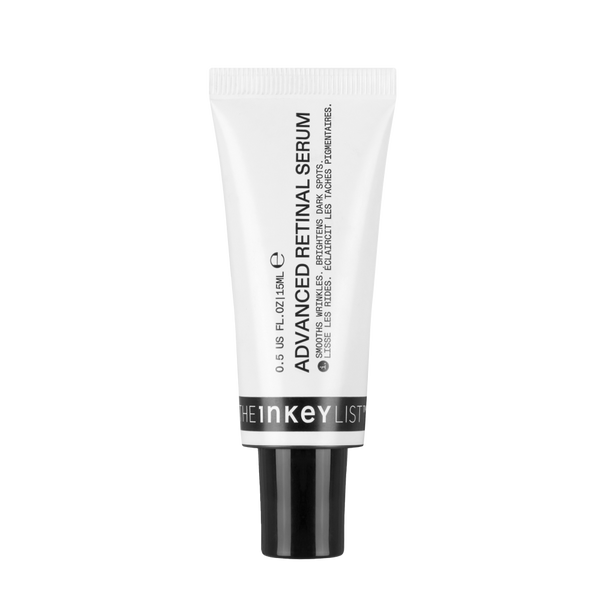
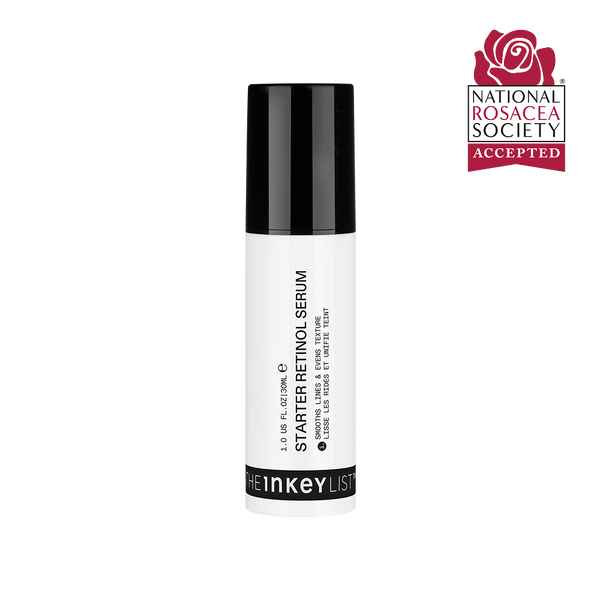
If your current bottle has clearly seen better days, you can browse our full retinol range and start fresh. Our Starter Retinol Serum ($15) is the accessible entry point, and our Advanced 0.2% Retinal Serum ($22) is the step up for anyone already comfortable with a retinol step. For the wider picture on how to use retinol well, our retinol guide is the place to start.
Does retinol expire? The short answer
Yes. Retinol degrades over time and loses potency as it does. That is the complete answer, and everything below is detail and nuance layered on top of it.
The single most important thing to understand is this: expired retinol usually becomes less effective, not unsafe. A retinol that has sat in a warm, bright bathroom for a year has not turned into a hazard. It has turned into a weaker version of itself, and quite possibly a much weaker one.
So when does retinol expire, in practical terms? Where your packaging shows a period after opening figure, use it. For a retinol, that figure is commonly somewhere around 6 to 12 months once opened. If your product does not show one, and many products sold in the US do not show any date information at all, the packaging section further down explains exactly what to look for instead. Do not assume a missing date means something is wrong with your product.
The complication, and the reason “can retinol expire” is a harder question than it first appears, is that the rate of decline varies enormously. It depends on how the formula was built, what it was packaged in, and where you have kept it. This is not a small variation.
Research on commercial retinoid products found retinoid content declined anywhere from 0% to 80% after six months at room temperature.
Read that again, because it is the most useful fact in this entire article. Some products in that stability research held essentially all of their retinoid content across six months. Others lost four fifths of it. Same category, same six months, wildly different outcomes. A bottle of retinol is not a fixed quantity of active sitting patiently on your shelf. It is a formula in slow motion, and the speed of that motion is partly in your hands.
That range is why generic advice about retinol shelf life only gets you so far, and why understanding what actually degrades retinol is worth five minutes of your time.
Why retinol is more fragile than most skincare actives
Retinol is not difficult by accident. Vitamin A derivatives are chemically sensitive in ways that most skincare ingredients simply are not, and formulators have been working around that reality for decades.
According to the SCCS Opinion on Vitamin A, retinol is sensitive to four things in particular:
- Oxygen, which reaches the formula every time the container is opened
- Heat, which accelerates the rate of chemical change
- Light, which drives degradation directly
- Trace metals, which can catalyze breakdown within the formula itself
That is a demanding list. Plenty of skincare ingredients are indifferent to two or three of those. Retinol is vulnerable to all four at once, which is why it sits in a different stability category from most of what is in your bathroom cabinet. This is a vitamin A problem specifically, not a general skincare problem. If you want the broader picture across every product type you own, our full guide to skincare expiry dates, shelf life and storage covers the wider territory. What follows here is retinol specific.
Light does more damage than heat, which surprises almost everyone
Here is the finding that should change how you store your retinol tonight. In the degradation kinetics research, light degradation was more pronounced than heat degradation. Not equal to it. More pronounced than it.
Most people have internalized the opposite. We worry about the steamy bathroom, the hot car, the radiator. We think far less about the clear bottle sitting on a windowsill catching afternoon sun, or the open shelf beside a bright window that feels perfectly cool to the touch. That shelf is arguably doing more damage than the warmth ever was, and it is doing it silently.
The same research found that decline followed first-order kinetics, which in plain English means the degradation is steady and predictable in its pattern rather than sudden. Your retinol does not fall off a cliff on a particular date. It tapers, continuously, from the moment conditions start working against it.
Not all vitamin A behaves the same way
The form of vitamin A in your product matters too. The SCCS opinion notes that retinyl esters are somewhat more stable than pure retinol, and the stability research found that newer derivatives performed better in testing than older ones.
This is where the difference between forms becomes genuinely practical rather than academic. A slow release retinyl ester and a pure retinol are not interchangeable in terms of how they hold up over time, even at comparable strengths. If you are unsure what you own or what would suit you better, retinol vs retinal breaks down how the forms differ, and what percentage retinol should I use covers how strength fits into the picture.
Why your retinol comes in the packaging it does
Once you know that retinol is vulnerable to oxygen, heat, light and trace metals, the packaging stops looking like a design choice and starts looking like a functional one. The SCCS opinion specifically notes that opaque packaging and air-excluding or airless designs help preserve stability, as does cool storage.
That is why you see retinol in tinted or opaque bottles, in airless pumps, in tubes that do not let light through. A formulator choosing an opaque airless container over clear glass is not making an aesthetic decision. They are buying the formula time.
Understanding what degrades retinol is genuinely useful, but only if it translates into timelines you can actually work with. So how long does retinol last in practice?
How long does retinol last, unopened vs opened
The opened versus unopened distinction is the one most people get wrong, usually by assuming an unopened product is frozen in time. It is not.
Unopened. Does retinol expire if unopened? Yes, though more slowly. The seal limits oxygen exposure, which removes one of the four pressures on the formula, and that genuinely helps. But it removes only one. Heat and light still reach a sealed bottle perfectly well, and light is the one that does the most damage. An unopened retinol stored somewhere warm and bright will lose potency while it sits there looking untouched.
If you need to know how old an unopened product actually is, go by the period after opening figure where one is shown. Where there is nothing printed, your best route is to contact the brand’s customer care team with the batch code from the base of the bottle. They can usually trace a manufacturing date from it.
Opened. Once the seal is broken, the period after opening figure becomes your practical guide, commonly around 6 to 12 months for a retinol. The critical detail, and the one people routinely miss, is that the clock starts at first opening, not at purchase. A product you bought eighteen months ago but only opened last month is a one month old product by that measure.
Why the two differ comes down to something very simple: once opened, oxygen reaches the formula every single time you use it. Every press of the pump, every unscrewed cap, every dropper drawn and replaced introduces a little more air. An unopened bottle is fighting on three fronts. An opened one is fighting on four.
The research puts hard numbers on how much your conditions matter. At room temperature over six months, retinoid decline ranged from 0% to 80%. At 40C over the same six months, decline ranged from 40% to 100%. For a US reader, 40C is roughly 104F, which is genuinely achievable inside a parked car in July, in an attic, or on a shelf directly above a shower in a small bathroom that runs hot twice a day.
Look at what happens at the bottom of those ranges. At room temperature, the best performing products lost nothing at all. At 104F, the best performing products still lost 40%. Heat does not just shift the average. It removes the possibility of a good outcome entirely.
The practical takeaway is uncomfortable but worth hearing. A retinol bought, half used and forgotten in a drawer for two years is very likely weaker than its label suggests, even if it was never opened at all. Retinol shelf life is not a countdown to a cliff edge. It is a slow erosion, and two years is a long time for erosion.
If that describes your current bottle, it may be time to restart with something fresh from our full retinol range. And if it has been a while since you used retinol consistently, retinol for beginners is worth a read before you pick up where you left off.
Timelines are only useful if you can find the relevant date on the packaging, which is exactly where readers in the US run into a surprise.
How to find the expiry information on your retinol
If you have turned your retinol over three times looking for an expiration date and found nothing, your product is not faulty and you are not missing something obvious.
The FDA does not require expiration dates on cosmetics. US law places no general requirement on cosmetic labels to carry one. According to FDA guidance on shelf life and expiration dating of cosmetics, there is no regulation compelling a cosmetic product to print an expiration date, full stop. For most people this lands as genuinely new information, because food labeling has trained us to expect a date on everything.
This is not a gap in oversight. Responsibility sits with the manufacturer. The FDA is clear that manufacturers are responsible for substantiating the shelf life of their products and for ensuring those products are safe, which includes carrying out appropriate stability testing. The work happens before the product reaches you, rather than being printed on the carton for you to police.
There is one exception that matters for a skincare audience. Products regulated as drugs rather than cosmetics arerequired to carry expiration dating. That category includes sunscreens and certain acne treatments. So if you are standing in front of your bathroom shelf wondering why one product has a clear date and another has nothing, that is usually why. A retinol serum is a cosmetic. Some of what sits beside it may not be.
What to look for instead
With no date required, three things become your practical reference points:
- The Period After Opening symbol. Look for a small illustration of an open jar with its lid lifted off to one side, with a number and the letter M printed inside or beside it, such as 6M or 12M. That number is how many months the product is expected to remain in good condition after you first open it. It is voluntary in the US, but you will see it frequently, particularly from brands that also sell internationally where it is required.
- The batch or lot code. A printed or stamped alphanumeric code, usually on the base of the bottle or along the crimped seal at the end of a tube. It is a manufacturing identifier rather than a date, so you cannot decode it yourself, but brands can trace a production date from it. Quote it when you contact a customer care team and you will usually get a straight answer.
- A voluntarily printed date. Some brands choose to include one even though nothing requires it. If yours has one, use it.
For retinol specifically, one caveat is worth stating plainly. A period after opening figure assumes sensible storage. It is a guide, not a guarantee. A retinol kept in a cool dark drawer has a good chance of honoring its 12M. The same product on a sunny windowsill will not come close, and no symbol printed on a carton can account for where you chose to put it.
If you enjoy decoding packaging, how to read an INCI list is a natural companion while you have the bottle in your hand. And for how dates, symbols and shelf life work across every product in your routine rather than just this one, our full guide to skincare expiry dates, shelf life and storage is the broader reference.
The FDA offers one more piece of consumer guidance that leads neatly into the next question: judge product age by changes in smell, color and texture, and remember that storage conditions affect how long a product lasts.
How to tell if your retinol has gone bad
Since US cosmetics often carry no date, using your own senses is not a workaround. It is precisely what the FDA advises consumers to do. Here is what to check.
Texture. Look for separation, where the formula has split into distinct layers that do not recombine with a shake. Also watch for thickening, thinning, or a slightly grainy quality that was not there when the product was new. A serum that once poured smoothly and now feels tacky or uneven has changed.
Smell. This is one of the more reliable signals. Most retinol serums are close to neutral or carry a faint characteristic scent. A rancid, sharp or distinctly sour note where there was previously nothing much is a meaningful change. Your nose is better at detecting this than you might expect, because it is tuned to notice exactly this kind of shift.
Color. Retinol can deepen from a pale ivory toward yellow over time. A slight yellow tint is not automatically a sign that the product is finished, and plenty of perfectly usable retinol serums carry a gentle warm cast from the start. What is more telling is a marked darkening that appears alongside other changes in texture or smell. If you want the full explanation of what the color shift actually means, why is retinol yellow covers it properly.
Now for the part that most articles on this subject leave out, and it is the most important thing in this section.
Retinol can lose a significant share of its potency with no visible change at all.
Texture, smell and color catch the obvious cases. They do not catch the quiet ones. A serum can sit at half its original strength and look, feel and smell exactly as it did on day one. Your senses are a useful screen for products that have clearly gone, but they are not a potency test. The date information your packaging carries and your honest memory of how it has been stored are the more reliable guides.
Packaging is a signal worth reading too. A clear glass dropper bottle that has lived on an open shelf has had far more light and air exposure than an opaque airless pump kept in a drawer. As the SCCS Opinion on Vitamin A notes, opaque and air-excluding containers help preserve stability. If your product is in clear packaging and has lived in the light, treat its age more conservatively than the calendar suggests.
Which raises the question everyone actually wants answered: if your retinol is past its best, is using it genuinely a problem?
Is it bad to use expired retinol?
For most people, the realistic outcome of using expired retinol is reduced results, not harm.
Degraded retinol has less active ingredient in it than it started with, so it does less. That is the mechanism, and it is not more dramatic than that. If you are asking “can you use expired retinol” because you are worried about a reaction, the evidence does not support that level of concern for a product that has simply aged.
So does expired retinol still work? Partially, and unpredictably. That second word is the one that matters. Given that retinoid content declined anywhere from 0% to 80% over six months at room temperature, you genuinely cannot know what strength you are applying. Two bottles of the same product, the same age, stored differently, are effectively two different products. One might be close to full strength. The other might be a hydrating serum with a rumor of retinol in it.
A degraded retinol is not so much unsafe as unreliable.
This causes a practical frustration that is worth naming, because a lot of people are quietly living inside it. Someone works their way up to using retinol consistently, sticks with it for months, sees very little change, and concludes that retinol just does not work for their skin. Sometimes that is true. But sometimes the product had lost most of its potency before they ever applied it, and they were faithfully using something that had very little left to give. If retinol seemed to stop delivering for you, the product is worth suspecting before your skin is.
On irritation, it is worth staying measured. There is no good evidence that a degraded retinol becomes more aggressive as it ages. If your skin is reacting, the more likely explanations are frequency, strength, or what else is in your routine, and what not to mix with retinol is a better place to start troubleshooting than the expiration question.
That said, there is a sensible line. If a product smells off, has visibly separated, or has been open for a long time, stop using it. Not because it is dangerous, but because you cannot rely on what is in it, and an unreliable active is a poor foundation for a routine you are putting real effort into.
Worth a brief mention on hygiene: any product that has been open a long time, particularly one in a jar or with a dropper that touches the skin, has had more opportunity for contamination than a sealed pump. This is not a reason for alarm, just a reason not to keep a half used serum indefinitely on the assumption that nothing changes.
If you are recalibrating what to expect from your routine, our retinol guide sets out what retinol realistically does and over what timeframe, which makes it much easier to tell a product problem from a patience problem.
If unpredictability is the real issue, then good storage is the fix.
How to store retinol so it lasts
Storage advice for retinol is often presented as a random list of tips. It is more useful in the order the evidence actually supports: light first, then heat, then air.
Light first. This is the one to change today. The research found light degradation more pronounced than heat degradation, so keep your retinol out of direct sunlight and off windowsills entirely. A closed drawer or a cabinet with a door beats an open shelf every time, even a cool one. If your retinol currently lives somewhere you can see it from across the room, it is living somewhere light can see it too.
Then heat. Avoid storing retinol on or near a radiator, above a heating vent, or in the hottest corner of a bathroom that runs steamy twice a day. The data makes the case without needing embellishment: at 40C, roughly 104F, decline ranged from 40% to 100% over six months. A shelf directly above a shower is not a neutral location.
Then air. Close the cap fully every single time, and press pumps down completely. As the SCCS Opinion on Vitamin A sets out, opaque, air-excluding and airless designs protect the formula better than a clear dropper bottle, which is exactly why thoughtful formulators choose them. Work with the packaging rather than against it.
On the fridge. Cool storage can help slow degradation, but the fridge is not essential for retinol as long as it is kept somewhere dark and reasonably cool. If you want the full argument about which products actually benefit from refrigeration, should you keep your caffeine eye cream in the fridge covers that question properly.
Two more small things. Keep the product in its outer box if the box is opaque. It costs nothing, takes no effort, and adds a genuine layer of light protection to packaging that might otherwise be translucent. And remember that retinol is a PM step, which conveniently means it spends its working life away from daylight anyway. Put it back in the drawer when you are done rather than leaving it out on the counter until morning.
Different actives have different storage needs, and vitamin C in particular has its own quirks. If that is also in your routine, how to store vitamin C serum is the dedicated guide. For everything else in your cabinet, our full guide to skincare expiry dates, shelf life and storage covers the general rules.
Good storage protects your next bottle. Which leaves the question of what to do with the current one.
What to do if your retinol has expired
Replace it. There is no way to restore degraded retinol, no trick that brings the potency back, and continuing with an unpredictable product quietly wastes the consistency you are putting into your routine. Retinol asks for patience over weeks and months. That is a fair deal only if the product is actually delivering something.
Dispose of the old one with your household waste and recycle the packaging where your local facilities accept it. Bottles, cartons and pumps vary in what can be processed, so check locally rather than assuming.
It is worth treating a replacement as a chance to reassess rather than an automatic repurchase. Has your skin changed since you bought the last one? Was the strength you were using actually right, or were you pushing through irritation you did not need to tolerate? Are you restarting after a long gap? What percentage retinol should I use is a useful checkpoint if the honest answer is that you are not sure.
If you are beginning or coming back after a break, our Starter Retinol Serum ($15) is built for exactly that moment. It uses 1% retinyl acetate as a slow release retinol, paired with squalane to hydrate and soothe, which makes it a gentler way into a retinol step while still helping to reduce the appearance of fine lines over time. For anyone already comfortable with retinol and ready for more, our Advanced 0.2% Retinal Serum ($22) is the step up, helping to smooth the look of uneven texture.
Retinol works better alongside a supported barrier, so if you would rather pick up the moisturizer at the same time, our Beginners Retinol Duo ($30) pairs the two. Our Bio-Active Ceramide Moisturizer ($22) also works well layered over a retinol step on its own. If you would prefer a full routine rather than individual steps, our intro routine for anti-agingand our anti-aging retinal routine are built as complete sets, and you can browse everything in our anti-aging collectionor our retinol range.
One last thing if you are restarting after a gap. Do not resume at the frequency you finished on. Your skin’s tolerance is not where you left it, and a fresh product at full potency is a meaningfully different experience from the degraded one you were finishing. Build back up gradually, as covered in retinol for beginners.
For more on getting the most from a retinol step, our retinol guide covers usage and expectations, and our full guide to skincare expiry dates, shelf life and storage covers shelf life across your whole routine.
The takeaway on retinol shelf life
So, does retinol expire? Yes, and it is more sensitive than most actives you will own, thanks to that combination of oxygen, heat, light and trace metals working against it. But the usual consequence is a weaker product rather than an unsafe one, and that is worth holding onto if you have spent the last ten minutes worrying about the bottle in your hand.
Three things matter most. Find out what date information your packaging does carry, whether that is a period after opening symbol, a batch code you can quote to a customer care team, or nothing at all. Store it away from light first and heat second. And replace it when you are genuinely unsure, because an unreliable active is not worth the months of consistency you are giving it.
Clear guidance, proven ingredients, real results. That includes being straight with you about when a product has had its day.
If yours is past its best, our retinol range is the place to start again, and our Starter Retinol Serum ($15) is a straightforward entry point whether you are new to retinol or picking it back up. If you are rebuilding a routine from scratch, our retinol guide will help you get the order and the frequency right.
Frequently Asked Questions
Got a question?
Our askINKEY team are a friendly bunch of skincare experts with deep product knowledge and zero judgement. Whether you're an ingredient obsessive or just starting out, we'll make it make sense. No question too big. No question too small. We Give A Care, Every Day.


