


How to Store Vitamin C Serum (And Why It Turns Yellow)
Learn how to store your Vitamin C serum correctly to maximise its potency, prevent oxidation and keep it working effectively for longer with simple storage tips.
Author
askINKEY skincare advisor
Published
08 July, 2026
Time to read
10 minutes
You pull your vitamin C serum out of the cabinet and notice it looks different. It was almost clear when you first opened it. Now it has a distinct orange tint, maybe even pushing toward amber. The question that follows is immediate: is it still safe to use, or has it gone bad?
It is a common scenario, and the answer is not as simple as the color change suggests. This blog covers the full picture: why vitamin C serums oxidize and change color in the first place, how to read that color change and what it tells you about the formula’s remaining potency, how long vitamin C serums last, and how to store vitamin C serum properly so it stays effective for as long as possible.
It is also worth knowing upfront that not all vitamin C serums are created equal when it comes to stability. There is a meaningful difference between formulas built on L-ascorbic acid, the most biologically active but most unstable form of vitamin C, and those that use more stable vitamin C derivatives. Understanding that distinction changes the storage conversation entirely. If you want to explore the ingredient in depth before diving in, our vitamin C ingredient page is a good place to start. Or, if you’re already looking for a more stable daily option, take a look at the 15% Vitamin C + EGF Serum ($20).
Why Vitamin C Serum Turns Yellow: The Science of Oxidation
The color change in your vitamin C serum is not a mystery. It is a predictable chemical reaction, and understanding it takes most of the anxiety out of the situation.
Vitamin C serums - particularly those formulated with L-ascorbic acid (LAA) - are inherently reactive compounds. L-ascorbic acid is a water-soluble antioxidant, which means its entire function is to donate electrons and neutralize free radicals. That same reactivity that makes it effective on skin also makes it vulnerable outside of it. When LAA is exposed to oxygen, UV light, or heat, it undergoes oxidation, a process in which it loses electrons and converts to a compound called dehydroascorbic acid, or DHAA.
This is precisely where the color change comes from. As published dermatology research in the Indian Dermatology Online Journal via PMC/NIH explains, the serum form of vitamin C contains active vitamin C in an almost colorless form, but on exposure to light, it gets oxidized to dehydroascorbic acid, which imparts a yellow color. In other words, the yellowing you are seeing is not a manufacturing defect or a storage mistake you already made. It is the physical evidence of oxidation in progress.
The color spectrum of vitamin C serum oxidation follows a clear and predictable path. A fresh serum will be clear or carry only the faintest pale yellow tint, which for some formulas is entirely normal from the first use and is simply a characteristic of the ingredients themselves, not a sign that anything has gone wrong. From there, as oxidation begins to take hold, the serum will shift into a light yellow, then a deeper, more saturated yellow. As degradation continues, that yellow moves into amber, then orange, and finally into brown. The further along the spectrum, the more the serum has degraded.
What matters most here is the direction and speed of the change. A serum that starts pale yellow and stays that way for weeks is behaving well. A serum that was clear when first opened and has turned orange within a month is telling you something important: either the formula is inherently unstable, or the storage conditions are accelerating the breakdown.
The primary triggers of vitamin C serum oxidation are three things: air (oxygen), UV light, and heat. Oxygen initiates and sustains the oxidation reaction every time you open the bottle. UV light, even ambient indoor light, degrades L-ascorbic acid because the molecule is photosensitive by nature. Heat accelerates the rate of chemical reactions, including the conversion of LAA to DHAA. This is why where and how you store your serum matters just as much as which serum you buy. For a deeper look at what vitamin C does in the skin and why it has become such a central ingredient in brightening routines, the vitamin C ingredient page covers the background in full.
As the oxidation progresses, the serum is not just changing color. It is losing its antioxidant capacity and its ability to deliver the brightening and photoprotective benefits it was formulated for. The deeper the color shift, the less functional the vitamin C remaining in the bottle. With that in mind, the next question most people have is a practical one: does an oxidized serum actually cause harm?
Is an Oxidized Vitamin C Serum Still Safe to Use?
When a vitamin C serum changes color, the concern that follows is usually safety-related. The reassuring answer is that an oxidized vitamin C serum is generally not dangerous to apply to skin. The more important issue is not whether it will cause harm, but whether it will do anything useful at all.
A light yellow tint is not automatically cause for concern. For many vitamin C formulas, particularly those using stable derivatives rather than pure L-ascorbic acid, a slight yellow tint is a natural characteristic of the formula from day one. It comes from the nature of the ingredients rather than from degradation. When a serum starts slightly yellow and remains that color throughout its life, that is a formula behaving as expected. It is the shift from baseline - the movement from clear to yellow, or from pale yellow to amber - that signals oxidation has progressed to a point where efficacy is being affected.
The distinction matters. A serum that begins slightly tinted has not necessarily degraded. A serum that has changed from its original state has. Once color change begins, it signals that the antioxidant potency of the formula is reducing. The serum is still converting to DHAA, still present in the bottle, but DHAA does not carry the same brightening, collagen-supporting, or photoprotective benefits that active vitamin C provides.
When the color has moved into orange or brown, the serum has degraded significantly. At this stage, meaningful results from continued use are unlikely. The serum will not deliver the brightening or antioxidant protection you are looking for, and it makes practical sense to replace it. Applying a heavily oxidized serum is not dangerous, but it is not doing much either, and continuing to use it while expecting results is where the real frustration sets in.
It is also worth noting that some serums may look fine visually while still having lost potency. If you have been storing a formula in warm or light-exposed conditions, the invisible degradation may have already occurred before the obvious color shift appears. This is part of why storage habits matter from day one, not just once you notice something has changed.
If you want broader context on when to assess and replace skincare products across your routine, the guide to skincare expiry and shelf life covers the full landscape. And for readers who want to understand more about how the vitamin C molecule behaves, the vitamin C ingredient page provides that deeper layer of context.
From understanding whether a changed serum is still worth using, it follows naturally to ask: how long should a vitamin C serum last in the first place, and when should you expect to replace it?
How Long Does Vitamin C Serum Last: Shelf Life and Expiry
Understanding how long vitamin C serum lasts - and how quickly it can degrade - gives you a much clearer picture of how to manage it as part of your routine. The short answer is that it depends heavily on the form of vitamin C in the formula and the conditions it has been stored in. But there are useful general benchmarks that apply across most products.
An unopened vitamin C serum, sealed and stored correctly, will typically remain stable for one to two years from its date of manufacture. This window varies depending on the formula, the preservative system, and the packaging, but it gives a reasonable general expectation for a product you buy and put aside. Once opened, the clock starts in a more serious way, and L-ascorbic acid serums in particular tend to degrade noticeably within three to six months, and sometimes faster if they are exposed to air, light, or heat frequently.
The Period After Opening symbol, commonly referred to as the PAO, is the most practical guide to how long a specific product is intended to remain effective after first use. You will find it on almost every skincare product, printed either on the box or directly on the packaging. It looks like a small open jar icon, with a number followed by the letter M inside or beside it. That number indicates the number of months after opening during which the product is considered effective. A symbol reading 6M means the formula is designed to remain effective for six months after the first time you open it. Twelve months reads as 12M, and so on. Paying attention to this symbol and noting the date you open a new product takes the guesswork out of knowing when to replace it.
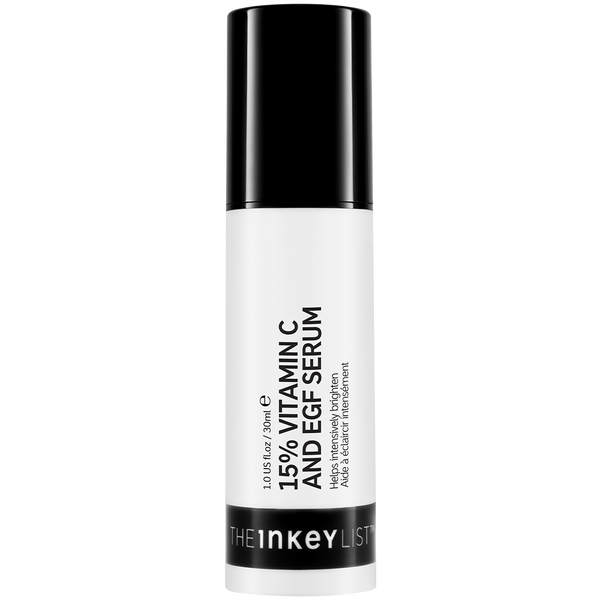
The form of vitamin C in the formula significantly affects how quickly the PAO becomes relevant. Does vitamin C serum expire faster depending on the type used? Yes, it does. L-ascorbic acid formulas are the most sensitive and tend to have shorter effective windows once opened. More stable derivatives, such as ascorbyl glucoside, are chemically structured to resist oxidation more effectively and tend to maintain their integrity for longer when stored correctly. This is one of the meaningful reasons to consider the formulation type when choosing a serum, not just the concentration. The 15% Vitamin C + EGF Serum ($20) uses ascorbyl glucoside precisely because of this stability advantage, which gives it a longer reliable window than most L-ascorbic acid alternatives.
Packaging also plays a more significant role in vitamin C serum shelf life than many people realize. Serums housed in opaque or dark glass bottles block light from reaching the formula. Pump dispensers, as opposed to open droppers, reduce the amount of air that enters the bottle with each use. These design choices are not just aesthetic. They are functional decisions that directly affect how quickly the vitamin C inside will oxidize. A serum in a clear glass bottle with a dropper cap is more vulnerable to light and air exposure with every single application than one in a pump-top, opaque container.
There are also early signs that a serum is approaching the end of its useful life before any dramatic color change is visible. A subtle shift in texture - the formula feeling slightly thicker or stickier than when it was new - can indicate that the chemistry is changing. A slightly different smell, even a faint one, is worth noting. These are early signals, not definitive proof, but combined with knowledge of how long you have had the product open, they provide useful data. For more detail on managing expiry across your skincare shelf, the skincare expiry and shelf life guide is a natural next read.
Armed with a clear picture of how long vitamin C serum typically lasts, the logical next step is understanding exactly what you can do to extend that window as much as possible.
How to Store Vitamin C Serum Properly
Proper vitamin C serum storage is the single most controllable factor in how long your serum stays effective. The chemistry of oxidation is fixed, but the environment you expose your serum to is entirely within your control. Each of the following storage principles has a direct reason behind it, because understanding the why makes it far easier to make the habit stick.
Keep it away from direct sunlight. UV light is one of the three primary triggers of vitamin C serum oxidation, and the published dermatology research on vitamin C is clear that L-ascorbic acid is particularly photosensitive. Even ambient indoor light from a window can contribute to degradation over time if your serum sits in its path daily. Storing your serum in a cupboard, a bathroom cabinet, a drawer, or any enclosed space that shields it from direct or consistent light exposure is one of the most effective things you can do to slow the oxidation process. A windowsill or an open shelf in a sun-facing room are the two places to avoid.
Store it somewhere cool and dark. Room temperature is perfectly appropriate for most vitamin C serums - the product page for the 15% Vitamin C + EGF Serum ($20) specifies storing in a cool, dry place between 15 and 25 degrees Celsius and keeping it out of direct sunlight, which represents the general ideal range. Heat accelerates the rate at which chemical reactions occur, including the degradation of vitamin C, so consistently warm environments speed up the process. A cool bedroom shelf or a bathroom cabinet away from the shower are both suitable options.
Can you store vitamin C serum in the fridge? This is one of the most frequently asked storage questions, and the answer depends on the type of vitamin C in your formula. For L-ascorbic acid serums, refrigeration can genuinely help. The lower temperature slows the oxidation reaction and can meaningfully extend the serum’s effective life after opening, which is why some dermatologists recommend it for LAA formulas. For stable derivative formulas like ascorbyl glucoside, refrigeration is not necessary. These formulas are designed to remain stable at room temperature and do not require the additional protection that refrigeration provides for their more reactive counterparts. If you do choose to refrigerate a serum, make sure the bottle is well-sealed before placing it in the fridge, and bring it to room temperature before applying if the consistency changes in the cold.
Always close the cap or pump firmly after each use. Oxygen is one of the core triggers of oxidation, and every second your serum sits open, air is reaching the formula. This sounds minor, but for a product you are opening daily, those small exposures accumulate quickly. Whether your serum has a screw cap or a pump top, closing it completely and immediately after dispensing your dose is a simple habit that makes a measurable difference over the course of weeks and months.
Avoid touching the nozzle or dropper tip to your skin. When skin oils, bacteria, or residue from fingertips contact the opening of the bottle, they can transfer into the formula or create a contaminated environment at the dispensing point. This introduces additional factors that can accelerate degradation and compromise the formula’s integrity. The correct technique is to dispense onto clean fingertips or into a clean palm rather than applying the dropper or nozzle directly to the face. It is a small discipline with a meaningful cumulative effect.
Pay attention to the packaging format. The way your vitamin C serum is packaged is not incidental. Opaque or dark bottles are designed to block light. Pump dispensers are designed to minimise the amount of air that enters the formula with each use, because they displace product without drawing air back in the way a dropper bottle does. The pump format of the 15% Vitamin C + EGF Serum is one of its practical advantages precisely for this reason. Each pump dispenses a consistent dose without exposing the remaining formula to air the way an open dropper system does. When you are choosing between formulas, packaging is a legitimate factor worth considering alongside the ingredients themselves.
These storage habits apply universally to vitamin C serums, but the degree to which they matter varies depending on what type of vitamin C your serum actually contains. That distinction is worth exploring in its own right, because it changes not only how you store the formula but how you think about it as a long-term skincare investment.
Does the Form of Vitamin C Affect Stability? L-Ascorbic Acid vs. Stable Derivatives
Not all vitamin C serums behave the same way on the shelf, and the reason comes down to chemistry. The form of vitamin C used in a formula determines how reactive it is, how quickly it degrades, and ultimately how reliably it performs over the weeks and months you are using it.
L-ascorbic acid is the most biologically active form of vitamin C. It is the same form that exists naturally in the body, and it is well-supported by research for its role in collagen synthesis, antioxidant protection, and the inhibition of melanin production that makes it effective for targeting hyperpigmentation and uneven skin tone. The challenge is stability. LAA is highly sensitive to air, light, and heat - the very conditions that are difficult to fully eliminate in everyday use. As the published research in the Indian Dermatology Online Journal notes, there is a marked interest in the synthesis of physiologically active and chemically stable ascorbate molecules precisely because L-ascorbic acid is so unstable in nature, especially when exposed to light.
There is a further complication with L-ascorbic acid formulas. To remain stable in a formula, LAA requires a low pH environment, typically below 3.5. At that pH, the molecule maintains its charge and can be transported across the skin barrier effectively. However, that same low pH is also what makes some L-ascorbic acid serums cause a stinging or redness sensation on application, particularly for those with sensitive or reactive skin. The stability requirement of the ingredient and the tolerability of the formula are in tension with each other by design.
Stable vitamin C derivatives were developed specifically to address this challenge. Compounds like ascorbyl glucoside are chemically modified versions of vitamin C that have been bonded to other molecules to improve their resistance to oxidation. They do not require a low-pH environment to remain stable, which means they can be formulated at a gentler pH that is more comfortable across a wider range of skin types. Once on the skin, they convert to active vitamin C through enzymatic activity, delivering their brightening and antioxidant benefits without the instability challenges of pure L-ascorbic acid. For those with sensitive skin, this distinction is particularly meaningful, and the guide on vitamin C on sensitive skin explores that angle further.
Our 15% Vitamin C + EGF Serum ($20) is built on 15% ascorbyl glucoside. This concentration delivers a meaningful dose of a stable, skin-compatible vitamin C form that targets brightening and hyperpigmentation without the instability behavior that L-ascorbic acid formulas are known for. Crucially, ascorbyl glucoside does not turn the dark brown color associated with heavily degraded L-ascorbic acid serums, which makes it a more forgiving and more reliable option for everyday use. It will not change dramatically in appearance over its life in the way that LAA formulas do when they degrade.
For those who prefer a vitamin C format in a daily moisturizer, the Vitamin B, C and E Moisturizer ($14) uses sodium ascorbyl phosphate, another stable vitamin C derivative with a well-established track record. It provides the antioxidant and brightening benefits of vitamin C in a format that layers into a routine differently - useful for those who want multiple touchpoints of vitamin C activity in their day.
The science of stable derivatives is still developing, with ongoing research into delivery methods and bioavailability, as the PMC research discusses. But the practical conclusion for everyday skincare users is clear: the form of vitamin C in your serum determines how much attention your storage habits need to pay, and how quickly the product will become less effective once opened. With that context in place, it becomes easier to identify when any serum, regardless of type, has crossed the line from slightly diminished to genuinely gone bad.
Signs Your Vitamin C Serum Has Gone Bad
Knowing whether a vitamin C serum has degraded beyond useful potency does not require a chemistry degree. There are clear, observable signals across color, smell, and texture that give you the information you need to make the call. The goal is not to create anxiety every time you pick up the bottle, but to know what to look for so you can make an informed decision without guessing.
The most obvious indicator is visual, and it connects directly to the oxidation science covered earlier. A serum that has shifted significantly from its original color has oxidized. If it started clear or nearly clear and is now a deep yellow, amber, orange, or brown, that color progression tells you the formula has degraded to a point where meaningful antioxidant or brightening activity is unlikely. The darker the shift from the original baseline, the more degraded the formula. An oxidized vitamin C serum in the orange-to-brown range is not going to deliver results worth expecting. If you are unsure where your serum started, this is one reason it is worth noting the color of a new serum when you first open it - even just mentally - so you have a reference point for later.
Smell is the second signal, and often an underused one. Fresh vitamin C serums typically have a faint, slightly neutral or citrus-adjacent scent. If your serum has developed an unusual smell - one that is sour, rancid, sharp, or noticeably different from when you first opened it - that is a clear sign of chemical change within the formula. Smell changes in skincare products generally indicate that something in the formulation has broken down. In the context of vitamin C, a changed smell alongside a color shift is a strong combined signal that the serum has gone bad and should be replaced.
Texture changes can also indicate degradation, though they are more subtle. Some serums that have significantly oxidized will develop a slightly different consistency - feeling stickier, thicker, or just notably different from the lightweight texture they had when fresh. If the formula feels meaningfully changed in your hand compared to when you first used it, add that to your assessment alongside the other signals.
Loss of visible results is the fourth and perhaps most functionally important indicator. If a vitamin C serum that was previously delivering visible improvements in skin brightness and evenness has stopped producing noticeable results, despite consistent use, that may indicate that the active ingredient has lost its potency. This can happen before any dramatic color change is visible, particularly in formulas that have been stored in warm or light-exposed conditions. If efficacy has dropped off noticeably, it is worth considering whether the formula has reached the end of its effective window.
If you are seeing two or more of these signs together, the practical course of action is to replace the serum. A vitamin C serum that has significantly oxidized will not deliver meaningful brightening or antioxidant protection, regardless of how much product remains in the bottle. Continuing to use it while expecting results is a source of both frustration and wasted product. The guide on skincare expiry and shelf life is worth a read if you want a broader framework for when to replace products across your entire routine.
One additional note: if a serum shows signs of degradation within one to two months of opening despite being stored correctly, this may suggest that the formula type is not particularly well-suited to the conditions of your storage environment, or that an L-ascorbic acid formula’s inherent instability is the limiting factor. In that case, it is worth considering whether a more stable vitamin C derivative would serve you better in the long run.
How to Get the Most Out of Your Vitamin C Serum
Knowing how to store vitamin C serum correctly is one half of the equation. The other half is using it in the way that maximizes both its effectiveness and its longevity. These two goals are more connected than they might seem.
Timing matters more than most people expect. Vitamin C serums are best used in the morning, and there is a specific reason for this beyond routine convention. Vitamin C functions as an antioxidant, meaning it neutralizes the free radicals generated by environmental aggressors like UV radiation and pollution. Those aggressors are predominantly daytime threats. Applying vitamin C in the morning gives it the best opportunity to do its job, acting as a layer of environmental defense throughout the day. Applying it at night, while not harmful, means the ingredient is not working against the conditions it is specifically equipped to address. For a full breakdown of timing and routine placement, the guide on when to use vitamin C serum is a detailed resource worth bookmarking.
Application technique also affects both efficacy and how long the product lasts. Applying to damp, cleansed skin helps absorption. A pea-sized amount across the face and neck is sufficient for full coverage, and using more does not increase the results. This is worth keeping in mind not just for efficacy, but for product longevity: using the correct amount means the bottle lasts as long as it is designed to, which matters when you are working against the clock of the PAO window.
Store the serum correctly from the very first use. The PAO clock starts the moment the bottle is opened, and so does oxidation. The serum that is stored correctly from day one will retain its potency for longer than one that sits on a sunny windowsill for its first three weeks before being moved to a cupboard. Building the storage habits from the outset is the most reliable strategy.
Layering vitamin C correctly within your routine protects both your results and the formula’s effectiveness over time. Apply vitamin C serum before heavier serums and before your moisturizer, allowing around 60 seconds between layers for absorption. What to avoid combining with vitamin C in the same routine is equally important: retinol, AHAs, BHAs, and PHAs are better reserved for a separate routine - typically the evening. Using vitamin C in the morning and your actives at night keeps the ingredients in conditions where each performs best and where neither undermines the other. The guides on vitamin C and retinol together and hyaluronic acid with vitamin C explore the layering logic in more detail if you want to build out your routine with confidence.
Consistency is what turns good ingredients into visible results. In an independent clinical study on the 15% Vitamin C + EGF Serum ($20), 87% of users agreed that their skin looked brighter after four weeks of consistent use. That kind of result does not happen with sporadic application or with a formula that has been allowed to oxidize before the four-week mark. The storage habits, the application habits, and the consistency of use are all working together. When one is out of alignment, the results reflect it.
For those with sensitive skin who have been hesitant about incorporating vitamin C, the question of whether it is suitable is worth exploring directly. The shift to stable derivatives at gentler pH levels has made vitamin C far more accessible to sensitive skin types than it once was, and the guide on vitamin C on sensitive skin addresses this in practical terms.
The Takeaway on Vitamin C Serum Storage and Oxidation
Vitamin C serums turn yellow or orange because of oxidation - a chemical reaction triggered by exposure to air, light, and heat that converts active L-ascorbic acid into dehydroascorbic acid. Whether a serum is still worth using depends on how far the color has shifted from its original state and whether changes in smell or texture accompany the visual change. Light yellowing in some formulas is entirely normal. Significant color shift into amber, orange, or brown is a signal that the formula has degraded and should be replaced.
Storing vitamin C serum in a cool, dark place, with the cap or pump firmly closed after every use, and away from direct sunlight and heat, gives the formula the best possible conditions to remain effective throughout its PAO window. Refrigeration is an option worth considering for L-ascorbic acid formulas, but unnecessary for stable derivative formulas designed to hold at room temperature.
The form of vitamin C in your serum makes a meaningful practical difference. Stable derivatives like ascorbyl glucoside maintain their integrity for longer and are a reliable option for consistent daily use without the instability challenges that L-ascorbic acid formulas carry by nature. For anyone who has opened a serum only to find it changed color faster than expected, the formulation type is often the variable worth reconsidering.
Ready to Try a More Stable Vitamin C?
You now have everything you need to store, use, and assess your vitamin C serum with confidence. If you are looking for a formula built for stability and consistent daily use, the 15% Vitamin C + EGF Serum ($20) uses 15% ascorbyl glucoside - a stable vitamin C derivative that targets brightness and hyperpigmentation without the rapid degradation associated with L-ascorbic acid formulas. For a daily moisturizer with stable vitamin C built in, the Vitamin B, C and E Moisturizer ($14) is a straightforward option that brings vitamin C into your routine in a different format.
If you want to keep exploring the ingredient before committing, the vitamin C ingredient page is the right starting point. And if you are deciding between vitamin C and other brightening actives, the comparison of vitamin C vs niacinamide vs exosomes is a useful next read.
Frequently Asked Questions
Got a question?
Our askINKEY team are a friendly bunch of skincare experts with deep product knowledge and zero judgement. Whether you're an ingredient obsessive or just starting out, we'll make it make sense. No question too big. No question too small. We Give A Care, Every Day.


