



Vitamin C and Sunscreen: Why You Need Both in Your Routine
Vitamin C and SPF are your ultimate daytime skincare duo - discover how they work together to defend against UV damage, brighten skin and help prevent premature signs of aging.
Author
askINKEY skincare advisor
Published
09 July, 2026
Time to read
13 minutes
SPF alone is not enough. Vitamin C alone is not enough. These two are not interchangeable - they do not compete, they do not replicate each other’s function, and using one without the other leaves a meaningful gap in your skin’s daytime defense. This is not a nuance reserved for skincare experts. It is the most important thing to understand about your morning routine.
Here is the core of it: SPF works by filtering UV rays before they penetrate the skin. Vitamin C works by neutralizing the free radicals that UV generates inside the skin - even through SPF. These are two entirely different mechanisms addressing two entirely different stages of the same problem. Both are needed because neither covers the other’s gap.
If you are currently using SPF without Vitamin C, UV-generated free radicals are accumulating in your skin every day - driving collagen breakdown, triggering melanin production, and accelerating the visible signs of photoaging. If you are using Vitamin C without SPF, UV exposure is actively counteracting the brightening and pigmentation-suppressing work your Vitamin C is doing. Neither scenario gives your skin what it needs.
This blog covers exactly why that is - what each ingredient does, how they work together at a scientific level, whether Vitamin C increases your photosensitivity (and what the honest answer to that actually is), the specific skin benefits this pairing delivers, and how to layer them correctly in your morning routine. For a deeper dive into each ingredient individually, visit the What is Vitamin C? and What is SPF? pillar pages. This blog is specifically about why the two must work as a system.
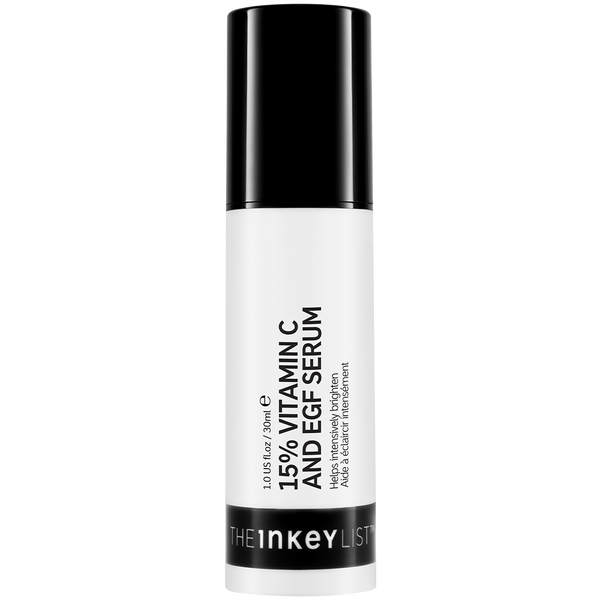
Our 15% Vitamin C + EGF Serum at $20.00 is the Vitamin C step in this daytime pairing - and it works best when followed by a broad-spectrum SPF as the final step in your morning routine. By the end of this, you will understand exactly why both belong in your routine - and why that combination is the most effective daytime skin protection available.
What Topical Vitamin C Actually Does for Your Skin
Vitamin C is one of the most researched topical skincare ingredients available - and one of the most misunderstood. It is frequently described as a “brightening” ingredient, which is true, but that description alone undersells the depth of what topical Vitamin C actually does in the skin. Understanding its mechanisms properly is the only way to understand why it needs SPF alongside it.
At its core, Vitamin C is a potent antioxidant. Its primary function in the skin is neutralizing free radicals - unstable molecules generated by UV radiation, pollution, heat, and other environmental stressors. Free radicals are chemically reactive, meaning they destabilize the molecules they come into contact with, triggering a cascade of oxidative stress inside the skin. Left unchecked, this oxidative stress degrades collagen, disrupts the skin’s barrier, and accelerates visible aging. Vitamin C interrupts this cascade by donating electrons to neutralize free radicals before they cause that damage. This antioxidant action is active at every level of daily environmental exposure - not just in direct sunlight.
The second major mechanism is tyrosinase inhibition. Tyrosinase is the enzyme responsible for triggering melanin production - the pigment that gives skin its color and, in excess or uneven distribution, creates dark spots, hyperpigmentation, and uneven skin tone. Vitamin C inhibits tyrosinase activity, which means it reduces melanin formation at the source. This is the biological basis for Vitamin C’s brightening effect: it is not superficially lightening the skin, it is actively reducing the enzymatic process that produces excess pigmentation. According to peer-reviewed research published in the Journal of Clinical and Aesthetic Dermatology, topical Vitamin C has demonstrated antipigmentary, photoprotective, and anti-aging effects through exactly these mechanisms - antioxidant activity, tyrosinase inhibition, and collagen synthesis support.
Vitamin C also plays a critical role in collagen synthesis. It is an essential cofactor for the enzymes that stabilize and produce collagen fibers - the structural proteins responsible for skin’s firmness, elasticity, and resilience. Without adequate Vitamin C, collagen production slows and existing fibers degrade more rapidly. Applied topically, Vitamin C supports the skin’s collagen infrastructure, which is why it is a meaningful anti-aging ingredient and not just a brightening one.
The form of Vitamin C matters enormously in terms of real-world efficacy and skin compatibility. Our 15% Vitamin C + EGF Serum uses Ascorbyl Glucoside - a stable Vitamin C derivative that converts to active Ascorbic Acid within the skin. Unlike L-Ascorbic Acid (the raw form of Vitamin C), Ascorbyl Glucoside does not rapidly degrade on contact with light and air. This means the serum retains its potency through consistent use - something that cannot be guaranteed with less stable formulations. It is also gentler on skin, making it a strong choice across a wider range of skin types, including those who find high-concentration L-Ascorbic Acid formulas reactive.
The formula also contains 1% Epitensive EGF - Epidermal Growth Factor - which supports skin cell renewal. This dual mechanism means the serum is simultaneously reducing melanin production via tyrosinase inhibition and encouraging the turnover of skin cells, which together accelerate the improvement of skin tone, texture, and clarity. In an independent trial of 64 participants using the 15% Vitamin C + EGF Serum, 87% agreed that their skin looked brighter within just four weeks of consistent use.
The consistent daily use point matters. Vitamin C’s antioxidant activity is ongoing - it is working with every hour of environmental exposure. This is exactly why it is a morning ingredient, not an evening one. For more on timing and frequency, see our dedicated guide on when to use Vitamin C serum.
With a clear picture of what Vitamin C does and how it operates in the skin, the next step is understanding SPF - and critically, where its protection ends.
What SPF Actually Does - and Where Its Protection Ends
SPF - Sun Protection Factor - is the single most important product in any daytime skincare routine. No ingredient, no serum, no antioxidant replaces it. Understanding how it works - and where its ceiling lies - is what makes the case for Vitamin C alongside it so clear.
SPF measures a sunscreen’s ability to filter UV radiation, specifically UVB rays - the rays primarily responsible for burning the skin. Broad-spectrum SPF formulas, which are the standard that any SPF worth using should meet, also protect against UVA rays. UVA rays penetrate more deeply into the skin than UVB and are the primary drivers of photoaging - the breakdown of collagen, the acceleration of fine lines, and the development of hyperpigmentation. They are also present year-round, at relatively consistent intensity regardless of season or cloud cover, which is why SPF is a non-negotiable daily habit in every month of the year - not just in summer.
Sunscreens work through one of two mechanisms, or a combination of both. Chemical sunscreens absorb UV radiation and convert it into heat before it can penetrate the skin. Mineral sunscreens (containing zinc oxide or titanium dioxide) work by physically scattering and reflecting UV rays away from the skin’s surface. Both are effective broad-spectrum options when formulated correctly. For a full breakdown of SPF types and how to choose the right one, visit our SPF pillar page.
Here is where the honest conversation about SPF’s ceiling begins. No SPF provides 100% UV filtration. SPF 30 filters approximately 97% of UVB rays, which means approximately 3% still reaches the skin. SPF 50 filters approximately 98%, allowing around 2% through. These numbers sound small in isolation - and they are, in relative terms - but the practical implication is significant: every day, some UV radiation is reaching your skin regardless of SPF use. If you are considering whether SPF 30 or SPF 50 is the better choice for your routine, our guide on SPF 30 vs SPF 50 breaks down that decision in full.
There is a second complicating factor: most people apply significantly less SPF than the amount used in standardized testing conditions. SPF ratings are tested at 2mg per cm squared of skin - a quantity that feels generous in practice. Research consistently shows that real-world SPF application is typically around 25-50% of the tested amount, meaning the effective protection delivered in everyday use is meaningfully lower than the number on the packaging. This is not an argument to abandon SPF - it is an argument to apply it generously, every single morning, and to understand that it is one layer of a broader defense system.
The third - and most important - limitation of SPF in the context of this blog: SPF does not neutralize free radicals. The UV rays that do penetrate the skin, through SPF film and through the inevitable shortfall of real-world application, trigger the generation of reactive oxygen species (ROS) - free radicals - inside the skin. These drive collagen degradation, activate tyrosinase, and accumulate oxidative damage that progressively ages the skin. SPF does not address this. SPF has no antioxidant function. It is a filter, not a neutralizer - and what gets through the filter still causes damage.
Additionally, UV radiation is not the only free radical generator your skin faces during the day. Pollution particles, ozone, blue light from screens and artificial lighting - none of these are blocked by SPF. All of them generate oxidative stress. Vitamin C addresses all of them. This is the gap that SPF cannot fill on its own, and it is exactly the gap that Vitamin C exists to close.
The Science Behind the Vitamin C and Sunscreen Dual Defense
This is the core argument. SPF and Vitamin C do not do the same thing. They address different fronts of the same problem - UV-driven skin damage - and using them together is the only way to cover both fronts simultaneously.
Think of it this way: SPF is the shield that stands between your skin and incoming UV. It deflects and absorbs the majority of UV radiation before it reaches the skin’s surface. But even the best shield is not impenetrable. Some UV gets through - by the physics of filtration, by the practical realities of application volume, and by the nature of UVA rays, which penetrate more deeply than any topical filter can fully prevent. The UV that does get through triggers a chain reaction inside the skin: reactive oxygen species are generated, and those free radicals begin attacking collagen fibers, triggering melanin-producing enzymes, and driving cellular oxidative stress. This is where Vitamin C steps in. It is the clean-up crew operating behind the shield - neutralizing the damage that the shield could not prevent.
Neither role can substitute for the other. Vitamin C has no UV-filtering properties. It cannot reduce the amount of UV reaching your skin. It is an antioxidant, and antioxidants work at the molecular level, inside the skin - not at the surface level, as a barrier. SPF has no antioxidant properties. It cannot neutralize free radicals. It is a filter, and once UV has passed through it and generated oxidative stress inside the skin, SPF’s job is done and nothing further happens without an antioxidant to address it. This is precisely why the two are not interchangeable and why the combination is not a marketing idea - it is a scientifically grounded approach to comprehensive daytime skin protection.
The research supports this directly. A peer-reviewed study published in the Journal of the American Academy of Dermatology tested a topical antioxidant solution containing Vitamins C and E stabilized by ferulic acid and found that it provided substantial UV photoprotection for skin, explicitly noting that its mechanism of action is different from sunscreens and would be expected to supplement the sun protection provided by sunscreens. This is not a marginal benefit - the study, conducted at Duke University Medical Center, found significant photoprotection measured across erythema (redness), sunburn cell formation, thymine dimer mutations (DNA damage markers), and inflammatory cytokine production. The conclusion is clear: topical antioxidants and sunscreens work through entirely different mechanisms and, used together, provide superior protection to either used alone.
Earlier research referenced via ScienceDirect similarly demonstrated that the combination of topical antioxidants including Vitamins C and E with SPF provided significantly better UV protection outcomes than SPF alone - reinforcing the complementary rather than redundant nature of this pairing.
The mechanism behind this amplification is important to understand. When UV radiation hits skin protected by antioxidants, the free radicals generated are intercepted and neutralized before they can trigger the cascade of collagen breakdown and melanin stimulation. While our Ascorbyl Glucoside formulation operates via a different stabilization approach than ferulic acid-stabilized L-Ascorbic Acid, the underlying principle holds: Vitamin C’s antioxidant function works in biological concert with SPF’s filtering function.
For anyone working to address hyperpigmentation, this dual defense is not optional - it is foundational. SPF prevents UV from triggering new melanin production. Vitamin C inhibits tyrosinase, reducing melanin at the enzymatic level. Together they block pigmentation formation from two separate angles. Without both, you are managing the problem with one hand tied behind your back. For a deeper look at how SPF specifically protects against pigmentation, see our guide on SPF for hyperpigmentation.
Does Vitamin C Make Your Skin More Sensitive to the Sun?
This is one of the most searched questions around Vitamin C in skincare - and it deserves a direct, honest answer rather than a vague disclaimer.
The short answer is: not in the way most people think, and not with the form of Vitamin C used in well-formulated products like our 15% Vitamin C + EGF Serum.
The concern about Vitamin C and photosensitivity is largely tied to L-Ascorbic Acid at high concentrations. L-Ascorbic Acid is the raw, active form of Vitamin C - highly effective, but also highly unstable. It oxidizes rapidly when exposed to light and air, and when it degrades, it can shift from antioxidant to pro-oxidant behavior - potentially contributing to skin sensitivity rather than protecting against it. This is a real phenomenon, documented in the scientific literature, and it is the origin of the photosensitivity concern. It is also one of the key reasons why formulation matters as much as the ingredient itself.
Ascorbyl Glucoside - the form used in our Vitamin C serum - is a stable derivative. It does not degrade in the same way when exposed to light and air. It converts to active Ascorbic Acid once absorbed into the skin, bypassing the surface-level oxidation risk associated with L-Ascorbic Acid formulas. This significantly reduces the photosensitivity concern associated with that raw form. The mechanisms of action review published on PubMed notes that finding the most stable and permeable formulation is precisely the challenge in Vitamin C skincare - and stable derivatives address that challenge directly.
That said - and this is important - the correct answer to “do I need to wear SPF with Vitamin C?” is always yes. Not because Vitamin C significantly increases your photosensitivity when using a stable, well-formulated product. But because SPF is simply non-negotiable in any morning skincare routine, regardless of what else you are applying.
Here is the practical reality that makes SPF essential alongside Vitamin C. Vitamin C’s primary job in a morning routine is to neutralize the free radicals generated by UV exposure. If you are applying Vitamin C and then stepping into a day with no SPF, you are exposing your skin to the full UV load - and then relying on Vitamin C alone to manage the consequences. That is asking one ingredient to do the work of two. More specifically, without SPF, the UV hitting your skin is actively stimulating melanin production via tyrosinase - precisely the process Vitamin C is working to suppress. You are applying a tyrosinase inhibitor and simultaneously triggering tyrosinase at full capacity. The Vitamin C is fighting a battle that SPF would have prevented from starting.
The practical conclusion is clear and unambiguous: apply your Vitamin C serum, let it absorb, and follow with a broad-spectrum SPF. Every morning. The concern about photosensitivity with stable formulations is not a reason to stop using Vitamin C - it is a reason to ensure your formulation is stable and to use it correctly, as part of a morning routine that always ends with broad-spectrum sun protection.
For more on the properties and stability of different Vitamin C forms, the Vitamin C pillar page covers the ingredient science in depth.
The Real Skin Benefits of Using Vitamin C and Sunscreen Together
Understanding the science is one thing. Knowing what that science delivers for your skin - in visible, measurable terms - is what makes the habit worth building. The combination of Vitamin C and SPF daily is not a theoretical upgrade. It produces real, compounding results across several specific skin concerns.
For hyperpigmentation and dark spots, this pairing is one of the most effective approaches available without a clinical prescription. Vitamin C inhibits tyrosinase - the enzyme that triggers melanin production - working at the cellular level to slow the formation of new pigment and gradually brighten existing marks. SPF prevents UV from stimulating fresh melanin production at the surface level, closing the loop that Vitamin C alone cannot close. Without SPF, daily UV exposure continuously triggers new pigmentation, making it nearly impossible for Vitamin C to make lasting progress. Together, they block the problem from two directions at once - and the results are genuinely faster and more sustained. For a comprehensive look at managing hyperpigmentation, see the hyperpigmentation pillar page and the SPF for hyperpigmentation guide.
If hyperpigmentation is a primary concern, the Tranexamic Acid Serum at $19.00 is worth considering as a complementary evening step. Tranexamic Acid addresses pigmentation through a different biological pathway to Vitamin C - targeting the communication between UV-exposed skin cells and melanocytes - making it a strong paired ingredient for stubborn or deeper pigmentation when used as part of an evening routine alongside morning Vitamin C and SPF.
For anti-aging and collagen protection, this combination is arguably the most evidence-based approach available in everyday skincare. Vitamin C supports collagen synthesis - the production and stabilization of the fibers that keep skin firm, bouncy, and elastic. SPF prevents the UV-driven collagen degradation that erases that work. Here is the dynamic that most people miss: UV is one of the most aggressive triggers of collagen breakdown in the skin. Without SPF, daily UV exposure is actively destroying collagen at a rate that Vitamin C cannot compensate for on its own. SPF preserves what Vitamin C builds. The two work in a cycle - Vitamin C supports new collagen, SPF protects it, Vitamin C supports more, SPF protects it again. Remove either, and the cycle breaks.
For skin brightness and overall radiance, consistent daily use of both ingredients creates a compounding improvement over time. Vitamin C’s antioxidant action reduces the accumulation of daily environmental damage - the dullness that builds up from ongoing oxidative stress from UV, pollution, and urban exposure. SPF prevents the daily UV load from continuously adding to that burden. In INKEY’s independent trial of 64 participants on our 15% Vitamin C + EGF Serum, 87% agreed skin looked brighter and 88% saw visible improvement in tone and texture within four weeks. These results are achieved with consistent daily use - and consistent daily use means SPF is always in the routine. Vitamin C brightening results are significantly undermined by UV exposure without protection.
For post-blemish marks and uneven skin tone from breakouts, Vitamin C’s brightening action directly addresses the residual hyperpigmentation - often called post-inflammatory hyperpigmentation - left behind when a blemish clears. UV exposure is known to slow the fading of these marks and can deepen them, making them more visible and longer-lasting. SPF is therefore a critical part of any routine targeting blemish-related discoloration - not just for prevention, but for actively supporting the skin’s ability to heal and fade those marks without UV interference.
Adding our Vitamin B, C and E Moisturizer at $14.00 to your routine introduces a further layer of Vitamin C benefit in a lighter, daily-maintenance form. It delivers Sodium Ascorbyl Phosphate - a gentle, lower-concentration Vitamin C derivative - as part of a moisturizing step, complementing the targeted serum dose from our 15% Vitamin C + EGF Serum and reinforcing the daily brightening and antioxidant effect of the routine as a whole.
How to Layer Vitamin C and Sunscreen in Your Morning Routine
Knowing that both ingredients are essential is the first step. Knowing exactly how to use them together - in the right order, with the right technique - is what turns that knowledge into results.
The non-negotiable principle is this: Vitamin C goes on first (after cleansing), and SPF goes on last. This order is not a preference - it is determined by the function of each product. Vitamin C serum needs direct contact with the skin to absorb and activate. If it is applied over SPF, it cannot penetrate effectively. SPF, on the other hand, must sit as the final layer on the skin’s surface - it forms a UV-filtering film, and applying anything over it dilutes and disrupts that film, compromising its protection. Reversing the order defeats the purpose of both products.
Here is the complete morning routine, in sequence:
- Cleanse - Start with a clean base. Residual products or sebum on the skin can impede serum absorption.
- Tone - Optional step. If a toner is part of your routine, apply it here on slightly damp skin.
- Apply our 15% Vitamin C + EGF Serum - Apply to slightly damp (not wet) skin for optimal absorption. Use a pea-sized amount - enough to cover the face and neck. Pat gently with fingertips rather than rubbing; patting is gentler on the skin and wastes less product. Wait approximately 60 seconds before moving to the next step.
- Additional serums - If you use other serums, such as a Hyaluronic Acid Serum, apply them after the Vitamin C. For more on pairing Vitamin C with Hyaluronic Acid, see our guide on using Hyaluronic Acid with Vitamin C.
- Eye cream - Optional step; apply around the orbital bone if relevant to your routine.
- Moisturize - Our Vitamin B, C and E Moisturizer at $14.00 is the natural Vitamin C-reinforcing option here, delivering a second layer of antioxidant and brightening benefit as part of your moisturizing step.
- SPF - always last. Apply a broad-spectrum SPF generously as the final step. Dot it across the face and neck and blend outward. Do not layer anything over it.
A few application details that make a meaningful difference in practice. Apply Vitamin C serum to slightly damp skin - not dripping wet, but not completely dry either. A small amount of residual moisture on the skin’s surface helps the serum spread evenly and absorb more effectively. Use your fingertips rather than your palms; precision matters for a serum, and palms absorb more product than they deliver. The 60-second wait before layering your next product is not arbitrary - it gives the serum time to begin absorbing before another layer is placed on top, which reduces the risk of the two products balling up or pilling on the skin.
For SPF, the most common mistake is under-application. The protection levels stated on the packaging are tested at a specific dose - most people apply far less in practice, which means real-world protection is lower than the stated SPF number. Apply generously. For daily indoor-to-outdoor life, morning application is sufficient. For extended outdoor time or direct sun exposure, reapply every two hours. And remember: SPF is a morning step even on days you do not plan to go outside. UV penetrates glass, meaning sitting near a window, driving, or spending time in a naturally lit office all involve UV exposure. There are no exceptions.
For readers building a full routine from scratch, the how to build your skincare routine guide is the best place to start. If you are also using retinol and wondering how that fits into your routine structure, our guide on using Vitamin C and retinol together addresses the timing and sequencing in full.
One question worth addressing directly: can you apply SPF immediately on top of Vitamin C without any wait time? Yes. The 60-second pause is about optimal serum absorption, not a hard requirement for safety or efficacy. If you are pressed for time, applying SPF directly over freshly applied Vitamin C will not cause any harm - it is simply the difference between optimal and functional application. The important thing is that both steps happen, in the right order, every morning.
The Bottom Line on Vitamin C and Sunscreen
There is no version of an effective daytime skincare routine in which only one of these ingredients is present. The science does not support it. The biology does not support it. The results do not support it.
SPF filters the UV radiation that reaches your skin. Vitamin C neutralizes the free radicals that UV generates inside your skin - even through SPF. These are two separate problems, operating at two separate levels of the same process, requiring two separate solutions. The pairing is not about doing more for the sake of it. It is about doing what the problem actually requires.
For anyone targeting hyperpigmentation, that means blocking UV-triggered melanin at the surface level with SPF while Vitamin C suppresses tyrosinase from within. For anyone concerned about fine lines and loss of firmness, it means protecting collagen with SPF while Vitamin C supports its synthesis. For anyone working toward consistently brighter, clearer skin, it means reducing daily oxidative burden with Vitamin C while SPF prevents that burden from being reset by UV every morning.
The habit is simple. Apply our 15% Vitamin C + EGF Serum in the morning. Follow with a broad-spectrum SPF as the final step. Every day, without exception. If you want to go deeper on either ingredient, the What is Vitamin C? and What is SPF? pillar pages are the most complete resources available.
Two products. Two mechanisms. One effective morning routine. Start today.
Shop the Routine
Shop our 15% Vitamin C + EGF Serum - $20.00 / 30ml
Build Your Morning Routine - Save up to 20% when you bundle.
Not sure where to start? Take the INKEY Skincare Quiz for a personalized morning routine in under two minutes.
Frequently Asked Questions
Got a question?
Our askINKEY team are a friendly bunch of skincare experts with deep product knowledge and zero judgement. Whether you're an ingredient obsessive or just starting out, we'll make it make sense. No question too big. No question too small. We Give A Care, Every Day.


