



Can You Use Niacinamide and Vitamin C Together?
Discover why this brightening duo works so well, the benefits of combining them in your routine, and how to layer them for healthier, more radiant-looking skin.
Author
askINKEY skincare advisor
Published
09 July, 2026
Time to read
13 minutes
Yes - you can absolutely use niacinamide and vitamin C together. Despite a persistent myth suggesting these two ingredients cancel each other out, the science tells a very different story. Modern, well-formulated skincare has moved far beyond the outdated research that gave rise to this concern, and when paired correctly, niacinamide and vitamin C are actually one of the most complementary ingredient combinations you can build a morning routine around.
The confusion stems from older studies involving specific forms and conditions that simply do not reflect how these ingredients are used in skincare today. We will break all of that down clearly in this guide - including where the myth came from, what each ingredient does individually, why they are more effective together, why the form of vitamin C matters more than most people realize, and exactly how to layer them step by step for brighter, clearer, more balanced skin.
This guide is for anyone building a brightening or balancing routine who wants to know not just whether these two ingredients can be combined, but exactly how to do it right.
The INKEY Products That Make This Combination Work
Before getting into the science, here are the two products at the center of this guide - because understanding which products you are using matters as much as understanding the ingredients themselves.
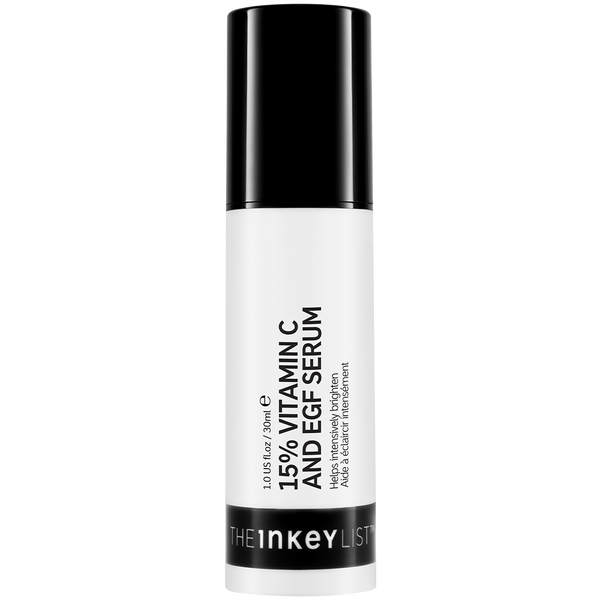
15% Vitamin C + EGF Serum - $20
This serum uses Ascorbyl Glucoside, a stable derivative of vitamin C that is formulated at a near-neutral pH of 6.8 to 7.2. That distinction is critical, and we will explain exactly why in the section on vitamin C forms. What you need to know right now is that this is not a harsh, low-pH, pure vitamin C formula - it is a stable, skin-compatible brightening serum that works precisely because of how it is formulated. In an independent consumer trial conducted over four weeks, 87% of participants agreed their skin looked brighter, and 88% saw visible improvement in tone and texture. Both the Vitamin C + EGF Serum and the Niacinamide Serum product pages confirm their compatibility with each other. That is not a coincidence - it is by design.
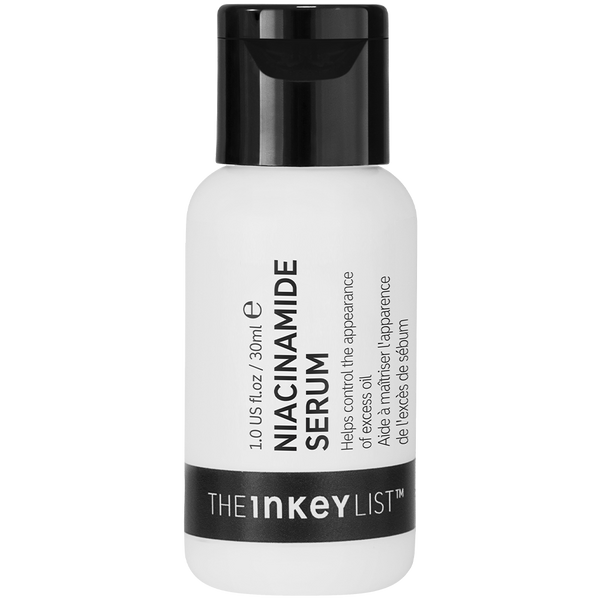
10% Niacinamide Serum - $13
A 10% niacinamide formula enhanced with hyaluronic acid for added hydration. It targets excess oil production, the appearance of enlarged pores, redness, and post-acne marks over time. At 10%, it sits in the sweet spot for efficacy - effective enough to deliver real results while remaining gentle enough for daily use across all skin types, including sensitive skin.
Completing the Routine
These two serums are the core of the combination, but a full morning routine benefits from a few supporting steps. The Hyaluronic Acid Serum ($13) works beautifully as a hydrating base layer applied to damp skin before your actives. To seal everything in, the Bio-Active Ceramide Moisturizer ($22) delivers deep barrier support and long-lasting hydration. If you have oily or combination skin, the Omega Water Cream ($15) is a lighter, oil-free option that keeps skin balanced without feeling heavy. And no morning vitamin C routine is complete without SPF - the essential final step to lock in your antioxidant protection and shield skin from UV-triggered pigmentation.
Now that you know which products to use, the next step is understanding the science behind why they work so well together - starting with where the concern originally came from.
Where the “Don’t Mix” Myth Actually Came From
The myth that niacinamide and vitamin C should not be used together is one of the most persistent pieces of misinformation in skincare. It sounds convincing, it gets shared constantly, and it has stopped a lot of people from building routines that could genuinely benefit their skin. So where did it actually come from?
The concern traces back to older laboratory research studying what happens when niacinamide and L-ascorbic acid - the pure, most reactive form of vitamin C - are combined under specific conditions. Two reactions were identified and studied. The first involved the potential conversion of niacinamide into niacin, also known as nicotinic acid. The second involved the formation of what is called a niacinamide-ascorbate complex.
On the niacin conversion concern:
Niacinamide is an exceptionally stable molecule. For it to convert into niacin - a structurally related but chemically distinct compound known to cause skin flushing - requires extreme heat and highly concentrated acidic conditions. These are not conditions that exist in a skincare product sitting on your bathroom shelf, and they are certainly not conditions that exist on the surface of your skin. Research consistently demonstrates that at room temperature and at pH levels relevant to skincare use, this conversion is negligibly small in practice. It is worth being clear: niacinamide does not cause flushing. Niacin - nicotinic acid - does. These are different compounds, and the conversion between them under normal skincare conditions is not a meaningful concern.
On the niacinamide-ascorbate complex:
When niacinamide and ascorbic acid are mixed together, a charge-transfer complex can form between the two molecules. This is the interaction that really fueled the compatibility myth. But the key detail that often gets left out in social media discussions is that this complex is reversible. The two molecules are held together loosely - not chemically bonded. As the formula penetrates into the deeper layers of the skin where the pH environment shifts, the complex dissociates and both ingredients become independently active. Neither is permanently deactivated. Neither is rendered useless.
Furthermore, the issue of complex formation is most relevant to L-ascorbic acid formulations, which are typically formulated at a very low pH - below 3.5 - to keep the pure vitamin C stable. Modern vitamin C derivatives like Ascorbyl Glucoside, used in our 15% Vitamin C + EGF Serum, are formulated at a near-neutral pH where this interaction is reduced even further. The myth has not kept pace with the science.
This does not mean all ingredient combinations deserve the same confidence. For a full guide on which ingredients genuinely should not be layered together, see our complete ingredient layering guide. And for a deeper dive into the science of vitamin C in skincare, visit our Vitamin C ingredient page. Niacinamide and vitamin C are not on the incompatible list - not when you understand the actual chemistry.
With the myth dismantled, it is worth stepping back to understand what each of these ingredients actually does on its own - which sets up the more important question: why are they better together?
What Niacinamide and Vitamin C Each Do for Your Skin
To understand why niacinamide and vitamin C are such a smart pairing, you first need a clear picture of what each one brings to the table individually. These are not one-trick ingredients. Each has a multifaceted profile that makes them valuable on their own - and even more powerful in combination.
Vitamin C: Antioxidant Defense and Brightening at the Source
Vitamin C is one of the most well-researched antioxidant ingredients in skincare. Its primary function is protection - specifically, defending skin against the daily barrage of environmental aggressors that accelerate visible aging and uneven pigmentation. UV exposure, pollution, and free radicals all trigger oxidative stress in the skin, and vitamin C works by neutralizing free radicals before they can cause the kind of cellular damage that shows up over time as dullness, dark spots, and an uneven complexion.
Beyond antioxidant protection, vitamin C targets hyperpigmentation by inhibiting tyrosinase - the enzyme responsible for triggering melanin production in the skin. By addressing pigmentation at the production stage, it works upstream to prevent new dark spots from forming while gradually fading existing ones. It also supports the skin’s natural collagen synthesis processes over time, contributing to firmer-looking, more resilient skin.
The 15% Vitamin C + EGF Serum uses Ascorbyl Glucoside rather than L-ascorbic acid. Ascorbyl Glucoside converts to active vitamin C on the skin, delivering the same brightening and antioxidant benefits while being substantially more stable and gentler - making it suitable for all skin types, including sensitive skin. For more on how vitamin C works and when to use it, visit our Vitamin C ingredient page and our guide on when to use vitamin C serum.
Niacinamide: The Multi-Tasker That Balances and Strengthens
Niacinamide - a form of vitamin B3 - is one of the most versatile ingredients in skincare. Unlike vitamin C, which has a primary focus on antioxidant protection and brightening, niacinamide operates across multiple skin concerns simultaneously. It regulates sebum production, helping to balance oily and combination skin types. It visibly reduces the appearance of enlarged pores. It calms redness and supports an even skin tone. And over time, with consistent use, it helps fade the appearance of post-acne marks and uneven pigmentation.
Critically, niacinamide also strengthens the skin barrier - the outermost layer of the skin responsible for keeping moisture in and irritants out. A stronger barrier means skin is better protected against environmental stressors, recovers more efficiently from daily damage, and responds more positively to active ingredients in general.
At 10%, our 10% Niacinamide Serum delivers effective results without causing irritation, making it appropriate for daily use across all skin types. For a full guide on how and when to incorporate niacinamide into your routine, see how and when to use niacinamide serum, or explore the dedicated Niacinamide ingredient page.
With a clear picture of what each ingredient does individually, the next section makes the case for why the combination adds up to more than the sum of its parts.
Why Niacinamide and Vitamin C Work Better Together
Here is where the combination becomes genuinely compelling. Niacinamide and vitamin C do not just coexist peacefully in a routine - they complement each other through mechanisms that target the same skin concerns via entirely different biological pathways. That distinction is important, because when two ingredients address the same problem through different routes, the combined effect is more thorough than either could achieve alone.
Brightening through dual pathways:
Vitamin C inhibits melanin production at the source by blocking tyrosinase activity. This is an upstream intervention - it reduces the amount of pigment the skin produces in the first place, particularly in response to UV exposure and oxidative stress. Niacinamide, by contrast, works downstream. Rather than reducing melanin production, it inhibits the transfer of melanin to skin cells - the step at which produced pigment is distributed into the outer layers of the skin where it becomes visible as dark spots and uneven tone.
Together, these two mechanisms address both ends of the hyperpigmentation process: the production of pigment and its distribution to the surface. The result is a more comprehensive brightening approach than targeting either stage alone. This is why consistent use of both ingredients together tends to yield more visible improvement in skin tone than rotating between them.
Barrier strength amplifies antioxidant benefit:
Niacinamide’s barrier-strengthening effect creates a secondary advantage for vitamin C. When the skin barrier is compromised - whether through environmental stress, harsh product use, or simply dehydration - the skin’s ability to retain moisture and absorb actives is reduced. By reinforcing barrier integrity, niacinamide creates the conditions in which vitamin C’s antioxidant and brightening activity can be better absorbed and more effective.
Protection plus balance:
Vitamin C is your daily environmental shield - it neutralizes free radicals and protects against UV-triggered pigmentation throughout the day. Niacinamide provides the balancing counterpart: managing oil, supporting barrier resilience, and keeping the skin calm and even-toned. Used together in a morning routine, they cover both the protective and balancing dimensions of a brightening regimen in a way that neither does independently.
The end result for skin: clearer, more even-toned, brighter-looking skin, with more balanced oil production, a stronger barrier, and better all-day antioxidant defense. For a broader comparison of these ingredients against other glow-focused actives, see our Vitamin C vs Niacinamide vs Exosomes showdown.
The case for combining these two ingredients is clear - but there is one variable that determines whether the combination works seamlessly or needs a bit more care: the specific form of vitamin C you are using.
Why the Form of Vitamin C Is the Key Variable
Not all vitamin C is formulated the same way, and understanding the difference is the most nuanced and practically important piece of information in this entire guide. The answer to “can you use niacinamide and vitamin C together” is not a simple blanket yes for every product on the market - it depends on which form of vitamin C your serum contains.
L-Ascorbic Acid: Pure, Potent, and pH-Sensitive
L-ascorbic acid is the pure, most researched form of vitamin C. It is highly effective at brightening and antioxidant protection, but it is also the most reactive and the least stable. To keep L-ascorbic acid stable in a formula, it must be formulated at a very low pH - typically between 2.5 and 3.5. This low-pH environment is what makes it effective, but it is also where the potential for interaction with niacinamide is at its highest.
At low pH, the formation of a niacinamide-ascorbate complex is slightly more likely - though as we established in the myth-busting section, even this interaction is reversible and its real-world impact is minimal. That said, if someone is using a high-strength L-ascorbic acid formula - particularly above 10 to 15% concentration - some formulators and dermatologists recommend applying the two products in separate steps rather than immediately one after the other. Apply vitamin C first, allow it to fully absorb over a few minutes, then follow with niacinamide. This is a precautionary approach rather than a necessary one, but it is a reasonable strategy for anyone who wants to exercise maximum caution.
Ascorbyl Glucoside: Stable, Gentle, and Niacinamide-Friendly
Ascorbyl Glucoside is a vitamin C derivative - a stabilized form in which the vitamin C molecule is bound to a glucose molecule, which is cleaved on the skin to release active vitamin C. Because it does not rely on a low-pH environment to remain stable, it can be formulated at a near-neutral pH. The 15% Vitamin C + EGF Serum is formulated at pH 6.8 to 7.2 - close to the skin’s own natural pH - meaning there is no meaningful compatibility concern when layering it with niacinamide.
This is precisely why the product page for the 15% Vitamin C + EGF Serum explicitly confirms compatibility with niacinamide. It was formulated that way intentionally. The choice of Ascorbyl Glucoside over L-ascorbic acid is not a compromise - Ascorbyl Glucoside converts to active vitamin C on contact with the skin and delivers effective brightening and antioxidant protection, while being significantly more stable, less prone to oxidation, and gentler on the skin. For anyone who has previously experienced irritation or sensitivity from pure L-ascorbic acid formulas, Ascorbyl Glucoside is the more compatible option. It is also particularly well-suited to sensitive skin types, or those who are new to vitamin C and want to start with a gentler introduction to the ingredient.
For more on layering vitamin C with other ingredients, including hyaluronic acid, see our guide on using hyaluronic acid with vitamin C.
The form of vitamin C being used resolves the biggest variable in this combination - and with that understood, the guide turns to the practical question of how to actually use these two products together in your daily routine.
How to Layer Niacinamide and Vitamin C: Step-by-Step Routine Guidance
Understanding the science is one thing. Knowing exactly what to apply, in what order, and when is what turns that knowledge into real results. This section gives you everything you need to build a routine using niacinamide and vitamin C - including layering order, AM versus PM guidance, and three complete routine examples based on different skin concerns.
Layering Order: Thinnest to Thickest
The general rule for layering serums is to apply the thinnest, most water-like formulas first, working toward thicker textures. This ensures each product can absorb properly without being blocked by a heavier layer underneath.
For the niacinamide and vitamin C pairing specifically:
- Apply vitamin C first.
- Wait 30 to 60 seconds to allow it to absorb.
- Apply niacinamide.
- Wait another 30 to 60 seconds, then apply moisturizer.
INKEY Tip: Waiting 60 seconds between serum layers is the simplest way to prevent pilling and ensure each product absorbs fully before the next one goes on.
If you are using a hyaluronic acid serum as a hydrating base - which is recommended for most skin types - apply it first to damp skin, before your actives.
AM vs. PM: When to Use Each
Both niacinamide and vitamin C are technically compatible with AM and PM use, but the recommended approach is to make this combination your morning routine stack.
Morning: Vitamin C’s antioxidant protection is most valuable during the day, when your skin is actively exposed to UV light, pollution, and environmental free radicals. Niacinamide provides all-day oil control and barrier reinforcement. Together, they form a powerful daytime defense and brightening routine. Always follow with SPF - without it, the pigmentation-fighting benefits of vitamin C are significantly undermined by unprotected UV exposure.
Evening: Niacinamide can be incorporated into PM routines - it pairs well with peptides and ceramide-rich moisturizers for overnight repair. However, the evening routine is where you would typically use retinol or exfoliating acids (AHAs, BHAs, PHAs), and those should not be combined with vitamin C in the same routine step. The cleanest approach: vitamin C and niacinamide in the AM; retinol or acids in the PM. For detailed vitamin C timing guidance, see when to use vitamin C serum.
Three Complete Routine Examples
Brightening Routine - All Skin Types (AM)
- Cleanser
- Hyaluronic Acid Serum ($13) - applied to damp skin
- 15% Vitamin C + EGF Serum ($20) - wait 60 seconds
- 10% Niacinamide Serum ($13) - wait 60 seconds
- Bio-Active Ceramide Moisturizer ($22)
- SPF
Oily or Acne-Prone Skin Routine (AM)
- Cleanser
- 15% Vitamin C + EGF Serum ($20) - wait 60 seconds
- 10% Niacinamide Serum ($13) - wait 60 seconds
- Omega Water Cream ($15) - lightweight, oil-free hydration
- SPF
Uneven Tone and Hyperpigmentation Routine (AM)
- Cleanser
- Hyaluronic Acid Serum ($13) - applied to damp skin
- 15% Vitamin C + EGF Serum ($20) - wait 60 seconds
- 10% Niacinamide Serum ($13) - wait 60 seconds
- Tranexamic Acid Serum ($19) - targets stubborn dark spots via a third distinct mechanism, creating a three-ingredient brightening system that addresses pigmentation at multiple stages simultaneously
- Moisturizer of choice
- SPF
What to Avoid in the Same Routine
Do not combine vitamin C or niacinamide with retinol, AHAs, BHAs, or PHAs in the same routine step. These are powerful actives that are better suited to the PM routine and should not compete with your morning antioxidant stack. The cleanest separation: AM for vitamin C and niacinamide, PM for retinol or exfoliating acids.
For the full ingredient layering guide, see what products should I not layer together. For specific guidance on niacinamide and retinol, see can you use niacinamide with retinol.
With your routine mapped out, the FAQs below address the specific questions people most commonly ask about this ingredient combination.
The Bottom Line
Niacinamide and vitamin C can absolutely be used together - and the evidence makes a strong case that they should be. The myth that they cancel each other out was built on outdated research that does not reflect modern formulation science or real-world skincare use. The form of vitamin C matters: stable derivatives like Ascorbyl Glucoside, used in the 15% Vitamin C + EGF Serum, have no meaningful compatibility issue with niacinamide. Together, these two ingredients address brightening, barrier strength, and skin balance in a way that makes them one of the most effective pairings you can build a morning routine around.
You now have the science, the products, and the routine. The only thing left is to use them.
Shop the combination: 15% Vitamin C + EGF Serum ($20) and 10% Niacinamide Serum ($13).
Not sure where to start? Take our Skincare Quiz and get a personalized routine built for your skin.
Keep reading:
Frequently Asked Questions
Got a question?
Our askINKEY team are a friendly bunch of skincare experts with deep product knowledge and zero judgement. Whether you're an ingredient obsessive or just starting out, we'll make it make sense. No question too big. No question too small. We Give A Care, Every Day.


