

Hyaluronic Acid Supplements: Oral vs Topical - What Actually Works for Your Skin?
Discover what the latest science says about supplements versus serums, how each hydrates the skin, and which approach delivers the most reliable results for a plumper, healthier-looking complexion
Author
askINKEY skincare advisor
Published
07 July, 2026
Time to read
15 minutes
Hyaluronic acid is one of the most searched skincare ingredients in the world - and for good reason. It’s backed by decades of clinical research, beloved by dermatologists, and found in everything from lightweight serums to rich moisturizers. But lately, it’s showing up somewhere new: the supplement aisle. Capsules, gummies, powders, and tablets all claiming to hydrate your skin from the inside out have entered the conversation, and with them comes one of the most common questions we get asked: is swallowing hyaluronic acid more effective than applying it to your skin?
This blog exists to answer that question honestly. We’ll walk you through what oral hyaluronic acid supplements actually are, what the clinical research currently shows, how topical HA works differently at the skin level, who might genuinely benefit from supplementation, and what the evidence-backed verdict looks like when you compare the two approaches side by side. No hype, no oversimplification - just the science, explained clearly.
At INKEY, we believe that understanding an ingredient is the first step to using it well. If you want the full picture on how hyaluronic acid functions as an ingredient, our complete Hyaluronic Acid ingredient guide is the place to start. But if you’re specifically trying to figure out whether oral supplements are worth your time and money, keep reading.
The first thing to understand is what these supplements actually are - and what they’re claiming to do inside your body.
What Hyaluronic Acid Supplements Are - and What They Claim to Do
Hyaluronic acid is not a foreign substance or a lab-invented molecule. It’s something your body already makes - and makes a lot of. HA is a naturally occurring polysaccharide (a type of long-chain sugar molecule) found throughout the human body, most abundantly in the skin, eyes, joints, and connective tissue. Its primary function is to retain water. A single gram of hyaluronic acid can hold up to six liters of water, which is why it plays such a critical role in keeping skin plump, cushioning joints, and maintaining the lubrication needed for healthy tissue movement.
The problem is that your body’s natural HA production doesn’t stay constant over time. Starting in your mid-twenties, HA synthesis begins to decline gradually, and by your forties and fifties, the reduction becomes more noticeable. Less HA in the skin means less moisture retention, which contributes to the visible signs of aging - dryness, a loss of plumpness, the deepening of fine lines, and a generally less supple skin texture. This natural decline is also part of why topical HA products have become so popular: they offer a direct way to replenish what the skin is losing.
Oral HA supplements work on a fundamentally different premise. Rather than delivering hyaluronic acid to the skin’s surface, they aim to replenish HA levels systemically - meaning through ingestion and absorption into the bloodstream - with the goal of supporting skin hydration and joint lubrication from within. These supplements come in multiple formats: capsules and tablets are the most common, but gummies, powders, and liquid formulas also exist. Dosing in clinical studies has typically ranged from 80mg to 200mg per day, though doses on the market vary considerably.
The “beauty from within” category has grown rapidly over the past several years, and oral HA supplements often appear alongside collagen peptides, biotin, and other ingestible skincare products. Marketers position them as a systemic complement to topical skincare - a way to support your skin at a deeper, whole-body level. The claims are compelling: firmer skin, improved moisture levels, reduced appearance of fine lines - all from a daily capsule.
But the central question is one of bioavailability and mechanism: does hyaluronic acid, when consumed orally, actually survive digestion, get absorbed into the bloodstream, and reach the skin in a form that makes a meaningful difference? That’s the question the science is now beginning to address - and it’s worth looking at carefully before spending money on a supplement regimen.
For a foundational understanding of how HA works as a skincare ingredient, our Hyaluronic Acid ingredient guidecovers the science in detail. Now, let’s look at what the clinical research on oral supplementation is actually showing.
What the Science Says About Oral Hyaluronic Acid - The Research So Far
The science on oral hyaluronic acid supplementation is not nonexistent - but it is early stage, and that distinction matters. What we have right now is a growing body of small-to-medium scale clinical trials that are beginning to point in an interesting direction. What we don’t yet have is the kind of large, highly standardized, independently replicated evidence base that would allow researchers or clinicians to make definitive, universal recommendations. Here’s where things actually stand.
In 2025, a meta-analysis authored by Amin et al. and published in the Journal of Drugs in Dermatology provided the most comprehensive synthesis of the existing evidence to date. The researchers reviewed seven randomized controlled trials - the gold standard study design for assessing whether an intervention actually works. Across those seven trials, the meta-analysis found statistically significant improvements in three key skin parameters following oral HA supplementation: skin hydration, skin elasticity, and wrinkle depth. These are meaningful outcomes - they represent measurable changes in how skin holds moisture, how it bounces back, and how lines appear. According to Amin et al., 2025, the results were not trivial.
However - and this is important - the same meta-analysis found that effects on skin firmness, wrinkle volume, and transepidermal water loss (TEWL, a measure of how much moisture the skin loses to the environment) were not statistically significant. For those three parameters, the data showed only a general trend of improvement, not a clear, measurable effect that could be confidently attributed to supplementation. The researchers themselves called for “larger, more robust trials” before firm conclusions could be drawn, citing the limited sample sizes and the heterogeneity - meaning the variability in study designs, dosing protocols, and participant populations - across the included trials.
Earlier, a 2023 randomized double-blind clinical trial by Gao et al., published in Skin Research and Technology, offered additional evidence from a single well-designed study. That trial found that oral HA administration significantly promoted skin hydration after two to eight weeks of consistent use across both younger and older participant groups. Skin tone improvement was observed after four weeks. These are genuinely promising results - but they come from one trial, and replication across diverse, larger populations is still needed.
So how does oral HA actually work if it does work? The proposed mechanism involves what happens to HA during digestion. When ingested, hyaluronic acid is broken down in the gut into smaller fragments called oligosaccharides. Rather than the intact HA molecule reaching the skin (which is unlikely given digestion), these smaller fragments may stimulate the body’s own fibroblast cells - the cells responsible for producing HA, collagen, and elastin in the skin - to ramp up their natural production. In other words, oral HA may work not by delivering HA directly to your skin, but by signaling your skin to make more of its own.
Bioavailability is a critical variable that the current research hasn’t fully unpacked. Not all oral HA is absorbed equally. The molecular weight of the HA in a supplement, the delivery format, the health of an individual’s gut microbiome, and other factors all influence how much of what you swallow actually makes it into circulation. Most studies haven’t standardized for these variables, which makes cross-study comparison difficult.
What we know at this point, honestly summarized: oral HA supplements show promising - but not conclusive - evidence of skin benefits. The strongest signals are for hydration, elasticity, and wrinkle depth. The mechanism is indirect and depends on gut absorption and fibroblast stimulation. Sample sizes are small, study durations are short (typically four to twelve weeks), and methodologies differ significantly between trials. Researchers are calling for more robust, larger-scale studies before definitive guidance can be offered.
That’s an honest read of where the science sits right now: interesting, worth watching, but not yet strong enough to make oral supplements the centerpiece of a skin hydration strategy.
While oral supplements work through a systemic, indirect route that depends heavily on the digestive system, topical HA takes a fundamentally more direct approach - one that’s been studied for far longer and in far greater depth.
How Topical Hyaluronic Acid Works - and Why It’s Different
The mechanism of topical hyaluronic acid is elegantly straightforward: it works as a humectant, meaning it actively draws moisture from its surroundings and binds it to the skin. When you apply a topical HA serum, it pulls moisture from the environment and from the deeper layers of your skin up toward the surface, creating a visible plumping and smoothing effect that can start within minutes of application. There is no waiting for digestion, no dependence on gut absorption, and no indirect signaling cascade. HA applied to the skin does its job where you put it.
One of the most significant advances in topical HA formulation is the use of multi-molecular hyaluronic acid - meaning HA molecules of different sizes included in a single formula. This matters because molecular size determines how deep into the skin a molecule can travel. Larger, high-molecular-weight HA molecules sit on the skin’s surface, forming a hydrating film that prevents moisture loss and delivers instant plumping. Smaller, low-molecular-weight HA molecules penetrate further into the upper layers of the skin, delivering lasting hydration at a deeper level. A serum formulated with multiple molecular weights works at multiple depths simultaneously, which is why multi-molecular HA formulas have become the benchmark for topical hydration.
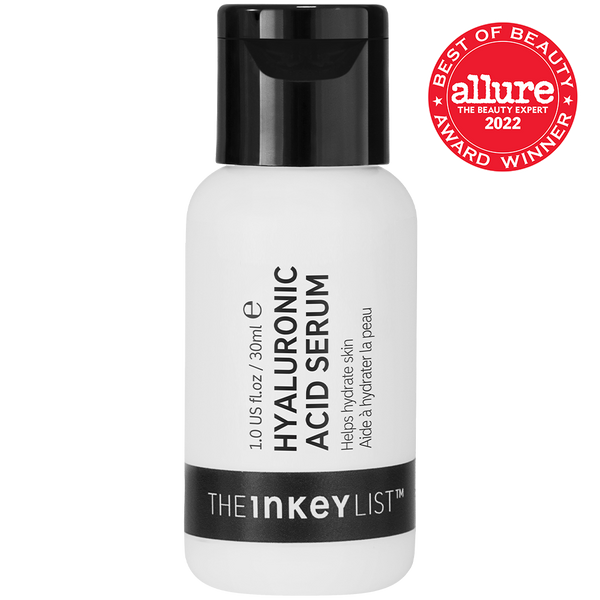
The clinical evidence behind topical HA is substantially larger and more established than anything currently available for oral supplementation. Our Hyaluronic Acid Serum - available at $13 for 30ml - is formulated with 2% multi-molecular hyaluronic acid at three distinct molecular weights, and is clinically proven to deliver instant hydration. In clinical testing, 82% of users reported firmer, smoother skin after just four weeks of consistent use. That’s a direct, measurable outcome from a product applied where you need it most.
Topical HA also offers a key practical advantage: it has no bioavailability variables. The effectiveness of a topical formula isn’t contingent on your digestive health, gut microbiome, or how well your body absorbs a particular molecule. It bypasses all of that and works directly at the skin level. Applied to skin that’s slightly damp - ideally within 60 seconds of cleansing - topical HA draws in and locks that ambient moisture, creating a hydration base that makes every product you layer on top more effective.
For those who want to pair deep hydration with active barrier repair, our Ectoin Hydro-Barrier Serum ($17) is a natural companion. It combines 2.5% multi-molecular hyaluronic acid with 2% Ectoin and three ceramides, delivering both lasting hydration and clinically proven barrier strengthening in a single formula. Pairing a dedicated hydration serum with barrier-supporting ingredients is one of the most effective approaches to skin that holds moisture better over time - because a stronger barrier means less moisture escaping throughout the day.
Another layer of the topical approach worth understanding: the products you pair with HA matter. Explore how a well-chosen face mist can amplify your serum’s results in our piece on the Hyaluronic Acid Serum and Face Mist power duo. And if you’ve ever wondered how HA works specifically on oily or combination skin, our guide on whether hyaluronic acid is good for oily skin covers that in depth.
The upshot: topical HA is fast-acting, well-evidenced, mechanistically direct, and highly accessible. Now that we understand how each approach works individually, the most useful thing we can do is put them side by side.
Oral vs Topical Hyaluronic Acid - An Honest, Evidence-Based Comparison
This is the comparison the reader came for, so let’s make it count - and make it fair. Both oral and topical hyaluronic acid have their place in the broader conversation about skin health. But when you look at the evidence, the mechanisms, and the practical realities side by side, a clear picture emerges.
Speed of results is one of the most immediate and practical differences. Topical HA delivers hydration from the very first application. The humectant action begins within minutes, and most people notice a visible plumping effect the same day they start using a well-formulated serum. Oral supplements, by contrast, require consistent daily use over an extended period. The clinical studies that have shown positive outcomes for oral HA have typically measured results after four to twelve weeks. If you’re looking for something that makes a visible difference quickly, the topical route wins by a significant margin.
The evidence base tells a similarly clear story. Topical HA has been studied extensively for decades, across large, diverse populations, in well-controlled trials with standardized methodologies. The body of evidence supporting its efficacy as a humectant and hydrating agent is substantial and consistent. Oral HA research, while growing and genuinely promising, is currently limited in scale - most studies involve fewer than 100 participants, run for less than three months, and vary significantly in their dosing and formulation choices. That doesn’t mean the research is wrong; it means it’s still early, and more robust evidence is needed before we can draw the same level of confident conclusions.
Mechanism and specificity are where the difference is perhaps most fundamental. Topical HA acts directly on the skin - where you apply it, at the molecular depths the formula is designed to target. Oral HA works indirectly, through digestion and potential fibroblast stimulation, in a process that affects the body systemically rather than targeting the skin specifically. For someone whose primary goal is skin hydration, the more targeted and direct mechanism - topical application - is the more logical choice.
Cost accessibility is another real-world factor worth considering. A high-quality, clinically tested topical HA serum can cost as little as $13 for a 30ml bottle. Quality oral supplement regimens, particularly those at the dosing levels used in clinical studies, tend to cost more per cycle and require ongoing, consistent purchasing to maintain any benefit. For the same investment or less, topical HA gives you faster, more targeted, and better-evidenced results.
Where oral HA may genuinely add value is worth acknowledging too. Some research suggests that oral HA supplementation may support joint lubrication - a benefit that topical application obviously can’t deliver. And for those who are genuinely interested in systemic approaches to skin health and are willing to be patient and consistent over many weeks, oral HA could serve as a complement to - not a replacement for - a topical routine. The key word there is complement. The evidence does not support oral supplementation as a standalone strategy for meaningful skin hydration.
The honest verdict: for direct, targeted, proven skin hydration, topical HA is the more reliable, faster-acting, and substantially better-evidenced choice. Oral HA supplements show early promise and may offer complementary systemic benefits over time, but they cannot match the immediacy, specificity, or clinical track record of a well-formulated topical serum.
For those who are still curious about whether oily skin types can benefit from topical HA - the answer is yes, and our guide on hyaluronic acid for oily skin explains exactly why. And to go deeper on the ingredient science overall, our HA pillar page is the most complete resource we have.
Having established what the evidence says, it’s worth addressing the more nuanced question of who might actually benefit from exploring oral HA supplementation - and what they should know before they do.
Who Might Consider Oral Hyaluronic Acid Supplements - and What to Know First
The honest comparison above isn’t meant to dismiss oral HA supplements outright - it’s meant to put them in their proper context. There are people for whom oral supplementation might be worth exploring, and there are situations where it genuinely warrants consideration. Here’s a balanced, practical look at who that might include.
If you’re someone who takes a holistic, inside-out approach to skin health - eating a nutrient-rich diet, staying well hydrated, supporting gut health - then oral HA supplements might appeal as a natural extension of that philosophy. The emerging research suggests they could contribute to systemic moisture support over time, particularly for those whose natural HA levels are declining with age. If you’re in your forties or beyond and already using topical HA consistently, adding an oral supplement as a complementary measure isn’t unreasonable - just keep your expectations grounded in the evidence. You’re looking at a potential modest boost to what your topical routine is already doing, not a replacement for it.
Joint health is a separate but related consideration. The evidence base for oral HA’s role in supporting joint lubrication and reducing joint discomfort is actually somewhat stronger than the evidence for its skin-specific effects. If joint health is a priority alongside skin hydration, oral HA may be a more compelling choice than it would be for skin alone.
Realistic expectations are essential. Most clinical studies showing any positive results for oral HA required consistent daily use for a minimum of four to eight weeks before meaningful outcomes were observed. If you decide to try oral supplementation, commit to at least that timeline before making a judgment call on whether it’s working. One or two weeks won’t give you a fair read.
There are also important cautions to keep in mind. There is insufficient clinical data to confirm the safety of oral HA supplements during pregnancy or while breastfeeding. If you’re pregnant, trying to conceive, or nursing, talk to your doctor or healthcare provider before starting any new supplement - including oral HA. Anyone on medication or managing an existing health condition should also check with their doctor or healthcare provider before adding a new supplement to their routine.
Supplement quality varies widely. The supplement industry is not regulated to the same standard as pharmaceutical products, which means dosing, ingredient disclosure, and quality control can differ significantly between brands. Look for products with transparent, clearly disclosed ingredient lists, verified dosing information, and ideally third-party testing.
Even for those who do choose to supplement, the current evidence does not suggest that oral HA alone is sufficient for meaningful skin hydration. For skin-specific goals, oral HA works best as an addition to a topical routine, not as a substitute.
If you’re looking to understand more about how HA works across different skin types and conditions, our guide on hyaluronic acid for oily skin is a useful read. And for building a complete routine around your skin’s specific needs, our skincare routine guide is the most comprehensive resource available.
For anyone focused primarily on skin results, the most direct, reliable, and evidence-backed path runs through a well-formulated topical routine - so let’s build one.
Building Your Topical Hyaluronic Acid Routine - Products That Actually Deliver
Knowing that topical HA is the most direct and well-evidenced route to skin hydration is one thing. Knowing exactly how to build a routine around it is another. The good news is that the approach is simpler than most people assume - and the core steps don’t require an elaborate multi-product system. Here’s how to get the most out of topical hyaluronic acid, step by step.
One foundational tip before you start: apply your HA serum to skin that’s still slightly damp. Within 60 seconds of cleansing - while your skin is still holding some moisture - is the optimal window. Hyaluronic acid is a humectant: it draws moisture in and holds it. If your skin is completely dry when you apply it, it has less to work with. Damp skin gives it a head start, and the results are noticeably better.
Step 1 - Deep Hydration Serum
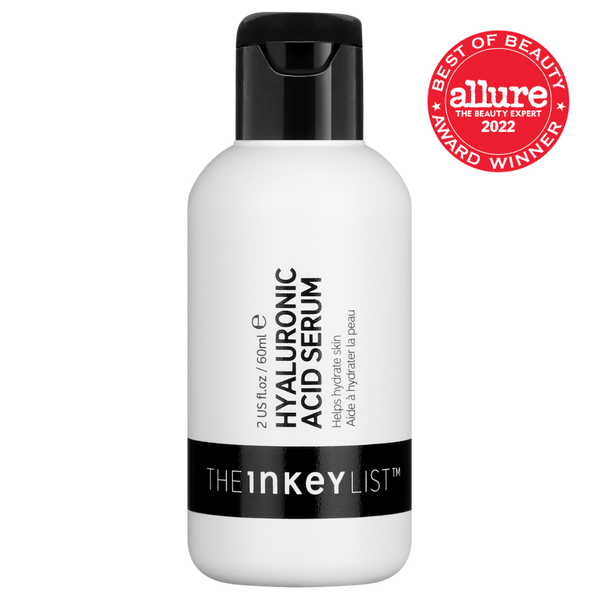
Start with our Hyaluronic Acid Serum, available at $13 for 30ml or $23 for the 60ml size. This is formulated with 2% multi-molecular hyaluronic acid at three distinct molecular weights, which means it hydrates at the surface and deeper into the skin simultaneously. It also contains Matrixyl 3000 Peptide, a peptide complex that supports skin firmness over time. Apply a few drops to damp skin immediately after cleansing and pat gently to absorb. This is the hydration foundation your routine is built on.
Step 2 - Barrier Support
Follow with our Ectoin Hydro-Barrier Serum ($17). This formula does two things at once: it hydrates with 2.5% multi-molecular hyaluronic acid, and it strengthens the skin barrier with 2% Ectoin and three ceramides. A strong barrier is what keeps the moisture you’ve just put in from escaping throughout the day. Clinically proven to reinforce barrier function, this serum is especially valuable for anyone dealing with sensitivity, dryness, or a compromised barrier.
Step 3 - Lock In with PGA
Before your moisturizer, apply our Polyglutamic Acid Serum ($17). Polyglutamic acid is a next-generation humectant that holds up to four times more moisture than hyaluronic acid. Applied over your HA serums, it acts as a seal - preventing the moisture drawn in by HA from evaporating - while also encouraging your skin to produce more of its own natural moisturizing factors over time. This step significantly extends how long your hydration lasts.
Step 4 - Moisturize and Protect
Finish with our Bio-Active Ceramide Moisturizer ($22). A moisturizer is the final seal in any skincare routine, locking in everything layered beneath it. This formula is clinically proven to firm, plump, and visibly reduce six signs of aging within 28 days. The ceramide complex strengthens the skin barrier further while the moisturizer itself creates a protective occlusive layer over your hydration stack.
This four-step approach - HA serum, barrier serum, PGA serum, moisturizer - represents a complete hydration and barrier strategy that works from the surface down. Each product has a specific job, and together they create a layered system where every step amplifies the one before it.
For more ideas on how to maximize your HA serum’s performance with complementary products, our piece on the Hyaluronic Acid Serum and Face Mist power duo is worth a read. And to see the full range of HA-powered options available, explore all our hyaluronic acid products to find the right fit for your routine. If you want a fully personalized recommendation based on your specific skin type and concerns, our skincare routine guide is the best place to start.
Now, let’s tackle the questions that come up most often about hyaluronic acid supplements.
The Verdict - and What to Do With It
Let’s bring this back to what matters most: your skin, your routine, and your decision.
Oral hyaluronic acid supplements are not a scam, and they’re not magic. They sit somewhere more interesting and more nuanced than either of those labels. The science is genuinely emerging - a 2025 meta-analysis of seven randomized controlled trials found meaningful improvements in hydration, elasticity, and wrinkle depth - but those findings come with important caveats around sample size, study duration, and the need for larger, more rigorous trials. The mechanism is indirect, the timeline is long, and the outcomes are still being characterized.
Topical hyaluronic acid, by contrast, is one of the most well-studied and well-established ingredients in skincare. It works directly, it works fast, and the evidence base behind it is wide and consistent. For anyone whose primary goal is skin hydration - achieving it, maintaining it, and building a routine around it - topical HA is the most reliable and effective tool available.
If you’re drawn to the idea of oral supplementation, the balanced take is this: approach it as a potential long-term complement to your topical routine, not as a replacement. Set realistic expectations, be consistent for at least eight weeks before drawing conclusions, and always check with your doctor or healthcare provider if you’re pregnant, breastfeeding, or managing any health conditions. Choose supplements from brands that are transparent about what’s in them and at what dose.
At INKEY, we will always give you the honest read - even when the honest read is “it’s complicated.” We’d rather help you make an informed decision than sell you on something the science doesn’t yet fully support. Knowledge drives better skincare. That’s what we’re here for.
Start with what the evidence strongly supports: a well-formulated topical routine built around ingredients that work. Our Hyaluronic Acid Serum, from $13, is clinically proven to deliver instant hydration and is the most direct first step you can take toward genuinely well-hydrated skin. Explore the full range of Hyaluronic Acid products to find the right fit for where your skin is right now. Still curious about how HA works across different skin types? Our guide on whether hyaluronic acid is good for oily skin is worth your time. And for the complete picture on this ingredient, our Hyaluronic Acid ingredient guide is where the full story lives.
Shop our Hyaluronic Acid Serum from $13 - clinically proven to deliver instant hydration from the first application.
Explore all Hyaluronic Acid products and find the right HA step for your routine.
Not sure where to start? Take our Skincare Quiz and get a personalized routine built around your skin’s needs.