



Can You Use Vitamin C When Pregnant?
Wondering if Vitamin C is safe during pregnancy? Discover why this antioxidant is considered pregnancy-friendly, how it helps brighten and protect skin, and the best way to include it in your daily routine.
Author
askINKEY skincare advisor
Published
07 July, 2026
Time to read
13 minutes
Yes - topical vitamin C is widely considered safe during pregnancy. If that’s all you needed to know, you can breathe easy. But if you want to understand why it’s safe, which forms are best suited to pregnancy-sensitized skin, what it can actually do for your complexion during these nine months, and exactly which products to reach for, you’re in the right place.
This blog focuses specifically on topical vitamin C in skincare - not oral supplementation. These are two distinct topics and should not be conflated. If you have questions about vitamin C supplements or dietary intake during pregnancy, that conversation belongs with your OB-GYN, midwife, or healthcare provider, not a skincare blog.
Pregnancy brings real skin changes - melasma, dullness, uneven tone, and heightened sensitivity - that make people pause and re-evaluate every product on their bathroom shelf. Vitamin C is one of the most frequently questioned ingredients, and the answer is clearer than you might expect. This guide covers the safety of topical vitamin C during pregnancy, the different forms of vitamin C and which are most appropriate, the skin benefits it delivers, INKEY products that are confirmed pregnancy and breastfeeding safe, how to use vitamin C correctly during pregnancy, what to avoid, and answers to the most common questions.
For a broader overview of the ingredient itself, visit the What is Vitamin C? guide. And if you want the full picture of pregnancy-safe skincare - including which ingredients to avoid - the complete guide to pregnancy-safe skincare has you covered.
This blog is for informational purposes only. Always consult your OB-GYN, midwife, or healthcare provider for personal guidance before making changes to your skincare routine during pregnancy.
Why Pregnancy Changes Your Skin
Before getting into the specifics of vitamin C, it helps to understand what pregnancy actually does to your skin - because the changes are significant, and they’re the reason so many people start questioning their routines in the first place.
The most well-known skin change during pregnancy is melasma, sometimes called the “mask of pregnancy.” Estrogen surges during pregnancy trigger a sharp increase in melanin production, making skin significantly more susceptible to hyperpigmentation. Melasma typically presents as brown or gray-brown patches across the cheeks, forehead, upper lip, and chin. It can appear gradually or seem to show up almost overnight, and UV exposure makes it considerably worse - meaning that the longer it goes unaddressed, the harder it becomes to manage.
Beyond melasma, hormonal shifts can slow skin cell turnover, leading to a dull, lackluster complexion that even the best cleansing routine struggles to lift. The fresh-faced glow associated with pregnancy is genuinely common, but so is its opposite - a flat, tired-looking skin tone that doesn’t respond the way it used to.
Skin sensitivity frequently increases during pregnancy, too. Ingredients that caused no reaction before may suddenly feel irritating or inflamed. This is an important factor when choosing which form of vitamin C to use - not all forms are equally gentle, and the difference matters more when skin is already reactive.
Finally, UV sensitivity tends to increase during pregnancy, which amplifies the need for antioxidant protection and makes daily broad-spectrum sunscreen non-negotiable. Vitamin C plays a specific and well-documented role in antioxidant defense - which is exactly why it becomes so valuable during this time.
For a full breakdown of how pregnancy affects your skin and which ingredients to avoid, see the complete guide to pregnancy-safe skincare.
Is Topical Vitamin C Safe During Pregnancy?
This is the question that brings most people here, so let’s address it directly and clearly.
Yes. Topical vitamin C is widely considered safe during pregnancy.
The reassurance comes down to how topical vitamin C actually works in the skin. Vitamin C is water-soluble, and when applied to the skin as a serum or moisturizer, it works primarily within the surface layers. Topical application involves minimal systemic absorption - it does not penetrate into the bloodstream in meaningful amounts. This is a fundamentally different situation from ingesting a supplement, where the compound enters your system directly.
A critical distinction worth making clearly: vitamin C is not retinol. Retinoids - including retinol, tretinoin, and other vitamin A derivatives - are the topical ingredients that carry genuine pregnancy concerns due to their mechanism of action and documented systemic effects. Unlike retinol, which is a vitamin A derivative recommended to avoid during pregnancy, vitamin C (ascorbic acid) is a completely different molecule with a completely different mechanism. There is no shared category of concern here.
It’s also worth noting what vitamin C is not. High-concentration salicylic acid is typically flagged during pregnancy due to concerns at clinical doses. Hydroquinone is also widely recommended against during pregnancy. Topical vitamin C does not share these concerns and is not in either category.
Harvard Health Publishing, in a review authored by dermatologists at Massachusetts General Hospital, describes topical vitamin C as a key antioxidant ingredient for skin health - confirming its established safety and efficacy profile. Research published via NIH/PubMed further supports the safety profile of topical antioxidants, including vitamin C, in cosmetic skincare formulations.
That said, this is a general guide - not a substitute for personalized medical advice. As always, confirm any new skincare products or routine changes with your OB-GYN, midwife, or healthcare provider, particularly in the first trimester.
INKEY’s Pregnancy-Safe Vitamin C Options
Knowing that topical vitamin C is safe is one thing. Knowing exactly which products are confirmed appropriate for use during pregnancy is another. Here are two INKEY formulas that carry explicit pregnancy and breastfeeding safe labeling.
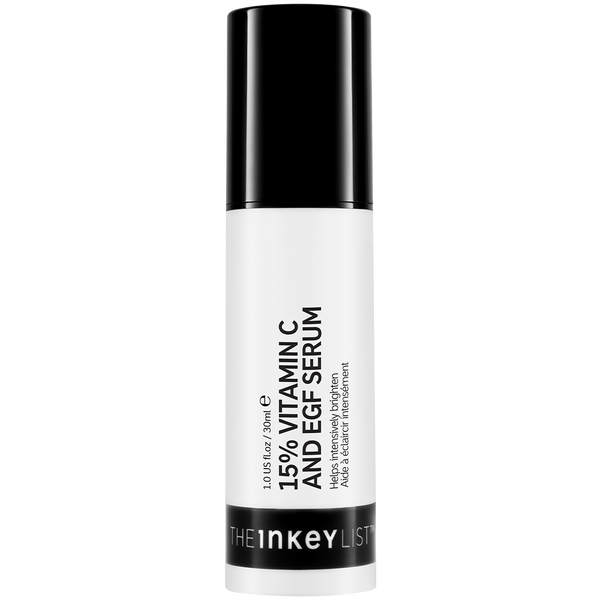
15% Vitamin C + EGF Serum - $20
The 15% Vitamin C + EGF Serum is the go-to for anyone looking for a clinically effective, pregnancy-safe brightening serum. It is explicitly listed as Pregnancy and Breastfeeding Safe - not as a general claim, but as a confirmed product attribute.
The active ingredient is 15% Ascorbyl Glucoside - a stabilized form of vitamin C where the ascorbic acid molecule is bonded to glucose. This form is significantly gentler than L-Ascorbic Acid while remaining genuinely effective. It is well-suited to pregnancy-sensitized skin precisely because it delivers the brightening and antioxidant benefits of vitamin C without the irritation potential that comes with more aggressive formulations.
The serum also contains 1% Epitensive EGF - a plant-derived Epidermal Growth Factor peptide that supports skin renewal and elasticity. It’s a thoughtful addition to a pregnancy routine because it supports the skin’s regenerative function without any of the ingredients flagged during pregnancy.
The clinical results are strong. In a 4-week independent consumer trial of 64 participants:
- 87% agreed their skin looks brighter
- 88% saw a visible improvement in the tone and texture of their skin
- 84% agreed their skin looks healthier and less dull
The formula is fragrance-free, vegan certified, and dermatologically tested - all relevant considerations for skin that may be more reactive than usual.
Vitamin B, C & E Moisturizer - $14
The Vitamin B, C & E Moisturizer is a lightweight daily moisturizer that delivers a gentler dose of vitamin C alongside complementary actives. It is confirmed pregnancy and breastfeeding safe.
The vitamin C in this formula is Sodium Ascorbyl Phosphate - another stable, gentle derivative with a low irritation potential. It functions as a daily maintenance brightener and antioxidant, rather than a targeted treatment, making it ideal for use as the moisturizing step in a morning routine or on its own as a simple, effective layer of protection and glow.
The formula also contains Niacinamide (Vitamin B3) and Vitamin E, both of which are considered pregnancy-safe and work in complementary ways to the vitamin C - supporting skin tone, barrier function, and overall resilience.
You can browse the full range of pregnancy and breastfeeding safe skincare at the pregnancy and breastfeeding safe collection, and explore all vitamin C options at the vitamin C collection.
Understanding the Different Forms of Vitamin C
Not all vitamin C in skincare is the same. The form of vitamin C in a product determines its potency, its stability, and - critically during pregnancy - its likelihood of causing irritation. Understanding the key forms helps you make a more informed choice.
For a deeper look at how vitamin C works across all of its forms, visit the What is Vitamin C? guide.
L-Ascorbic Acid
L-Ascorbic Acid is the purest and most potent form of vitamin C. It is the form most studied in clinical literature and the most immediately bioavailable to the skin. The tradeoff is instability - it oxidizes quickly when exposed to light and air, turning the formula brown and losing effectiveness - and a significantly higher irritation potential. Tingling, stinging, and redness are common with higher concentrations of L-Ascorbic Acid, even on skin that isn’t particularly reactive.
L-Ascorbic Acid is not specifically contraindicated in pregnancy when applied topically - but its irritation potential makes it a less practical choice for pregnancy-sensitized skin. If your skin is already more reactive than usual, starting with a high-strength L-Ascorbic Acid formula is likely to create more problems than it solves.
Ascorbyl Glucoside
Ascorbyl Glucoside is a stabilized derivative - vitamin C bonded to glucose. Once on the skin, the glucose is cleaved off and the ascorbic acid becomes active. The result is a form of vitamin C that is significantly gentler than L-Ascorbic Acid, highly stable, and effective at brightening and antioxidant defense.
This is the form used in the 15% Vitamin C + EGF Serum. At 15%, it delivers a meaningful dose of vitamin C in a format that is genuinely well-tolerated - including by skin that has become sensitized during pregnancy. The stability also means no guessing about whether the formula is still active.
Sodium Ascorbyl Phosphate
Sodium Ascorbyl Phosphate is another stable derivative with a particularly low irritation profile. It converts to ascorbic acid on the skin and provides antioxidant and brightening benefits, making it a strong choice for daily maintenance use. This is the form used in the Vitamin B, C & E Moisturizer, making it ideal for anyone who wants the benefits of vitamin C without layering a dedicated serum.
The key takeaway: stable vitamin C derivatives are preferred during pregnancy not because L-Ascorbic Acid is harmful topically, but because pregnancy-sensitized skin benefits from the gentler tolerance profile. The choice is a practical one, not a safety-driven one.
What Vitamin C Can Do for Your Skin During Pregnancy
The case for vitamin C during pregnancy isn’t just that it’s safe - it’s that it’s genuinely useful. Here’s what it can realistically do for your skin when your hormones are working against you.
Targeting melasma and hyperpigmentation
This is where vitamin C becomes particularly valuable during pregnancy. With hydroquinone typically advised against during pregnancy, many of the conventional approaches to managing pigmentation are off the table. Vitamin C steps in as a pregnancy-compatible alternative.
Vitamin C inhibits tyrosinase - the enzyme responsible for triggering melanin production in the skin. By interrupting this process at the enzymatic level, vitamin C addresses hyperpigmentation at its source. As noted in a review published on NIH/PubMed, this tyrosinase-inhibiting mechanism is one of vitamin C’s most well-documented actions in dermatology.
Results build with consistent daily use over four to eight weeks - set realistic expectations, but know that the mechanism is sound and the evidence is solid.
Antioxidant protection against UV and environmental damage
Pregnancy increases photosensitivity, which means the skin’s response to UV exposure is amplified. Vitamin C is one of the most well-established topical antioxidants available in skincare. As noted by Harvard Health Publishing, topical vitamin C fights harmful free radicals that come in contact with skin from external sources including UV and air pollution. This antioxidant function is especially important during pregnancy, when the hormonal environment is already priming the skin toward pigmentation.
Applying vitamin C in the morning creates a meaningful layer of defense that works alongside - not instead of - your sunscreen.
Brightening and radiance
Dullness is one of the most consistent skin complaints during pregnancy, driven by the hormonal slowdown in cell turnover. Vitamin C directly addresses this by inhibiting melanin overproduction and supporting a more even, luminous complexion. In the 4-week consumer trial of the 15% Vitamin C + EGF Serum, 87% of participants agreed their skin looks brighter and 84% agreed their skin looks healthier and less dull.
Collagen support
Vitamin C plays a well-documented role in collagen synthesis - it is essential for the hydroxylation of proline and lysine, two amino acids necessary for stable collagen formation. Research published in NIH/PubMed confirms vitamin C’s role in collagen biosynthesis pathways. For skin that may be undergoing structural changes during pregnancy, this is a meaningful long-term benefit.
Gentleness on sensitized skin
When formulated as Ascorbyl Glucoside or Sodium Ascorbyl Phosphate, vitamin C is well-tolerated on sensitized skin - including the kind of reactivity that pregnancy often brings. The 15% Vitamin C + EGF Serum is dermatologically tested and fragrance-free, making it a practical choice even when your skin is behaving less predictably than usual.
How to Use Vitamin C During Pregnancy
Knowing which products to use is only half the picture. Here’s how to actually use vitamin C during pregnancy - the right routine placement, frequency, and what to keep well away from it.
Routine Placement
Apply the 15% Vitamin C + EGF Serum after cleansing, on slightly damp skin, before your moisturizer. Morning use is strongly recommended - vitamin C’s antioxidant properties work hardest during the day, when your skin is actively exposed to UV radiation and environmental pollutants.
Use a pea-sized amount, patted gently into the face and neck. Wait approximately 60 seconds before applying your next product to allow the serum to absorb fully.
Follow with the Vitamin B, C & E Moisturizer to seal in hydration and add another layer of vitamin C, niacinamide, and vitamin E. Finish your morning routine with a broad-spectrum sunscreen - this is non-negotiable during pregnancy, particularly given increased UV sensitivity and the risk of worsening melasma.
For more detail on timing and layering, see when to use vitamin C serum.
Frequency
Daily morning use is safe and recommended. If you are new to vitamin C or your skin has become particularly reactive during pregnancy, start by applying every other morning and build to daily use over one to two weeks.
Patch test every new product before incorporating it into your full routine. Apply a small amount to the inner forearm or jawline, wait 24-48 hours, and check for any reaction before applying to your full face.
What to Avoid Alongside Vitamin C
Retinol and retinoids: Avoid these entirely during pregnancy - not because of any interaction with vitamin C, but because retinoids as a category carry documented pregnancy concerns. For more on this, see the retinol guide and the blog on using vitamin C and retinol together.
Hydroquinone: Typically advised against during pregnancy. Vitamin C is the more appropriate alternative for managing pigmentation.
High-concentration L-Ascorbic Acid formulas: Not because they are harmful topically, but because stable derivatives are better suited to pregnancy-sensitized skin.
AHAs and BHAs in the same routine step: Do not layer vitamin C directly with exfoliating acids in the same routine. If you use any acids, apply vitamin C in the morning and acids in the evening.
Safe Ingredient Combinations
Vitamin C + Hyaluronic Acid: Safe and complementary. Hyaluronic acid adds hydration that helps skin absorb vitamin C more comfortably.
Vitamin C + Niacinamide: Safe when vitamin C is formulated as Ascorbyl Glucoside, as in the INKEY formula. The Vitamin B, C & E Moisturizer combines Sodium Ascorbyl Phosphate and niacinamide in a single formula. Learn more about niacinamide.
Vitamin C + Peptides: Safe. The EGF peptide in the 15% Vitamin C + EGF Serum is a direct example of this combination working well.
The Bottom Line on Vitamin C During Pregnancy
Topical vitamin C is widely considered safe during pregnancy. It is water-soluble, minimally absorbed through the skin, and has no shared mechanism of concern with the ingredients - like retinoids or hydroquinone - that carry genuine pregnancy-related restrictions. That clarity matters when you’re trying to make confident, informed decisions about what goes on your skin.
The form of vitamin C you choose matters, practically speaking. Stable derivatives like Ascorbyl Glucoside and Sodium Ascorbyl Phosphate are the most appropriate choices during pregnancy - not because L-Ascorbic Acid is harmful topically, but because pregnancy-sensitized skin benefits from the gentler tolerance profile that stable derivatives offer.
Vitamin C addresses the skin concerns that pregnancy most commonly creates: melasma and hyperpigmentation, dullness and uneven tone, and the increased need for antioxidant protection against UV and environmental damage. Used consistently, it is one of the most functional additions you can make to a pregnancy skincare routine.
Results build with daily use. Give it four to eight weeks of consistent morning application to see the full benefit. Always pair vitamin C with a broad-spectrum sunscreen every morning - especially during pregnancy, when UV sensitivity is elevated.
And always consult your OB-GYN, midwife, or healthcare provider before making changes to your skincare routine during pregnancy. This guide provides general information, not personalized medical advice.
For the complete picture on skincare during pregnancy, visit the pregnancy-safe skincare guide. To explore the full range of INKEY products confirmed safe for pregnancy and breastfeeding, browse the pregnancy-safe collection. And for everything you need to know about how vitamin C works in skincare, the What is Vitamin C? guide is the place to start.
Ready to Start? Shop Pregnancy-Safe Vitamin C
Two products. Both pregnancy and breastfeeding safe. Both formulated with gentle, stable forms of vitamin C.
15% Vitamin C + EGF Serum - $20
The targeted brightening serum. 15% Ascorbyl Glucoside plus 1% plant-derived EGF. Fragrance-free, vegan certified, dermatologically tested. Clinically proven results in four weeks. Start here if you want a dedicated vitamin C treatment step in your morning routine.
Vitamin B, C & E Moisturizer - $14
The daily moisturizer with Sodium Ascorbyl Phosphate, Niacinamide, and Vitamin E. Pregnancy and breastfeeding safe. Ideal as a standalone moisturizer or as the hydrating follow-up to the serum.
Browse the full pregnancy and breastfeeding safe collection
See every INKEY product confirmed safe for use during pregnancy and breastfeeding in one place.
Not sure where to start? Take the Skincare Quiz to get a personalized routine built around your skin and your needs.
Frequently Asked Questions
Got a question?
Our askINKEY team are a friendly bunch of skincare experts with deep product knowledge and zero judgement. Whether you're an ingredient obsessive or just starting out, we'll make it make sense. No question too big. No question too small. We Give A Care, Every Day.


