

Retinol for Beginners: How to Start Without Irritating Your Skin
New to retinol? Learn how to start your retinol journey with confidence, avoid common mistakes and irritation, and build a beginner-friendly routine for smoother, brighter, healthier-looking skin.
Author
askINKEY skincare advisor
Published
18 July, 2026
Time to read
15 minutes
Retinol is one of the most clinically validated ingredients in modern skincare. Decades of peer-reviewed research support its efficacy for reducing fine lines, refining skin texture, evening out skin tone, and accelerating the skin’s natural renewal process. It is not hype - it is science. And yet, retinol has earned a reputation for being difficult to start with: dryness, flaking, redness, and early breakouts have caused countless beginners to abandon it before they ever see results.
The good news is that irritation is largely avoidable. With the right formula, the right approach, and the right expectations, most people can introduce retinol into their routine without significant disruption - and begin seeing real results within the first few weeks.
This guide covers everything a retinol beginner needs to know. What retinol actually does at a cellular level, which product to start with, how to build a step-by-step routine, how often to use it, what your skin is telling you during the adjustment period, and the most common mistakes that cause people to give up too early. For a deeper reference on everything retinol, visit our Complete Retinol Guide.
Whether you have never used an active skincare ingredient before or you have tried retinol in the past and found it too harsh - this is your starting point.
What Retinol Actually Does - and Why Beginners Should Care
Retinol Works at a Cellular Level - Here Is the Mechanism
Retinol is a derivative of Vitamin A, and it is one of the most extensively studied active ingredients in skincare. Its reputation is not built on marketing - it is built on biology. To understand why it delivers such consistent results across such a wide range of skin concerns, you need to understand what it actually does inside the skin.
When retinol is applied topically, it penetrates the outer layers of the skin and is converted, in two steps, into retinoic acid - the biologically active form that interacts directly with skin cells. This conversion is what allows retinol to work at a cellular level, communicating with receptors that regulate how skin cells behave. The primary effect is an acceleration of cell turnover: old, dull skin cells shed faster, and fresh, healthy cells surface more quickly. This is the engine behind retinol’s visible results. Texture refines because newer, more uniform cells replace the old uneven surface. Fine lines appear smoother because the underlying skin structure is being renewed and supported. Skin tone becomes more even because accelerated turnover disrupts the accumulation of pigment that causes post-breakout marks and uneven color.
A 2023 review published in PubMed - cited over 175 times in the scientific literature - confirmed retinol’s role in stimulating collagen production and inhibiting matrix metalloproteinases, the enzymes responsible for breaking down the skin’s structural proteins over time. In other words, retinol does not just improve the appearance of skin. It actively works to slow and counteract the biological processes that cause visible aging.
The Key Benefits of Retinol
The clinical evidence for retinol is broad and well-established. For beginners, the key benefits to know are:
- Smooths fine lines and wrinkles - by stimulating collagen production and accelerating cell turnover
- Refines skin texture - rough, uneven surfaces become visibly smoother with consistent use
- Evens skin tone - accelerated turnover helps fade post-breakout marks and discoloration
- Supports firmer-looking skin - collagen stimulation improves the structural density of the skin over time
- Unclogs and minimizes the appearance of pores - faster cell turnover prevents the buildup that leads to congestion
These are not instant results. They develop over weeks and months of consistent use - which is exactly why understanding how to start without irritation matters so much. Abandoning retinol in week two, before the adjustment period is complete, means never seeing the payoff.
Understanding the Retinoid Family
Retinol does not sit alone. It belongs to a broader family of ingredients called retinoids, all of which work by ultimately converting to retinoic acid in the skin. The difference between them lies in how many conversion steps are required - and therefore, how potent and potentially irritating they are.
Retinol requires two conversion steps to reach retinoic acid. Retinal (retinaldehyde) requires only one step, making it faster-acting. Retinoic acid itself - sold as prescription tretinoin - requires zero conversion because it is already in its active form. This is why prescription retinoids are significantly more potent, and significantly more likely to cause irritation, particularly for those new to the ingredient category.
For beginners, the starting point should always be at the gentler end of this spectrum - retinol, or a modern encapsulated retinoid complex designed to deliver efficacy with a reduced irritation profile. As your skin builds tolerance over months of consistent use, moving to a stronger form becomes a considered, gradual progression rather than a shock to the system. For a full breakdown of where retinol and retinal sit in comparison, see our guide on Retinol vs Retinal: What Is the Difference.
There is also a concept worth knowing before you start: “retinisation.” This is the skin’s adjustment period - the 2-6 weeks during which your skin adapts to retinol and may show mild dryness, flaking, or temporary sensitivity. It is normal. It is temporary. And it is largely manageable with the right supporting routine. Because retinol increases the skin’s photosensitivity, it should only ever be used in your evening routine - and SPF every morning is non-negotiable when using it consistently.
Now that the science is clear, the next step is identifying the right product for a first-time user.
The Best Retinol Products for Beginners - Where to Start
Our Starter Retinol Serum - The Ideal Starting Point
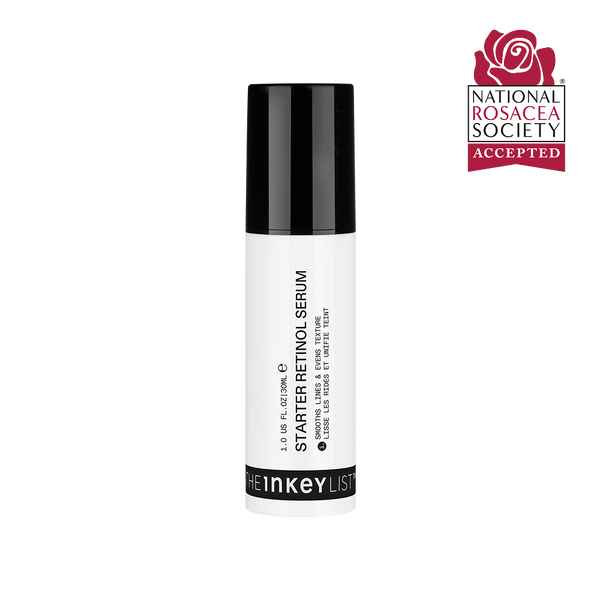
Finding the best retinol serum for beginners is not just about picking the lowest percentage on the shelf. It is about finding a formula that has been specifically engineered to deliver real results while protecting the skin barrier during the adjustment period. That is exactly what our Starter Retinol Serum ($15.00) was built to do.
The hero technology in this serum is a slow-release Dual-Retinoid Complex: 1% Granactive Pro+ (a next-generation encapsulated retinoid) combined with 0.01% Retinal. This combination is clinically proven to be 2x more effective than standard retinol - not because of a higher raw percentage, but because of how the retinoid is delivered and stabilized within the formula. The encapsulation technology keeps the active ingredient stable until it reaches the skin, then releases it gradually - maximizing efficacy while minimizing the peak concentration that causes irritation.
Beyond the retinoid complex itself, the formula includes 0.5% Amisol Trio (a lipid complex that actively supports barrier function) and 0.2% SymRelief (an active calming ingredient clinically shown to reduce redness and sensitivity). These are not filler ingredients. They are there because a beginner’s skin needs protection during the adjustment phase as much as it needs the retinoid itself.
The clinical results speak clearly:
- Smooths fine lines from 7 days - demonstrated in a 4-week clinical study of 30 participants
- 95% of users experienced zero irritation in a 4-week in vitro study
- 90% saw significant clinical improvement in the appearance of wrinkles at 4 weeks - from a 12-week consumer study of 130 participants
- 86% agreed skin tone looked more even
- 92% said skin felt noticeably smoother
This serum is suitable for all skin types - including sensitive skin and rosacea-prone skin. It is the recommended starting point for every retinol beginner, regardless of prior experience with actives.
Our Retinol Eye Cream - for the Delicate Eye Area
The skin around the eyes is the thinnest on the face - typically four to five times thinner than skin on the cheeks or forehead. Standard retinol serums are not formulated for this area. Applying a face retinol directly to the eye contour significantly increases the risk of sensitivity, redness, and barrier disruption in an already vulnerable zone.
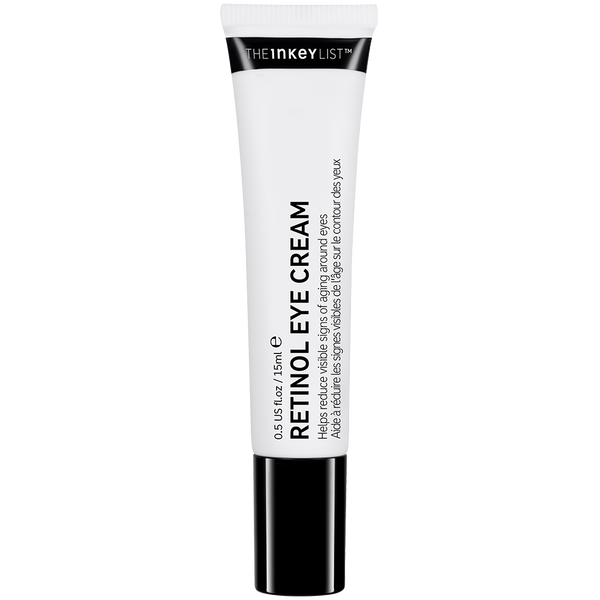
Our Retinol Eye Cream ($15.00) addresses this directly. It is powered by 3% Vitalease - a stabilized, slow-release retinoid compound formulated specifically for the eye contour, where thinner skin demands a gentler, more targeted delivery method. It reduces the appearance of fine lines and wrinkles in this area without the irritation risk of a standard face retinol.
The formula also contains Glycerin and Shea Butter, which provide hydration and a soothing cushion to the application. Apply it with your ring finger using a gentle patting motion - never dragging or pulling - working from the inner corner of the eye outward. As a bonus, it can also be used on fine lines around the mouth, though it should never be applied directly on the lips.
Build Your Beginner Retinol Routine with These Supporting Products
A retinol serum does not work in isolation. The products you apply before and after it have a significant impact on how well your skin tolerates the adjustment period - and how effective the retinol ultimately is.
Our Hyaluronic Acid Serum ($13.00) is the ideal pre-retinol step. Applied to damp skin immediately after cleansing, it creates a moisture buffer - a layer of hydration that helps reduce the dryness and tightness that some beginners experience during the first few weeks. Formulated with 2% Multi-Molecular Hyaluronic Acid at multiple molecular weights, it hydrates across multiple depths of the skin. It is lightweight, non-sticky, and appropriate for every skin type. For more on how these two ingredients work in tandem, see our guide on Hyaluronic Acid and Retinol: Can You Use Them Together?
Our Bio-Active Ceramide Moisturizer ($22.00) is the final step after retinol - and one of the most important pieces of a beginner’s routine. Applied as the last step in your evening routine, it seals in hydration and actively supports barrier recovery overnight. Its key active - Bioactive Ceramide NP - is clinically proven to firm, plump, and visibly reduce six signs of aging in 28 days. It is also central to the Moisture Sandwich Method covered in the routine section below.
When You Are Ready to Step Up - Advanced 0.2% Retinal Serum
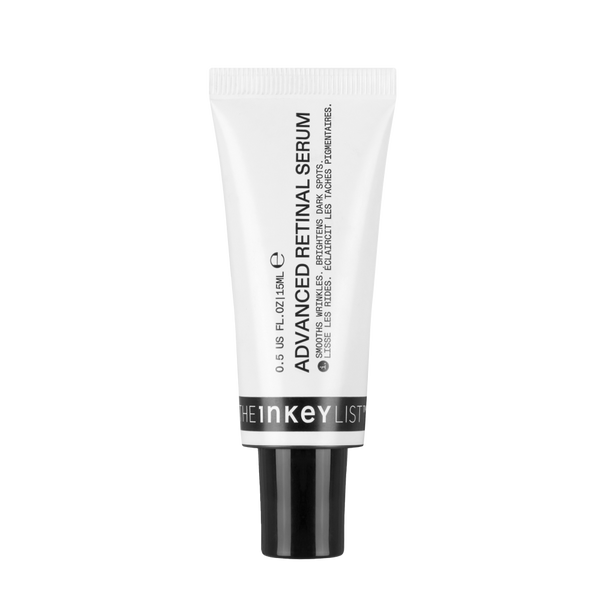
For those who have spent several months with the Starter Retinol and want to know where the journey leads: our Advanced 0.2% Retinal Serum ($22.00) is the logical next step. Formulated with 0.2% Retinal rather than Retinol, it works at one conversion step closer to retinoic acid - and is clinically proven to work up to 11x faster than standard retinol. This is not a beginner product. It is designed for experienced retinoid users who have built meaningful tolerance over time. View the full retinol range to see the complete progression from starter to advanced.
What Retinol Strength Should a Beginner Use?
Why Percentage Is Not the Whole Story
One of the most persistent myths in skincare is that a higher retinol percentage always means better or faster results. It does not. And chasing a higher number on the label is one of the most common reasons beginners experience unnecessary irritation and abandon retinol altogether.
Here is why: the percentage of retinol in a formula is only one variable in a much more complex equation. What actually determines a formula’s efficacy - and its tolerability - is a combination of three factors. First, the form of retinoid being used. Second, the delivery technology that carries it into the skin. Third, the supporting ingredients in the formula that either protect or expose the skin barrier during the process.
As the Cleveland Clinic notes, retinol is highly effective when used correctly - but the formulation context matters enormously. A 1% non-encapsulated retinol applied in a drying base will cause more irritation and potentially deliver fewer results than a well-engineered lower-percentage formula with encapsulation technology and barrier-supporting actives.
What Actually Matters in a Beginner Retinol Formula
For a beginner, the three meaningful criteria when choosing a retinol are:
-
The form of retinoid - Retinol is the appropriate starting point. More potent forms - retinal, and prescription tretinoin - should come later, once the skin has built tolerance. A gentle retinoid complex (like the Dual-Retinoid Complex in our Starter Retinol Serum) can offer enhanced efficacy while remaining suitable for first-time users.
-
Delivery technology - Encapsulation is the key. An encapsulated retinoid is housed in a protective carrier molecule that keeps it stable during storage and on the skin. It does not release its active payload immediately on contact. Instead, it releases gradually as it reaches the skin, reducing the peak concentration that causes irritation while improving the depth and consistency of delivery.
-
Supporting ingredients - A beginner formula should actively help the skin manage the adjustment period. Look for barrier-supporting lipids (like ceramides or the Amisol Trio lipid complex), calming actives (like SymRelief), and hydrating ingredients that reduce transepidermal water loss during the retinisation phase. These are not nice-to-haves. For someone new to retinol, they are the difference between sticking with it and giving up.
Understanding Encapsulated Retinol
Encapsulation is worth understanding in more detail because it is genuinely the technology that makes modern retinol formulas more accessible to beginners than older-generation products. The protective carrier surrounding the retinoid molecule serves multiple functions. It stabilizes the ingredient, which is naturally sensitive to light and air. It prevents the immediate high-concentration surface release that causes surface redness and peeling. And it allows the retinoid to travel deeper into the skin before releasing, which means better delivery to where it is most effective.
This is why our encapsulated Starter Retinol Serum is clinically proven to be 2x more effective than standard retinol - not despite being gentler, but partly because of how encapsulation improves delivery. It is a better vehicle. For anyone new to retinoids, this technology changes what “starting gently” actually means. It is no longer a trade-off between tolerability and results.
For readers who want to go deeper on how different retinoids compare across the full spectrum - from retinol to retinal to tretinoin - our Retinol vs Retinal guide and the Complete Retinol Guide cover this in full detail.
With the right product chosen, the next step is building it into a practical, sustainable routine.
How to Build Your Beginner Retinol Routine - Step by Step
The Golden Rules Before You Start
Before applying retinol for the first time, there are five foundational rules that will determine whether your introduction goes smoothly or becomes a reason to stop.
Rule one: retinol is PM only. Retinoids increase the skin’s photosensitivity - applying them in the morning exposes already-sensitized skin to UV radiation, compounding the irritation risk and reducing the ingredient’s stability. Every retinol application should be part of your evening routine only.
Rule two: SPF every morning, without exception. This is not optional. When you are using retinol, your skin is more vulnerable to UV damage than usual. A broad-spectrum SPF applied every morning protects the skin’s integrity and ensures that the results you are building with retinol are not simultaneously being undermined by unprotected sun exposure.
Rule three: a pea-sized amount is enough. Using more product does not accelerate results. For face and neck combined, a pea-sized amount is all that is needed. More than this increases irritation risk without improving efficacy.
Rule four: patch test first. Before your first full facial application, apply a small amount to the inner arm or behind the ear. Wait 24-48 hours to assess the response. If there is no unusual reaction, proceed with full facial use.
Rule five: do not apply to broken or actively irritated skin. If your skin barrier is already compromised - from a reaction, active breakouts that have been picked at, or any form of open skin - wait until it has healed before introducing retinol.
Your Step-by-Step PM Retinol Routine
A beginner’s evening retinol routine does not need to be complicated. In fact, the simpler it is, the easier it is to isolate how your skin responds.
-
Cleanse - Start with a clean base. Use a gentle cleanser and allow the skin to dry fully before moving to the next step. Applying retinol to damp or wet skin increases penetration and irritation risk significantly.
-
Hyaluronic Acid Serum - Apply immediately after cleansing, while skin is still slightly damp. The multi-molecular formula hydrates across different depths of the skin and creates a moisture buffer that helps the skin tolerate retinol application more comfortably.
-
Starter Retinol Serum - Apply a pea-sized amount to dry skin. Smooth gently over the face and down onto the neck. Do not rub aggressively - a light, even application is sufficient. Allow it to absorb for 1-2 minutes before the next step.
-
Retinol Eye Cream - Using your ring finger (the lightest pressure finger), apply with a gentle patting motion around the eye contour. Work from the inner corner outward, avoiding the lash line directly.
-
Bio-Active Ceramide Moisturizer - Apply as the final seal. This locks in hydration, supports the barrier overnight, and actively works to firm and strengthen the skin with consistent use.
The Moisture Sandwich Method - for Extra Sensitive Skin
If you have particularly reactive skin or want additional protection during the first few weeks, the Moisture Sandwich Method is a proven approach to reducing retinol’s potential to irritate.
The method works exactly as the name implies: you apply a thin layer of moisturizer first, then the retinol serum on top of it, then a second layer of moisturizer as the final step. The initial moisturizer layer acts as a buffer, slowing the penetration of the retinol and reducing peak surface concentration - much like how encapsulation works at the formulation level, but applied as a technique.
Use our Bio-Active Ceramide Moisturizer for this method. Its ceramide-rich formula supports barrier integrity while allowing the retinol to still penetrate effectively. This is particularly recommended for the first 2-4 weeks of use, after which you can reassess whether you need the buffer layer at all.
Your Morning Routine When Using Retinol
Your morning routine while using retinol should focus on repair, hydration, and protection - not introducing additional actives that could compound sensitivity.
- Gentle cleanser
- Hyaluronic Acid Serum (on damp skin)
- Bio-Active Ceramide Moisturizer
- Broad-spectrum SPF - non-negotiable on every morning after retinol use
On the nights you are not using retinol, keep it equally simple: cleanser, Hyaluronic Acid Serum, and moisturizer. This keeps the barrier strong between retinol applications and avoids over-stressing the skin during the adjustment period.
If you are looking to build a broader anti-aging skincare framework around your retinol, our Best Anti-Aging Skincare Routine guide covers how retinol fits alongside other key ingredients like Vitamin C, niacinamide, and peptides across a full AM/PM routine.
How Often to Use Retinol as a Beginner - and What to Expect Week by Week
Your Frequency Guide
The single most common reason beginners experience unnecessary irritation with retinol is using it too frequently, too soon. Frequency is not a badge of commitment. Starting slower does not mean slower results in the long run - it means your skin arrives at consistent nightly use without the disruption that forces people to stop entirely.
The recommended approach:
- Weeks 1-6: Use retinol 2-3 nights per week. Not every night. Allow the skin to recover and adapt between applications.
- Weeks 6-12: If your skin has tolerated the initial phase well - no persistent redness, no significant sensitivity - consider increasing to every other night.
- Week 12 and beyond: If the skin is comfortable with every other night, you can move to nightly use if you choose to. There is no requirement to use retinol every night to see results - consistent use 3-4 times per week delivers meaningful outcomes for most people.
Never use retinol in the morning. Every morning after a retinol application, apply a broad-spectrum SPF as part of your routine.
Reading Your Skin - What Each Stage Is Telling You
The week-by-week frequency guide above is a scaffold, not a script. The more valuable skill for a beginner to develop is the ability to read what their skin is actually communicating at each stage - and to adjust accordingly. This is where most beginner guides fall short: they give you a schedule, but not the language to interpret your own skin’s response.
Weeks 1-2: Some people feel nothing. Their skin absorbs the serum without any perceptible change. Others notice mild dryness, a sense of tightness, or very slight sensitivity. Both responses are within the normal range. The skin is beginning to adapt - cell turnover is accelerating and the barrier is adjusting. This is not a reason to stop. If tightness is noticeable, apply the Moisture Sandwich Method and ensure your Hyaluronic Acid step is consistent.
Weeks 2-4: A mild increase in breakouts can occur during this window. This is skin purging - covered in detail below - and it is a sign that the accelerated cell turnover is bringing existing congestion to the surface more quickly. Light flaking may also appear around drier areas like the nose and chin. This is still within the normal adjustment range. Do not introduce any other new active ingredients during this period - isolate retinol as the single new variable so that if anything unusual happens, you know exactly what caused it.
Weeks 4-6: The majority of people who have used retinol consistently at 2-3 nights per week will have passed the primary adjustment period by this point. Texture typically begins to refine visibly. If you are still experiencing redness or sensitivity at week 5-6, pull frequency back to once per week for 2 weeks before building back up. The skin is telling you it needs more time - listen to it.
Week 6 and beyond: Skin is typically tolerating retinol well at this stage. Texture refinement is noticeable. Fine lines appear softer. This is the point at which increasing frequency to every other night is appropriate if desired. Your skin is now adapted and ready to handle more consistent use.
When to stop completely: If you experience persistent burning that does not subside after application, significant swelling, or a broken skin barrier - where the skin feels raw and every product applied stings - stop use immediately. Rest the skin with Hyaluronic Acid and ceramide moisturizer only for 5-7 days, allow the barrier to repair, and reintroduce retinol at a lower frequency when the skin is calm again. This scenario is uncommon with a properly formulated beginner retinol - particularly our Starter Retinol Serum, where 95% of users in clinical testing experienced zero irritation - but it is worth knowing what to do if it occurs.
Understanding Skin Purging
Skin purging deserves its own explanation because it is the single most common reason beginners abandon retinol unnecessarily. Purging is a temporary increase in breakouts that can appear in the first 2-4 weeks of using retinol. It is not an allergic reaction. It is not a sign that the product is wrong for your skin.
Here is what is actually happening: retinol accelerates the skin’s cell turnover cycle, which means congestion that was sitting below the surface - not yet visible - gets pushed to the surface faster than it would have naturally. It was always going to appear. Retinol just accelerates the timeline. The result is a short-term increase in breakouts or small bumps in areas where you are normally prone to congestion.
The key distinction between purging and a genuine reaction: purging is confined to areas where you typically break out, and it resolves within 4-6 weeks. A genuine reaction tends to appear in new or unusual areas, does not resolve on its own, and may be accompanied by persistent redness or itching. If you are uncertain, consult a dermatologist.
A Realistic Retinol Results Timeline
- Week 1: Skin may feel smoother to the touch - even if no visual change is visible yet
- Weeks 2-4: Texture begins to refine. Skin tone starts to appear more even. In clinical testing of our Starter Retinol Serum, 90% of participants saw significant clinical improvement in the appearance of wrinkles by week 4
- Weeks 4-8: Visible reduction in fine lines. Firmer-looking skin. 86% of participants in the same study agreed skin tone looked more even by this stage
- Weeks 8-12: Full results with consistent use - smoother, more even-toned, more youthful-looking skin that builds progressively with continued application
Wondering what age to start retinol, or whether you should have started earlier? Read our guide on When to Start Using Anti-Aging Products for the full picture.
Common Beginner Mistakes - and What Not to Mix with Retinol
The Most Common Retinol Beginner Mistakes
Most early retinol problems are not caused by the ingredient itself. They are caused by how it is used. The good news: every mistake below is straightforward to avoid once you know what to look out for.
Mistake 1: Starting too strong, too fast. Using retinol every night from day one is the fastest route to the dryness, peeling, and sensitivity that give retinol its difficult reputation. Begin at 2-3 nights per week and let the skin build tolerance before increasing frequency.
Mistake 2: Applying to damp skin. Unlike Hyaluronic Acid - which is specifically applied to damp skin - retinol should go on after the skin has fully dried post-cleansing. Damp skin increases the rate of penetration, which increases the concentration of the active ingredient absorbed at once, which increases irritation risk. Wait 60-90 seconds after your Hyaluronic Acid has absorbed before applying retinol.
Mistake 3: Using too much product. A pea-sized amount covers the face and neck. More product does not accelerate results - it just increases the likelihood of irritation and wastes the formula.
Mistake 4: Skipping SPF in the morning. Retinol increases photosensitivity. If you apply retinol in the evening and then step outside unprotected the next morning, you are working against your own routine. Apply a broad-spectrum SPF every single morning when using retinol consistently.
Mistake 5: Giving up in week two. This is the most costly mistake. The adjustment period typically peaks in weeks 2-4, which is exactly when most people stop. By week 6-8, the skin has adapted and results begin to emerge meaningfully. Quitting during the adjustment period means never seeing the payoff that the clinical evidence consistently demonstrates.
Mistake 6: Adding too many new products at once. Introducing retinol at the same time as a new AHA, a new Vitamin C, or any other new active makes it impossible to identify what is causing a reaction if one occurs. Introduce retinol as the single new product in your routine. Give it 6-8 weeks before adding anything else.
Ingredients to Avoid Using with Retinol
Not every skincare ingredient plays well with retinol in the same routine. Understanding what to avoid - and when - prevents the combination-driven irritation that gives some people a negative experience. For the complete, detailed breakdown of ingredient interactions, see our guide on What Not to Mix with Retinol.
The key categories to be aware of:
- AHAs and BHAs (glycolic acid, lactic acid, salicylic acid): Do not use these on the same night as retinol. Both categories drive exfoliation - combining them in the same application compounds irritation risk significantly. Alternate nights instead.
- Vitamin C (ascorbic acid formulas): Use Vitamin C in your morning routine and retinol in your evening routine. Applied together at the same time, they can destabilize each other and increase the likelihood of sensitivity.
- Other retinoids: Do not layer additional retinoid products on top of a retinol serum. One retinoid in the routine is sufficient.
- Prescription retinoids: If you are using a prescription retinoid prescribed by a dermatologist or doctor, do not add an over-the-counter retinol on top of it. Consult your prescribing doctor before making any changes.
Safe Combinations - What Works Well with Retinol
Retinol pairs well with several key ingredients that either support the skin barrier or work at a different time of day without interaction risk.
- Hyaluronic Acid: Apply before retinol on damp skin in your PM routine. One of the best-supporting pairings for a beginner.
- Niacinamide: Apply before retinol to help buffer sensitivity and support the barrier. Can be used in the same PM routine.
- Ceramides and moisturizers: Apply after retinol as the sealing final step. Central to barrier support during the adjustment period.
- Peptides: Best used in the AM routine or on non-retinol evenings to avoid potential interaction. See our Peptides vs Retinol guide for more detail.
Who Should Avoid Retinol
Retinol is not appropriate for everyone. The following groups should avoid all retinoid products:
- Those who are pregnant or breastfeeding. All retinoids - topical and oral - should be avoided during pregnancy and breastfeeding. Consult a doctor before using any retinoid-containing product if you are pregnant, trying to conceive, or breastfeeding.
- Children under 18. Retinol is formulated for adult skin.
- Those currently using prescription retinoids. Do not combine prescription and over-the-counter retinoid products without medical guidance.
If you have sensitive skin but are not in any of the above categories, retinol is still accessible to you - with the right formula. Our Retinol and Sensitive Skin guide covers this in full. Not sure whether retinol is right for your specific skin profile? Take our Skin Quiz for a personalized routine recommendation.
Starting Retinol Is Simpler Than You Think
The evidence for retinol is among the strongest in skincare. Decades of clinical research, peer-reviewed studies, and real-world results consistently point to the same conclusion: retinol, used correctly and consistently, delivers meaningful, visible improvements in fine lines, texture, skin tone, and the long-term health of the skin. The only barrier standing between most beginners and those results is the intimidation that comes from not knowing where to start.
The right starting point is straightforward. Choose a formula that is engineered for beginners - encapsulated, barrier-supporting, clinically proven. Build a simple PM routine around it: Hyaluronic Acid before, ceramide moisturizer after. Start at 2-3 nights per week. Read your skin’s signals through the adjustment period - mild dryness and temporary purging are normal; persistent burning or swelling are not. Apply SPF every morning without exception. And give it the full 8-12 weeks to show what it is capable of.
Our Starter Retinol Serum was built for exactly this moment. Gentle enough for sensitive skin. Effective enough to deliver clinical results from 7 days. And priced at $15.00 because the best active ingredients in skincare should not be out of reach.
When your skin has adapted and you are ready to progress, our Advanced 0.2% Retinal Serum is waiting. But that step comes later. Right now, the most important thing is starting - and starting right.
Shop our Starter Retinol Serum - $15.00
Not sure which product is the right fit for your skin? Take our Skin Quiz for a personalized routine recommendation
Frequently Asked Questions
Got a question?
Our askINKEY team are a friendly bunch of skincare experts with deep product knowledge and zero judgement. Whether you're an ingredient obsessive or just starting out, we'll make it make sense. No question too big. No question too small. We Give A Care, Every Day.


