


How to Stop Hair Shedding: Causes & What Actually Helps
Here’s how to tell normal hair shedding from hair loss, what’s causing it, and the simple scalp routine that can help.
Author
askINKEY skincare advisor
Published
05 April, 2022
Time to read
11 minutes
Finding a few extra strands on your pillow or in the shower drain can feel alarming, but in most cases, it’s not a sign that something has gone wrong. It’s a sign that your hair is doing exactly what hair is designed to do: grow, rest, and eventually let go so something new can take its place.
Let’s start with the baseline fact: losing roughly 50 to 100 hairs a day is a completely normal part of the hair growth cycle. That number can creep higher for a while in response to things like stress, illness, seasonal changes, or hormonal shifts after pregnancy. When that happens, it’s sometimes referred to as telogen effluvium, which is just the clinical name for a temporary increase in shedding triggered by something your body is working through.
This post is focused specifically on that kind of shedding: the normal, often temporary increase that has a clear beginning and, usually, a clear end. If what you’re noticing instead is a receding hairline, a widening part, or gradual thinning in one specific area over many months, that’s a different pattern with a different set of causes, and you’ll get more useful answers from our dedicated guide on how to prevent hair loss and thinning hair. There’s no benefit in reading the wrong article for your specific situation, so it’s worth pausing here to self-select if that sounds more like you.
For everyone else, here’s what we’re covering: what actually causes hair shedding, how to tell it apart from hair loss, the scalp care that can genuinely help, and the everyday habits worth adjusting while your body resets. If you want the fuller picture on keeping your scalp in good shape generally, our scalp health page is a useful companion to this one.
Now that you know this post is about normal, temporary shedding and not progressive hair loss, it helps to understand what’s actually happening beneath the surface to cause it.
What Causes Hair Shedding? Understanding the Hair Growth Cycle
Every hair on your head is cycling through its own private timeline, independent of the hairs around it. That’s actually good news: it’s the reason you don’t lose all your hair at once, and it’s also why a disruption can cause a noticeable but temporary spike in shedding rather than permanent loss.
The cycle breaks down into three simple phases. First comes anagen, the active growth phase, where a hair follicle is actively producing new hair and can stay in this phase for years. Next is catagen, a short transitional phase where growth slows and the follicle starts to shrink. Finally there’s telogen, the resting phase, where the hair stops growing altogether and eventually sheds to make room for a new strand to begin the cycle again. At any given time, the vast majority of your hairs are in that active growth phase, with only a small percentage resting or shedding, which is exactly why the 50 to 100 hairs a day figure holds up as “normal.”
Problems arise when something pushes an unusually large number of hairs into that resting and shedding phase all at once, rather than the normal, staggered trickle. Common everyday triggers include:
- Significant physical or emotional stress
- Illness, infection, or a high fever
- Crash dieting or rapid, significant weight loss
- Iron or vitamin deficiency
- Postpartum hormonal shifts in the months after giving birth
- Seasonal shedding, which many people notice is more pronounced in the fall
- Coming off certain medications or hormonal birth control
One question that comes up often: can dehydration cause hair shedding? The honest answer is that dehydration on its own isn’t typically a primary driver of excess shedding. But hydration and nutrition don’t exist in isolation from the rest of your health. Chronic poor hydration, alongside inadequate nutrition, can affect the overall condition of your scalp and hair, and a well-hydrated, balanced scalp environment genuinely does support healthier-looking growth over time. Think of it less as a direct cause-and-effect and more as one piece of a larger picture that includes sleep, nutrition, and stress levels.
The good news in almost all of these cases is that this kind of shedding is temporary and self-resolving. Once the triggering event passes, whether that’s recovering from an illness, stabilizing hormones postpartum, or moving through a stressful period, hair typically returns to its normal shedding rate within about 3 to 6 months. That delay surprises a lot of people, since the shedding often becomes most noticeable a couple of months after the actual trigger, due to the lag built into the hair cycle itself. If you’ve recently been asking yourself “why is my hair shedding so much,” tracing back 2 to 3 months is often where the real answer is hiding.
Understanding these causes is one thing, but knowing how to apply that understanding to your own situation is what actually matters. That’s where distinguishing shedding from hair loss becomes essential, so let’s walk through exactly how to tell the two apart.
Hair Shedding vs Hair Loss: How to Tell the Difference
This is probably the most important section of this entire post, because the right next step depends entirely on which category you fall into.
Hair shedding, the kind we’ve been describing so far, is diffuse. That means it’s spread out across your whole scalp rather than concentrated in one spot, and it tends to show up everywhere you’d expect loose hair to collect: more strands in the shower drain, more on your pillow, more coming through when you brush. Crucially, it’s usually temporary, tied to an identifiable trigger, and it resolves once that trigger has passed.
Hair loss and thinning look different. Instead of being spread evenly across the scalp, this pattern is localized or progressive: a hairline that’s visibly moved back over the course of months or years, a part that’s gradually gotten wider, or a patch of scalp that’s become more visible in photos taken months apart. This category includes things like androgenetic (genetic and hormonal) thinning and conditions like alopecia, and these patterns don’t typically resolve on their own the way temporary shedding does.
Here’s a simple self-check you can run through right now:
- Has this been happening for a few weeks to a few months, and can you point to something that might have triggered it, like an illness, a stressful period, giving birth, or a change in diet?
- Or has it been a slow, gradual change playing out over a year or more, with no obvious single cause you can identify?
If the first scenario sounds like you, you’re very likely dealing with ordinary shedding, and the rest of this post is directly relevant to you. If the second scenario is closer to your experience, particularly if you’re also noticing a receding hairline or a widening part, this guide isn’t the right fit for your situation. Our guide on how to prevent hair loss and thinning haircovers that pattern specifically, including the causes and approaches that are actually relevant to progressive thinning rather than temporary shedding.
It’s worth being honest that this distinction isn’t always perfectly clean. Some people experience both at different points in their life, and it’s entirely possible to have a temporary shedding episode layered on top of underlying genetic thinning. If you’re ever genuinely unsure, that uncertainty itself is a good reason to speak with a dermatologist, who can look at your scalp directly rather than relying on a self-assessment from an article.
Assuming you’ve worked through that self-check and landed on “this sounds like temporary shedding,” the next logical question is what you can actually do to support your scalp while your body works through it.
Scalp Care That Can Help: Product Recommendations
Let’s be upfront about what scalp care can and can’t do here. No product is going to override a hormonal shift, a stressful few months, or a genuine nutrient deficiency, and anything claiming to “cure” shedding overnight should be treated with skepticism. What a thoughtful scalp routine can do is give your hair follicles a clean, balanced environment to work in while your body resolves whatever triggered the increased shedding in the first place. That’s a sensible foundation, not a guaranteed fix, and we think that distinction matters.
With that framing in place, here’s a simple two-step routine worth considering.
Step One: Exfoliate Before You Wash
The Glycolic Acid Exfoliating Scalp Scrub is designed to be used as a pre-wash step, once or twice a week, massaged directly into a dry or damp scalp before you shampoo. Its job is to clear away the product build-up, dead skin cells, and excess oil that can accumulate at the scalp over time, so your follicles aren’t sitting underneath layers of congestion.
The formula is built around 7% glycolic acid, an exfoliating acid that works to gently lift away buildup, alongside supporting ingredients chosen to work with the scalp rather than strip it. In INKEY’s own in-use testing, 92% of users agreed their hair felt healthier after 4 weeks of consistent use, which is a meaningful signal that a cleaner scalp environment translates into a noticeably different feel, not just a theoretical benefit.
Step Two: Treat Overnight
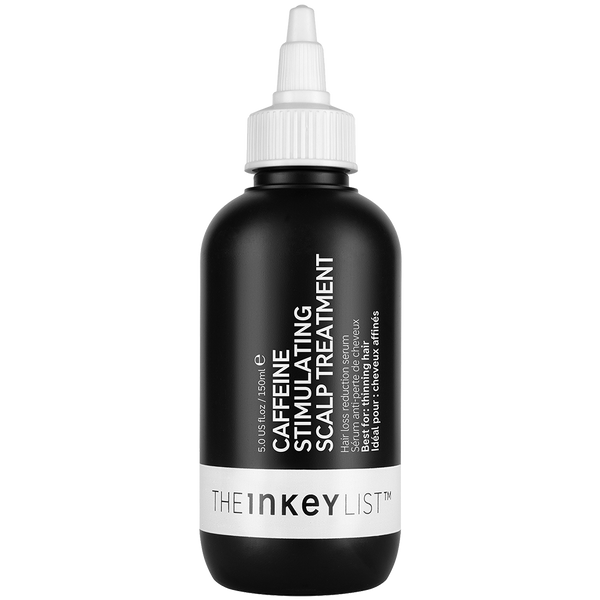
The Caffeine Stimulating Scalp Treatment is the overnight leave-on step in this routine. It’s formulated with 1% caffeine alongside Redensyl, an ingredient studied for its role in supporting the hair’s natural growth cycle. Applied nightly directly to the scalp, the idea is to work while you sleep, supporting the scalp environment over the course of consistent use.
As with most scalp and hair treatments, this isn’t a one-week product. For a fair assessment of whether it’s working for you, plan on using it nightly for at least 3 months before drawing conclusions, since hair growth and visible change both happen on a slow, biological timeline that no product can accelerate.
A quick, honest note on availability: the Caffeine Stimulating Scalp Treatment is $17.00 for 150ml, and it has been in high demand recently, which means it may show as temporarily out of stock on our US site from time to time. You can shop it here and check current availability, and it’s worth checking back if it’s sold out when you visit, since we restock regularly. The Glycolic Acid Exfoliating Scalp Scrub is $14.00 for 150ml and is currently available.
If you’re curious about glycolic acid as an ingredient beyond this one product, our glycolic acid collection is worth a browse to see how it’s used across other formulas. And if your scalp tends to feel flaky or itchy rather than just congested, the Salicylic Acid Exfoliating Scalp Treatment is a gentler, alternative pre-wash option worth considering, while the Clean & Healthy Scalp Duo bundles both core steps together if you’d rather not choose between them.
Products, though, are only one lever you can pull. The habits surrounding your hair, from what you eat to how you style it, play just as meaningful a role, so let’s get into those next.
Lifestyle, Diet and Haircare Habits That Support Healthier Shedding Patterns
A good scalp routine works best alongside everyday habits that either support or undermine your hair’s natural cycle, and this is the part of the conversation that’s easy to overlook in favor of talking about products.
Diet matters more than people expect. Protein, iron, biotin, and overall balanced nutrition all play a role in supporting the hair growth cycle, since hair follicles are metabolically active and need a steady supply of nutrients to function properly. This is also why rapid weight loss or restrictive dieting is such a well-recognized trigger for increased shedding: when the body is under nutritional stress, hair growth is one of the first non-essential processes it deprioritizes. If you’ve recently changed your eating habits significantly and noticed more shedding a couple of months later, that timeline lines up with what we’d expect.
Stress management is not a wellness cliche here, it’s physiologically relevant. Elevated stress hormones can directly push more hairs into the shedding phase of the cycle, which is part of why shedding often spikes after a genuinely difficult period, sometimes with a delay of a few months. Prioritizing sleep, finding realistic ways to manage ongoing stress, and giving your body room to recover aren’t just general health advice, they’re directly tied to the mechanism behind this type of shedding.
Handle hair gently while shedding is elevated. This is a practical, low-effort adjustment: reducing heat styling, avoiding tight hairstyles like tight ponytails or braids, and easing off harsh chemical treatments for a while can all help. None of these cause shedding on their own, but added tension or damage layered on top of an already-elevated shedding phase can make the visible effect more noticeable than it needs to be.
Scalp circulation is worth paying attention to. Gentle scalp massage, whether on its own or as part of applying a scalp treatment, is a simple, low-risk habit that many people find genuinely helpful. It’s not a guaranteed solution, but it costs nothing and takes only a minute or two, which makes it one of the easiest additions to any routine. If you want to go deeper on scalp fundamentals generally, our scalp health page covers this in more detail.
Patience is the hardest habit of all. Hair grows at roughly half an inch per month, which means any change you make, whether it’s a new product, a dietary adjustment, or a stress-reduction habit, needs time to show up in visible results. Give any new routine at least 3 months before judging whether it’s working, and resist the urge to switch things up every few weeks out of impatience. This is also a good moment to mention that if your scalp feels flaky or irritated on top of shedding, it’s worth figuring out why; our guide on dandruff vs dry scalp can help you identify which one you’re dealing with, since an irritated scalp environment doesn’t do your hair any favors.
Bringing It All Together
If there’s one thing worth taking away from all of this, it’s that some hair shedding isn’t a problem to be solved, it’s a sign that a completely normal biological process is working the way it’s supposed to. Losing 50 to 100 hairs a day is expected, and even a temporary increase beyond that range, triggered by stress, illness, postpartum changes, or diet, typically resolves within a few months once the underlying cause has passed.
A simple two-step scalp routine, exfoliating before you wash to clear away buildup and treating overnight to support the scalp environment, is a sensible, low-effort addition to lean on during that window. It’s not a guaranteed cure, and we’d rather be upfront about that than oversell it, but giving your scalp a clean, well-cared-for foundation is a genuinely useful thing to do while your body works through whatever triggered the change.
And if, after reading all of this, you’re still not sure whether what you’re experiencing is temporary shedding or something more progressive, that uncertainty is worth resolving. Our guide on how to prevent hair loss and thinning hairis built specifically for that pattern, and getting the right information for your actual situation matters more than finishing this particular article. For everyone else ready to put together a full routine, our scalp treatments collection has the full range to browse.
Clear guidance and proven ingredients only go so far without a little patience and the right information applied to your specific situation, and that’s really what this entire post has been about.
Still Have Questions? Let’s Talk It Through
If you’ve read all of this and you’re still unsure about your specific shedding pattern, which routine makes the most sense for you, or how to fit these products into what you’re already using, you don’t have to figure it out alone. Chat with an askINKEY advisor, and ask whatever’s on your mind, no question is too big or too small. If you’d rather get a personalized starting point first, our Hair & Scalp Quiz can point you toward a routine built around your specific hair and scalp needs.
Frequently Asked Questions
Got a question?
Our askINKEY team are a friendly bunch of skincare experts with deep product knowledge and zero judgement. Whether you're an ingredient obsessive or just starting out, we'll make it make sense. No question too big. No question too small. We Give A Care, Every Day.


