

Salicylic Acid for Scalp: How to Exfoliate Buildup, Oil and Flakes
If your roots feel coated a day after washing, here is how an oil-soluble BHA clears scalp buildup, oil, flakes and scalp acne, plus how often to use it.
Author
askINKEY skincare advisor
Published
22 August, 2026
Time to read
15 minutes
Salicylic acid is a beta hydroxy acid, or BHA. Unlike water-soluble acids, it is oil-soluble, which means it can work into an oily environment like a hair follicle rather than only across the surface of the skin. That single property is why salicylic acid comes up so often in conversations about scalp exfoliation, scalp buildup and oily roots.
This article covers:
- How salicylic acid works on the scalp, in plain English
- How to exfoliate your scalp, and how often
- What scalp buildup actually feels like, and what to do about it
- Who a salicylic acid scalp treatment suits
- Scalp acne and clogged hair follicles
- What is inside a 2% salicylic acid formula
- The exact method, including contact time
- Scalp treatment versus salicylic acid shampoo
- What salicylic acid will not do, plus answers to the most common questions
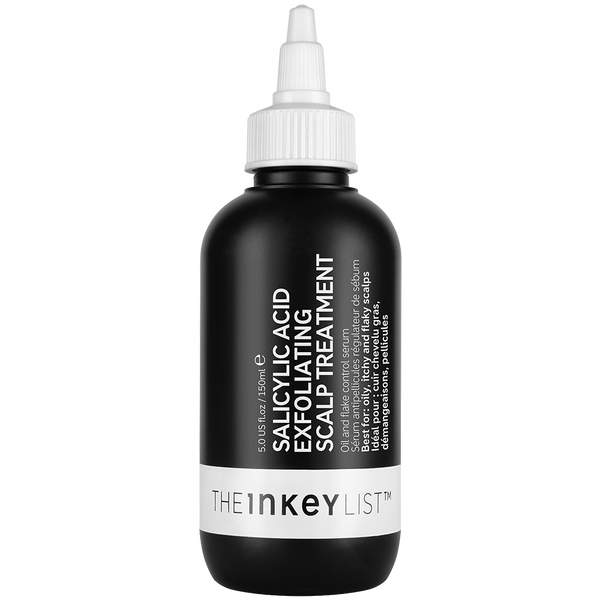
One definition before we go further. A salicylic acid scalp treatment is a leave-on exfoliating step used before you wash your hair. It is not a shampoo and it does not replace one. Our Salicylic Acid Exfoliating Scalp Treatment ($17) is the product this article is built around, and you can read more about the ingredient itself on our salicylic acid page.
If your concern turns out to be something else entirely, our full range of scalp treatments covers oiliness, flakes and thinning-looking hair.
To set expectations honestly from the start: this is a cosmetic exfoliating treatment for buildup, oiliness and the appearance of flakes. It is not a medicated product. For the bigger picture of what a healthy scalp looks and feels like, our scalp health hub is the place to start.
Everything that follows rests on the mechanism, so let us begin there.
How Does Salicylic Acid Work on the Scalp?
Start with the chemistry, because it explains almost everything else.
Acids used in skincare are broadly split by what they dissolve in. Alpha hydroxy acids such as glycolic acid are water-soluble. They work across the surface of the skin, lifting dead cells from the very top layer. Salicylic acid is a beta hydroxy acid and it is oil-soluble. Oil and water do not mix, but oil and oil do. That means salicylic acid can move into an oily environment rather than sitting on top of it.
On the scalp, that distinction matters more than it does almost anywhere else on the body.
Your scalp is skin. It sheds, it produces oil, and it responds to the right ingredients.
The second half of the mechanism is keratolytic action. Keratolytic is a technical word for a simple idea: an ingredient that helps soften and loosen the outermost layer of dead skin so it can shed rather than accumulate.
Here is what that means at a cellular level. The surface of your skin is made up of corneocytes, which are flattened dead skin cells packed together and held in place by an intercellular substance that behaves rather like cement between bricks. Salicylic acid reduces the cohesion between those cells and softens scale, so they lift and rinse away instead of building up into something visible.
This is well documented in dermatological literature. A systematic review of keratolytics published in Dermatology and Therapy describes salicylic acid as the most thoroughly studied of the known keratolytic compounds, and explains its action as reducing intercellular cohesion between corneocytes by dissolving the intercellular cement material while lowering the pH of the surface layer, which increases hydration and softening. A separate review of topical therapies in the Indian Dermatology Online Journal describes the same process as desquamation of corneocytes, and notes that salicylic acid is used on areas with a thicker outer skin layer, including the scalp.
Those are clinical papers describing the ingredient in a clinical context. They substantiate the mechanism, not any particular cosmetic product.
So why does the scalp benefit specifically? Two reasons, and they compound.
- Follicle density. The scalp holds roughly a hundred thousand hair follicles. Every one is an opening, and every opening is somewhere material can collect.
- Active oil glands. The scalp produces more sebum than most other areas of skin. Shed cells have something to cling to rather than simply falling away.
- Hair itself. Fibers physically hold onto what the scalp sheds and secretes, in a way that bare skin does not.
Put those together and you have a surface where dead cells and oil have both somewhere to gather and something to stick to. An oil-soluble, keratolytic acid is an unusually good fit for that specific set of conditions.
The mechanism in three lines:
- Oil-soluble so it can work into the follicle rather than only across the surface
- Keratolytic so it loosens the bonds holding dead cells in place
- Exfoliating so what has been loosened rinses away when you wash
One more piece: pH. Acids only behave like acids within a certain range. Formulated too high and the acid is largely inactive. Formulated too low and it becomes needlessly harsh on skin that you are going to be massaging with your fingertips. A window of pH 4.0 to 4.5 keeps salicylic acid effective while staying comfortable for scalp skin.
This is the point we return to constantly at INKEY: the scalp is skin. It has the same layers, the same shedding cycle and the same responsiveness to well-formulated actives as the skin on your face. We treat it as an afterthought largely because hair is in the way. Once you stop thinking of it as “under your hair” and start thinking of it as skin that happens to grow hair, the logic of exfoliating it stops sounding strange. Our scalp health hub goes deeper on that principle.
Understanding the mechanism is useful. Knowing what to actually do with it is more useful, so let us get practical.
How to Exfoliate Your Scalp and Clear Scalp Buildup
Most people wash their hair regularly and assume that covers everything. It does not, and the gap between washing and exfoliating is where scalp buildup lives.
Shampoo cleans. Exfoliation loosens what has bonded to the scalp surface. They are related jobs, but they are not the same job.
Shampoo is a surfactant system. It lifts oil and loose debris and carries them away in water. It is very good at that. What it is less good at is releasing material that has become adherent, sitting in and around follicles, bound up with sebum and the dead cells that have not shed cleanly. That is a different problem, and it needs a different tool.
Chemical Versus Physical Scalp Exfoliation
There are two ways to exfoliate a scalp.
Physical exfoliation works by abrasion. A scalp scrub contains particles that physically dislodge material as you massage. It is immediate, it is satisfying, and results depend partly on how you use it, because pressure and technique affect the outcome.
Chemical exfoliation works by dissolving the bonds instead of scrubbing them off. An acid-based leave-on treatment sits on the scalp, softens the connections between dead cells, and lets water do the removal when you rinse. Nothing depends on how hard you rub.
Our salicylic acid treatment contains no physical beads. That has two practical consequences. It rinses out more easily than a scrub does, which matters a lot if you have long, dense or textured hair. And the result does not vary with how vigorously you work it in, which makes it more consistent from wash to wash.
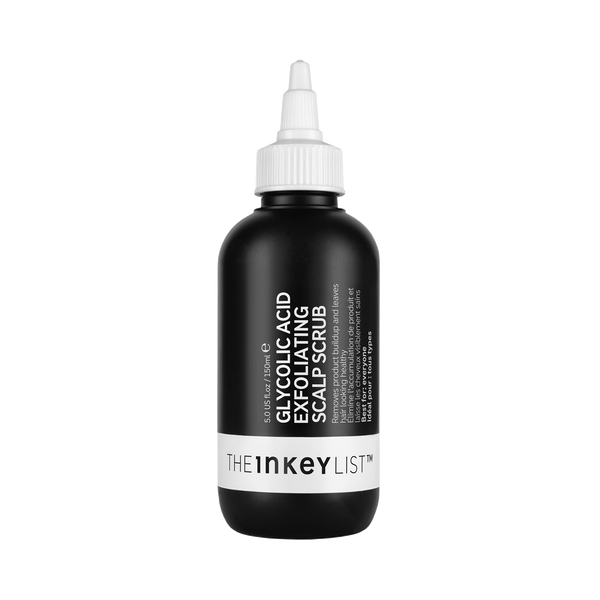
Neither format is superior in the abstract. If you prefer the tactile experience of massaging a scrub through your roots, our Glycolic Acid Exfoliating Scalp Scrub ($14) is built for exactly that. The formats simply behave differently, and the right one depends on your hair, your routine and what you enjoy using. A product you actually use beats a product you theoretically should use.
Signs Your Scalp May Need Exfoliating
People rarely describe this in clinical terms. They describe it like this:
- Your roots feel coated or filmy when you run your fingers through them, even a day after washing
- You can see flakes on your part line, your shoulders or your brush
- Your hair looks oily again fast, sooner than it used to
- Hair falls flat at the root and loses volume within hours of drying
- Styling products stop behaving. Dry shampoo sits rather than absorbs, and texture spray feels gritty instead of grippy
- Your scalp feels tight or slightly itchy in a way that washing does not resolve
If several of those sound familiar, exfoliation is a reasonable next step. Not because anything is wrong, but because your scalp is telling you that what it sheds and produces is accumulating faster than washing alone removes it.
How Often Should You Exfoliate Your Scalp?
Once or twice a week. Not daily.
This is the single most common mistake, and it comes from good intentions. If a scalp exfoliation makes your roots feel clean and light, the instinct is to do it more often. Resist it.
Over-exfoliation is a genuine risk, and the reason returns to our central point: the scalp is skin. Push exfoliation too far on your face and you get tightness, sensitivity and irritation. The scalp is no different, it is just harder to see. Your skin barrier needs time between exfoliating steps to do its job, and stripping it repeatedly can leave the scalp feeling more uncomfortable, not less.
Once a week is a sensible starting point for most people. Twice a week suits scalps that get oily quickly or that carry a lot of styling product. If you are new to acids anywhere in your routine, begin with once a week and see how your scalp responds over three or four washes before you consider increasing.
Consistency matters more than intensity. A weekly scalp exfoliation done properly for two months will do more than an aggressive fortnight followed by giving up.
Now that the practice is clear, the obvious next question is whether it applies to you.
Who Should Use a Salicylic Acid Scalp Treatment?
Scalp exfoliation is not a universal requirement. Plenty of people wash their hair, feel comfortable, and never need to think about it. This section is about recognizing whether you are one of the people who would notice a difference.
This May Suit You If
- You see flakes on your part line, your clothes or your brush
- Your scalp gets oily quickly and your roots lose freshness within a day
- Your roots feel coated, heavy or filmy even shortly after washing
- You get bumps or congestion along your scalp, hairline or the back of your neck
- You use styling products regularly and your scalp feels like it is carrying them
Those are the clearest matches. Salicylic acid addresses surface buildup, excess oil and the appearance of flakes, and if your experience maps onto that list, an exfoliating step is a logical addition to your wash day.
What About Itch?
Honesty is more useful than optimism here.
Reducing flakes and clearing surface buildup can make an itchy flaky scalp feel considerably more comfortable. When there is less material sitting on the skin, there is often less of the sensation that makes you want to scratch.
But itch has many possible causes. Product sensitivity, dryness, environmental factors, medical conditions and stress can all contribute. A cosmetic exfoliating treatment is not an anti-itch medication and it does not treat the underlying causes of persistent itching. If exfoliating helps, that is a welcome outcome. If it does not, the itch is telling you something else and deserves a different response. Our guide on how to soothe an itchy or flakey scalp covers the wider territory.
Dry Scalp Versus Dandruff
These are not the same thing, and the distinction changes what you should do. Dry scalp flakes tend to be small, fine and dry, with skin that feels tight and sometimes rough. Dandruff flakes tend to be larger, oilier and more yellow in tone, on a scalp that can look shiny rather than tight. The two are often confused because both produce visible flaking, but the causes and the right responses differ.
We go into this properly on the scalp health hub, which is the right place to work out which one you are dealing with.
Suitability
Our Salicylic Acid Exfoliating Scalp Treatment is suitable for all hair types, sensitive scalps and colored hair, and it is safe to use during pregnancy and while breastfeeding.
The formula is fragrance-free, alcohol-free, sulfate-free, silicone-free and gluten-free. It is registered vegan with the Vegan Society and Leaping Bunny approved.
A note on colored hair, since it comes up often. The treatment is applied to the scalp rather than through the lengths, sits for ten minutes, and is rinsed before you shampoo. It is not a bleaching or clarifying agent. As with any new product, patch testing first is sensible, particularly if your color is fresh.
When to See a Board-Certified Dermatologist
Cosmetic products have a defined scope, and part of using them well is recognizing where that scope ends.
If your flaking is persistent and does not improve, if your scalp is red, patchy, painful, weeping or crusting, or if flaking is accompanied by hair loss, that warrants professional assessment rather than a cosmetic product. A board-certified dermatologist can diagnose what is actually happening and recommend appropriate care. The American Academy of Dermatology publishes clear, non-commercial guidance on how to treat dandruff and on seborrheic dermatitis treatment, both of which are worth reading if persistent scaling is your situation. Conditions like these are managed clinically, and no cosmetic exfoliant is a substitute for that.
There is one concern that deserves a section of its own, because it is extremely common and almost never discussed.
Scalp Acne and Clogged Hair Follicles
Almost nobody talks about this, and almost everybody has experienced some version of it.
When people say “scalp acne,” they usually mean small bumps, breakouts or areas of congestion along the scalp, around the hairline, behind the ears or at the nape of the neck. You often notice it with your fingertips before you ever see it, because hair hides it. It can be tender when you brush, when you tie your hair back, or when you rest your head on a pillow.
These are the areas where oil and product tend to gather around follicles, and where a hat brim, a headband or a helmet strap sits against skin for hours at a time.
Why Salicylic Acid Is Relevant Here
This is the clearest practical demonstration of the mechanism described earlier.
A follicle is a small opening surrounded by oil. A water-soluble acid works across the surface and largely stops there. An oil-soluble acid can work into that oily environment, which is precisely where congestion around a follicle exists. That is why salicylic acid is the acid most associated with clogged pores on the face, and the same logic applies to clogged hair follicles on the scalp.
By loosening dead skin cells and helping reduce excess surface oil, salicylic acid addresses two of the things that contribute to a congested-feeling scalp. It is the same ingredient, the same mechanism, applied to a part of the body most people never think to include.
If salicylic acid interests you elsewhere in your routine, our acne hub covers the ingredient in a facial context, our acne scars page is there for anyone concerned about marks left behind, and the full salicylic acid collection shows the range of formats available. The salicylic acid ingredient page explains the oil-soluble mechanism in more depth.
Habits Worth Knowing About
No judgment attached to any of these. They are simply common, and easy to adjust.
- Heavy styling products left on the scalp. Waxes, pomades, thick creams and dry shampoo applied to the roots day after day without a thorough wash.
- Not washing after workouts. Sweat plus friction plus time is a reliable combination for congestion.
- Tight headwear worn for long stretches. Caps, helmets, headbands, wigs and hair tied tightly against the scalp for hours.
Small changes here often make a noticeable difference, and they cost nothing.
Manage at Home Versus See a Dermatologist
Reasonable to address at home with exfoliation and habit changes:
- Occasional small bumps that come and go
- A generally congested feeling around the hairline or nape
- Mild roughness you can feel more than see
- Blackheads or blocked-feeling follicles along the hairline
Warrants a board-certified dermatologist:
- Lesions that are painful, deep or persistent
- Widespread breakouts across the scalp
- Anything that bleeds, weeps, crusts or scars
- Bumps accompanied by hair loss in the same area
- Anything that has not improved after several weeks of sensible care
That second list is not a cosmetic problem, and treating it as one wastes time. Persistent scalp conditions are diagnosed and treated clinically, and the American Academy of Dermatology’s guidance on seborrheic dermatitis is a good starting point for understanding when professional care is the right call.
To be completely clear about scope: our Salicylic Acid Exfoliating Scalp Treatment is a cosmetic exfoliating treatment that helps reduce oil and buildup. It is not an acne medication and it does not treat any medical condition. It can make a congested-feeling scalp feel cleaner and clearer. That is a real and useful benefit, and it is a different thing from medical treatment.
Having covered who it helps and why, it is worth opening the bottle and looking at what is actually inside.
Inside the 2% Salicylic Acid Formula
Ingredient transparency means percentages and functions, not adjectives. Here is the full breakdown.
- 2% Salicylic Acid. Gently exfoliates and sloughs away dead skin cells, helping reduce the appearance of flakes and excess oil.
- 2.5% FLUIDIPURE 8G. Helps reduce the appearance of scalp redness.
- 1% Panthenol. Helps hydrate and moisturize hair, so an exfoliating step does not leave your hair feeling stripped.
- pH 4.0 to 4.5. Keeps the acid effective while staying comfortable on scalp skin.
Why 2% Specifically?
Percentage questions deserve straight answers, because higher is not automatically better.
2% is a meaningful, effective concentration for cosmetic exfoliation. It is enough to do the keratolytic work described earlier: loosening the bonds between dead surface cells so they lift and rinse away. It is also formulated to remain comfortable for regular weekly use, which matters for a product you apply directly to skin and massage in with your fingertips.
There is a trade-off in any acid formulation between strength and tolerability. A concentration you can use consistently every week for months will deliver more than a stronger one that leaves your scalp feeling sensitized after two applications. 2% sits at a well-established point on that curve.
The supporting actives are there for balance rather than decoration. FLUIDIPURE 8G addresses the appearance of redness. Panthenol handles the hydration side, which is the most common complaint about exfoliating products of any kind: the feeling of being clean but stripped. Exfoliation and hydration in the same step is deliberate.
Format
The treatment is a lightweight, non-greasy liquid in a 150ml bottle with a nozzle applicator, designed to deliver product to the scalp itself rather than through the hair. There are no physical beads, so it rinses out easily and does not depend on how hard you massage.
The nozzle sounds like a small detail. It is not. Getting an active to the scalp rather than onto the hair is most of the challenge with any scalp product, and an applicator built for parting and targeting solves a problem that a bottle of liquid does not.
The Clinical Results
100% agree flakes look instantly reduced after 1 use*
Clinically proven to visibly reduce flakes by up to 50% after 1 use*
Clinically proven to reduce scalp oiliness and increase hydration levels after 1 use*
\4-week independent clinical study of 22 people under dermatological control.*
Worth reading the footnote as well as the headline. This was an independent four-week study of 22 participants, conducted under dermatological control. That is the evidence base, stated plainly so you can judge it for yourself.
The treatment currently holds a 4.2 out of 5 rating from 373 reviews, and has been featured in InStyle and Vogue.
You can see the full ingredient list on our Salicylic Acid Exfoliating Scalp Treatment ($17) page, and the salicylic acid ingredient hub goes further into how the acid behaves across different formats. If you want the ingredient elsewhere in your routine, the salicylic acid collection brings everything together.
Knowing what is in the bottle is only half of it. Using it correctly is the other half.
How to Use Salicylic Acid on Your Scalp: Method and Contact Time
At a glance: 1 to 2 times a week, before washing, leave for 10 minutes, rinse, then shampoo.
Here is the full method.
- Shake the bottle well before use.
- Start with dry or damp hair, before you wash. This is a pre-shampoo step.
- Part your hair into sections so you can reach the scalp itself.
- Apply directly to the scalp using the nozzle, working section by section.
- Massage gently with your fingertips. Fingertips, not nails.
- Leave for 10 minutes.
- Rinse thoroughly with water.
- Shampoo as normal, then condition your lengths.
How Often
One to two times a week. More is not better with exfoliation, and the reasoning is the same as before: the scalp is skin, and skin needs recovery time between exfoliating steps.
How Long to Leave It On
10 minutes. That is the tested contact time and it is the window the formula is designed around.
Leaving it longer does not improve results. Acids do not work on a linear scale where double the time means double the effect. The keratolytic action happens within the intended window, and extending it simply increases the chance of leaving your scalp feeling uncomfortable without any additional benefit. Set a timer and use the ten minutes for something else.
Can I Leave It On Overnight?
No. This is a rinse-off treatment with a defined ten minute contact time. It is not formulated as a leave-in product and overnight use is not recommended.
Do Not Combine With Our Glycolic Scrub
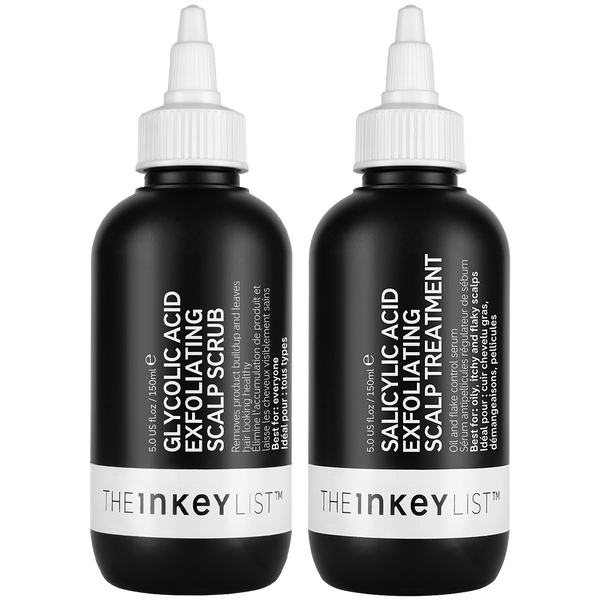
Do not use this treatment in the same wash as our Glycolic Acid Exfoliating Scalp Scrub ($14). Two exfoliating steps stacked into one wash is more than any scalp needs. If you own both, alternate them on different days.
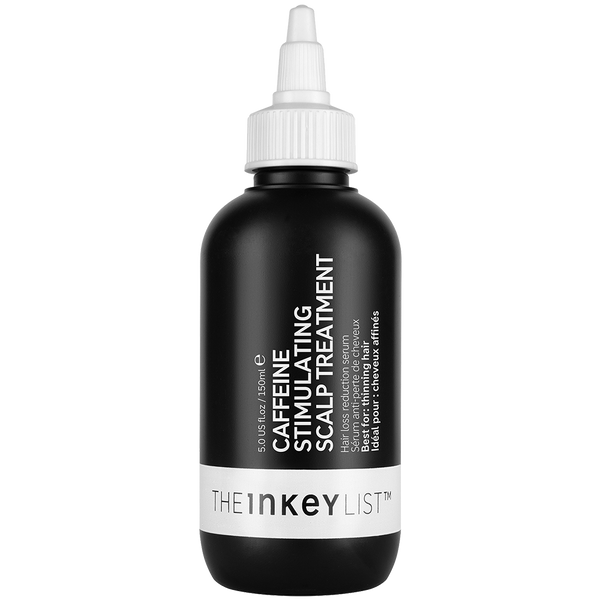
On non-exfoliating days, our Caffeine Stimulating Scalp Treatment ($17) is a leave-in option that works alongside an exfoliating routine rather than competing with it. The Clean & Healthy Scalp Duo ($29.45) pairs the products designed to be used together.
Safety Notes
- For scalp use only. This is not a face or body product.
- Avoid the eye area. If it gets in your eyes, rinse thoroughly with water.
- Do not use on broken, irritated or sunburned skin.
- Patch test first, particularly if your skin is sensitive or reactive.
- No SPF is needed afterward. The product rinses off and the scalp is largely covered by hair, so the sun sensitivity guidance that applies to facial acids does not apply in the same way here. General sun sense for exposed parts like your part line still applies.
Where This Sits on Wash Day
The sequence is simple: treatment, rinse, shampoo, condition the lengths. The exfoliating step comes first, before anything else, on the one or two days a week you use it.
That is all you need for this product. For how a complete scalp and hair routine fits together across the week, the scalp health hub is the proper guide.
Which raises a fair question: if salicylic acid is the useful part, why not just use a shampoo containing it?
Scalp Treatment vs Salicylic Acid Shampoo, and How It Compares to Glycolic Acid
It is a reasonable question and it deserves a straight answer rather than a defensive one.
Salicylic acid shampoo is a well-established, perfectly sensible category. If you have used one and liked it, nothing here is going to tell you that you were wrong. But the two formats are doing different jobs, and understanding the difference helps you decide what you actually need.
The difference is not the acid. It is how long it stays where you need it.
Contact Time
This is the core of it.
A shampoo is diluted with water the moment it hits wet hair, worked through for perhaps sixty to ninety seconds, and then rinsed away. Whatever active it contains has a short, diluted window in which to work.
A leave-on treatment is applied undiluted, directly to the scalp, and stays there for ten minutes before rinsing. That is roughly ten times the contact time at full concentration.
Chemical exfoliation is not instantaneous. It takes time for an acid to soften the bonds between surface cells. Contact time is therefore not a minor variable, it is the main one.
Application Accuracy
The second difference is where the product actually lands.
Shampoo is worked into hair. Some reaches the scalp, plenty does not, and coverage is uneven by nature. Our Salicylic Acid Exfoliating Scalp Treatment ($17) uses a nozzle applicator so you part your hair and apply to the scalp deliberately, section by section. Reviews of topical scalp therapies in the dermatological literature make a related point: the choice of vehicle materially affects how well an active is delivered to the scalp, which is why scalp-specific formats exist at all.
What a leave-on scalp treatment does well:
- Delivers the active undiluted, directly to scalp skin
- Provides a full ten minutes of contact time
- Targets precisely where buildup and congestion sit
- Works as a focused weekly or twice-weekly step
What a salicylic acid shampoo does well:
- Fits into every wash without changing your routine
- Cleanses and delivers a small amount of active in one step
- Requires no additional time in the shower
- Suits people who want maintenance rather than a targeted step
Different tools, different jobs. Many people use both. Crucially, a treatment does not replace washing your hair. You still shampoo afterward, every time.
Salicylic Acid or Glycolic Acid for Your Scalp?
Both exfoliate. They just approach it from opposite directions.
Salicylic acid is oil-soluble, so it works into the follicle rather than only across the surface. That makes it the better match for excess oil, buildup, flakes and congestion around follicles: concerns where the problem sits in and around an oily environment.
Glycolic acid is water-soluble and works across the surface of the scalp. It is a different mechanism suited to different concerns, and our Glycolic Acid Exfoliating Scalp Scrub ($14) adds a physical element that some people simply prefer to use.
If you want the full picture from the other side, read glycolic acid for scalp, and the glycolic acid ingredient page covers the acid itself. Browsing the complete range of scalp treatments is the quickest way to compare formats side by side.
Honest comparison leads naturally into honest limits.
What Salicylic Acid Will Not Do for Your Scalp
We would rather you buy the right product than buy ours. Setting accurate expectations is the most useful thing we can do here.
- It will not cure dandruff. It is a cosmetic exfoliating treatment that helps reduce the appearance of flakes.
- It will not treat seborrheic dermatitis or scalp psoriasis. Those are medical conditions requiring clinical care.
- It is not an acne medication, even though it can help with oil and buildup around follicles.
- It will not make your hair grow. A cleaner scalp environment is a good thing, but salicylic acid is not a hair growth active.
- It will not permanently stop oil production. Your scalp produces oil because that is what scalps do.
- It will not fix everything in one use. Visible improvement after a single use is supported by our clinical testing, but maintaining results requires consistency.
- It does not replace washing your hair. It is a step before shampoo, not instead of it.
A word on hair growth in particular, because it is the most common misplaced expectation. Exfoliating supports a cleaner scalp environment, and a healthy scalp is a reasonable foundation for healthy-looking hair. But that is a foundation, not a growth treatment. If your actual concern is shedding or thinning, how to prevent hair loss and thinning hair is a far more relevant read, and a longer-term approach will serve you better than a weekly exfoliant.
And to close the loop on the clinical side: persistent, red, patchy or painful flaking warrants a board-certified dermatologist. Guidance from the American Academy of Dermatology on treating dandruff makes clear that these conditions are managed with a specific clinical approach. Recognizing when a cosmetic product is not the answer is part of using cosmetic products well. Our scalp health hub is the right place to work out which category you are in.
Now for the questions people actually search for.
Conclusion
The short version, for anyone who scrolled straight here:
- How it works: Salicylic acid is an oil-soluble BHA, so it works into the follicle to loosen dead skin cells and help reduce buildup, flakes and excess oil.
- How to use it: One to two times a week, before washing, ten minutes, rinse, then shampoo.
- What it will not do: It will not treat dandruff, seborrheic dermatitis or psoriasis, and it is not an acne medication. Persistent, red, patchy or painful flaking should be seen by a board-certified dermatologist.
The idea underneath all of it is straightforward. Your scalp is skin. It sheds dead cells, produces oil and responds to well-formulated actives in exactly the way the skin on your face does. We give facial skin careful, considered attention and then treat the scalp as an afterthought, largely because hair is in the way.
Apply the same thinking to your scalp that you already apply above your eyebrows, and most of this stops being complicated. The scalp health hub is where that thinking is laid out in full, and our scalp treatments are built around it.
Where to Start
If buildup, oiliness or flakes are your concern, our Salicylic Acid Exfoliating Scalp Treatment ($17) is the place to begin. For a paired routine, the Clean & Healthy Scalp Duo ($29.45) brings the steps together, and the 3 Month Hair Growth Trio ($45.90) is there if you are thinking longer term.
Because at The INKEY List, We Give A Care.
Frequently Asked Questions
Got a question?
Our askINKEY team are a friendly bunch of skincare experts with deep product knowledge and zero judgement. Whether you're an ingredient obsessive or just starting out, we'll make it make sense. No question too big. No question too small. We Give A Care, Every Day.


