



Dandruff vs Dry Scalp: How to Tell Which You Have
Flaking and not sure what's causing it? Take the two-minute self-check to tell dandruff from dry scalp - and skip the mistake that makes it worse.
Author
askINKEY skincare advisor
Published
22 August, 2026
Time to read
12 minutes
Dandruff and dry scalp share two symptoms, flaking and itching, and that overlap is the reason they get mistaken for each other so consistently. Underneath the surface they are not the same thing at all. Dry scalp means the skin on your head is short on moisture. Dandruff is linked to Malassezia, a yeast that lives naturally on the skin, and it typically appears on a scalp that runs oily rather than dry. Telling them apart determines whether your routine helps your scalp or quietly works against it.
What follows is a step-by-step self-check you can run at home in about two minutes, the most common mistake people make when they guess wrong, how to handle it if you seem to have both, the signals that mean your scalp needs a professional rather than a product, what makes each condition worse, and an honest timeline for results. For the complete overview instead of the diagnostic deep dive, start with scalp health.
If you want a starting point right now, the products below are the shortcut.
Where To Start If You Already Know What You Are Dealing With
If you have a reasonable sense of what your scalp is doing, start here. If you do not, the self-check below will settle it in two minutes.
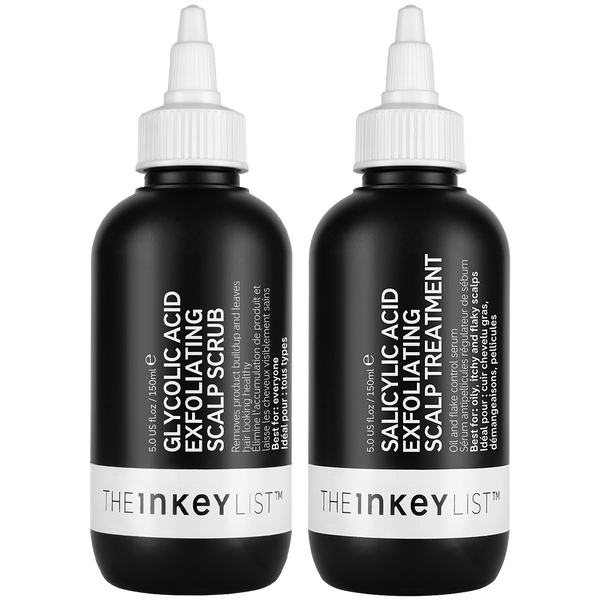
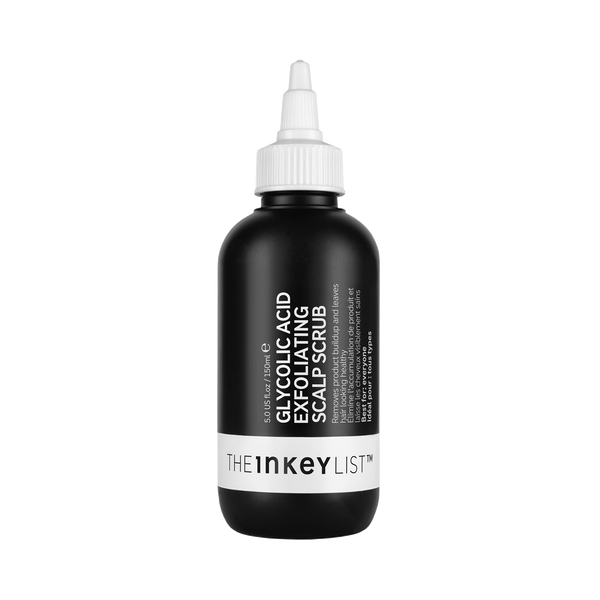
- Product buildup, dull roots and general congestion: the Glycolic Acid Exfoliating Scalp Scrub ($14) combines chemical and physical exfoliation to lift residue away from the root.
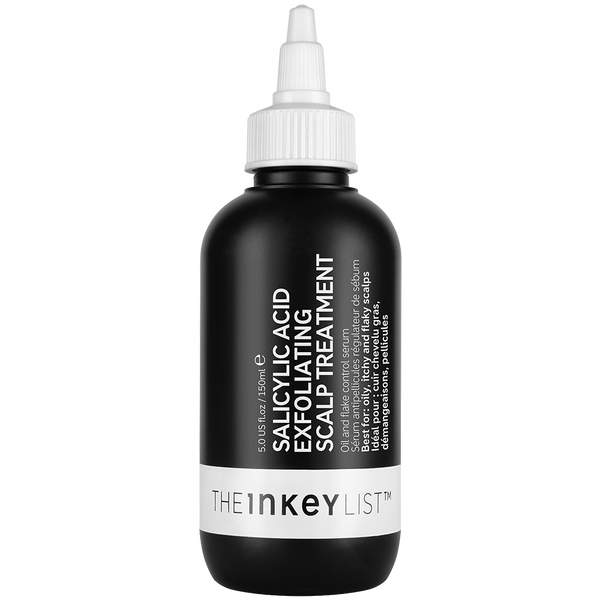
- Flakes, buildup and an oily scalp: our Salicylic Acid Exfoliating Scalp Treatment ($17) pairs 2% Salicylic Acid with 2.5% FLUIDIPURE 8G and 1% Panthenol, applied pre-wash once or twice weekly and left on for 10 minutes. Check current availability before you plan your routine around it.
- Ongoing scalp support alongside what you already use: the Caffeine Stimulating Scalp Treatment ($17), formulated with 1% caffeine and Redensyl.
Never use the Salicylic Acid Exfoliating Scalp Treatment and the Glycolic Acid Exfoliating Scalp Scrub in the same wash. Choose one per wash and alternate across separate wash days if you want both in your week.
Undecided? Browse all scalp treatments.
Most readers land here genuinely unsure which category they fall into. That is what the rest of this article resolves.
What Dry Scalp Actually Is, And What Dandruff Actually Is
The two conditions look alike from a distance and behave completely differently up close. Understanding the mechanism is what makes every diagnostic cue below meaningful instead of arbitrary.
Dry scalp: a moisture problem
- The driver: your scalp is not retaining enough moisture. Scalp skin is skin, and it dehydrates and sheds for the same reasons the skin on your face does.
- The look: small, fine, powdery flakes, white or slightly gray, dry to the touch and easily scattered.
- The feel: tight, sometimes rough or papery, often most noticeable right after a shower.
- The causes: cold weather, indoor heating, hot water and harsh cleansers. The American Academy of Dermatology covers dry scalp conditions and when dryness signals something more.
Dandruff: an oil and yeast problem
- The driver: Malassezia, a yeast that lives naturally on nearly everyone’s skin, feeds on scalp oils.
- The mechanism: as the yeast breaks down sebum, it releases oleic acid as a by-product. Some scalps respond by speeding up skin cell turnover, and accelerated turnover is what you see as flaking.
- The look: larger, thicker flakes with a waxy or greasy quality, white to yellowish in color.
- The feel: oily rather than tight, especially a day or two after washing.
This is the counter-intuitive part, and it changes how you should read your own scalp. A flaky scalp is not automatically a dry scalp. Flaking is often caused by too much oil rather than too little, which is why so many well-intentioned routines fail.
The model worth remembering: dry scalp is a moisture problem, dandruff is a microbiome and oil problem. That single split explains every cue in the self-check and every recommendation that follows it.
One caveat before you start diagnosing. An itchy scalp shows up with both conditions, so itch by itself is close to useless as a signal, even though it is the one most people weight most heavily. The AAD’s guidance on relieving scalp itch is worth reading, but for identification purposes you need to examine the flakes and feel the scalp. For the wider context, our full scalp health guide is the hub for this topic, and salicylic acid goes deeper on the ingredient.
Flaking on its own does not tell you which one you have.
With the mechanisms clear, here is how to identify what is happening on your own scalp.
The Two-Minute Scalp Self-Check You Can Do At Home
Run these steps in order, in strong light, and record what you actually observe rather than what you assume.
Do this check on day-old hair. A freshly washed scalp will lie to you.
- Wash, then wait 24 hours. Never run this check on a just-cleansed scalp. Fresh washing temporarily conceals both oil and flakes and will skew every step that follows.
- Check the flake. Part your hair under good light and examine the flakes on the scalp itself rather than the ones already on your shoulders. Small, fine, dry, white or gray and powdery indicates dry scalp. Larger, thicker, waxy or greasy, white to yellow indicates dandruff.
- Press and feel. Press a fingertip to the scalp near your part and roll it slightly. Tight, rough or papery suggests dryness. A slick or greasy residue on your finger alongside visible flakes suggests dandruff.
- Check the rest of your skin. Dry scalp usually travels with dryness elsewhere: shins, forearms, hands, face. If the rest of your skin feels fine and only your scalp flakes, dryness is a weaker explanation. Widespread dryness often points to barrier disruption, and our guide to a damaged skin barrier is the useful follow-up read.
- Check the timing pattern. Dry scalp gets worse in cold weather, in heated indoor air and after hot showers, and improves in milder conditions. Dandruff follows its own cycle, persists year-round and tends to flare with stress, heat or sweat.
- Check what happens after washing. If flaking eases for a few days post-wash and returns as your scalp gets oily again, that leans dandruff. If washing immediately intensifies tightness and flaking, that leans dry scalp.
What your answers mean
- Mostly the first option: your signals point to dry scalp. Prioritize moisture, gentleness and less stripping.
- Mostly the second option: your signals point to dandruff. Prioritize regular cleansing, oil management and buildup control.
- A genuine mix: far more common than most articles acknowledge, and handled properly two sections down.
That is how to tell if you have dandruff or dry scalp without leaving your bathroom. It is not a clinical diagnosis and it is not intended as one, but it is a much stronger basis for a decision than guessing from what lands on your shirt.
Guessing wrong is common, and the consequences are real. Here is the mistake that catches almost everyone.
The Most Common Mistake: Treating Dandruff Like Dryness
If you are flaking and your scalp feels oily, adding more oil is unlikely to be the answer.
The reasoning is intuitive and wrong. Flakes resemble dry skin, dry skin needs moisture, so the response is heavier oils, richer products and fewer washes to avoid stripping the scalp. Every step of that logic is defensible. The conclusion is still incorrect when the underlying cause is dandruff.
Why oils can make dandruff worse
Malassezia feeds on the oils on your scalp. Applying heavy oil treatments to a scalp that is already flaking because of yeast activity effectively increases the available food supply. This is not universal and it does not happen to everyone, but for some people it can make flaking worse. It is one of the least obvious dynamics in scalp care and one of the easiest ways to spend months going backward while doing something that feels nurturing.
Why washing less rarely helps
The companion instinct is to reduce washing frequency to preserve moisture. On a dandruff-prone scalp, that just lets oil and product accumulate, which is precisely the wrong direction. Regular, gentle cleansing generally does more good than harm for this scalp type.
Combine both instincts and a loop forms. More oil plus fewer washes produces more flaking. More flaking reads as worse dryness. Worse dryness justifies more oil and even fewer washes. People stay inside that loop for months, growing more convinced they have severely dry skin while the actual picture is the reverse.
If your self-check pointed to dandruff, do these three things instead:
- Maintain a regular washing schedule rather than stretching the gaps.
- Focus on gently clearing buildup and managing oil instead of layering richness onto the scalp.
- Measure progress in weeks, not days. The AAD’s guidance on dandruff care reinforces giving a consistent approach real time before judging it.
For buildup and oil specifically, our Salicylic Acid Exfoliating Scalp Treatment is clinically proven to visibly reduce flakes by up to 50% after 1 use.*
\4-week independent clinical study of 22 people under dermatological control.*
To understand the ingredient rather than just the product, salicylic acid breaks down how it works.
The mistake runs in reverse too. If your self-check pointed to dryness, attacking it with aggressive, frequent exfoliation and very hot, very frequent washing will worsen the tightness and flaking. Dryness calls for gentler and less often, not harder and more.
Plenty of people recognize themselves in both descriptions. If that is you, keep reading.
What If You Think You Have Both?
Yes, you can have both, and here is how to handle it without making either one worse.
Your scalp is not a uniform surface. An oily, flake-prone crown can coexist with a dry, tight hairline or nape, and seasonal shifts can move you between states across the year. The scalp you have in August is not necessarily the scalp you have in January.
There is also a frequent overlap driver worth naming: over-correcting. Someone with dandruff who responds by washing aggressively and exfoliating too often can end up with a scalp that is oily at the root and dried out and irritated at the surface simultaneously. Both symptom sets are genuinely present, because the routine manufactured the second problem while chasing the first.
Sequence the response rather than doubling up on it.
- Address buildup, oil and flakes first. This is the more disruptive issue and the primary driver of visible flaking.
- Then restore comfort and hydration. Once buildup is controlled, shift toward soothing and supporting rather than continuing to strip.
- Reassess after a few weeks. Avoid changing your routine every wash based on day-to-day variation.
A workable weekly rhythm is an exfoliating pre-wash treatment once or twice a week, with every other wash kept gentle. Do not run both problems at maximum intensity at once, since that is how the over-correction started.
Do not use the Salicylic Acid Exfoliating Scalp Treatment and the Glycolic Acid Exfoliating Scalp Scrub in the same wash. To use both in a week, alternate them across separate wash days.
For sensitive scalps, our Salicylic Acid Exfoliating Scalp Treatment is fragrance-free, color safe, vegan, formulated at pH 4.0 to 4.5, suitable for sensitive scalps and safe to use in pregnancy. For buildup and dull roots, the Glycolic Acid Exfoliating Scalp Scrub is the alternative, with glycolic acid covering the ingredient and glycolic acid for scalp going deeper on that use case.
There is one scenario where the answer is not a product decision at all.
When It Is Not Just Dandruff: Inflammation Is The Dividing Line
Dandruff occupies the mildest end of a spectrum. According to the AAD’s seborrheic dermatitis overview:
Dandruff may be considered the mildest form of seborrheic dermatitis.
The dividing line between them is inflammation. Dandruff alone does not typically involve visible redness or swelling. Seborrheic dermatitis does, and it frequently extends beyond the scalp to the eyebrows, the sides of the nose, behind and around the ears, and sometimes the chest. That spread is the clearest practical marker that you are dealing with more than routine flaking, and it is also what separates seborrheic dermatitis from dry scalp, which produces dryness without inflamed, greasy, well-defined patches.
Stop self-managing and get professional input if you notice:
- A visibly red, sore or swollen scalp.
- Flaky, itchy patches showing up on your face or elsewhere on your body.
- Crusting, weeping or open areas.
- Hair loss occurring alongside the flaking.
- No improvement after roughly four weeks of consistent care.
- Symptoms disruptive enough to affect your sleep or daily life.
In any of those cases, see a board-certified dermatologist.
Cosmetic scalp products are not a substitute for medical advice. Our products support scalp comfort, help manage buildup and oil, and improve the look of flakes. They are not a treatment for a medical scalp condition, and diagnosis belongs to a qualified professional. Knowing exactly where that line sits is genuinely useful, and drawing it clearly is more honest than blurring it.
With the boundary established, back to the everyday picture: what aggravates each condition, and how long change actually takes.
What Makes Each One Worse, And How Long Improvement Really Takes
Two questions remain once you know what you are dealing with. What should you stop doing, and when should you expect results?
What makes dry scalp worse
- Very hot water and long, hot showers.
- Indoor heating and cold, dry air.
- Over-washing with harsh cleansers.
- Frequent or aggressive exfoliation.
- High-heat styling aimed directly at the roots.
What makes dandruff worse
- Allowing oil and product to accumulate between washes.
- Heavy oils and rich, occlusive products applied straight to the scalp.
- Stress, widely reported as a flare-up trigger.
- Heat and sweat, including sweat left on the scalp after workouts.
- Washing too infrequently.
How long before you see a difference
- Immediately: an exfoliating pre-wash treatment can visibly change flaking after one use. With our Salicylic Acid Exfoliating Scalp Treatment, 100% agree flakes look instantly reduced after 1 use, and it is clinically proven to reduce scalp oiliness and increase hydration levels after 1 use. Apply pre-wash, once or twice weekly, leaving it on for 10 minutes before shampooing.
- The first two weeks: consistent use should reduce visible flaking and buildup. That is progress, not a permanently resolved scalp.
- Around four weeks: the honest assessment point. AAD guidance similarly emphasizes giving a consistent approach time before drawing conclusions.
- Beyond four weeks with no change: your cue to seek professional advice, as covered above.
\4-week independent clinical study of 22 people under dermatological control.*
Here is the part most brands skip. This is management, not a permanent fix. Dandruff in particular recurs. Find a routine that works, stop it, and flaking commonly returns. That is not your scalp failing or the routine failing, it is simply how the condition behaves over time.
Consistency also outperforms intensity by a wide margin. Once or twice a week, done reliably across a couple of months, beats an aggressive two weeks followed by nothing. The usual reason people conclude that nothing works is that no single approach ever got enough runway to prove itself.
Browse all scalp treatments to see the full range, and our scalp health guide places all of this inside a complete routine.
A handful of specific questions come up repeatedly, so here are direct answers.
The Takeaway
Dry scalp is about moisture, dandruff is about oil and yeast, and it is the flakes and the feel of your scalp, not the itch, that tell them apart. Fine and powdery on tight skin points one way. Larger and waxier on an oily scalp points the other. Instead of guessing, run the self-check on day-old hair and let the evidence decide.
Set expectations accordingly. This is management and consistency rather than a one-time fix, and four weeks of steady care will tell you far more than four days of intensity. If your scalp is red, sore or swollen, if flaky itchy patches appear elsewhere on your body, or if nothing has changed after about four weeks, see a board-certified dermatologist.
Clear guidance. Proven ingredients. Real results.
Find Your Routine
Still weighing two options? Browse our scalp treatments to see everything together. For buildup, dull roots and congestion, start with the Glycolic Acid Exfoliating Scalp Scrub ($14).
One final reminder: never use the Salicylic Acid Exfoliating Scalp Treatment and the Glycolic Acid Exfoliating Scalp Scrub in the same wash.
This article references guidance from the American Academy of Dermatology. It is intended for general information only. Our products are cosmetic and are not intended to diagnose, treat or cure any condition. If your symptoms are persistent or severe, see a board-certified dermatologist.
Frequently Asked Questions
Got a question?
Our askINKEY team are a friendly bunch of skincare experts with deep product knowledge and zero judgement. Whether you're an ingredient obsessive or just starting out, we'll make it make sense. No question too big. No question too small. We Give A Care, Every Day.


