

Glycolic Acid for Scalp: What It Does and How to Use It
What glycolic acid actually does on your scalp, how to use it safely, and when flaking needs a dermatologist instead.
Author
askINKEY skincare advisor
Published
05 August, 2026
Time to read
11 minutes
Glycolic acid for scalp use is straightforward once you understand the mechanism. Glycolic acid is an alpha hydroxy acid that loosens the bond holding dead skin cells together, which clears product build-up, dead skin and excess oil from the scalp before you shampoo.
That is the whole idea. Your scalp is skin, it accumulates residue like skin, and an acid designed to lift that residue works there for the same reason it works anywhere else.
This article covers the practical detail:
- What glycolic acid actually does when it meets your scalp
- Why build-up accumulates in the first place
- The signs your scalp would benefit from exfoliating, and the signs it would not
- What glycolic acid will not do, stated plainly
- How glycolic acid compares to salicylic acid specifically on the scalp
- The step by step method, including how long to leave it on
- How often to use it, who it suits, and what results to expect
- Direct answers to the questions people ask most
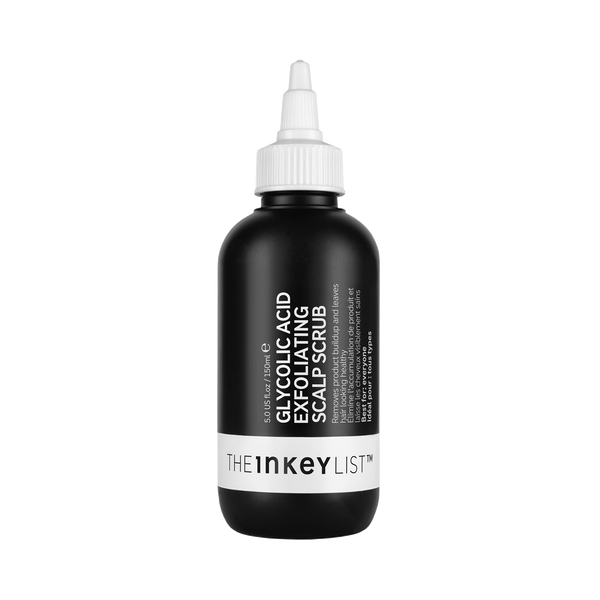
Throughout, the reference product is our Glycolic Acid Exfoliating Scalp Scrub, which is $14 for 150ml. It sits within our wider range of scalp treatments, and if you would rather have a routine built for you than assemble one yourself, our Hair and Scalp Quiz takes about two minutes.
One honest note before we start, because it shapes everything that follows. A glycolic scalp scrub is a build-up and oil product. It is not a dandruff treatment. There is a real line between those two things, and this article explains exactly where it sits rather than blurring it.
What Glycolic Acid Actually Does on Your Scalp
Glycolic acid has the smallest molecular size in the alpha hydroxy acid family. That matters because a smaller molecule moves more efficiently across the skin’s surface, which is why glycolic acid became the most widely used AHA in skincare rather than a niche one.
The mechanism is not complicated. Dead skin cells on the surface of your scalp are held together by an intercellular bond. Glycolic acid reduces the cohesion between those cells so they release and lift away instead of staying put. Cleveland Clinic’s explainer on glycolic acid describes the same process, noting that alpha hydroxy acids loosen what binds surface skin cells together so dead cells can shed.
On your face, that produces the smoother, brighter surface people associate with acid exfoliation. On your scalp, the outcome is different because the problem is different. Dead cells on the scalp do not just sit there politely. They mix with sebum and with whatever you sprayed, creamed or oiled onto your roots, and the result compacts into a film that ordinary washing does not always shift.
Your Scalp Is Skin, and It Behaves Like Skin
This is the part most hair care conversations skip. The scalp sheds on a cycle, produces sebum from its sebaceous glands, and hosts a microbiome, exactly as the skin on your face does. The difference is that it sits underneath hair, so it receives a fraction of the attention and almost none of the direct treatment.
Nobody applies a considered routine to the skin they cannot see. Most people apply shampoo, which is formulated primarily to clean hair fibers, and consider the job done.
What glycolic acid changes in practical terms:
- Follicles stay clearer of the debris that settles around them
- There is less residue sitting at the root
- Roots feel lifted rather than flat and coated
- Hair feels lighter almost immediately after rinsing
We are not going to re-explain glycolic acid from first principles here, because that ground is already covered. If you want the general ingredient background, the wider glycolic acid range and our breakdown of 5 benefits of glycolic acidboth go deeper on how the ingredient behaves across the rest of the body.
The Formula, and Why Each Percentage Earns Its Place
Our Glycolic Acid Exfoliating Scalp Scrub is built around four actives, and each one is solving a distinct part of the problem:
- 7% Glycolic Acid. The chemical exfoliant. This is the component doing the work described above, dissolving the bonds between dead skin cells so build-up and dead skin lift away rather than compacting at the root.
- 2.5% SymControl Scalp. A sebum regulator derived from a Mediterranean microalgae. Its job is to reduce sebum overproduction rather than simply strip oil that is already there. That distinction matters, and we come back to it in the next section.
- 2% Castor Beads. Physical exfoliation, working alongside the acid rather than instead of it. They are derived from hydrogenated castor oil and are 100% biodegradable, which rules out the plastic microbead problem entirely.
- 0.5% BioEcolia. A prebiotic. Exfoliation clears the surface, and a prebiotic supports the microbiome living on it, helping keep the scalp balanced rather than simply scoured clean.
The finished formula sits at pH 4.0 to 5.0, in the range where an AHA is active but the skin’s own acid environment is respected. It is free from fragrance, alcohol, silicone, sulfates and gluten. It is Vegan Society certified and Leaping Bunny approved.
The pairing of an exfoliant with a sebum regulator is the design decision worth understanding. Exfoliation alone removes what has already accumulated. A sebum regulator addresses the rate at which the oil arrives in the first place. One is cleanup, the other is upstream.
So Is Glycolic Acid Good for Hair?
This question deserves a precise answer, because the common phrasing hides a category error.
Glycolic acid works on your scalp, not on your hair fiber. It is not conditioning your strands, repairing damage along the length or altering the hair shaft in any way. When people report that their hair feels healthier after using a scalp exfoliant, what they are describing is the downstream effect of hair growing from and sitting against a cleaner surface, without a film of residue weighing down the root.
That is a genuine benefit. It is just worth being accurate about where it originates.
The same precision applies to growth. A clean follicle is a better environment than a congested one, so an exfoliating scalp treatment helps keep hair follicles clean, supports a balanced scalp microbiome, and helps boost healthy hair growth. What it does not do is regrow hair, increase density or add thickness. Any product promising that from a rinse-off scrub is selling you something the formula cannot deliver.
Now that the mechanism is clear, the obvious next question is where all that build-up came from.
Why Scalp Build-Up Happens in the First Place
Build-up is not a hygiene failure. It is the predictable result of three continuous processes meeting a fourth thing you do on purpose.
The three biological contributors run whether you think about them or not. Your scalp produces sebum, which is a good thing, because sebum is what keeps skin and hair from drying out. Your scalp sheds dead skin cells on its normal renewal cycle, as all skin does. And those two things meet each other constantly, on a surface that is warm, covered by hair and rarely exposed to air.
The fourth contributor is everything you apply.
The Products That Leave Something Behind
Most styling products are not designed to fully rinse out. That is not a flaw, it is the point. A heat protectant that vanished on contact would not protect anything, and a texturizing spray that rinsed away in the shower would not hold texture.
Common sources of root-level residue:
- Dry shampoo, which works by absorbing oil and therefore by definition leaves absorbent material sitting at the root
- Texturizing sprays and volumizing powders, formulated to grip
- Leave-in conditioners and bond treatments, which are meant to stay
- Hair oils, particularly when applied near the root rather than through the lengths
- Gels, mousses, creams and waxes, all of which cast a film
- Heat protectants, which coat deliberately
Use any of these occasionally and your regular wash keeps pace. Use several of them several times a week, stretch the gaps between washes, and the arithmetic changes. Each application adds a little more than the previous wash removed.
The Environmental Factors Nobody Mentions
A few more contributors that quietly compound the problem:
- Hard water, which leaves mineral deposits on the scalp and hair
- Sweat from exercise, especially when hair goes back up without washing
- Hats, helmets, headscarves and wigs, which trap heat and hold product against the scalp
- Longer intervals between washes, which is often a deliberate hair health choice and still increases what accumulates
Sebum Overproduction Is Its Own Driver
Some scalps simply produce more oil, and that tendency is influenced by genetics, hormones, climate and season rather than by anything you are doing wrong.
There is also a self-defeating loop worth knowing about. Aggressively stripping the scalp can prompt it to compensate, and a scalp that feels squeaky after washing but greasy by the next morning is a familiar pattern. This is precisely why our formula includes a sebum regulator alongside the exfoliant rather than relying on removal alone. Managing the production rate is a different task from removing the output.
Why Shampoo Alone Is Sometimes Not Enough
Shampoo is very good at what it is designed for: cleaning the hair fiber and lifting surface oil. It is not formulated to dissolve compacted dead skin that has bonded with styling residue and hardened into a layer.
Asking shampoo to do that is a little like asking a face wash to do the job of an exfoliant. Both are cleansers, both are useful, and they operate at different depths. A scalp exfoliant is not a replacement for shampoo. It is the step that runs before it, once or twice a week, to clear what shampoo leaves behind.
If you want the broader picture on looking after your scalp day to day, we cover it properly in Scalp Health 101 and in 5 straightforward tips for a healthy scalp and hair. This article stays focused on the exfoliation question.
Understanding the causes is useful. Recognizing the signs on your own scalp is more useful still.
The Signs Your Scalp Needs Exfoliating (And the Signs It Does Not)
Not everyone reading this needs a scalp scrub, and some people reading this should not use one right now. Both lists below matter equally.
Signs a Scalp Exfoliant May Help
- Roots that feel flat or weighed down within a day or two of washing
- A film or coating you can feel with your fingertips at the root
- Hair that gets greasy faster than it used to, without an obvious change in routine
- Dull-looking roots, where the shine sits along the lengths but not at the scalp
- A scalp that feels congested, heavy or somehow unclean even after shampooing
- Heavy dry shampoo use, particularly across consecutive days
- Frequent styling product use, especially anything designed to grip or hold
- Loose flakes that appear alongside general dryness and product residue, without redness or persistent itching
If several of those describe your scalp, exfoliation is a reasonable next step, and our Glycolic Acid Exfoliating Scalp Scrub is formulated for exactly this situation.
Signs This Is Not the Answer Right Now
- A scalp that is actively sore, broken, raw or bleeding
- Sunburn on the scalp, including along the part line
- A scalp already irritated by another treatment, such as color, bleach, chemical straightening or a strong active
- Persistent red, itchy patches with recurring flakes that come back regardless of washing
- Open scratches from scratching
- Any diagnosed scalp condition you have not discussed with a professional
That last group is the important one, and it is where a lot of published advice goes quiet.
Loose Flakes Are Not the Same as Recurring Flakes
This distinction is worth reading twice, because it determines whether a scrub helps you or wastes your money.
Loose flakes that show up with dryness and product residue, are not especially itchy, and clear up when the build-up clears, are usually just build-up. Exfoliation addresses that directly.
Persistent flaking that keeps returning, comes with visible redness, produces genuine itching, or appears in defined patches, is a different situation. That pattern points toward a condition rather than an accumulation, and exfoliating the visible flakes will not resolve it. The next section deals with this in full, because it is the most important thing in this article.
Over-Exfoliation Is Real
More is not better, and a scalp can be over-exfoliated exactly like a face. Watch for tightness after rinsing, stinging on application when there was none before, heightened sensitivity, or a scalp that feels raw or tender to touch. If any of those show up, reduce frequency or stop for a week or two and let the barrier recover.
A few safety points, all straight from the product guidance. This is a scalp-only product, so keep it away from the eyes. Do not use it on broken or irritated skin. Patch test before your first full application. And if you are genuinely unsure which route suits you, our Hair and Scalp Quiz is a faster way to narrow it down than guessing.
Which brings us to the limits.
What Glycolic Acid Will Not Do: The Honest Limits
Here is the sentence that a lot of pages competing for this search term will not print.
Glycolic acid alone is not an established treatment for dandruff or seborrheic dermatitis. A glycolic scalp scrub is for product build-up, excess oil, dead skin cells and flat-feeling roots.
That is not modesty. It is what the dermatological evidence supports, and pretending otherwise would waste the time of the people who most need accurate information.
Why Dandruff Is a Different Problem
Dandruff and seborrheic dermatitis are not accumulation problems. They are commonly linked to Malassezia, a yeast that lives naturally on human skin, feeds on sebum, and in some people triggers an inflammatory response. The visible flaking is a symptom of that inflammatory process and of accelerated skin cell turnover, not the cause of it.
This is why the recognized treatments are what they are. The American Academy of Dermatology’s guidance on seborrheic dermatitis treatment centers on medicated approaches: antifungals such as ketoconazole, along with actives including salicylic acid, selenium sulfide, zinc pyrithione and coal tar, plus anti-inflammatory options where they are needed. Glycolic acid does not appear on that list.
An international expert consensus on managing scalp seborrheic dermatitis reaches the same conclusion, setting out a management pathway built on antifungal and anti-inflammatory treatment rather than on cosmetic exfoliation.
The logic follows naturally. If a yeast and an inflammatory response are producing flakes, removing the flakes does not address either the yeast or the inflammation. You have cleared the evidence and left the mechanism running.
So Does Glycolic Acid Help With Dandruff at All?
The honest answer is a qualified and limited yes, with an important caveat.
A glycolic acid scrub may reduce the visible build-up and residue sitting on top of the scalp, and a scalp with less accumulated debris will usually look and feel better in the short term. What it is not doing is treating the underlying condition. If a condition is driving the flaking, the flaking returns, because the driver was never touched.
Hydroxy acids as a broader category have been studied in this space, and it is worth being precise about what those studies actually show. A randomized study comparing a lipohydroxy acid shampoo with an antifungal shampoo for scalp seborrheic dermatitis found both were effective across the treatment period. Lipohydroxy acid is a related molecule rather than glycolic acid itself, and it was formulated into a medicated shampoo for that trial. Separately, research on a hydroxy acid based scalp scrub regimen has assessed multi-active scrub formats in adults with seborrheic dermatitis, with encouraging tolerability findings from a small, open-label study.
Read carefully, those papers tell you that hydroxy acids have a plausible supporting role in scalp regimens. They do not tell you that a cosmetic glycolic scrub treats dandruff, and we are not going to stretch them into saying so.
Scalp Psoriasis
Do not apply exfoliating acids to psoriatic plaques or to broken skin without professional guidance. Scalp psoriasis involves a compromised skin barrier and an immune-driven process, and an acid exfoliant applied over plaques risks irritation and aggravation rather than improvement. If you have or suspect scalp psoriasis, that conversation belongs with a board-certified dermatologist before any acid goes near your scalp.
If This Sounds Like You
Persistent, itchy, red or recurring flaking is worth taking to a board-certified dermatologist. We would rather tell you that than sell you a scrub that was never going to solve it.
A diagnosis gets you to a treatment that targets the actual mechanism, usually quickly and often inexpensively. Working through cosmetic products in sequence, hoping one of them turns out to be medicine, mostly costs you months.
The Better Fit for Flaky, Itchy-Feeling Scalps
If flaking and an itchy feeling are your primary complaint rather than oiliness and residue, our Salicylic Acid Exfoliating Scalp Treatment at $17 is the more appropriate product in our range. Salicylic acid is one of the actives the AAD recognizes for scalp flaking, and our treatment is formulated as a pre-wash step for exactly that concern.
Signposting you to the right product is more useful than defending the wrong one, which makes the next comparison the natural one to make.
Glycolic Acid vs Salicylic Acid for the Scalp: How to Choose
Two pre-wash scalp treatments, two different jobs. The deciding factor is solubility, and it determines everything else.
Glycolic Acid: Surface, Residue and Oil
- Water-soluble, so it works across the surface of the scalp rather than descending into the follicle
- Lifts dead skin cells and product residue from the scalp surface
- Best suited to build-up, excess oil, dull flat roots and heavy styling product use
- Our formula adds castor beads for immediate physical exfoliation alongside the acid, so there is a tangible scrub action during massage
- Includes a sebum regulator to address oil production rather than only removing oil
- Our scrub is $14 for 150ml
Salicylic Acid: Into the Follicle
- Oil-soluble, which means it can work into the follicle itself rather than staying on the surface
- Formulated in our treatment for flaky and itchy-feeling scalps
- The active most likely to suit a scalp where flaking is the headline complaint
- No physical exfoliating beads, so it is a smoother application and easier to rinse
- Our treatment is $17 for 150ml
Which Should You Pick?
Choose glycolic if your primary complaint is residue, oiliness and roots that feel weighed down. If you use dry shampoo regularly, style frequently, or your hair feels coated at the root, that is the one.
Choose salicylic if your primary complaint is flaking and an itchy feeling. Its oil solubility and its formulation target that concern more directly.
If you genuinely have both, start with the one matching your more persistent complaint and give it four weeks before reassessing.
Can You Use Both?
Yes, but alternate them rather than layering them. That is our official product guidance and there is good reason for it. Both are exfoliating actives, and applying them together in one session significantly increases the risk of over-exfoliating a scalp barrier that is easy to push too far.
A sensible alternating pattern is one product on one wash day and the other on the next, keeping total exfoliation to one or two sessions a week combined rather than one or two of each.
This section is deliberately scalp-only. The face comparison is a genuinely different discussion, with different concentrations, different contact times and different priorities, and we cover it in glycolic acid vs salicylic acid: which is right for your skin.
You can compare the glycolic scrub and the salicylic treatment side by side, or browse all scalp treatments to see the full range in one place.
Once you have chosen, the method matters more than most people expect.
How to Use Glycolic Acid on Your Scalp, Step by Step
The short version, for anyone who came here for one specific answer: apply to a dry or damp scalp before shampooing, leave for 10 minutes, rinse thoroughly, then shampoo as normal. Use it one to two times a week.
The longer version is worth reading, because most disappointing first experiences with a scalp scrub trace back to application rather than formula.
-
Start on dry or damp hair, before shampooing. You do not need to wash first. This is a pre-shampoo treatment, and applying it to unwashed hair is correct rather than a shortcut. Working on a scalp that has build-up on it is precisely the point.
-
Shake the bottle well. The castor beads settle toward the bottom between uses, so an unshaken bottle delivers liquid without much of the physical exfoliant. Shaking also helps prevent the nozzle clogging, which is the single most common frustration people report. If the nozzle does clog, rinsing the tip under warm running water clears it.
-
Section your hair. This is the step people skip and the one that makes the biggest difference. Part your hair into rows and work across your head section by section so the nozzle reaches the scalp itself rather than depositing product on the lengths. Product sitting on your mid-lengths is doing nothing except making the rinse harder.
-
Apply enough to cover the full scalp, then massage with your fingertips. Fingertips, not fingernails. Nails scratch a surface you are already exfoliating, which is how irritation starts. Use small circular movements and cover the whole scalp, including the crown and the nape, which both get missed routinely.
-
Leave it on for 10 minutes. No longer. Set a timer if you are likely to lose track. Ten minutes is the tested contact time, and longer does not produce a better result. It increases irritation risk without increasing benefit. Do not leave it on overnight under any circumstances.
-
Rinse thoroughly, then shampoo and condition as normal. Rinse under running water with your fingertips moving continuously through the roots, which is what actually clears the beads. Then shampoo and condition as you usually would.
If You Have Thick, Curly or Coily Hair
Worth saying openly, because it is the second most common piece of feedback we see: the castor beads can be harder to rinse out of thick or textured hair.
Three things that reliably help:
- Work in smaller sections. More sections, less product per section, easier rinse.
- Allow noticeably more rinse time than you think you need. Under running water, fingertips moving through the roots rather than just letting water fall on top of the hair.
- Rinse before you shampoo, and then let the shampoo do a second pass. The shampoo step carries out anything the first rinse left behind.
None of this is a formulation flaw so much as physics. Denser hair holds more of everything, including water, conditioner and beads. Planning for a slightly longer rinse turns the most common complaint into a non-event.
Aftercare
There is very little to it. You do not need SPF on your scalp afterwards. Style as normal once your hair is clean. Patch test before your first full application, particularly if your scalp runs sensitive.
For authoritative context on alpha hydroxy acid concentration, pH and safe use, the US FDA’s guidance on alpha hydroxy acids is the reference point, and it supports the conservative frequency and contact time described here. If you are wondering what else can sit alongside this step, what products should I not layer together is a useful companion read.
Our Glycolic Acid Exfoliating Scalp Scrub is $14 for 150ml, which at once or twice weekly use lasts a considerable time.
One good session is easy. The rhythm is what produces results.
How Often to Use It, Who It Suits, and What to Expect
Frequency and Timing
One to two times a week, always pre-shampoo. Not daily, and not as a substitute for shampoo.
Start at once a week. Build to twice only if your scalp stays comfortable across a few weeks, and stay at once weekly indefinitely if that is where your scalp is happiest. There is no benefit to reaching twice weekly for its own sake.
Ten minutes of contact time, every time. Longer does not deliver more and does raise irritation risk. Independent guidance on alpha hydroxy acids consistently supports starting slow and building frequency gradually rather than beginning at maximum intensity, which is exactly the approach that produces the fewest problems.
Can You Use a Glycolic Acid Face Toner on Your Scalp?
It is a fair question, and the answer is that it is the wrong format for the job. Three reasons.
Format. A thin liquid toner runs. On a face, that is fine, because the surface is flat and open. On a scalp, gravity takes the product straight off the application point, down through the hair and toward your forehead, ears and eyes. Very little of it stays where the build-up actually is. A scrub with a targeted nozzle delivers product to the scalp itself, which is the only place it can work.
Control. Face formulas are designed for leave-on facial skin, at concentrations and a pH calibrated for that use. A scalp treatment is a different brief: a 10 minute rinse-off application, paired here with a sebum regulator and a microbiome prebiotic that address scalp-specific concerns a face toner was never built to consider.
Safety. Runoff near the eyes and hairline is a genuine issue, not a theoretical one. Anything applied at the top of your head travels downward.
Our Glycolic Acid Toner is formulated for the face. Our scalp scrub is formulated for the scalp. The same active, engineered for two different surfaces and two different application methods. The same principle applies further down: our Glycolic Acid Exfoliating Body Stick at $20 exists because body skin has its own requirements again.
Colored, Textured, Sensitive and Thinning Hair
Colored hair. Safe to use. As a pre-shampoo step that gets rinsed out and followed by shampoo and conditioner, it is not sitting on your color or interfering with it.
Textured hair. Our consumer study covered hair types 1A to 4C, so the full range was represented in testing. The practical advice repeats what the method section covered: section thoroughly, and allow extra rinsing time for coily and densely curly hair. Applying to damp rather than fully dry hair can also make distribution easier through denser textures.
Sensitive scalps. Suitable, and the formula is deliberately fragrance-free and alcohol-free, which removes two of the most common sources of irritation. Patch test first, start at once weekly, and stay there if that is comfortable.
Pregnancy and breastfeeding. Safe to use.
Thinning hair. A clean scalp supports the environment hair grows from, but this scrub is not a hair loss treatment and should not be bought as one. If you are concerned about shedding, see a board-certified dermatologist, and read how to prevent hair loss and thinning hair for the fuller picture.
What Results to Expect and When
In our consumer testing:
- 88% agreed their scalp felt cleaner immediately after use. Based on a consumer study of 52 participants with hair types 1A to 4C.
- 81% agreed their hair felt and looked healthier immediately after use. Based on a consumer study of 52 participants with hair types 1A to 4C.
- 92% agreed their hair felt healthier after four weeks of use. Based on a consumer study of 52 participants with hair types 1A to 4C.
The pattern is worth reading rather than just the numbers. The immediate effect is a cleaner-feeling scalp and lighter roots, noticeable from the first rinse. The four-week figure reflects something different: the cumulative result of consistent use, where build-up is not just cleared once but prevented from re-establishing.
Which leads to the honest expectation. This is a maintenance step, not a one-time fix. Sebum production and skin cell shedding are continuous processes, so build-up will always return. That is not a product limitation, it is how skin works. The goal is a manageable rhythm that keeps accumulation from ever reaching the point where you notice it.
A single step is useful. A routine is better, and it does not need to be complicated.
Building a Simple Scalp Routine That Works
Two products, two moments in the week. That is the whole structure.
Wash Day
Apply our Glycolic Acid Exfoliating Scalp Scrub to a dry or damp scalp, section by section. Massage in with fingertips. Leave 10 minutes. Rinse thoroughly, then shampoo and condition as normal.
Once or twice a week, depending on how much product you use and how quickly your roots feel coated.
Alternative Wash Day
If flaking and an itchy feeling are your dominant concern rather than oiliness, swap in our Salicylic Acid Exfoliating Scalp Treatment instead. Alternate the two rather than stacking them in the same session, and keep the combined total to one or two exfoliating sessions a week.
Overnight, on Non-Wash Days
Our Caffeine Stimulating Scalp Treatment at $17 is the overnight partner step. It contains 1% Caffeine and 1% Redensyl, and it goes onto a clean, dry scalp and stays there. No rinsing.
The sequencing logic is simple. Exfoliation clears the surface on wash day. The overnight treatment works on a scalp that is already clean, on the nights in between. One prepares the ground, the other uses it.
A Realistic Weekly Rhythm
- Wash day one: glycolic scrub, 10 minutes, then shampoo and condition
- The nights in between: caffeine treatment on a clean dry scalp, left in overnight
- Wash day two, optional: glycolic scrub again, or the salicylic treatment if flaking is the bigger concern that week
- Everything else: your normal shampoo, conditioner and styling, unchanged
Nothing here requires you to rebuild your hair care. It adds ten minutes to one or two showers a week and a thirty second application on some evenings.
Both the scrub and the caffeine treatment are suitable for sensitive scalps, safe for colored hair, and safe during pregnancy and breastfeeding.
On timelines: expect a cleaner-feeling scalp immediately, and treat the four-week mark as the meaningful checkpoint for how your hair feels overall. Consistency beats intensity every time. Twice a week done properly, with a full 10 minutes and a thorough rinse, will outperform an aggressive one-off session by a wide margin. Scalps respond to rhythm, not to force.
You can shop all scalp treatments to build this yourself, or take our Hair and Scalp Quiz and have the routine assembled for you in about two minutes.
A few questions come up repeatedly, so here they are with direct answers.
The Bottom Line on Glycolic Acid for Scalp Care
Glycolic acid on the scalp does one job well: it clears product build-up, dead skin and excess oil before you shampoo, leaving roots feeling lighter, cleaner and less weighed down. The method is simple enough to remember without notes. Ten minutes, once or twice a week, before you shampoo.
The boundary is just as important as the benefit. This is a build-up and oil product rather than a dandruff treatment, and persistent flaking, itching or redness deserves a board-certified dermatologist rather than another cosmetic product.
Knowing which of those two situations you are in is worth more than any ingredient. That is the thinking behind everything we make: clear guidance, proven ingredients, real results, and no claims the formula cannot support.
Find the Routine That Fits Your Scalp
If you would like a routine built around your hair and scalp rather than assembled by guesswork, take our Hair and Scalp Quiz and you will have a personalized answer in about two minutes. If you would rather choose for yourself, shop scalp treatments to see the full range.
Our Glycolic Acid Exfoliating Scalp Scrub is $14 for 150ml.
Frequently Asked Questions
Got a question?
Our askINKEY team are a friendly bunch of skincare experts with deep product knowledge and zero judgement. Whether you're an ingredient obsessive or just starting out, we'll make it make sense. No question too big. No question too small. We Give A Care, Every Day.


