



Collagen for Skin: What It Does and How to Support It
We don't sell collagen supplements or serums — so here's the honest evidence on what collagen does for skin, and what actually works
Author
askINKEY skincare advisor
Published
31 August, 2026
Time to read
14 minutes
Collagen is the protein that gives skin its structure, firmness and bounce. It sits in the deeper layers of your skin like scaffolding, holding everything up, and everyone starts losing it as they get older. That part is not up for debate.
What is up for debate is nearly everything else. Collagen for skin is one of the most searched skincare topics in the US and also one of the most oversold. There are powders to stir into coffee, gummies, sachets, creams, capsules and serums, and a great many of them promise to put back what time takes away. Some of that promise is grounded in evidence. A lot of it is not.
So this article does something simple. It explains what collagen actually does in your skin, when it starts to decline and why, whether collagen can genuinely be absorbed through the skin, whether collagen supplements are worth your money, and what really helps protect the collagen you already have.
One thing up front, because it shapes everything that follows: we do not sell a collagen supplement or a collagen serum. We have nothing to defend here. What you are about to read is the evidence as it stands.
What Does Collagen Do for Skin?
Collagen is the most abundant protein in the human body. It is in your bones, tendons, cartilage, blood vessel walls and, most relevantly here, your skin. In the dermis, the layer sitting beneath the surface you can see and touch, collagen is the main structural protein. It forms a dense, interwoven mesh of fibers that gives skin something to be built on.
The simplest way to picture it is architectural. Collagen is the scaffolding. Everything else is decoration.
Collagen is the scaffolding. Everything else is decoration.
The visible job collagen does every day
When people ask what collagen does for skin, they usually mean what it does that they can actually see in the mirror. The answer covers four things.
The first is firmness. Skin that is well supported by a dense collagen network resists gravity and pressure. It holds its shape along the jaw, the cheeks and the neck rather than settling downward.
The second is plumpness. A robust collagen matrix gives skin physical volume and thickness. It is part of why younger skin looks fuller rather than flat.
The third is bounce, or more precisely, recovery. Press a fingertip into skin with plenty of structural support and it springs back almost immediately. That responsiveness comes from the collagen network working alongside its partner proteins.
The fourth is smooth-looking texture. When the scaffolding underneath is even and well organized, the surface sitting on top of it reflects light evenly. When the scaffolding becomes patchy or disorganized, the surface starts to show it as fine lines and a slightly crepey quality.
Collagen does not work alone
This is the part most collagen content skips, and skipping it leads people to buy the wrong things. Collagen is the primary structural protein, but it is one member of a team, and the other members matter.
Elastin provides the snap-back. Where collagen supplies tensile strength and resistance, elastin supplies recoil, the ability of skin to stretch and return. Elastin makes up far less of the dermis by volume than collagen does, but its contribution is disproportionate. When elastin degrades, skin can feel slack even where structural collagen is still reasonably intact.
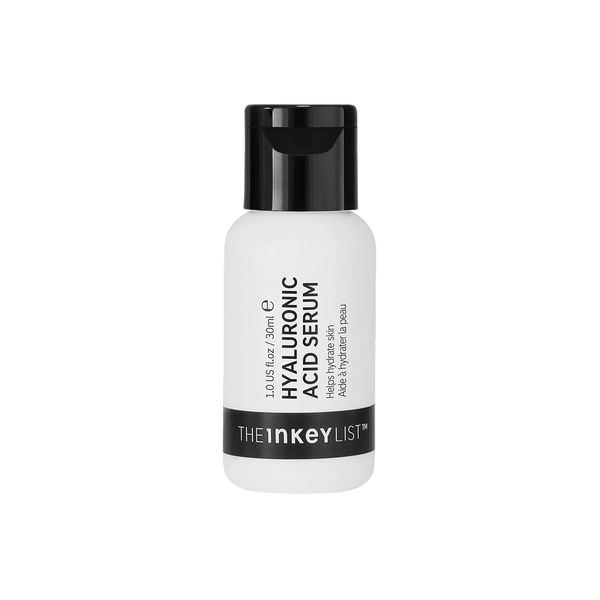
Hyaluronic acid fills the space between the fibers. It is a humectant molecule capable of holding many times its own weight in water, and it sits in the extracellular matrix keeping the whole environment hydrated and cushioned. If collagen is the scaffolding, hyaluronic acid is what keeps the structure full rather than dry and collapsed. This matters practically, because a lot of what people interpret as collagen loss is actually dehydration. Skin low on water looks flatter, feels less resilient and shows fine lines more readily, and unlike collagen decline, that particular problem responds quickly. You can read more about how it works on our hyaluronic acid page, and our Hyaluronic Acid Serumis the straightforward way to add it to a routine.
That distinction is genuinely useful. Before assuming you need to rebuild collagen, it is worth checking whether your skin is simply thirsty.
A brief word on collagen types
There are at least 28 recognized types of collagen in the human body, which sounds more complicated than it needs to be. For skin, two matter: Type I, which makes up the overwhelming majority of dermal collagen and provides most of its tensile strength, and Type III, which is more prevalent in younger skin and in healing tissue.
That is as deep as this needs to go. Any product marketing that leans heavily on collagen type numbers is usually selling specificity rather than benefit.
What changes as collagen declines
As the collagen network thins and becomes less organized, the changes are gradual and cumulative. Fine lines appear first in the areas that move most and where skin is thinnest, typically around the eyes and mouth. Firmness softens along the jawline and the neck. Skin can look flatter, slightly less luminous, and take a fraction longer to bounce back.
None of this is a defect. Collagen loss is universal, it happens to every single person, and it is not a problem you have failed to prevent. It is biology. The useful question is not how to stop it, because you cannot, but how much of the avoidable acceleration you can steer clear of.
Which raises the obvious next question: when does this actually start?
When Does Skin Stop Producing Collagen?
Let us deal with the myth first, because it is everywhere and it is wrong.
Skin does not stop producing collagen at 25. You have likely seen that claim repeated on social media, in product marketing and in countless articles. It is not accurate. Your skin does not have an expiration date, and nothing switches off on your twenty-fifth birthday.
What actually happens is far less dramatic and far more manageable. Collagen production slows. Gradually. Research indicates that collagen production declines gradually with age at a rate of roughly one percent per year from the mid-twenties onward. One percent. That is a rate of change you would struggle to perceive month to month, which is precisely why collagen loss tends to feel like it arrives suddenly in your thirties or forties when in reality it has been accumulating quietly for years.
The word that matters most in “when does skin stop producing collagen” turns out to be the wrong word entirely. It does not stop. It decelerates, and it keeps going.
Two kinds of aging, and only one you can influence
Skin aging runs on two parallel tracks, and separating them is the single most useful mental model in this entire article.
Intrinsic aging is the track you were born with. It is driven by genetics, the passage of time and hormonal change. Fibroblasts, the cells responsible for manufacturing collagen, become less productive over the years. Hormonal shifts, particularly the drop in estrogen around menopause, accelerate the decline noticeably. You cannot negotiate with any of this. It is happening to everyone, everywhere, at broadly similar rates.
Extrinsic aging is the track shaped by everything you are exposed to and everything you do. UV exposure. Smoking. Air pollution. Chronic poor sleep. Consistently high sugar intake. Repeated cycles of skin barrier damage.
Here is the insight worth holding onto: the extrinsic half is substantial, and it is the half you can actually influence.
UV is the biggest single factor
Among all the extrinsic contributors, ultraviolet exposure stands well clear of the rest. UV radiation does not simply slow collagen production, it actively accelerates collagen breakdown by triggering enzymes that degrade existing collagen fibers. Over years, this produces a distinct pattern of premature aging in sun-exposed areas, most visible when you compare the skin on someone’s face and forearms to the skin on their upper inner arm.
The practical implication is enormous, and we will come back to it properly later. For now, note the logic: if UV is the largest avoidable driver of collagen loss, then managing UV exposure is the largest available lever. Not a supplement. Not a serum. Sun protection.
The honest reassurance
You cannot stop collagen decline. Anyone telling you otherwise is selling something. But you can meaningfully slow the avoidable portion of it, and because that portion is significant, the effort is genuinely worth making.
There is also something quietly encouraging in learning the decline starts earlier and moves slower than the myth suggests. It means small, consistent habits started at any age have time to compound. If you want a structured place to begin, our guide to the best anti-aging skincare routine lays out the sequence in practical order.
Of course, once you know collagen is declining, the instinct is immediate and obvious: put it back. Apply it directly. Which brings us to the question people ask most.
Can Collagen Be Absorbed Through the Skin?
No. Whole collagen molecules cannot be absorbed through the skin into the dermis where your own collagen lives.
That is the honest answer, and it deserves to be the first sentence rather than buried in a paragraph of hedging. Now here is why, and more importantly, what topical collagen genuinely does instead, because the real answer is more interesting than a flat no.
The size problem
Skincare ingredients face a physical gatekeeper called the stratum corneum. It is the outermost layer of your skin, and its entire evolutionary purpose is to keep the outside world out. It is remarkably good at this job.
Molecular size is the main determinant of whether something gets through. As a rough working rule in cosmetic science, molecules much above 500 daltons struggle to penetrate meaningfully.
Native collagen has a molecular weight of approximately 300 kilodaltons. That is around 300,000 daltons. In skincare terms this is not merely large, it is enormous, roughly six hundred times the size of the threshold where penetration becomes difficult. A 2024 review in Molecules examining the use of collagen in cosmetic products confirms the point directly: collagen molecules are too large to penetrate the skin barrier and reach the dermis.
Asking native collagen to cross the stratum corneum is like asking a sofa to fit through a mail slot. The barrier is working exactly as designed. That is not a formulation failure, it is physics.
What topical collagen actually does
Here is where the conversation usually stops, and it should not, because topical collagen is not useless. It just does a different job than the marketing implies.
On the surface of the skin, collagen behaves as a humectant and a film-former. As a humectant it attracts and holds water at the skin’s surface. As a film-former it creates a thin, smoothing layer across the top of the skin.
The practical results of that are real and worth having. Skin feels softer. Texture looks smoother. Surface hydration improves. Skin can look temporarily plumper, because hydrated skin genuinely does look fuller. Makeup often sits better over it.
Those are legitimate cosmetic benefits. They are simply not the same as rebuilding your dermal collagen network, and the gap between those two things is where most collagen marketing lives.
What about hydrolyzed collagen?
A fair question, and the answer requires some nuance. Hydrolyzed collagen has been broken down into much smaller fragments, sometimes down to a few kilodaltons. Smaller molecules penetrate better, so hydrolyzed collagen does get somewhat further into the upper layers of the skin than native collagen manages.
But “further into the upper layers” is not the same as “into the dermis, where it becomes new structural collagen.” Collagen fibers in your dermis are assembled by your fibroblasts through a specific biological process. They are not delivered pre-made from a bottle and slotted into place. Even well-formulated hydrolyzed collagen largely stays in the superficial layers, doing hydration and smoothing work.
There is an emerging and more scientifically interesting idea that certain small peptide fragments may act as signals rather than building blocks, and that some ingredients can help support natural collagen production. Note the wording carefully. Help support natural collagen production is an honest, evidence-appropriate claim. Language suggesting a topical product stimulates or rebuilds dermal collagen outright goes further than the evidence sustains, and we would rather stay on the right side of that line even when it makes for less exciting copy.
So what about collagen serums?
If you are shopping the collagen serum category, adjust your expectations rather than avoiding it entirely. A collagen serum can be a decent hydrating product. What it will not do is meaningfully increase the collagen density in your dermis, and the honest framing is that you are buying surface hydration and smoothing rather than structural change.
Which reframes the whole question productively. If applied collagen cannot rebuild collagen, the genuinely useful question becomes: which ingredients actually communicate with your skin and help support its own processes? That points squarely toward peptides, and we will get there shortly.
First, though, if you cannot put collagen on your skin, the next thing most people try is putting it in their body.
Do Collagen Supplements for Skin Actually Work?
Before anything else, the disclosure that makes this section worth reading: we do not sell collagen supplements. No powder, no capsule, no gummy, no sachet. We have no product to protect and no revenue riding on your conclusion. What follows is a straight read of the evidence.
Collagen supplements for skin are a genuinely enormous market, and the volume of searching around them reflects real confusion. Let us work through it properly.
We don’t sell a collagen supplement. So here’s the evidence, straight.
First, the mechanism question
When you swallow collagen, it does not travel intact to your face. Digestion breaks proteins down into amino acids and short peptide chains, which are absorbed through the gut and distributed throughout the body according to whatever your body currently needs. There is no biological delivery route that routes ingested collagen preferentially to your dermis.
This is the single most common misunderstanding about collagen supplements. Drinking collagen does not deposit collagen in your skin any more than eating chicken makes you feathery.
The actual scientific proposal is more subtle. The theory is that specific collagen-derived peptide fragments, particularly di- and tripeptides that survive digestion intact, may circulate and act as signals. Under this model the fragments are not raw material but messengers, potentially prompting fibroblasts toward greater collagen-related activity. It is a plausible mechanism and it has some laboratory support. It is not a settled one.
The evidence in favor
The case for collagen supplements is not nothing, and it deserves fair presentation.
A 2023 systematic review and meta-analysis of 26 randomized controlled trials, covering 1,721 participants in total, found statistically significant improvements in skin hydration and skin elasticity in participants taking hydrolyzed collagen compared with placebo.
That is a meaningful body of evidence. Twenty-six RCTs is not a handful of anecdotes, and randomized placebo-controlled designs are the appropriate tool for this question. Hydration and elasticity are also real, measurable outcomes rather than vague wellness language.
The findings on wrinkle depth were weaker and less consistent across studies. So the positive signal, where it exists, is strongest on skin quality measures rather than on structural change.
Now the counterweight
Here is the finding that almost no article about collagen supplements includes, and it changes the picture considerably.
A 2025 review published in The American Journal of Medicine by Myung and colleagues analyzed 23 randomized controlled trials on oral collagen and skin. When the researchers separated the trials by funding source, a 2025 review found that studies not funded by industry showed no significant effect.
Read that again, because it is the most important sentence in this section. The positive results clustered in industry-funded research. The independently funded studies did not replicate them.
This does not prove collagen supplements do nothing. Industry funding does not automatically invalidate a study, and there are legitimate reasons why companies fund research on their own products. But funding-source effects are a well-documented phenomenon across nutrition and pharmaceutical research, and when a benefit largely disappears in independent trials, the honest interpretation is that the effect is less certain than the marketing suggests.
The practical caveats worth knowing
Several structural limitations run through this literature, and they apply to the positive studies as much as the negative ones.
Study duration is short. Most trials run 8 to 12 weeks. Skin aging operates over decades. A twelve-week trial tells you about short-term hydration and elasticity, not about long-term structural outcomes.
Sample sizes are often small. Many individual trials involve a few dozen participants, which limits how much confidence any single result can carry.
Source and dose vary enormously. Marine collagen, bovine collagen, porcine collagen, different hydrolysis processes, doses ranging from around 2.5 grams to 15 grams daily. Pooling these into one meta-analysis is statistically convenient but biologically messy.
Regulation is loose. In the US, supplements are not held to the pre-market approval standards applied to medicines. What is on the label and what is in the tub are not guaranteed to match.
Outcome measures are inconsistent. Some studies use instrumented measurement, others rely on self-reported perception, and these produce different levels of evidentiary weight.
Are collagen supplements worth it?
Here is a fair verdict, delivered without an agenda.
The evidence is genuinely mixed. It leans modestly positive on hydration and elasticity, and that lean is real enough to take seriously. But it weakens considerably once industry funding is accounted for, the studies are short, and the effects reported are typically modest rather than transformative.
If you already take a collagen supplement, you enjoy the routine and you feel it suits you, there is no reason to stop. It is a low-risk product for most healthy adults.
If you are deciding where to allocate a limited skincare budget for the first time, our honest view is that collagen supplements should not be the first purchase. Daily sun protection and well-evidenced topical actives have substantially stronger and more consistent evidence behind them, and they cost less. Start there, then add a supplement later if you want to.
One low-cost, well-evidenced starting point deserves mention. Your body needs specific nutrients to carry out its normal collagen processes, and vitamin C is essential among them. A diet with adequate protein, plenty of vitamin C and a good spread of antioxidant-rich fruits and vegetables supports those processes directly, without requiring a subscription to anything.
So if eating collagen is uncertain and applying it does not reach the dermis, what does have solid evidence behind it? That is where peptides enter the conversation.
Collagen Peptides for Skin vs Peptides in Skincare
There is a naming problem here that causes real confusion, so let us clear it up quickly.
Collagen peptides in a supplement tub and peptides in a skincare serum are not the same thing. Collagen peptides are hydrolyzed collagen, broken into fragments and intended to be swallowed. Skincare peptides are short chains of amino acids, often just a few links long, designed and formulated specifically to work on skin when applied topically. Same broad vocabulary, different products, different mechanisms, different evidence bases.
The interesting thing about topical peptides is that they are not trying to be building blocks. They act as messengers. Certain peptide sequences resemble fragments your skin naturally produces during its own repair and renewal processes, and applying them may help support the skin’s natural processes, including helping support natural collagen production. That is a meaningfully different proposition from smearing on a protein too large to go anywhere.
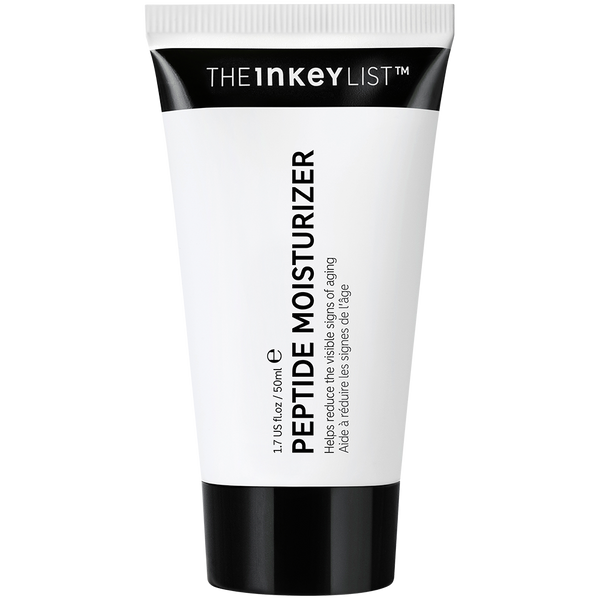
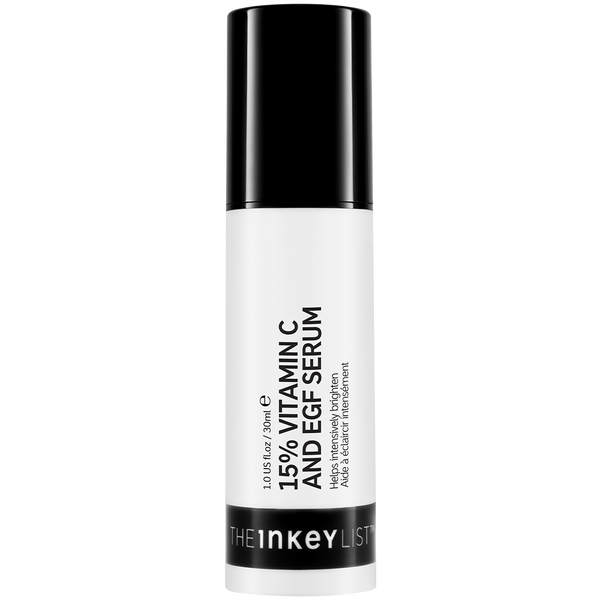
Not all peptides are the same, and knowing which one you are buying matters more than the word “peptide” on the front of a box. Matrixyl 3000 is the peptide complex we use most, and it appears in two formulas: our Hyaluronic Acid Serum and our Caffeine Eye Cream. Royal Epigen P5 and a hydrating peptide solution sit in our Peptide Moisturizer. A plant-derived Epitensive EGF peptide works alongside vitamin C in our 15% Vitamin C + EGF Serum. And a Tetrapeptide Complex appears in our eye formula, covered further down.
Rather than compress the Matrixyl 3000 science into a paragraph here, we have written it up properly: What is Matrixyl 3000? covers how it works and what the research shows.
If you want a practical entry point, our Peptide Moisturizer is the simplest way to bring peptides into an existing routine without rebuilding it.
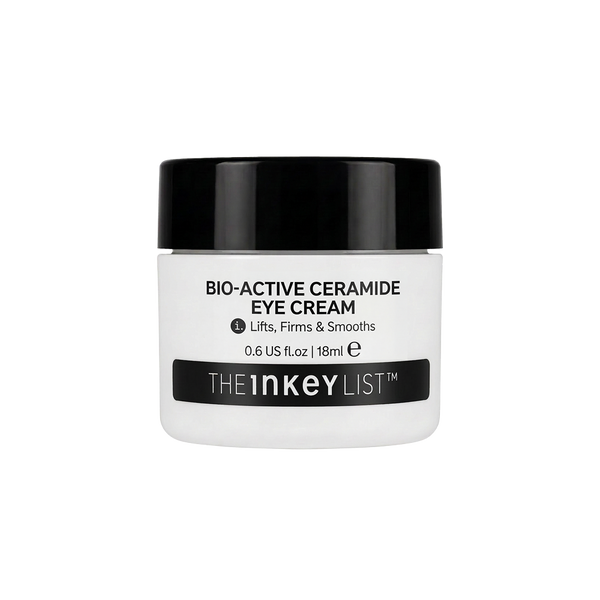
Peptides also appear in formulas built for specific areas. Our Bio-Active Ceramide Eye Cream pairs a Tetrapeptide Complex with bio-active ceramides, which is a deliberate combination for the eye area — more on why that area needs its own approach further down.
A common follow-up question is how peptides sit alongside barrier ingredients, since both appear in similar products. We answer that in Ceramides vs Peptides: Do You Need Both?
This article is about collagen, so we will stop here rather than write a peptide guide inside it. For the full picture, including how peptides work and which formulas suit which skin types, head to our peptides page.
Peptides are one useful part of the picture. But the bigger win, by a considerable margin, is protecting the collagen you already have.
How to Protect and Support the Collagen You Already Have
Everything so far has been diagnosis. This is the treatment, and it comes with a governing principle that is worth stating plainly:
Protecting the collagen you have beats trying to rebuild what you lost.
That is not a consolation prize. It is the actual hierarchy of what works, ordered by strength of evidence. Here is how to act on it.
Daily SPF is the single highest-return habit
If you do one thing from this entire article, do this one.
Daily broad-spectrum sun protection is the best-evidenced method available for protecting existing collagen. UV exposure is the largest contributor to premature collagen breakdown, driving the enzymatic degradation of existing collagen fibers alongside slowing new production. Sun protection is the only intervention discussed here that addresses the primary cause rather than managing the consequences.
The return on effort is not close. No serum, supplement or treatment on the market can match the collagen-preservation value of consistent daily sun protection, and none of them costs less effort than a step you can complete in fifteen seconds.
The word doing the heavy lifting is daily. Not beach days. Not sunny days. Every day, year round. UVA radiation, the wavelength most associated with long-term collagen degradation and photoaging, penetrates cloud cover and window glass. Overcast January mornings and desk-bound days by a window still count. This is why dermatologists frame sun protection as a habit rather than an occasion.
Practical guidance that helps people actually stick with it: most adults apply less than they should, so be more generous than feels necessary on the face and neck. Do not stop at the jawline. The neck and chest show collagen loss early and are chronically under-protected, which is worth remembering alongside our guide on how to get rid of neck lines. Reapply across long days outdoors. And choose a formula you genuinely enjoy wearing, because the best sunscreen is unambiguously the one you will use every single morning.
If you want to understand what the numbers mean, how broad-spectrum protection works and how to choose a formula that suits your skin, our SPF page explains it in full.
Retinol, kept brief
Retinol is among the most extensively studied topical ingredients in dermatology, with a substantial body of research supporting its role in skin renewal and the appearance of fine lines over time. It is a genuine workhorse rather than a trend.
Two practical points. It is a PM-only step, since retinol degrades in sunlight and increases sun sensitivity, which makes daytime sun protection non-negotiable alongside it. And you should build up slowly, starting once or twice weekly and increasing gradually as your skin adapts. Rushing retinol is the most common reason people abandon it.
That is deliberately the short version. For strengths, formats, how to introduce it and what to pair it with, our retinolpage has the complete guide.
Peptides, in one line
As covered above, peptides act as messengers that can help support natural collagen production. Layer them under moisturizer or choose a moisturizer that includes them.
Antioxidants and vitamin C
Environmental stress, from UV to pollution, generates free radicals that contribute to collagen breakdown. Antioxidants help defend skin against that oxidative stress, which makes them a natural partner to sun protection rather than a substitute for it.
This works from both directions. Research indicates that antioxidant-rich diets support skin health, so the fruits and vegetables on your plate are doing legitimate work. Topically, vitamin C is the best known of the antioxidant actives, valued both for daytime environmental defense and for its role in brightening and evening out skin tone.
Vitamin C has a second connection to this article worth knowing: it is a genuine cofactor in your body’s own collagen synthesis, which is why it appeared in the diet section above. Our 15% Vitamin C + EGF Serum is relevant here because it is also a peptide product. Alongside 15% Ascorbyl Glucoside for brightening, it contains 1% Epitensive EGF, a plant-derived peptide that supports the appearance of elasticity and firmness over time. Two mechanisms relevant to this article in a single step. Our vitamin C page covers how to choose and use one.
Barrier support makes everything look better
A healthy, well-hydrated skin barrier is underrated in conversations about firmness. Skin that is holding water properly looks plumper, feels more resilient and reflects light more evenly. A compromised barrier looks and feels the opposite regardless of how much structural collagen sits beneath it.
This is also the most immediately achievable improvement in this section. Barrier repair happens on a timescale of days to weeks, whereas collagen-related change is measured in months.
Ceramides are central to barrier function, forming part of the lipid matrix that holds skin cells together and keeps water in. Our Bio-Active Ceramide Moisturizer is built for exactly this job.
The eye area needs its own approach
The skin around your eyes is the thinnest on the face, and that single fact explains most of what happens there. Where skin is thinner, the collagen network beneath it is proportionally less substantial, so the same gradual decline described earlier in this article becomes visible around the eyes considerably sooner than it does across the cheeks or forehead. Add in the sheer volume of movement that area handles every day — blinking, squinting, smiling — and you have the reason fine lines tend to arrive there first.
This is why a face moisturizer, however good, is not automatically the right answer for the eye contour. Formulas built for that area are designed around thinner, more reactive skin and are tested accordingly.
Our Bio-Active Ceramide Eye Cream is our recommendation here, and it is relevant to a collagen conversation for a specific reason: it combines a Tetrapeptide Complex with bio-active ceramides. That pairing addresses both halves of what tends to go wrong in the eye area at once. The peptides work on the appearance of fine lines and the firmness of the eye contour, while the ceramides support the barrier in a region where dryness shows up quickly and makes every line look deeper than it is. It is dermatologist and ophthalmologist approved, which matters more here than elsewhere on the face.
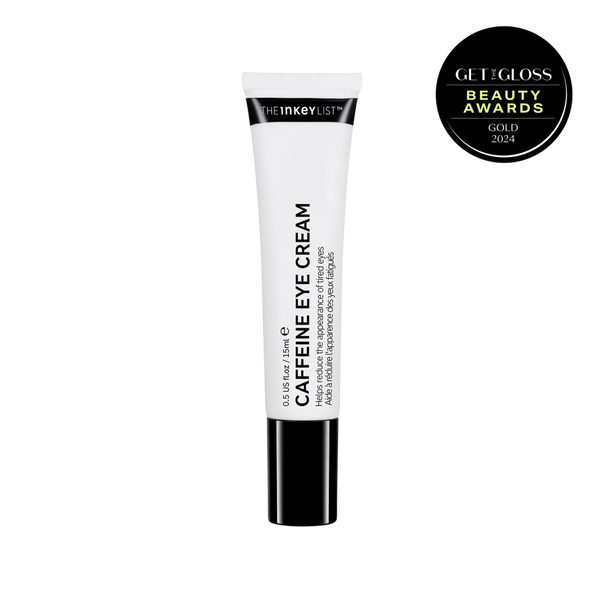
If puffiness and dark circles are your primary concern rather than fine lines, our Caffeine Eye Cream is the other option worth knowing, and it belongs in this article because it carries Matrixyl 3000 alongside 0.3% caffeine. That is the same signal peptide found in our Hyaluronic Acid Serum, working in the area where skin is thinnest, while the caffeine addresses the fluid retention behind under-eye puffiness. Choose between the two based on what you actually see in the mirror: ceramides and Tetrapeptide for barrier support and the look of lines, caffeine and Matrixyl 3000 for puffiness and tired-looking eyes.
Apply either with your ring finger, patting rather than dragging, and give it the same eight to twelve weeks of consistency you would give anything else in this article. For a fuller breakdown of what causes lines in this area and what realistically helps, our guide on how to treat under-eye wrinkles goes further, and our dark circles page covers the discoloration side of the conversation.
Glow and rejuvenation
Exosomes are one of the more talked-about areas in skincare science, and our Exosome Hydro-Glow Complex is our glow boosting entry into the category. Helps support natural collagen production.
Its clinical results speak to skin quality broadly: 6-in-1 skin rejuvenation: clinically proven to visibly improve radiance, hydration, tone, firmness, elasticity, and texture*. Firmness and elasticity sitting inside that result set is what makes it relevant to a conversation about how skin looks and behaves over time.
The wider findings are worth knowing. 100% saw more glowing skin, clinically proven. Clinic worthy rejuvenated skin in 14 days. Proven to deliver up to 12-hours of hydration. In-vitro testing also showed a 55% reduction in visible signs of skin stress (redness, puffiness, visible irritation)* and a 63% increase in skin renewal activity in 8 hours*.
If the ingredient category itself is new to you, our exosomes page explains what they are and how they are used in skincare.
*4-week clinical study of 26 people
**Clinical study of 31 people
*In-vitro testing of Cica Exosomes showed a 55% reduction in pro-inflammatory markers and a 63% increase in markers associated with skin renewal after 8 hours.
Lifestyle factors, briefly
Sleep matters, because overnight is when a great deal of skin repair activity happens. Not smoking matters considerably, since smoking is strongly associated with accelerated collagen degradation. Managing cumulative sun exposure, through shade and clothing as well as sunscreen, compounds the benefit of everything above.
That is the whole list. No lectures.
Set realistic timelines
Skincare works on the timescale of skin cell turnover and dermal remodeling, not on the timescale of marketing.
Hydration and barrier improvements can show within days to a couple of weeks. Texture and radiance typically take four to eight weeks. Changes in the appearance of fine lines and firmness need 8 to 12 weeks minimum of consistent use, and often longer.
Judge any product on that timeline, not on a week. Consistency over months beats intensity over days, every time. Anything promising visible firmness in days is selling hydration and calling it something grander.
A few questions come up repeatedly, so let us close those out directly.
The Honest Summary on Collagen for Skin
Here is the throughline. Collagen gives your skin its structure, firmness and bounce. The decline begins in your mid-twenties and progresses at roughly one percent a year, which means it never stops and it never suddenly switches off either. You cannot meaningfully apply collagen back onto your skin, because the molecule is far too large to get anywhere useful, though it does hydrate and smooth the surface. The supplement evidence is genuinely mixed and noticeably weaker once industry funding is accounted for. And protecting the collagen you already have is comfortably the highest-value move available to you.
The practical hierarchy follows from that. Daily broad-spectrum sun protection first, because it addresses the largest avoidable cause. Then proven topical actives, peptides and retinol among them. Then barrier care and consistency, because well-hydrated, well-supported skin simply looks better than skin that is not.
We do not sell a collagen supplement or a collagen serum, and we are not going to invent a reason for you to buy one. The recommendations above are the ones the evidence actually supports, which is why they look less exciting than most collagen marketing and work considerably better.
Give it months rather than days. Collagen loss took years to become visible, and supporting your skin works on the same unhurried timescale. Consistency is the whole strategy.
Ready to act on it? Start with peptides if you want the best-evidenced topical route to supporting your skin’s natural processes, and with SPF if you want the single highest-return habit in skincare. Free US shipping on orders over $40.
Build your routine:
Our Peptide Moisturizer is the primary recommendation of this article and the simplest way to bring peptides into your routine. The Bio-Active Ceramide Eye Cream brings that same peptide thinking to the eye area, where lines show first, and our Caffeine Eye Cream is the Matrixyl 3000 option if puffiness is your concern. The 15% Vitamin C + EGF Serum pairs antioxidant protection with a peptide in one step. The Exosome Hydro-Glow Complex is our glow boosting serum for overall skin quality. And the Bio-Active Ceramide Moisturizer covers barrier support, which makes everything else you do work better.
Frequently Asked Questions
Got a question?
Our askINKEY team are a friendly bunch of skincare experts with deep product knowledge and zero judgement. Whether you're an ingredient obsessive or just starting out, we'll make it make sense. No question too big. No question too small. We Give A Care, Every Day.


