

Ceramides vs Peptides: Do You Need Both?
Ceramides vs peptides is not really a contest: they work in different layers of your skin, on different problems, so here is how to tell which one your routine actually needs.
Author
askINKEY skincare advisor
Published
25 August, 2026
Time to read
10 minutes
Ceramides and peptides show up on a huge number of ingredient labels, often side by side and sometimes in the same formula. What is far less obvious is whether you need one, the other, or both.
This article answers that directly. You will learn what each ingredient does, how ceramides vs peptides actually differ, whether your routine needs both, the right order to layer them, and which products suit which concern and which area of your face.
Here is the short version. Ceramides and peptides are not competing ingredients. They work in different layers of your skin, on different problems, over different timelines. Framing them as rivals is the wrong question entirely. The question worth asking is which problem you have right now.
We will go through both properly, with routes out to deeper reading on ceramides and peptides if you want the full science. If barrier comfort is your starting point, our Bio-Active Ceramide Moisturizer ($22) is the product this article keeps returning to. And if you would rather be told what to use, our skincare quiz will diagnose it for you.
What ceramides actually do for your skin barrier
Ceramides are naturally occurring lipids, and they make up a large part of your skin’s outer layer. Think of them as the mortar between bricks. Your skin cells are the bricks. Ceramides hold them together, keep water in and keep irritants out.
When ceramide levels are healthy, skin feels comfortable and predictable. Those levels drop with age, and they drop fast when the barrier is damaged by over-exfoliation, harsh cleansers, weather or stress. That is when skin feels tight, looks flaky and starts reacting to products it used to handle fine.
Our Bio-Active Ceramide Moisturizer is built around Bio-Active Ceramide NP, and a ceramide moisturizer of this kind is clinically proven to strengthen the skin barrier from first use**. For the ingredient in depth, read what is Ceramide NP, or bio-active ceramides vs regular ceramides for why the form matters. If you are unsure whether your skin needs hydration or barrier support, which is an extremely common mix-up, hyaluronic acid vs ceramides clears it up.
What peptides actually do
Peptides are short chains of amino acids that act as messengers. They signal your skin to behave a certain way. Different peptides send different messages, which is why the word “peptide” on a label tells you less than the specific peptide does.
Matrixyl 3000 is a signal peptide associated with the look of firmness and smoothness. EGF is a plant-based peptide that supports the look of skin renewal. Both work on appearance, gradually, rather than on how your skin feels today.
So are ceramides and peptides the same? No. What peptides and ceramides do sits in two separate categories: one repairs and protects, the other communicates. For depth, start with our guide to peptides, then what is Matrixyl 3000and what is EGF.
That split in job description is the real answer, and it lands properly once you know where in your skin each one works.
The key difference: ceramides and peptides work in different layers of your skin
Ceramides work at the surface, in the stratum corneum. That is the outermost layer of your skin, the part you can physically touch. Their job is structural and defensive: hold moisture in, keep irritants out, keep the wall intact. The payoff is fast. A properly supported barrier feels different within days, and the mechanism behind it is water loss, explained in what is TEWL, transepidermal water loss.
Peptides signal deeper. Their job is communicative rather than structural, prompting skin toward the look of firmness, bounce and smoother texture. That takes weeks, not days, and it connects to the wider picture in collagen for skin, what you need to know.
Different layer, different job, different timeline.
That is the difference between ceramides and peptides in one line, and it is why “which is better” has no answer. Ceramides deliver comfort you feel quickly. Peptides work on appearance over a longer horizon. Judge either by the other’s standard and you will be disappointed by both.
There is a practical consequence worth taking seriously. If your barrier is compromised, everything else you apply has a harder time performing, and your skin gets irritated more easily. Barrier first is sequencing logic, not a sales pitch. What is skin stress explains why reactive skin behaves the way it does, and dehydration lines vs wrinkles is the single most useful thing to read before you buy, because it tells you whether your lines are a moisture problem or a structural one. If you are also weighing peptides against other actives, peptides vs retinol covers it.
With the frame fixed, the title question gets a lot easier to answer honestly.
So do you need both?
Not everyone does. The right answer depends on the problem you actually have right now, and for plenty of people that is one problem, not two.
If your skin feels tight, dry, flaky or reactive, start with ceramides
If your skin feels tight after cleansing, looks flaky, stings when products go on or reacts easily, barrier comfort is the priority and ceramides are your answer. Fix that first. A lot of complaints people attribute to aging are barrier complaints, and they clear up once the barrier is supported.
If your main concern is fine lines, firmness or bounce, prioritize peptides
If your barrier is comfortable, your skin tolerates products well and your concern is the look of fine lines, firmness or bounce, peptides are where your money should go. There is no point adding barrier repair if the barrier is not the issue. What causes crepey skin and how to get plump skin are the right next reads, along with our best anti-aging skincare routine and when should I start using anti-aging products.
If it is both, here is how to run them together
Real overlap is common, especially in mature skin that is also dry or reactive, because ceramide levels naturally decline with age. If that is you, running peptides and ceramides together is simple and there is no conflict to manage.
They’re different but complementary. Peptides signal your skin to produce more collagen and elastin. Bio-Active Ceramides repair and strengthen your barrier.
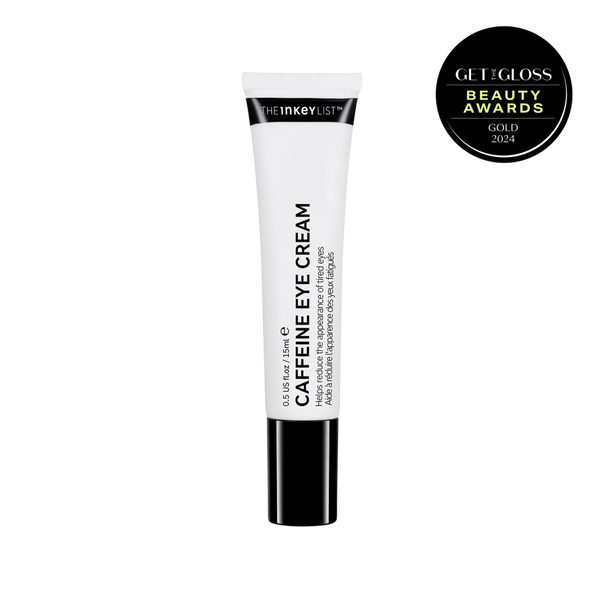
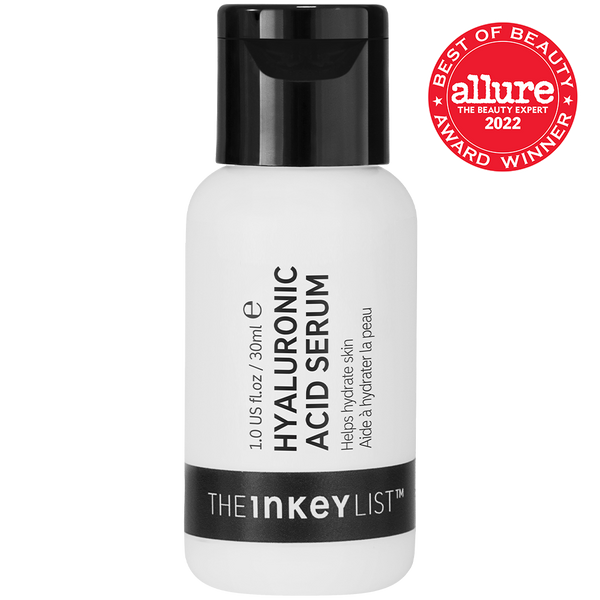
One more thing before you buy anything. A lot of people already use a peptide without knowing it. Matrixyl 3000 is in our Hyaluronic Acid Serum ($13) and our Caffeine Eye Cream ($14), so if either is in your routine, your peptide step may already be handled. Check what you own first. If you are not sure which concern is actually yours, our complete skincare concerns guide will narrow it down.
And on two areas of your face, this decision is already made for you, because the products built for those zones combine both. More on that below.
How to layer ceramides and peptides in your routine
The general rule is thinnest to thickest. Serums before creams. Peptide serums go on cleansed, slightly damp skin so they absorb properly, and your ceramide moisturizer goes on after to seal everything in.
In the morning:
- Cleanse.
- Apply your peptide serum to slightly damp skin and let it settle.
- Apply eye cream around the eye contour.
- Apply your neck product upward across neck, jawline and décolletage.
- Apply your ceramide moisturizer over the top to seal it all in.
- Finish with a broad-spectrum sunscreen.
At night the logic is identical, minus the sunscreen. Cleanse, apply your peptide serum or your active of choice, then eye cream, then neck, then moisturizer last. If you use exfoliating acids or retinol, those go in the treat step, and a ceramide moisturizer over the top is especially welcome afterward because barrier support is exactly what skin wants at that point. How to use Ectoin with retinol and other actives covers that pairing.
Two details people get wrong constantly. Eye cream goes after your serum and before your face moisturizer. The neck stick also goes after serums and before moisturizer, applied in upward strokes. Both are AM and PM. For technique rather than order, read how to apply eye cream the right way.
For the full build, how to build your skincare routine and our skincare routine guide go deeper, and the moisture sandwich method is worth knowing if your skin soaks up product.
Can you use ceramides and peptides at the same time?
Yes. Ceramides and peptides do not conflict, do not cancel each other out, and do not need to be split across different days or alternated. You can use peptides and ceramides together in the same routine, morning and night, with no special handling.
The two-step build is what we recommend, and it is the only route we are recommending here. A peptide serum layered under a ceramide moisturizer gets both jobs done. You do not need a single face moisturizer that contains both, because layering covers it, and it gives you more control: swap the serum without touching the moisturizer, or drop a step if your skin’s needs change.
If ingredient clashes worry you more broadly, what products should I not layer together is the reassurance you want.
Our ceramide and peptide products, and which to pick
Grouped by what you need, not by category, so these map onto the three branches above.
If your priority is barrier comfort
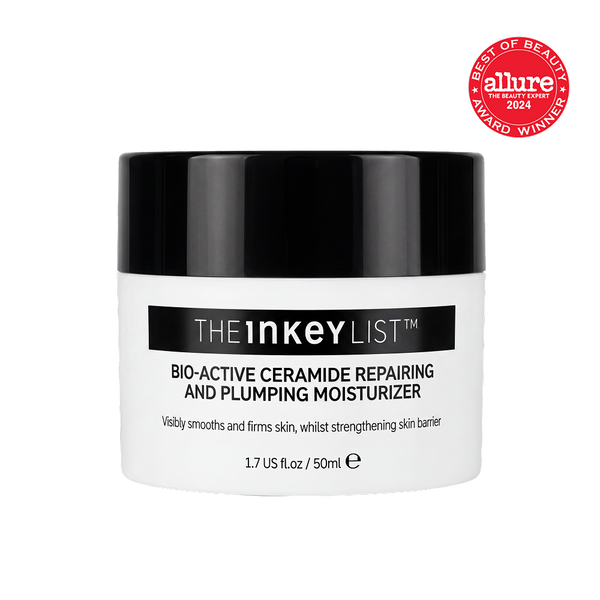
Our Bio-Active Ceramide Moisturizer ($22) is the core pick, built on Bio-Active Ceramide NP with Gransil Blur X-11, glycerin and shea butter. Clinically proven to strengthen the skin barrier from first use, up to 4x greater visible wrinkle reduction vs standard ceramide formulations*, and clinically proven to deliver 24-hour hydration. In testing, 100% saw a clinical improvement in 6 signs of aging in 28 days**. Non-comedogenic, fragrance-free, suitable for sensitive skin, and safe during pregnancy and breastfeeding.
Our Ectoin Hydro-Barrier Serum ($17) has a 1% barrier blend of three ceramides and works as the bridge product if you want barrier support in serum form. Our Omega Water Cream 50ml ($15) has a 0.2% ceramide complex and is the lighter pick for oily or combination skin, or anyone who finds a richer cream too much.
If your priority is the look of firmness and fine lines
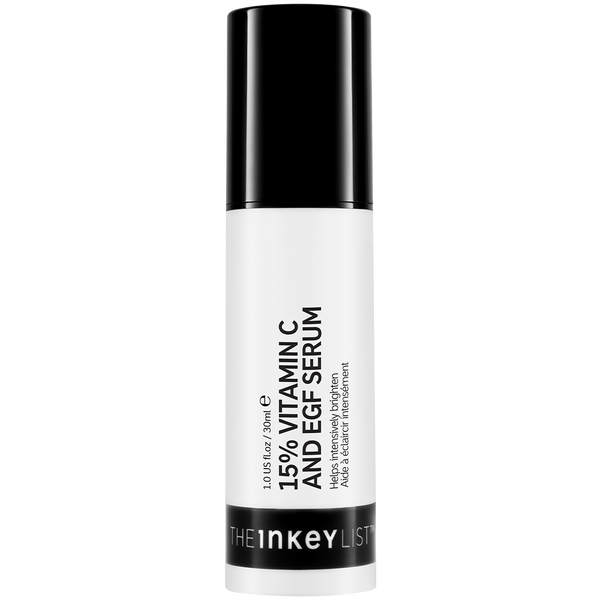
Our 15% Vitamin C + EGF Serum ($20) pairs vitamin C with EGF, a plant-based peptide. Our Hyaluronic Acid Serum 30ml ($13) contains Matrixyl 3000, and so does our Caffeine Eye Cream ($14).
This group is serums and an eye cream rather than a face moisturizer, and that is by design. Under the layering logic above, your peptide step is a serum and your ceramide moisturizer goes over the top. That is the build, and it works.
Want proof first? The Bio-Active Ceramide Moisturiser before and after results timeline shows what the study period looked like, and best ceramide products 2026 is the wider shortlist. You can also browse ceramides, peptides, moisturizers and anti-ageing.
12-week independent clinical study of 30 people comparing Ceramide NP at 0.2% vs placebo. 4-week clinical study of 20 people. 4-week consumer trial of 70 people.
Where you need both most: the eye area and the neck
There are two places where the ceramides vs peptides question stops being a choice at all.
The skin around your eyes and below your jawline is thinner and more delicate than the rest of your face. The neck specifically has up to 40% less thickness, fewer oil glands and lower collagen density than facial skin. Both problems therefore show up in the same place at the same time: the barrier is easier to compromise, and structural change shows earlier.
This is exactly why the products made for these areas combine both ingredients rather than picking one. The decision is settled for you by the formula, inside a single product.
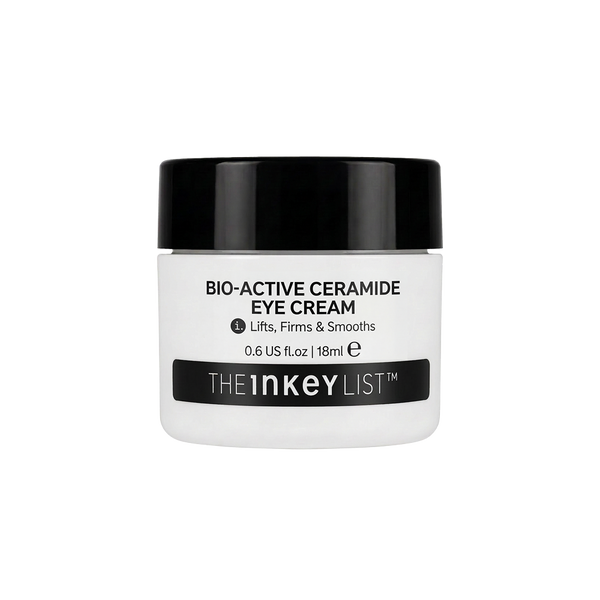
For the eye area. Our Bio-Active Ceramide Eye Cream ($16) pairs Bio-Active Ceramide NP with a Tetrapeptide Complex, which makes it a true ceramide and peptide eye cream. The ceramide strengthens the barrier around the eye contour while the Tetrapeptide Complex works on the look of fine lines and firmness. Lightweight, fast-absorbing, layers under makeup. Clinically proven to lift eyelids by 29% in 4 weeks, up to 4x wrinkle reduction, 89% saw fine lines smoothed and blurred instantly**, and clinically proven to improve skin firmness and elasticity**. Suitable for sensitive eyes, fragrance-free, dermatologist and ophthalmologist approved, and safe during pregnancy and breastfeeding.
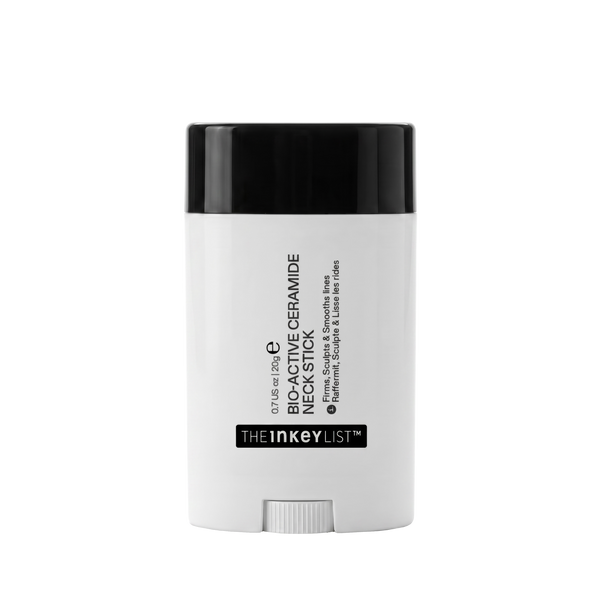
For the neck and décolletage. Our Bio-Active Ceramide Neck Stick ($17) is a gua sha-inspired solid stick with 0.2% Bio-Active Ceramide NP alongside Gatuline In-Tense MB and CO2llageneer. Barrier support and elasticity support in one glide, on the area that shows change first. Clinically proven to lift, tighten and firm the neck and chest area in 14 days, and clinically proven to improve the lifted appearance of the neck and jawline by 26% in 8 weeks. Fragrance-free, suitable for sensitive skin, and safe during pregnancy and breastfeeding.
If neck lines or screen posture is the concern driving this, how to get rid of neck lines and fight tech neck go further than we will here, and what causes crepey skin covers texture. The full eye treatments range is worth a browse too.
12-week independent clinical study of 30 people comparing Ceramide NP at 0.2% vs placebo. Clinically tested on 32 participants over 28 days. ** Tested on 32 participants. Neck Stick claims: clinically tested on 28 participants over 8 weeks.
What the science actually says
The evidence for each ingredient on its own is strong. Ceramides are a core structural component of the skin barrier’s lipid organization, and there is solid clinical support for topical ceramides restoring barrier function and reducing water loss through the skin. The connection between a disrupted barrier and reactive skin is well documented, and research on ceramide acyl chain length shows the form of the ceramide affects barrier recovery, which is why we use the one we use. On the peptide side, the mechanism behind signal peptides is well characterized, and a randomized controlled trial on palmitoyl pentapeptide-4 supports the effect on the appearance of fine lines over a period of weeks.
Here is what the evidence does not show. There is no definitive head-to-head clinical trial proving that using ceramides and peptides together outperforms using either one alone. We are not going to pretend there is.
We should also be precise about our own numbers. The up to 4x wrinkle reduction figure comes from a study comparing Ceramide NP at 0.2% against a placebo. That is strong evidence for the ceramide. It is not a measurement of ceramide-plus-peptide versus peptide alone, and it should not be read that way.
So why is using both still a reasonable approach? Because the case is mechanistic and spatial. They act in different layers on different problems, and a compromised barrier makes it harder for any active to perform. That is a logical argument, not a proven one, and you deserve to know the difference. It is also precisely why we tell you to fix barrier discomfort first and add peptides after, instead of buying both by default. For more ingredient depth, what is Ceramide NP is the place to start.
Common mistakes when combining ceramides and peptides
- Buying both before figuring out which problem you actually have. The most expensive mistake and the most common one. Diagnose first.
- Giving up on peptides too early. They work on appearance over weeks, not days. People quit on products that were working.
- Using a rich moisturizer under makeup when a lighter one would suit better, then blaming the ingredient instead of the texture. Our Omega Water Cream exists for exactly this.
- Adding too many new actives at once, so when skin reacts you have no way to tell what caused it. What products should I not layer together helps.
- Ignoring the barrier while chasing anti-aging results, which usually slows progress rather than speeding it up.
- Treating your face and stopping at the jawline, when the neck and eye area are where thin skin shows both problems first.
The takeaway
Ceramides vs peptides is the wrong fight to pick. They work in different layers of your skin on different problems, so the only useful question is which one your skin needs right now. Barrier discomfort points to ceramides. Fine lines and firmness point to peptides. Both concerns point to both, layered serum before moisturizer. On thin skin like the eye area and neck, the products built for those zones already combine the two. You do not need both to get results. You need the one that matches your actual concern.
Not sure which that is? Start with our skincare quiz, or browse ceramides and peptides and read those labels with fresh eyes. If your skin feels tight, dry or reactive, our Bio-Active Ceramide Moisturizer ($22) is where to start. If your barrier is comfortable and firmness is the goal, our 15% Vitamin C + EGF Serum ($20) is the peptide step to layer underneath.