



What is EGF? Understanding the Growth Factor Peptide in Your Skincare
Discover what EGF (Epidermal Growth Factor) is, how this clinically studied growth factor peptide supports skin renewal and collagen production, and why it's a powerful addition to your routine for brighter, firmer, healthier-looking skin.
Author
askINKEY skincare advisor
Published
13 July, 2026
Time to read
14 minutes
EGF - Epidermal Growth Factor - has moved from the pages of clinical research journals into the heart of advanced skincare routines, and for good reason. It is one of the most scientifically grounded ingredients available in modern cosmetic formulations, backed by decades of published research and a Nobel Prize-winning discovery. But for all the buzz around EGF skincare, clear and honest information about what it actually is, how it works, and what it can realistically do for your skin remains harder to find than it should be.
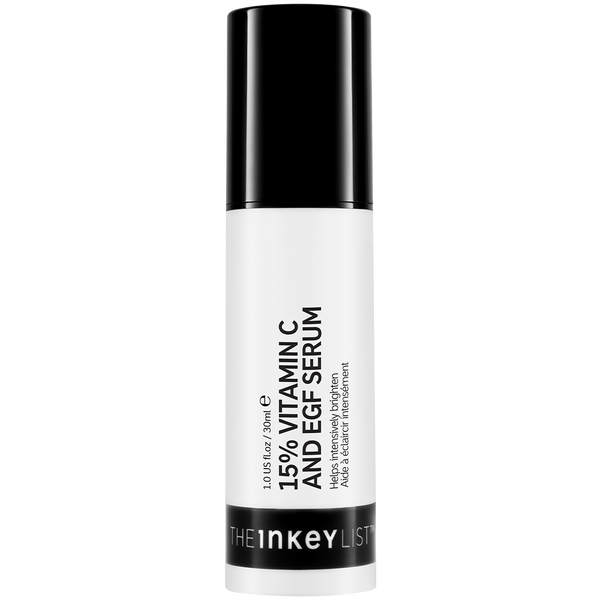
This guide covers everything. You will learn what EGF is at a biological level, where it sits within the broader peptide family, what skin benefits it delivers and the science behind them, how cosmetic-grade plant-derived EGF differs from its original form, how EGF interacts with other key actives like Vitamin C and Retinol, and exactly how to build it into your daily routine. If you want to skip ahead to the product, our 15% Vitamin C + EGF Serum at $20 brings together 15% stable Vitamin C and 1% plant-derived EGF in one lightweight, clinically tested formula - but understanding the ingredient will help you get the most from it. Let us start at the beginning.
What is EGF? Definition, Discovery, and Its Nobel Prize-Winning Origins
EGF stands for Epidermal Growth Factor. It is a naturally occurring protein - a polypeptide, to be precise - found throughout the human body, including in saliva, blood plasma, urine, and various tissues. Its presence in the body is not incidental. EGF plays an essential biological role: it binds to specific receptors on the surface of cells and triggers a signaling cascade that instructs those cells to grow, divide, and repair themselves. In skin specifically, this process is central to how your skin renews itself at a cellular level.
The discovery of EGF is not recent. Biochemist Dr. Stanley Cohen first identified and isolated the protein in the early 1960s while studying nerve growth factors at Vanderbilt University. His work on EGF and its receptor earned him the Nobel Prize in Physiology or Medicine in 1986 - a detail that matters in skincare, where ingredients come and go based on trend cycles rather than scientific track records. EGF is not a trend. It has been studied rigorously for over six decades, and the body of published research supporting its role in cell regeneration and skin renewal is substantial.
For skincare purposes, this scientific history is precisely what distinguishes EGF from many newer or less-studied ingredients. When a formulation includes EGF, it is drawing on one of the most well-documented biological signaling proteins known to dermatological science. As a systematic review of EGF in aesthetics and regenerative medicineconfirms, EGF’s role as a skin anti-aging agent and promoter of wound repair has been investigated across a wide range of clinical and cosmetic applications, making it one of the most credible active ingredients available today.
EGF as a Growth Factor Peptide - Where It Sits in the Peptide Family
Understanding EGF requires understanding where it sits within the broader peptide family - because not all peptides work the same way, and the differences matter.
Peptides are short chains of amino acids, the fundamental building blocks of proteins in the body. Your skin is made up of structural proteins - primarily collagen and elastin - and the amino acids that form peptides are the same building blocks that make up these proteins. When peptides are used in skincare, they are working with the language of your skin’s biology, which is part of what makes them effective and well-tolerated across skin types.
Within the peptide category, there are several distinct functional groups. Signal peptides - such as Matrixyl 3000 - work by sending messages to skin cells that encourage the production of collagen and other structural proteins. Carrier peptides help transport trace elements like copper into the skin to support wound healing. Enzyme-inhibitor peptides work by blocking the enzymes that break down collagen. Each type has a specific mechanism and a specific set of benefits.
EGF belongs to a fourth category: growth factor peptides. These are peptides that work not by building structure directly, but by signaling cell behavior - specifically, by triggering the cellular processes of growth, regeneration, and repair. EGF is the most well-studied member of this category. On cosmetic ingredient labels, you will find it listed under its INCI name: Oligopeptide-1. If you are reading the ingredient list on your serum and you see Oligopeptide-1, that is EGF.
For a full breakdown of the peptide family and how different peptide types work in your skin, see our complete guide to peptides in skincare. Having established what EGF is and where it fits within the science of skin actives, the next question is the one that matters most in practice: what does it actually do when it reaches your skin?
What EGF Does for Skin and the Science Behind How It Works
EGF’s core function is cell communication. It does not exfoliate, resurface, or directly build collagen the way some other actives do. Instead, it acts as a messenger - and when it reaches your skin, it binds to receptors on the surface of two key cell types: keratinocytes (the primary cells in the outer layers of skin) and fibroblasts (the cells in the deeper dermis responsible for producing collagen and elastin). Once bound, it triggers an intracellular signaling cascade that encourages these cells to proliferate, repair, and function more efficiently.
The result of that cellular signaling, applied consistently over time, shows up in several ways that are visible and measurable.
Cell renewal and regeneration. As we age, the skin’s natural cell turnover process slows down considerably. New skin cells take longer to reach the surface, and older, duller cells sit there longer than they should. EGF signals keratinocytes to divide and replace themselves more efficiently, supporting a renewal rate that more closely resembles younger skin. This is the foundation of most of EGF’s visible benefits.
Elasticity and firmness support. By stimulating fibroblast activity, EGF indirectly supports the skin’s production of collagen and elastin - the structural proteins responsible for firmness and bounce. This is not the same as directly injecting collagen, but it is working through the skin’s own biological pathways to support those structures from within.
Texture improvement. When fresher, newer cells reach the skin’s surface more regularly, the texture of that surface improves. Rough patches, enlarged-looking pores, and uneven texture all benefit from the kind of accelerated turnover that EGF promotes over consistent use.
Radiance and more even skin tone. Skin that is renewing itself efficiently simply looks better. The visible dullness that comes from an accumulation of older surface cells gives way to a brighter, more even complexion as fresher cells take their place.
EGF is particularly well-suited to mature skin, dull skin, uneven texture, and skin that has plateaued on its current routine. It is also a strong option for those noticing the first signs of aging who want to address renewal at a cellular level rather than surface-level only. An independent clinical study on topical EGF demonstrated improved texture and appearance following daily topical EGF serum application - supporting the practical skin benefits described above with published clinical evidence.
The Science Behind EGF - How Receptor Binding Works
The mechanism is worth understanding in a little more depth, because it explains why EGF is different from other actives in your routine.
When EGF is applied to the skin’s surface, it travels to the EGF receptors (known as EGFR) located on the surface of skin cells. Think of EGFR as a lock and EGF as a very specific key. When EGF fits into that receptor, it triggers a chain reaction inside the cell - a signaling cascade - that activates the processes of cell proliferation, survival, and repair. Your skin essentially reads the signal and responds.
At the cosmetic concentration of 1% Epitensive EGF used in our 15% Vitamin C + EGF Serum, this receptor-binding activity takes place within the skin’s outermost layers. Formulation science plays a critical role here: the molecular size of EGF, the delivery vehicle used, and the concentration all influence how effectively the ingredient reaches its target receptors. Published research on EGF formulation in skincare highlights the importance of both concentration and delivery vehicle in maximizing the ingredient’s effectiveness in cosmetic applications - which is why the choice of formulation matters as much as the ingredient itself.
With a clear picture of what EGF does and how it works, there is an important distinction to address before moving on: not all EGF used in skincare comes from the same source, and understanding the difference matters both scientifically and ethically.
Plant-Derived EGF vs Traditional EGF - What’s the Difference?
When EGF was first identified in the 1960s, it was isolated from biological sources - specifically, from the salivary glands of mice, and later from human biological material. This was entirely appropriate for controlled laboratory and clinical research, where sourcing precision is possible and tightly regulated. But it was never a scalable or practical approach for cosmetic manufacturing, and it raised obvious questions about ethics, consistency, and safety.
Modern cosmetic EGF is produced through biotechnology - a development that has made the ingredient both scalable and suitable for mass formulation. There are two primary biotechnology routes used today: recombinant DNA technology, which involves programming microorganisms such as yeast or bacteria to produce the EGF protein, and plant-based fermentation processes that replicate the EGF protein structure using plant-derived systems. Both approaches produce an EGF protein that mirrors the structure and function of naturally occurring human EGF, without relying on animal sources.
Epitensive - The Plant-Derived EGF in Our Formula
The EGF used in our 15% Vitamin C + EGF Serum is called Epitensive - a plant-derived Oligopeptide-1 produced by Lipotrue, a specialist biotech ingredient company. Epitensive is a trademark of Lipotrue and is used with permission. It is produced through a plant-based biotechnology process that replicates the activity of EGF without using animal-derived materials.
This sourcing matters to the reader in several practical ways. Epitensive is vegan-suitable - the 15% Vitamin C + EGF Serum carries Vegan Society certification, which requires rigorous verification of the entire supply chain. It is also sustainably produced and formulated specifically for cosmetic-grade application at concentrations validated through clinical testing. On the ingredient label, Epitensive appears as Oligopeptide-1 - the same INCI name used for all cosmetic-grade EGF, regardless of its source.
Ingredient transparency is not a marketing exercise for us. The distinction between original laboratory-derived EGF and plant-derived, biotechnology-produced Oligopeptide-1 is real, meaningful, and something every consumer has the right to understand before choosing a product. Our formula uses Epitensive because it performs, because it is ethically sourced, and because it is formulated to the standard that the science requires.
With the sourcing question addressed, the logical next step is to look concretely at the results EGF delivers - and to address the safety questions that consumers most commonly raise.
EGF Benefits for Skin - What to Expect, and Is EGF Safe?
Knowing what EGF does at a biological level is one thing. Knowing what that translates to in the mirror, over real time, with realistic expectations - that is what most people actually need to make an informed decision about whether EGF belongs in their routine.
What to Expect From EGF Skincare
EGF’s benefits are cumulative. This is not an ingredient that delivers overnight results. It works by improving the quality and efficiency of skin cell renewal over time, and that kind of change becomes visible gradually. Most users notice an initial improvement in radiance and skin tone within the first two to four weeks of daily use. More meaningful improvements to texture, elasticity, and overall skin quality typically become visible at four to eight weeks of consistent use.
Here is what the skin benefits actually look like in practice:
- Firmer, more elastic-looking skin - as EGF stimulates fibroblast activity and supports collagen pathways, the skin’s visible bounce and firmness improves over time.
- Refined skin texture - newer skin cells at the surface produce a smoother, more even texture with consistent use.
- Brighter, more even complexion - accelerated cell turnover reduces the dullness caused by an accumulation of older surface cells, revealing fresher skin underneath.
- Cellular-level renewal support - unlike exfoliants that physically remove surface cells, EGF improves the quality of the cells arriving at the surface. It works from the inside out.
The consumer data from a four-week independent consumer trial of the 15% Vitamin C + EGF Serum - conducted with 64 participants - reflects these benefits clearly: 87% agreed that their skin looked brighter, 88% saw visible improvement in tone and texture, and 84% agreed their skin looked healthier and less dull. These are not lab results in controlled conditions - they are real consumer outcomes from daily use over four weeks.
EGF is particularly well-suited to mature skin, dull skin, uneven texture, and anyone who feels their existing routine has stopped delivering results. It is also appropriate as an early intervention for those beginning to notice the first signs of aging who want to address skin renewal before more significant changes take hold.
Is EGF Safe to Use in Skincare?
Yes - and the evidence behind that answer is robust.
EGF is a protein that already exists naturally in the human body. At the concentrations used in cosmetic formulations, it is not a foreign substance or an aggressive active. It does not exfoliate, sensitize, or disrupt the skin barrier. There is no purging period, no required skin adaptation phase, and no downtime. Users with sensitive skin can use EGF without the concerns that come with retinoids or high-strength acids.
Our 15% Vitamin C + EGF Serum is also confirmed safe for use during pregnancy and breastfeeding - which is not a given for many active skincare formulations. See our guide to pregnancy-safe skincare for a full list of ingredients that are and are not recommended during pregnancy.
Addressing the EGF and cancer concern directly. Some consumers have come across the concern that EGF’s cell-signaling properties - specifically its role in promoting cell proliferation - might theoretically stimulate abnormal cellular growth. This is a reasonable question and deserves a straight answer. At the topical, cosmetic concentrations used in skincare (such as 1% Epitensive), EGF operates on the skin’s outermost layers. It does not penetrate deeply enough to affect internal tissues, and there is no published evidence linking topical cosmetic EGF to abnormal cellular growth. Published research on EGF in dermatological practice supports its safety profile at cosmetic concentrations and confirms its established role as a well-tolerated dermatological ingredient. The concern, while understandable, is not supported by the science.
Understanding the safety and benefits of EGF opens up the next practical question: how does it interact with the other active ingredients most commonly found in modern skincare routines?
EGF with Vitamin C and Retinol - How These Ingredient Pairings Work
One of the most common concerns among skincare enthusiasts is ingredient compatibility - specifically, whether adding a new active like EGF will cause problems when layered with the other ingredients already in their routine. The good news with EGF is that it plays exceptionally well with both of the most popular actives in advanced skincare: Vitamin C and Retinol.
EGF and Vitamin C - A Powerful Combination
These two ingredients work through entirely different mechanisms, which is precisely what makes them so effective when combined.
Vitamin C is one of the most well-researched antioxidants in skincare. It works by neutralizing free radicals generated by UV exposure and environmental pollution, inhibiting tyrosinase (the enzyme responsible for excess melanin production) to visibly fade dark spots and hyperpigmentation, and supporting collagen synthesis. It is primarily a surface-active protective and brightening ingredient. For a full breakdown of what Vitamin C does and how different forms compare, see our complete Vitamin C guide.
EGF, by contrast, works below the surface - it is signaling skin cells to renew and regenerate more efficiently. One ingredient is protecting and brightening what is already there; the other is improving the quality of what is being generated to replace it. The result of combining both in a single step is a brightening and renewal effect that neither ingredient could produce as effectively on its own.
Our 15% Vitamin C + EGF Serum at $20 delivers exactly this pairing: 15% Ascorbyl Glucoside (a stable, gentle form of Vitamin C that converts to its active form on the skin) alongside 1% Epitensive EGF. The formula is lightweight, fragrance-free, and designed for daily AM use. For readers wanting to explore how Vitamin C compares to other glow-focused ingredients, the Vitamin C vs Niacinamide vs Exosomes: the glow ingredient breakdown is a useful companion read.
EGF and Retinol - Can You Use Them Together?
Yes. And the combination is one of the more powerful pairings available in a non-prescription skincare routine.
Retinol is a vitamin A derivative that accelerates cell turnover, stimulates collagen production, and addresses fine lines, texture, and pigmentation through a different set of biological pathways than either EGF or Vitamin C. It is a well-proven ingredient with a strong clinical track record - but it comes with a specific constraint: it must be used in the evening only, because it increases the skin’s sensitivity to UV light.
EGF, used via a morning Vitamin C + EGF Serum, carries no such photosensitivity concern. The simple, practical approach is this: EGF and Vitamin C in your morning routine; Retinol in your evening routine. Two different mechanisms, two different time-of-day windows, no interaction risk, and no conflict. Both ingredients support skin renewal - EGF through growth factor signaling that improves cell quality, Retinol through accelerated turnover that pushes older cells to the surface faster - but they work through completely separate biological pathways. They are complementary, not competitive.
For a comprehensive look at this pairing and how to manage the AM/PM split effectively, see our full guide to using Vitamin C and Retinol together.
With the pairing questions answered, the final practical piece is the one readers need most: exactly how to incorporate EGF into a daily routine, step by step.
How to Use EGF in Your Skincare Routine
EGF is applied at the serum step - after cleansing and any hydrating layers, and before moisturizer. This positioning in the routine ensures that the skin is clean and prepped, and that the EGF serum can be absorbed efficiently before being sealed in by a moisturizer.
Morning use is recommended. The antioxidant protection provided by Vitamin C in the formula is most valuable during the day, when UV exposure and environmental stressors are highest. EGF’s cellular renewal signaling is compatible with morning use and does not conflict with daytime exposure. In the evening, if you use Retinol or exfoliating acids, it is simplest to reserve those actives for PM and let the EGF + Vitamin C serum do its work in the AM.
How much to use. A pea-sized amount is sufficient to cover the full face and neck. More product does not mean faster or better results - EGF is effective at the concentrations in the formula, and using the correct amount prevents waste and ensures even application.
Wait before layering. After applying the serum, allow approximately 60 seconds for it to absorb before applying the next product. This prevents pilling and allows the active ingredients to begin working without dilution from the next layer.
Always follow with SPF. No matter what actives you use in your morning routine, finish with a broad-spectrum SPF 30 or higher. Sun protection is not optional - it prevents the UV damage that undoes the results of every other ingredient in your routine.
For readers who want to build a full routine from scratch, our full guide to building a skincare routine covers every step in detail.
A Complete AM Routine with EGF
This is how a well-structured morning routine with EGF looks in practice:
Step 1 - Cleanse. Start with a gentle cleanser suited to your skin type to remove overnight buildup and prep skin for actives.
Step 2 - Hydrate. Apply the Hyaluronic Acid Serum ($13) to damp skin. This serum contains 2% multi-molecular Hyaluronic Acid alongside Matrixyl 3000 peptide, making it an ideal hydrating base that also supports skin structure. Applying to damp skin maximizes its effectiveness.
Step 3 - Treat. Apply a pea-sized amount of the 15% Vitamin C + EGF Serum ($20) to the face and neck. Wait 60 seconds before moving to the next step.
Step 4 - Moisturize. Follow with the Peptide Moisturizer ($18), which contains Royal Epigen P5 peptide and Diffuporine to support barrier function and skin renewal. This is an ideal follow-up moisturizer that works alongside the EGF serum rather than against it.
Optional Eye Step. The Caffeine Eye Cream ($14) - which contains Matrixyl 3000 peptide alongside Caffeine - targets puffiness and dark circles. Apply before moisturizer at the eye area.
Step 5 - SPF. Finish with a broad-spectrum SPF 30 or higher.
INKEY Products with EGF - The Hero Formula
15% Vitamin C + EGF Serum ($20) - /products/15-vitamin-c-egf-serum
This is the hero EGF product in the INKEY range. It delivers 15% Ascorbyl Glucoside - a stable, gentle form of Vitamin C that converts to its active L-ascorbic acid form on the skin - alongside 1% Epitensive EGF (Oligopeptide-1). The formula is lightweight and absorbs without residue.
It targets dull skin, hyperpigmentation, uneven skin tone, and the first visible signs of aging. It is suitable for all skin types including sensitive skin, and it is confirmed safe for use during pregnancy and breastfeeding.
Certifications: Vegan Society Certified, Leaping Bunny Cruelty-Free, Fragrance-Free, and Dermatologically Tested.
Consumer results from a four-week independent trial with 64 participants: 87% agreed skin looked brighter; 88% saw visible improvement in tone and texture; 84% agreed skin looked healthier and less dull.
EGF is One of Skincare’s Most Credible Ingredients - Here’s the Short Version
EGF is a naturally occurring growth factor peptide with over six decades of scientific research behind it, including a Nobel Prize-winning discovery. Applied topically in a well-formulated cosmetic product, it signals skin cells to renew and regenerate more efficiently - visibly supporting elasticity, texture, and a more even, brighter complexion over consistent use.
The plant-derived Epitensive EGF in the 15% Vitamin C + EGF Serum delivers 1% EGF alongside 15% stable Vitamin C in a single $20 formula - clinically tested, Vegan Society certified, Leaping Bunny cruelty-free, fragrance-free, and suitable for all skin types including sensitive skin and those who are pregnant or breastfeeding.
Clear guidance. Proven ingredients. Real results. Because at INKEY, We Give A Care.
Shop the 15% Vitamin C + EGF Serum - $20
Not sure where to start? Build your full brightening routine or take our Skincare Quiz to find the right products for your skin.
Frequently Asked Questions
Got a question?
Our askINKEY team are a friendly bunch of skincare experts with deep product knowledge and zero judgement. Whether you're an ingredient obsessive or just starting out, we'll make it make sense. No question too big. No question too small. We Give A Care, Every Day.


