

Can Niacinamide Cause Acne? Side Effects Explained
Think niacinamide is causing your breakouts? Discover why niacinamide doesn't cause acne or purging, the real reasons spots can appear after starting a new routine, and how to troubleshoot your skincare with confidence.
Author
askINKEY skincare advisor
Published
12 July, 2026
Time to read
10 minutes
Niacinamide is one of the most well-tolerated, extensively researched skincare actives available - and yet the worry that it might be causing breakouts is one of the most common concerns we hear. If you’ve recently introduced niacinamide and noticed new pimples appearing, that anxiety is completely understandable. But it also deserves a clear, science-first answer rather than vague reassurance.
This blog covers exactly that. Here is what you will find: whether niacinamide can cause acne, what purging actually is and why niacinamide cannot trigger it, every documented niacinamide side effect explained with honest context, the real reasons breakouts appear after starting niacinamide, and a step-by-step troubleshooting guide if something genuinely seems wrong.
What this blog is not: a general overview of what niacinamide does or how it benefits skin. For that, visit our full niacinamide ingredient guide. If you want broader context on acne as a skin concern, our acne guide covers the full picture. And if you want to read the positive-angle companion to this piece - the case for why niacinamide actively helps with acne - that exists too: does niacinamide help with acne?
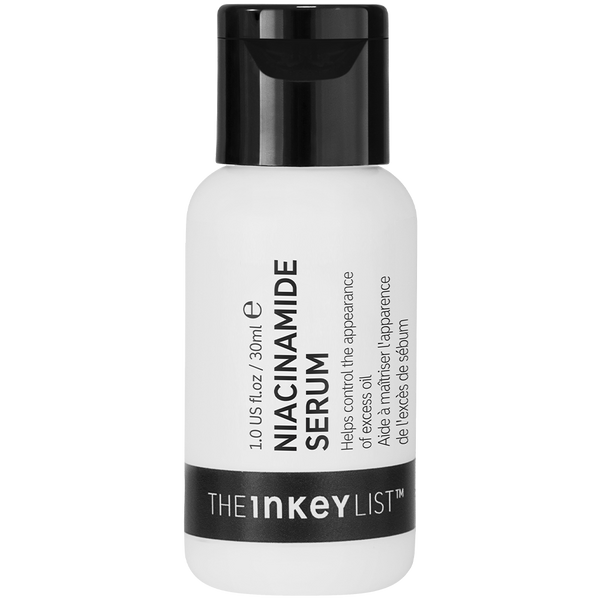
The product referenced throughout this blog is our 10% Niacinamide Serum at $13 - INKEY’s core daily niacinamide treatment, fragrance-free and formulated for all skin types including acne-prone.
What Niacinamide Actually Does to Your Skin
Before you can properly answer “can niacinamide cause acne?”, you need to understand what niacinamide actually does inside the skin. Because when you look at its mechanisms, the question almost answers itself.
Niacinamide is the cosmetic name for nicotinamide - one of the two active forms of vitamin B3. It is water-soluble, stable across a wide pH range, and backed by decades of peer-reviewed clinical research. Unlike many trending skincare ingredients, niacinamide does not owe its reputation to marketing. It earned it through science.
The mechanisms are well-established. A 2024 comprehensive review published in Antioxidants (MDPI) provides the most thorough current analysis of how niacinamide works at a cellular level. The research identifies four primary mechanisms relevant to acne-prone and oily skin:
Sebum regulation. Multiple clinical studies, including those reviewed in the 2024 paper, demonstrate that niacinamide at concentrations from 2% to 5% measurably reduces sebum production following topical application. While the exact mechanism is still being studied, the sebostatic effect is clinically well-documented across different skin types and ethnicities. Less excess sebum means a less hospitable environment for the bacteria and congestion that drive acne.
Anti-inflammatory action. This is where niacinamide’s case against acne is most compelling. The ingredient inhibits the production of a specific set of pro-inflammatory cytokines - including TNF-alpha, IL-1, IL-6, and IL-8 - through control of NF-kB-mediated transcription. In practical terms, this means it directly interrupts the inflammatory signalling cascade that turns a clogged pore into a red, painful spot. Clinical studies have shown its topical application for acne vulgaris displays efficacy levels comparable to clindamycin for anti-inflammatory outcomes.
Skin barrier reinforcement. Niacinamide activates the mRNA expression of serine palmitoyl transferase, the key enzyme responsible for ceramide synthesis. Ceramides are the structural lipids that hold the skin barrier together. A stronger barrier means less transepidermal water loss, more resilient skin, and a reduced susceptibility to the environmental triggers that can worsen acne.
Inhibition of melanin transfer. Niacinamide blocks the transfer of melanosomes from melanocytes to surrounding keratinocytes - the process responsible for post-inflammatory hyperpigmentation. This is why consistent niacinamide use visibly reduces the dark marks that linger after a breakout has resolved.
One additional point that connects directly to the purging discussion later: the 2024 Antioxidants study explicitly states that niacinamide has no effect on keratinocyte proliferation. It does not accelerate cell turnover. This is a critical distinction.
It is also worth clarifying the niacin confusion. Niacin, or nicotinic acid, is the other form of vitamin B3 - and at high oral doses, it is associated with cutaneous flushing. Niacinamide does not share this property. The 2024 review confirms that niacinamide does not possess cutaneous vasodilating properties and is extremely well-tolerated by the skin. Clinical testing has confirmed no stinging at concentrations up to 10%, no irritation up to 5%, and no irritancy during a 21-day use test at 5% concentration.
The scientific picture, then, is this: niacinamide is anti-inflammatory, oil-regulating, barrier-building, and non-vasodilating. By every known mechanism, it is the opposite of something that should cause acne. Which makes the question of why breakouts appear after starting it all the more important to address clearly. For a deeper look at the ingredient’s full benefits, our niacinamide pillar page and serum-specific guide are good next reads.
Given this foundation, the next logical question is: if niacinamide’s mechanisms are fundamentally anti-acne, why do so many people report breakouts after introducing it?
Can Niacinamide Actually Cause Acne?
The direct answer is no. Niacinamide does not cause acne. It is non-comedogenic - meaning it does not block pores - and its mechanisms are anti-inflammatory and oil-regulating, not pro-inflammatory or pore-clogging. There is no peer-reviewed clinical evidence that correctly formulated niacinamide at standard concentrations causes or worsens acne.
And yet. Breakouts appearing after introducing niacinamide are a genuinely common experience, reported widely enough that this question ranks among the most searched niacinamide topics online. The key distinction is this: the cause is almost never the niacinamide itself.
This is not a dismissal of the experience. The breakouts are real. The discomfort is real. What is not accurate is the attribution. Skin is complex, and the moment you introduce a new product is rarely the isolated event it seems. Here are the most common actual causes - each worth auditing carefully before pointing the finger at niacinamide.
Other ingredients in the formula. Niacinamide products are not just niacinamide. Every formula contains a carrier base, emollients, thickeners, preservatives, and often additional actives. Some of these ingredients - particularly certain esters, heavy emollients like isopropyl myristate, or silicones in high concentrations - can be comedogenic for some skin types. If you are breaking out after starting a niacinamide product, the first step is to look beyond the headline active and read the full ingredient list. Our guide on what causes clogged pores goes deeper on this.
Introducing multiple new products at once. This is one of the most common routine mistakes. If you introduced a niacinamide serum alongside a new moisturizer, a new SPF, or a new cleanser in the same week, any breakout that follows cannot rationally be attributed to niacinamide specifically. The only way to isolate a product’s effect is to introduce it alone, on a stable routine, over a sufficient observation period.
Stress. Stress is a frequently underestimated breakout trigger. It elevates cortisol, which increases sebum production and triggers inflammation - a direct acne pathway that has nothing to do with what you applied to your face. If your stress levels changed around the same time you started niacinamide, that correlation is worth examining. For more on this, read our guide on whether stress causes acne.
Hormonal shifts. Cyclical hormonal changes - across a menstrual cycle, during a period of elevated androgens, or as a result of hormonal fluctuations - drive breakouts independently of any skincare routine. If your breakouts follow a recognizable cycle or have been worsening regardless of what products you use, adult acne and its hormonal drivers is worth reading.
Dietary changes. Diet and acne have a complex relationship, but there is evidence that certain foods - particularly those with a high glycaemic index, or dairy in some individuals - can influence sebum production and inflammation. If your diet shifted around the time you introduced niacinamide, that is a variable worth considering. Our does diet cause acne guide covers this evidence fairly.
Seasonal skin changes. Humidity, temperature, and UV exposure all affect sebum production and skin behaviour. Transitional seasons in particular are known to trigger increased oiliness and congestion as skin adapts. A breakout that coincides with a weather shift and a new product introduction may have more to do with the former.
Coincidental timing. Acne has its own biological cycle. A breakout forming beneath the surface this week was likely congesting for days or weeks before it became visible. Starting a new product during an already-active breakout cycle creates an apparent causal link where none actually exists. The breakout would have appeared regardless.
The rational first step when new pimples appear is to audit the full routine before attributing them to any single product. Given niacinamide’s mechanisms - anti-inflammatory, oil-regulating, barrier-supporting - it should, if anything, be the last product removed from an acne-focused routine. Removing it during an active breakout is often counterproductive.
This connects naturally to the most specific variation of this question: the idea that niacinamide might be causing skin purging. That has its own answer - and it is worth spelling out in full.
Niacinamide and Purging - The Full Explanation
Purging is one of the most misunderstood concepts in skincare, and niacinamide is one of the most misattributed causes of it. Getting clarity on exactly what purging is - and what causes it - makes the niacinamide question simple to answer.
What purging actually is. Purging is not just a general term for breaking out after a new product. It is a specific physiological response that occurs when a skincare active significantly accelerates keratinocyte proliferation - the rate at which skin cells turn over. When cell turnover speeds up dramatically, congestion that was already forming beneath the surface is forced to the surface faster than it normally would be. The result is a temporary surge of pimples, blackheads, and whiteheads - a skin purge of existing congestion. It is real, it is well-documented, and it resolves once the skin normalises.
What causes purging. The ingredients known to trigger purging are those with a direct, documented effect on cellular turnover: retinoids (retinol, retinaldehyde, tretinoin), alpha-hydroxy acids (glycolic acid, lactic acid) at active concentrations, and beta-hydroxy acids (salicylic acid) at active concentrations. These ingredients increase the rate at which skin cells proliferate and shed. That is precisely the mechanism that drives purging.
Why niacinamide cannot cause purging. The 2024 Antioxidants review is explicit on this point: niacinamide has no effect on the proliferation of keratinocytes. It does not accelerate cell turnover. Without that mechanism, the physiological process that causes purging does not exist. Healthline’s reviewed analysis confirms the same position: because niacinamide does not affect skin cell turnover, purging is not a plausible outcome of its use.
Niacinamide cannot cause purging. Full stop.
Purging versus a product reaction - how to tell the difference. This distinction matters practically, because if you are experiencing breakouts after starting any new product, knowing which category you are in tells you what to do next.
Purging typically appears within 2 to 4 weeks of starting a cell-turnover active such as a retinoid or AHA/BHA, concentrates in areas where you normally break out, involves pimples similar in type to your usual acne, and resolves within 6 to 8 weeks as the skin adjusts and normalises. It does not spread to unusual areas or change in character.
A reaction or breakout typically appears in new or unusual areas - places where you do not normally break out. It may appear more rapidly or more diffusely, does not resolve with continued use and may worsen, often accompanies other signs such as redness, texture changes, or sensitivity, and persists or escalates rather than settling down.
If you have introduced niacinamide alongside a retinoid or an exfoliating acid and are experiencing a surge of pimples, that pattern is consistent with purging from the cell-turnover active - not from niacinamide. Niacinamide is actually recommended as a complementary ingredient during retinol introduction for exactly this reason: its barrier-supporting and anti-inflammatory properties help skin tolerate the adjustment period. More on that pairing in our salicylic acid and niacinamide guide.
Practical guidance. If breakouts persist beyond 8 weeks without any improvement, or if they are appearing in areas where your skin is not usually prone to acne, this signals a reaction rather than purging - and warrants a full routine audit. The troubleshooting section below walks through that process systematically. For now, the takeaway is clear: niacinamide is not causing purging. The mechanism for it simply does not exist.
With purging addressed, there is still a fair question about what niacinamide can genuinely cause - because transparency about a full side effect profile is more useful than selective reassurance.
Real Niacinamide Side Effects - What the Science Actually Says
Niacinamide has one of the most favourable safety profiles of any skincare active. The clinical evidence is clear: no stinging at concentrations up to 10%, no irritation up to 5%, and no irritancy during a 21-day use test at 5% concentration, as confirmed by the 2024 Antioxidants study. That safety record is one of the reasons niacinamide became one of the most widely used actives in formulation.
But well-tolerated does not mean zero risk for everyone. Some people do experience reactions, particularly at higher concentrations or with sensitive skin. Here is an honest, evidence-grounded breakdown of every documented potential side effect - what it is, how likely it is, what causes it, and what to do.
Mild flushing or tingling
How common: Very rare at standard topical concentrations up to 10%.
The flushing response associated with vitamin B3 is linked to niacin (nicotinic acid), not niacinamide. As the 2024 research confirms, niacinamide does not possess the vasodilating properties of its chemical cousin. However, at very high topical concentrations - particularly above 10%, and especially at 20% - a small number of people with reactive or sensitive skin have reported mild warmth or tingling upon application. This is not a dangerous reaction. It typically resolves within minutes and does not persist with continued use.
What to do: If you are experiencing this, switch from a 20% formula to a 10% product. The 10% concentration is clinically validated for all the documented benefits of niacinamide - oil control, pore refinement, inflammation reduction, and post-acne mark fading. There is no evidence that 20% delivers meaningfully superior results for most users.
Redness or irritation
How common: Rare at 5% to 10% concentrations on its own.
At standard concentrations, niacinamide is very unlikely to cause redness or irritation by itself. Where redness does occur, it is more commonly a reaction to another ingredient in the formula - fragrance, high concentrations of alcohol, or essential oils are the most frequent culprits in niacinamide-branded products. Niacinamide is often the active that gets blamed because it is the most prominent ingredient on the label, but the formula has many components.
What to do: If redness occurs after starting a niacinamide product, examine the full ingredient list rather than just the headline active. Check for fragrance (listed as “parfum” or “fragrance”), denatured alcohol (alcohol denat.), or botanical extracts that could be sensitising. Our 10% Niacinamide Serum at $13 is formulated without fragrance and without known irritants - making it a useful benchmark for comparison if you are reacting to another brand’s formula.
Dryness or tightness
How common: Not a typical niacinamide side effect.
This is worth addressing because it is sometimes reported - but dryness is counterintuitive as a niacinamide reaction. Niacinamide actively boosts ceramide synthesis, which strengthens the skin barrier and supports moisture retention. If you are experiencing dryness alongside niacinamide use, the more probable cause is the cleanser step (particularly foaming or sulphate-based cleansers that can strip the barrier), another active in the routine such as a high-strength exfoliant or retinoid, or simply insufficient moisturizer.
What to do: Check the rest of the routine before attributing dryness to niacinamide. Ensure you are following with an appropriate moisturizer - our Omega Water Cream at $15 contains 5% niacinamide alongside barrier-supporting omega fatty acids and is lightweight enough for oily and combination skin.
Contact dermatitis
How common: Very rare. Genuine allergic reactions to niacinamide are documented in the literature but represent a small minority of cases.
True allergic contact dermatitis to niacinamide would typically present as persistent widespread redness, itching, or a rash that does not improve with time or product removal. It would be distinguishable from a standard breakout by its character - more diffuse, more uniform, and accompanied by itching rather than the localised, inflamed spots typical of acne.
What to do: If you suspect genuine contact dermatitis - persistent redness, itching, or a rash that is worsening rather than settling - discontinue the product. If symptoms persist after stopping use, consult a dermatologist.
Sensitivity at very high concentrations
How common: More likely at 20% than at 10%, particularly in those with thin or already-compromised barrier function.
Twenty percent niacinamide formulas have grown in popularity, but the clinical evidence for superior outcomes at this concentration over 10% is not strong. What is well-documented is that higher concentrations carry a greater risk of sensitivity, particularly for reactive skin types. Dermatological consensus supports starting at lower concentrations and building up where needed.
What to do: Start at 10%. For the vast majority of skin types - including acne-prone, oily, sensitive, and dry - 10% niacinamide delivers all documented clinical benefits. There is no clinical need to use 20% as a starting point.
What niacinamide does NOT cause: Acne. Purging. Clogged pores. These are not documented side effects of niacinamide and they contradict its known mechanisms. These attributions persist because of coincidental timing, formula complexity, or routine variables - not because of the niacinamide itself.
When to seek professional advice: Consult a dermatologist if you experience intense burning, severe redness, a widespread rash, signs of skin infection, or irritation that persists more than 2 to 4 weeks after stopping use of the product.
Now that the science of what niacinamide can and cannot cause is clear, the most practically useful question is: what do you actually do if you are experiencing a reaction right now?
Troubleshooting - What To Do If You Think Niacinamide Is Causing a Reaction
If you found this blog because your skin is currently reacting to something in your routine, this section is for you. The goal here is not to convince you to keep using niacinamide regardless. The goal is to help you identify the actual cause of what is happening so you can make an informed decision based on facts, not frustration.
Work through this in order.
Step 1 - Audit What Else Changed in Your Routine
Think carefully: when did the breakout or reaction actually start? Did you introduce any other new products around the same time - a different SPF, a new cleanser, new makeup, a different moisturizer? Did you switch anything else in the weeks before? The cause of a new breakout is frequently something introduced alongside niacinamide, not niacinamide itself. Write down exactly what is in your current routine and note when each product was introduced. This audit is the single most important step.
Step 2 - Check the Full Formula, Not Just the Active
The “10% Niacinamide Serum” label tells you only about the active ingredient. It does not tell you about the emollients, the texture agents, the preservatives, or the fragrance. Check the full ingredient list of every product in your routine - not just the one you are suspecting. Look for potentially comedogenic ingredients (certain esters and heavier emollients are common culprits), fragrance or parfum, alcohol denat., and essential oils. Our 10% Niacinamide Serum at $13 is fragrance-free, non-comedogenic, and formulated without known irritants - making it a useful reference point when comparing labels.
Step 3 - Reduce Frequency Before Eliminating
If you genuinely suspect mild sensitivity to niacinamide at 10%, do not immediately stop using it. Instead, reduce application frequency first. Move to once daily (PM only) or every other day for two weeks. For those using multiple actives simultaneously, reducing frequency gives the skin breathing room to adjust. If symptoms improve with reduced frequency, gradually reintroduce to twice-daily use over 2 to 3 weeks.
Step 4 - Check the Concentration You Are Using
Sensitivity is more commonly reported at 20% niacinamide concentrations than at 10%. If your current product is a 20% formula, switch to a 10% formula for 4 to 6 weeks and assess whether the reaction improves. Given that 10% delivers all clinically documented benefits, this is a low-sacrifice switch.
Step 5 - Simplify the Entire Routine Temporarily
If the source of the reaction is genuinely unclear after the first four steps, strip the routine back to basics. That means a gentle cleanser, a simple moisturizer - such as our Omega Water Cream at $15, which is lightweight and non-comedogenic - and nothing else for one to two weeks. Once skin has stabilised and calmed, reintroduce products one at a time with at least one week between each new addition. This methodical approach is the only reliable way to isolate which product is responsible for a reaction.
Step 6 - Consider Lifestyle Factors
Skin does not exist in isolation. Has stress increased recently? Has your diet shifted? Has the season changed? All of these independently influence breakout frequency and severity. Before attributing a change in your skin to a product, honestly assess whether any of these variables changed at the same time. Our guides on stress and acne and diet and acne provide evidence-based context for both.
Step 7 - When to See a Dermatologist
Seek professional advice if: the reaction is severe (intense burning, widespread rash, swelling or signs of an allergic response), if your skin is worsening despite a simplified routine and stopped product use, or if breakouts are increasing in frequency or intensity over 4 or more weeks. A dermatologist can examine the reaction in person and provide diagnosis that no guide can substitute.
For a starting point on understanding your skin’s specific patterns, the Acne Analyzer Pro offers personalized guidance that can help you identify your skin concern triggers before or alongside professional consultation. You can also explore our full acne resource for comprehensive context on what might be driving your skin behaviour.
With the troubleshooting process mapped out, it is worth ending on the positive: how to use niacinamide correctly going forward so that it does exactly what the science says it should.
How to Use Niacinamide Safely - Especially If Your Skin Is Sensitive
The good news, having worked through everything in this blog, is that niacinamide is genuinely one of the most approachable actives in skincare. Used correctly, at the right concentration, in the right formula, it is an asset for virtually every skin type - and particularly for those managing acne-prone or oily skin. Here is how to do it right.
Start at 10%, Not 20%
For the vast majority of people, 10% niacinamide delivers all documented clinical benefits: sebum reduction, inflammation calming, pore refinement, barrier support, and post-acne mark fading. The clinical evidence for meaningfully superior outcomes at 20% over 10% is not strong, and sensitivity risk is higher at elevated concentrations. Start at 10%. If your skin is happy and stable after 6 to 8 weeks, reassess whether any increase is warranted - but for most skin types, it will not be.
Our 10% Niacinamide Serum at $13 is the reference formula for this blog. It is fragrance-free, non-comedogenic, and suitable for daily use on all skin types.
Introduction Guidance for Sensitive Skin
If your skin is reactive, introduce niacinamide in the PM routine only for the first 1 to 2 weeks. Once you have confirmed the skin is tolerating it well - no unusual redness, no new breakouts - you can add it to your morning routine as well. This graduated approach removes variables and gives you clear information about how your skin is responding.
Correct Routine Order
Getting the application order right matters for both efficacy and comfort.
Morning: Cleanse with our Salicylic Acid Cleanser at $15 for acne-prone skin, or a gentle non-foaming option for very sensitive skin. Apply the niacinamide serum to damp or dry skin. Follow with moisturizer and SPF.
Evening: Cleanse. Apply niacinamide serum. Follow with moisturizer - our Omega Water Cream at $15 layers well here, providing barrier support without heaviness. If you are using a retinoid, apply niacinamide first, allow it to absorb, then apply retinol - niacinamide’s anti-inflammatory properties help support skin through the retinol adjustment period.
Application Tips
A pea-sized amount applied to the face and neck is sufficient. Using more does not accelerate results. Apply each step of your routine separately rather than mixing serums in your palm - this preserves the integrity of each formula. Both damp and dry skin application work effectively for niacinamide.
Building a Supporting Routine
Niacinamide works well alongside most other actives. A few pairings worth knowing about:
For acne-prone and oily skin, niacinamide and salicylic acid are complementary, not competing. Salicylic acid decongests pores; niacinamide regulates oil and calms inflammation. The full guide is here: salicylic acid and niacinamide for acne-prone skin.
For brightening alongside acne management, niacinamide and vitamin C are compatible with correct layering. Read: can you use niacinamide and vitamin C together?
For redness-prone or post-acne skin, niacinamide and azelaic acid are genuinely complementary. Read: azelaic acid and niacinamide together
For persistent or active breakouts, our 360° Acne Clearing Serum at $18 can be used alongside or as an alternative to the niacinamide serum for more targeted treatment. For individual spots, our Hydrocolloid Invisible Pimple Patches at $10 provide overnight active treatment without disrupting the broader routine.
The full niacinamide ingredient guide is a good companion resource for anyone wanting to build the most effective routine around this ingredient.
The Science Is Clear - And So Is the Path Forward
Niacinamide does not cause acne. It does not cause purging. Its mechanisms are anti-inflammatory, oil-regulating, barrier-reinforcing, and non-comedogenic - working in the opposite direction from anything that would worsen acne or trigger a breakout cascade.
Documented side effects at 10% concentration are rare and manageable. Mild sensitivity is possible at 20% concentrations in reactive skin types, and switching to 10% resolves it. Genuine allergic contact dermatitis is very rare. When breakouts appear after introducing niacinamide, a systematic look at the full routine - other products introduced simultaneously, the complete formula of the niacinamide product itself, and relevant lifestyle factors - almost always reveals the actual cause.
Niacinamide is among the most rigorously evidenced, most widely studied skincare actives available. The research behind it spans decades and continues to deepen. Used at the right concentration, in the right formulation, as part of a thoughtfully constructed routine, it is not a risk for acne-prone skin. It is one of the most useful tools available to manage it.
If you are still unsure what is happening with your skin, the Acne Analyzer Pro can help you identify patterns and get personalized guidance as a starting point. And if you want to build a complete routine tailored to your skin type and concerns, the Skincare Quiz or the Routine Builder - where you can save up to 20% - are both good next steps.
Shop our 10% Niacinamide Serum - $13 - Explore the full Niacinamide collection - Take the Acne Analyzer Pro for a personalized routine - Not sure where to start? Take the Skincare Quiz - Build your full routine and save up to 20%: Build Your Routine
Frequently Asked Questions
Got a question?
Our askINKEY team are a friendly bunch of skincare experts with deep product knowledge and zero judgement. Whether you're an ingredient obsessive or just starting out, we'll make it make sense. No question too big. No question too small. We Give A Care, Every Day.


