


How to Plump Your Lips Without Fillers: The Science of Peptide Lip Balms
Discover how to achieve fuller, healthier-looking lips without fillers by using peptide-powered skincare that hydrates, supports collagen and delivers natural-looking plumping over time.
Author
askINKEY skincare advisor
Published
13 July, 2026
Time to read
12 minutes
Fuller, healthier-looking lips are one of the most searched aesthetic topics online - and the conversation has shifted meaningfully in recent years. Where the discussion once centered almost exclusively on injectable procedures, there is now a growing body of interest in what topical skincare science can realistically achieve. This blog covers three things: the biology of why lips lose volume in the first place, the ingredient science behind peptide lip balms and hyaluronic acid, and what results are genuinely achievable without a single needle involved.
This is not a sales piece. It is a science-led breakdown of a real ingredient category - one that is worth understanding properly before you decide what route is right for you. If you are already familiar with the landscape and want to see the formulations themselves, our lip treatments collection covers the full range. But if you want to understand the science first - which is always the better starting point - read on.
The concept of a “topical plumper” is distinct from an injectable. These are not the same thing, and pretending otherwise does nobody any favors. What topical peptide science can do, however, is address the biological mechanisms behind volume loss - and do it progressively, consistently, and without downtime. A peptide lip balm that is clinically proven to plump lips by up to 40% in 4 weeks* is a credible, verifiable claim worth examining carefully. That is exactly what this blog sets out to do.
The growing conversation around non-invasive alternatives to fillers is not a trend built on wishful thinking. It is a response to a real gap in the market - and to a generation of consumers who want to understand what they are putting on their skin before they commit to anything. The science, it turns out, gives them genuinely good reasons to pay attention.
Why More People Are Rethinking the Filler Conversation
Lip filler demand has grown substantially over the past decade. Social media accelerated a cultural shift toward fuller lips as an aesthetic standard, and cosmetic clinics responded accordingly. For a period, injectable lip augmentation became almost normalized - discussed openly, photographed routinely, and priced at a level that made it feel accessible to a wider audience than ever before.
But something shifted. The aesthetic conversation began to move away from the over-filled look that dominated mid-2010s beauty culture, and a more nuanced, naturalistic approach started gaining ground. Publications that once celebrated dramatic volumisation began running features on subtlety, proportion, and what publications like Allure now actively describe as “the alternatives conversation” - a serious editorial exploration of what non-injectable options can achieve. Byrdie has similarly recognised needle-free lip enhancement as a growing, legitimate category within mainstream beauty.
This shift is not anti-filler. It is important to say that clearly. Injectable lip augmentation is a valid, well-established cosmetic procedure when performed by a qualified practitioner. What has changed is the proportion of people who are pausing before committing - and asking a question that deserves a real answer: what else is out there?
The practical concerns around fillers are well-documented and worth acknowledging honestly. A single session typically costs $500 to $1,000 or more in the US, depending on the clinic, the practitioner, and the quantity of product used. Results last anywhere from 6 to 18 months, meaning maintenance is not optional - it is a recurring financial and time commitment. The procedure involves needles, a recovery window involving potential bruising and swelling, and the skill of the individual practitioner, which varies significantly. There is also the documented phenomenon of filler migration over repeated sessions - where product shifts subtly from its original placement, creating uneven results that require correction.
None of these are reasons to avoid fillers entirely. For someone who wants dramatic, immediate volumisation and is prepared to commit to the process, an injectable is likely the most effective available option. But for a meaningful and growing segment of people, these factors are enough to prompt the question: before I go down that road, what can topical science actually do?
That question is worth taking seriously - because the honest answer is no longer “not much.” The ingredient science has moved. Signal peptides, advanced hyaluronic acid delivery systems, and evidence-backed formulations now exist in the lip care category in a way they simply did not ten years ago. The conversation has earned its legitimacy.
It is also worth validating something that is sometimes left unsaid in beauty discourse: wanting fuller lips is not vanity. It is biology. Lips naturally lose volume, definition, and hydration over time - beginning, for most people, in their mid-20s. Collagen production slows. Hyaluronic acid levels decline. Fat pads shift. The structure that gives lips their three-dimensional projection begins to reduce. These are physiological realities, not cosmetic conceits. Understanding them is the first step toward addressing them intelligently.
Before exploring what peptides can do for lips, it helps to understand what determines lip fullness at the biological level - and why that biology creates the specific conditions that targeted skincare ingredients are designed to address.
What Actually Makes Lips Look Full: The Biology of Lip Volume
Lip volume is not simply a matter of genetics and luck. It is the product of a specific biological architecture - one that is dynamic, age-sensitive, and responsive to environmental conditions. Understanding that architecture helps explain why certain ingredients work where others fall short.
The skin of the lips is structurally unlike the rest of the face. Where the skin on your cheeks contains approximately 15 to 16 cell layers, lip skin is thin - typically just 3 to 5 cell layers deep. It contains no sebaceous glands, which means it produces none of the natural oils that help maintain the skin barrier on the rest of your face. It also has a very limited capacity to self-hydrate. Lips are, by their biological nature, more vulnerable to moisture loss and environmental exposure than virtually any other part of the face.
Lip volume and definition are primarily determined by three structural elements. The first is collagen - the fibrous protein that provides structural support and shape to the lip tissue. Collagen gives lips their firmness and definition, maintaining the clear border between lip skin and the surrounding perioral area. The second is hyaluronic acid (HA) - a naturally occurring polysaccharide that hydrates the dermis and maintains the plump, filled-out appearance of healthy lips. The third is the orbicularis oris muscle (the circular muscle surrounding the mouth) and the surrounding fat pads, which together provide the three-dimensional projection that makes lips look full from the front and in profile.
Volume loss begins gradually. From the mid-20s onward, collagen synthesis slows - the body produces less of it and breaks down existing collagen faster. Hyaluronic acid levels decline alongside collagen, reducing the tissue’s capacity to retain moisture and maintain structural fullness. The fat pads that support the lip’s projection begin to shift or reduce in volume. By the 40s and 50s, these cumulative changes become more visible: lip thinning, softening of the lip border, and the appearance of vertical lip lines - often called “lipstick lines” - become more pronounced.
Environmental factors accelerate this timeline meaningfully. UV exposure is one of the most significant - ultraviolet radiation degrades both collagen and hyaluronic acid in the skin, speeding up the structural changes that would otherwise develop more slowly with age. Chronic dehydration, whether from low water intake or environmental factors like dry air and central heating, visibly flattens lip tissue by depleting the moisture that gives lips their characteristic surface plumpness. Even habitual movements - drinking from straws frequently, or specific facial expressions repeated over years - can contribute to lip-line definition loss over time.
There is also an immediate, visual dimension to all of this that is easy to overlook: dehydrated lips look thinner than hydrated ones, even when structural volume has not changed. When the lip tissue is depleted of moisture, it appears flatter, more textured, and less defined than when properly hydrated. This means that addressing dehydration alone - without any structural intervention - can produce a visible improvement in how full lips appear. For more on how dehydration affects skin appearance more broadly, our dehydrated skin guide provides a useful foundation.
This biological context matters because it identifies exactly what the right lip care ingredients need to target. Volume loss in the lips is not one problem - it is several: declining collagen synthesis, reduced hyaluronic acid levels, impaired moisture retention, and the cumulative effect of environmental stressors. The most effective topical approach addresses more than one of these simultaneously. That is precisely where peptide science - and specifically a combination of signal peptides and advanced HA delivery - becomes relevant. We will get into the detail of how peptides work on lips shortly, but for a grounding on the peptide category as a whole, our full peptides guide is a good starting point.
Understanding what creates lip fullness - and what depletes it - makes the case for targeted, ingredient-led lip care far more compelling than any marketing claim ever could. Now, the question is: what can a peptide actually do about it?
What Peptides Do for Lips: The Science Behind the Signal
Peptides are one of the most researched ingredient categories in modern skincare - and one of the most misunderstood. The term gets used broadly, applied to everything from basic moisturizers to high-concentration serums, which has made it harder for consumers to understand what specific peptides actually do and why some formulations are meaningfully different from others. In the context of lip plumping specifically, the distinction matters enormously.
A peptide is, at its most fundamental, a short chain of amino acids - the same building blocks that make up proteins like collagen and elastin. In the context of skincare, certain peptides function as biological messengers. They signal to specific cells in the skin to perform particular functions - and the cells, recognising the signal, respond accordingly. This is not a cosmetic trick. It is a mechanism that mirrors the body’s own communication systems.
The peptides most relevant to lip plumping fall into a category called signal peptides. Two in particular - Palmitoyl Tripeptide-1 and Palmitoyl Tripeptide-38 - have been studied specifically for their role in stimulating fibroblast activity. Fibroblasts are the cells responsible for producing collagen in the dermis. When collagen synthesis slows with age, fibroblast activity is a central part of what is declining. Signal peptides like Palmitoyl Tripeptide-1 send targeted messages to fibroblasts, prompting them to increase collagen production. The result, with consistent use, is improved structural support in the lip tissue - not overnight, but progressively and measurably.
Palmitoyl Tripeptide-38 goes further. This specific peptide has been studied for its ability to stimulate the production of six different components of the skin matrix: collagen I, collagen III, collagen IV, fibronectin, hyaluronic acid, and laminin. These are not peripheral proteins - they are the core structural and hydrating elements that give lip skin its density, elasticity, and moisture retention. Stimulating their production simultaneously addresses multiple dimensions of the volume loss process that the previous section outlined. Research into Palmitoyl Tripeptide-38 confirms it penetrates into the skin layers and activates synthesis at the dermal level, making it meaningfully different from peptides that remain purely at the surface.
What makes lip-specific peptide application particularly effective - and this is a point that is often overlooked - is the structural thinness of lip skin. While that thinness creates the vulnerability to moisture loss described earlier, it also means that active ingredients applied topically do not need to penetrate as deeply to reach the dermal layer where fibroblasts reside. The distance from the surface to the active dermal layer is shorter in lip skin than in facial skin. This is one reason why a well-formulated peptide lip product can deliver measurable results at the lip specifically, even when the same concentration in a face product might take longer to show visible effects.
It is worth drawing a clear distinction here between peptide-based lip plumpers and the older generation of “tingle” plumpers that still exist in the market. Traditional plumping lip products - and there are still many of them - rely on mild irritants: menthol, capsicum extract, cinnamon oil, or similar compounds. These create a temporary swelling response by triggering a mild inflammatory reaction in the lip tissue. The effect can be immediate and visible, but it lasts minutes to hours, fades completely, and achieves nothing cumulative. It is a temporary irritation response, not a structural change.
Peptide-based plumping works through an entirely different mechanism. There is no tingling, no warmth, no irritation-induced swelling. The results build with consistent use because the underlying process - collagen signalling, matrix protein stimulation, cumulative structural support - takes time to develop. This is a fundamentally different value proposition: not a quick visual hit that fades, but a gradual, measurable improvement that compounds over weeks.
“Incorporation of peptides into lip care products, such as balms and creams, could mean that collagen formation is stimulated - contributing to the appearance of fuller, better-defined lips over time.” - TRI Princeton, a cosmetics research institute
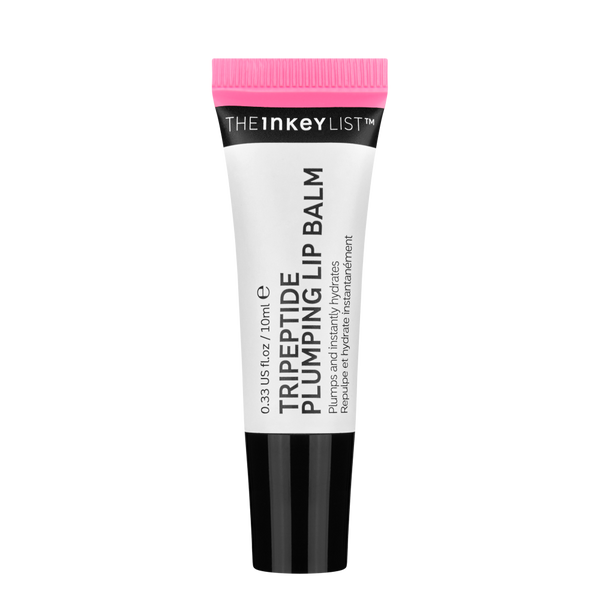
Our Tripeptide Plumping Lip Balm contains a 6% Tripeptide Complex featuring both Palmitoyl Tripeptide-1 and Palmitoyl Tripeptide-38. The formulation contains no tingling agents, no menthol, no fragrance, and no harsh irritants. It is suitable for sensitive lips, vegan-certified, and confirmed safe for use during pregnancy and breastfeeding. The clinical protocol that generated the 40% volume increase result* was based on minimum 3x daily application over 4 weeks - reflecting the cumulative nature of how peptide technology delivers results.
For a broader look at how peptides function across the full spectrum of skincare, our peptides guide goes into detail on the category as a whole. Our introductory peptides article also covers the foundational science for anyone new to the ingredient category. This blog goes further specifically on the lip-focused application - because the lip environment, as we have established, is genuinely distinct from the rest of the face.
With the peptide mechanism understood, there is a second active ingredient in the formula that works alongside the tripeptides - and it operates through a different but complementary mechanism. Hyaluronic acid is not just a hydrating comfort ingredient in a lip balm. In the right delivery format, it is a volumising agent in its own right.
Hyaluronic Acid and Lips: Why Hydration Is a Volume Strategy
Hyaluronic acid is well-established in skincare, but its role in lip volume is more specific and more interesting than the general conversation around HA skin hydration often suggests. In the context of lip tissue, HA is not simply a moisture-delivery ingredient. It is one of the primary structural components responsible for the plump, filled-out appearance of healthy lips - and its decline is a direct driver of the volume loss described earlier.
Hyaluronic acid is a polysaccharide found naturally throughout the body, including the dermis and the lips. It is hygroscopic by nature - meaning it actively attracts and holds water. According to Harvard Health Publishing and peer-reviewed dermatological research published in the National Library of Medicine, HA is capable of binding up to 1,000 times its weight in water. In practical terms, this means that HA molecules within the lip dermis act as a reservoir - maintaining the hydrated, volumised state of the tissue from within. As those HA levels decline with age and UV exposure, that reservoir depletes. The lips lose their characteristic “filled-out” appearance not just because of collagen loss, but because the hydration infrastructure that supports them is eroding.
It is important here to draw a clear line between topical HA and injectable HA fillers, because they work in fundamentally different ways. Injectable fillers use a cross-linked HA gel that physically displaces tissue, adding volume structurally from within. The volumisation is immediate and significant. Topical HA - in a well-formulated product - works by hydrating the outer and mid layers of lip skin, reducing the appearance of fine surface lines, and restoring the surface plumpness that dehydration depletes. These are not the same mechanism, and the results are not equivalent in magnitude. Both are legitimate approaches. Neither is a substitute for the other.
What makes the hyaluronic acid component of a peptide lip treatment particularly worth understanding is how the HA is delivered - and this is where formulation technology makes a meaningful difference. Our Tripeptide Plumping Lip Balm contains 2% Ultra Filling Spheres - a specific delivery system using dehydrated hyaluronic acid microspheres. When these microspheres come into contact with moisture in the lip tissue, they absorb water and expand, delivering hyaluronic acid directly within the lip surface rather than simply sitting on top of it. This is what creates the immediate plumping effect that users notice from first application - and it is distinct from HA that remains at the surface and evaporates.
The Ultra Filling Spheres mechanism delivers HA at multiple depths of the lip surface simultaneously - addressing both the immediate visible hydration effect and longer-term moisture retention. This dual action is what enables the Tripeptide Plumping Lip Balm to deliver both an instant result on first use and a cumulative improvement over 4 weeks of consistent application. The instant effect comes from HA hydration. The progressive effect comes from the tripeptide collagen signalling described in the previous section. Together, they address lip volume from two different directions at once.
Industry coverage from publications including Allure has begun highlighting the peptide and hyaluronic acid combination as the most evidence-backed approach in the topical lip plumping category - a recognition that reflects the growing body of clinical and dermatological support for this ingredient pairing.
The formulation is also waterless, which has a practical benefit worth noting: without water as a base, the formula maintains optimal stability for both the peptide complex and the HA delivery system, and it is fully compatible with any lip color or gloss worn on top. For anyone interested in a deeper formulation-level exploration, The Science Behind Tripeptide Plumping Lip Balm covers the specific ingredient interactions in detail.
Both mechanisms - peptide collagen signalling and hyaluronic acid volume restoration - are now understood. The natural next question is how these translate into practice, and how they compare honestly against what an injectable can deliver.
Peptide Lip Balm vs. Lip Fillers: An Honest Side-by-Side
This section exists because the question deserves a straight answer - and because the INKEY approach has always been to educate rather than convince. So here is the honest comparison.
Lip fillers and peptide lip balms are not the same thing. They operate through different mechanisms, deliver different magnitudes of result, and involve fundamentally different commitments. This is not a comparison designed to steer you toward one or the other. It is designed to help you understand what each actually achieves, so you can make the right decision for your goals.
What lip fillers deliver: Injectable HA fillers physically add volume to the lip tissue by introducing a cross-linked gel beneath the surface. The result is immediate, often dramatic, and highly controllable in the hands of a skilled practitioner. Results typically last 6 to 18 months depending on the product used, the individual’s metabolism, and lifestyle factors. The cost in the US ranges from approximately $500 to $1,000 or more per session. The procedure involves needles, a recovery window that may include bruising, swelling, and tenderness, and requires repeat appointments to maintain results. It is a cosmetic procedure with genuine results - and genuine considerations.
What a peptide lip balm delivers: Progressive, cumulative volume improvement via collagen signalling (tripeptides) and surface hydration (hyaluronic acid). Our Tripeptide Plumping Lip Balm is clinically proven to deliver up to 40% increase in lip volume in 4 weeks, with visible plumping results beginning at 2 weeks of consistent use. 95% of users felt instant nourishment and hydration from first application*. No needles. No downtime. No practitioner required. The cost is $14 for a tube that lasts approximately 6 to 8 weeks with 3x daily use.
What a peptide lip balm cannot do: Replicate the immediate, dramatic structural volumisation of an injectable. If someone has experienced significant volume loss and is looking for a fast, pronounced transformation, a topical product - however well formulated - will not deliver that. Honesty here matters more than enthusiasm. A topical plumper works progressively and naturally. The change is real, but it is gradual.
What a peptide lip balm does well: Deliver measurable, natural-looking volume improvement over 4 weeks. Maintain lip hydration and barrier health on a daily basis. Improve the visible appearance of fine lip lines. Work on all lip types, tones, and ages. Complement existing filler results - the formula is confirmed safe to use alongside injectable treatments, and can help maintain lip health and hydration between filler appointments. And it can be used every single day, indefinitely, with no recovery and no clinical appointment required.
The cost-to-result ratio is worth sitting with for a moment. One session of injectable lip filler versus approximately 6 to 8 weeks of a $14 product. That is a contrast that reflects one of the core principles behind the INKEY approach: effective skincare should not require a significant financial commitment to access. Cosmopolitan’s coverage of lip filler alternatives reflects the same mainstream editorial recognition - this is a category that is being taken seriously at the highest level of beauty journalism.
There is also a consistency dimension worth addressing honestly. Results from a peptide lip balm require consistent daily use - minimum 3x daily for 4 weeks - to reach the clinical benchmark. This is a different kind of commitment from a quarterly filler appointment, but it is still a commitment. Sporadic use will produce limited results. If you apply it three times a day for a week and then forget about it for two, the cumulative collagen-signalling mechanism does not have the sustained activation it needs to deliver the full clinical result. Consistency, in this context, is the product working as designed.
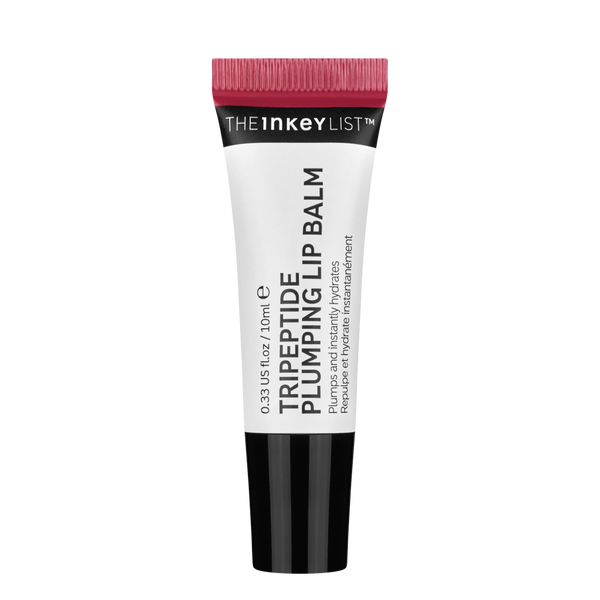
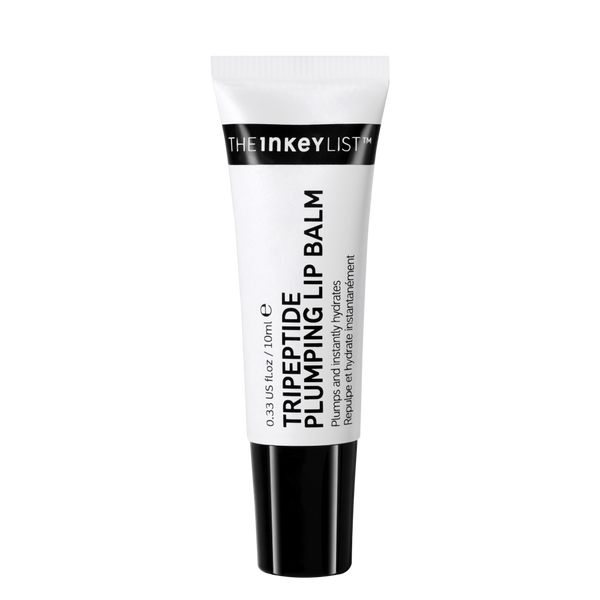
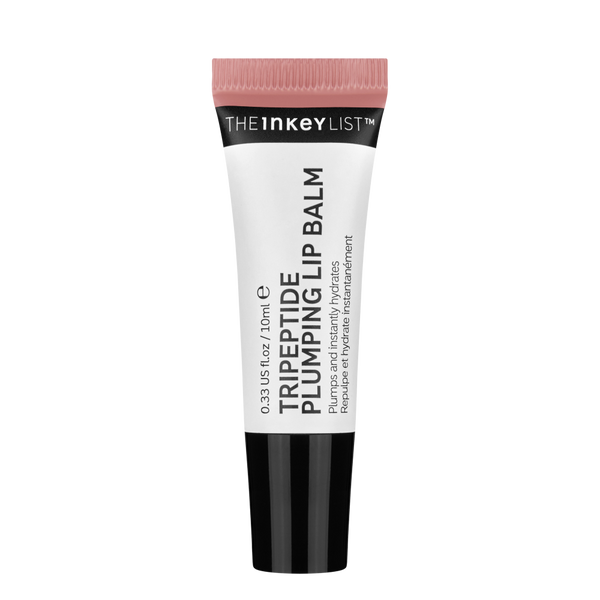
The Tripeptide Plumping Lip Balm is available in four shades to suit different preferences and occasions: Clear, Pink Tint, Berry Tint, and Mocha Tint - all at $14, all with the same 6% Tripeptide Complex and Ultra Filling Spheres formula. For a broader look at the full topical lip plumping category and how different product types compare, The Ultimate Guide to Lip Plumpers offers a comprehensive side-by-side of the available options.
The comparison is made. The next practical question is: how do you actually use a peptide lip balm to get the best possible results?
How to Build a Lip Care Routine Around Your Peptide Lip Balm
Understanding the science is one thing. Using the product correctly to get the results is another. This section covers both - because the clinical results that underpin the 40% volume claim* are based on a specific usage protocol, and following it closely is what separates meaningful results from a product that just sits on your bathroom shelf.
The basics of application are simple: apply to clean, dry lips. A small amount goes a long way. The formula is designed for a thin, even layer across the lip surface - not a thick coat. Because the Ultra Filling Spheres activate on contact with lip moisture, the product begins working immediately after application without needing additional occlusion or layering on top.
For your morning routine, the Tripeptide Plumping Lip Balm is a final-step product. After applying any serum or moisturizer to the face, finish with a layer to the lips. In the Clear shade, it gives a natural, glossy finish that wears comfortably under a face mask or on its own. The tinted versions - Pink, Berry, and Mocha - can be worn as a standalone lip color with a subtle, buildable tint.
For your evening routine, apply as part of your overnight skincare finish. Lips are an active repair zone during sleep - the tripeptide complex works cumulatively through the night as part of its collagen-signalling function, and overnight application adds meaningful additional contact time for the active ingredients. This is one of the most underused applications of a peptide lip treatment, and one of the most valuable.
A third application during the day - midday, or whenever you feel your lips need refreshing - is what takes usage to the clinical minimum of 3x daily. The product can be reapplied as often as needed throughout the day with no upper limit on frequency. Think of it less as a treatment you apply strategically and more as a daily lip moisturizer you reach for habitually - morning, midday, and night.
INKEY Tip: The most common reason people underperform the clinical results is inconsistency. Set a phone reminder for your midday application if that is the one you are most likely to skip. The cumulative results compound with every application, and a missed week early in the protocol delays the timeline to full results.
On layering: the Tripeptide Plumping Lip Balm works well as a base under any lip color. Apply first, allow 30 to 60 seconds for the formula to settle, then apply your lip color or gloss on top. This gives you the plumping benefit underneath any finish - from a bare, natural look to a full lipstick application.
Before applying the balm, lips benefit from gentle exfoliation to remove any dry or flaking skin. Removing dead surface cells allows the active ingredients to make direct contact with the lip skin, improving absorption and the immediate visual effect of the HA hydration. Even a gentle, damp cloth buffed lightly across the lips before your evening application can make a perceptible difference to how the product performs.
How long does a tube last? With 3x daily use, a 10ml tube typically lasts 6 to 8 weeks - making the $14 cost work out to well under $2.50 per week for a clinically proven, twice-daily treatment plus midday refresh.
For anyone who also wants to address the under-eye area as part of a combined routine, the Eye and Lip Hydration Duopairs the Tripeptide Plumping Lip Balm with a Caffeine Eye Cream at $26.60 - targeting the entire eye-and-lip zone as a coordinated approach to the areas of the face that are most prone to volume and hydration loss. The Lip Balm Gift Setis also available for anyone who wants to explore all four shades or is looking for a thoughtful gift option. The full Lip Treatments collection covers everything in one place. For more background on the ingredient powering the results, our peptides guide remains the most complete reference available.
Now that the practical routine is covered, the final section addresses the questions that come up most often around peptide lip balms - the ones people search for but do not always find answered directly and honestly.
The Bottom Line on Plumping Lips Without Fillers
Lip volume loss is biology. Collagen synthesis slows from the mid-20s onward. Hyaluronic acid levels decline. The structural architecture that gives lips their fullness and definition gradually depletes - accelerated by UV exposure, dehydration, and time. Understanding that process is what makes the case for peptide lip science genuinely compelling, because the right ingredients are not trying to cosmetically disguise volume loss - they are addressing the biological mechanisms behind it directly.
The evidence behind topical peptide and hyaluronic acid lip technology is real. Palmitoyl Tripeptide-1 and Palmitoyl Tripeptide-38 have documented mechanisms of action at the dermal level. Ultra Filling Spheres HA delivery provides immediate surface hydration alongside longer-term moisture retention. The clinical result - up to 40% increase in lip volume in 4 weeks, visible results at 2 weeks, and 95% instant nourishment from first use** - is tested, not invented.
No needles. No downtime. No practitioner appointment. No tingling. Four shades. $14. That is not a sales pitch - it is a summary of the facts, laid out after several thousand words of science.
The INKEY approach has always been the same: know your ingredients, understand what they do, and make decisions based on evidence rather than marketing. That applies whether you are choosing between a peptide lip balm and a lip filler, or simply deciding what to add to your daily routine. An informed choice is always the right one - whatever it turns out to be.
Ready to Try It?
Shop our Tripeptide Plumping Lip Balm - $14. Available in Clear, Pink Tint, Berry Tint, and Mocha Tint.
Explore the full Lip Treatments collection to see everything available.
Shop the Eye and Lip Hydration Duo at $26.60 for a paired approach to the eye and lip zone.
Find all four shades in the Lip Balm Gift Set.
Not sure where to start? Take the Skincare Quiz for a personalized routine recommendation built around your specific skin concerns.
*4-week independent clinical study of 20 people under dermatological control.
**4-week independent consumer trial of 20 people under dermatological control.
Frequently Asked Questions
Got a question?
Our askINKEY team are a friendly bunch of skincare experts with deep product knowledge and zero judgement. Whether you're an ingredient obsessive or just starting out, we'll make it make sense. No question too big. No question too small. We Give A Care, Every Day.


