

How Much Retinol Should You Actually Use?
A pea-sized amount, a few nights a week - here's exactly how much retinol to use, how often to apply it, and why more isn't better.
Author
askINKEY skincare advisor
Published
12 September, 2026
Time to read
17 minutes
Retinol is one of the most researched ingredients in skincare, and also one of the most commonly over-applied. Most people who ask how much retinol to use are not using too little. They are using two or three times what their skin can actually absorb, then assuming the resulting dryness is just part of the process. It usually is not. It is a dosing problem.
This article covers the practical side of retinol that rarely gets explained properly: the correct amount to apply per application, how that amount changes depending on the area of your face, how often to use it, how to build your frequency up week by week, the signs you have overdone it, and how long a single bottle should realistically last you.
Here is the thesis, stated plainly in the first hundred words so there is no suspense. With retinol, using more does not get you results faster. It mostly gets you irritation. Your skin can only take up so much active at one time. Everything past that point sits on the surface, does nothing useful, and raises your chances of flaking and tightness.
One important boundary before we start. This is an article about how much and how often, not how strong. If what you actually want to know is which concentration to buy, you want What Percentage Retinol Should I Use? instead, and you should go there now rather than reading a guide that will not answer your question. If you want the foundational explanation of the ingredient itself, start with what retinol is and what it does, or browse our full retinol collection to see the formats available. Think of this piece as the retinol-specific companion to our wider guide on how much skincare you should actually use. Same principle, applied to the one active where getting the amount wrong is most noticeable.
The short version: a pea-sized amount of retinol is enough for your entire face.
How Much Retinol To Use: The Short Answer
A pea-sized amount is enough for your whole face. Apply it at night as a thin, even layer, dotting the product across your forehead, cheeks and chin before spreading it outward. Using more than this will not deliver results faster. It mainly increases your risk of dryness, flaking, stinging and redness.
That is the answer. If you came here for a number and nothing else, you now have it and you can stop reading.
For everyone else, the reasoning matters, because understanding why a pea is the right amount is what stops you quietly creeping back up to a blob over the following weeks.
How Much Retinol To Use On Your Face
Retinol works by being absorbed into the skin. Absorption has a ceiling. Your skin can only take up a finite quantity of active in any single application, and once you pass that threshold, the surplus has nowhere to go. It sits on the surface of your face, gradually transfers to your pillowcase, and contributes nothing to your results.
This is why a pea-sized amount is not a cost-saving suggestion. It is a functional one. The dose is calibrated to what skin can realistically use, and going beyond it moves you from the useful part of the curve to the irritating part.
This is not just our position. The Cleveland Clinic’s retinol guidance is explicit on the point, instructing readers to “apply retinol in a thin layer to your entire face” and adding that “you should use a dose that’s about the size of a pea.” When independent medical guidance and a retinol brand land on precisely the same number, that number is worth trusting.
The phrase “thin, even layer” does a lot of work in that sentence, so let us make it concrete. A correctly dosed layer of retinol should disappear into your skin within seconds. It should feel like your face is simply damp for a moment, then normal. If your product is still sitting wet on your skin a full minute after application, or if it is beading, balling up under your fingertips, or leaving a visible film, you have applied too much. That is the most reliable at-home test there is, and it requires no measuring at all.
Why More Retinol Does Not Mean Faster Results
There is a persistent assumption in skincare that actives behave like effort: that doubling the input should roughly halve the time to results. Retinol does not work that way. Past the absorption ceiling, additional product does not accelerate anything. It simply raises the likelihood that you will irritate your skin badly enough to stop using the product altogether, which is the one outcome guaranteed to give you no results at all.
We are comfortable saying this even though we sell retinol. Our own Retinol Eye Cream ($15) page has stated it for years.
More isn’t better. Using more retinol than directed will not give you faster results, and overuse can cause irritation.
A brand telling you to use less of its product is not a marketing position. It is just what the evidence supports.
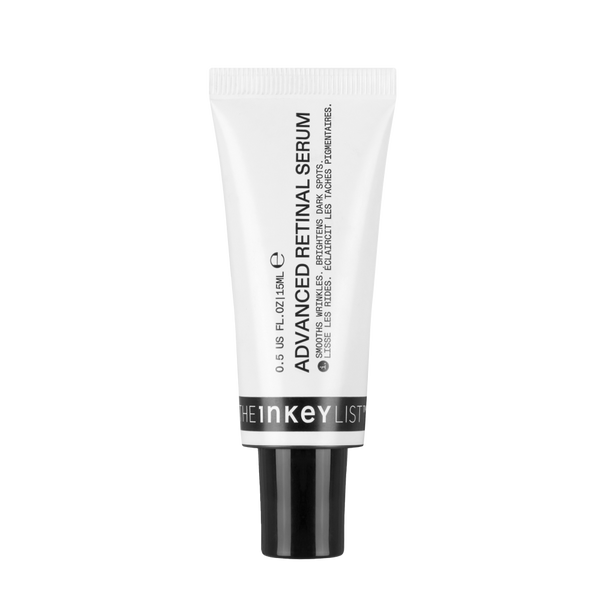
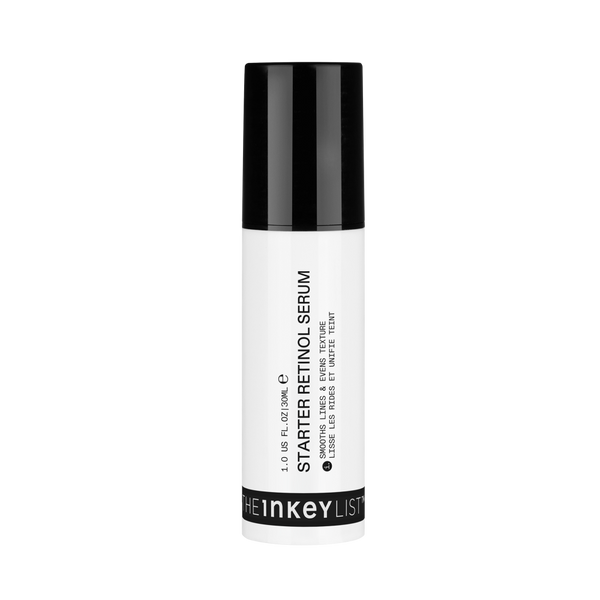
If you are choosing a product to apply this dose with, our Starter Retinol Serum ($15) is the straightforward entry point, and our Advanced 0.2% Retinal Serum ($22) exists as a step up once your skin is comfortable and established. Which one you pick is a strength question, and strength is deliberately not what this article is about. The amount you apply matters considerably more than the number printed on the bottle, and applying a modest amount consistently will outperform an ambitious product used erratically.
Knowing the answer is “a pea” is useful. Being able to picture a pea on your fingertip at eleven at night, with wet hands and a dropper you cannot quite see, is more useful. So let us make the measurement real.
What A Pea-Sized Amount Actually Looks Like
“Pea-sized” is one of those instructions that sounds precise and turns out to be almost useless the moment you are standing at the sink. Peas vary. Fingertips vary. Formulas behave differently. So here is a physical description you can actually replicate.
A pea-sized amount of retinol is roughly the size of a garden pea, sitting on your fingertip, covering a little less than the pad of your index finger. Not the whole pad. A little less. If the product spreads across your entire fingertip and starts to run toward the first knuckle, that is closer to two doses than one.
The reason to use a reference object rather than a unit of measurement is that nobody owns a 0.4ml measuring spoon, but everybody has seen a pea. Harvard Health uses exactly the same benchmark, advising readers to “use a pea-sized amount over your entire face before bedtime.” The consistency of this figure across independent sources is the strongest signal available that it is the right target.
Why Drops Are A Poor Way To Measure Retinol
A lot of people try to solve the dosing problem by counting drops instead, and it is a reasonable instinct that produces unreliable results.
The trouble is that a “drop” is not a fixed quantity. It depends on the diameter of the dropper, the viscosity of the formula, how full the bottle is, how hard you squeeze the bulb, and even the ambient temperature. A thin, watery serum and a thicker emulsion will produce visibly different volumes from an identical pipette. Two people diligently counting four drops each can easily end up applying substantially different amounts of product.
Measure retinol by sight, not by count. What the product looks like on your fingertip is far more reliable than how many drops came out of the bottle.
If you prefer a drop-based habit because it feels tidier, use drops to get product out of the bottle and then check it by eye before it touches your face. Dispense onto the back of your hand or a fingertip, look at it, and adjust. For most droppers and most serum textures, you will find yourself landing somewhere in the region of three to four drops, but treat that as an observation rather than a rule, and let the visual check be the thing that decides.
How To Apply Retinol Across Your Face
How you distribute the product matters almost as much as how much you dispense. Trying to spread a single blob from your cheek outward means the first area you touch receives a heavy dose and the last area receives almost nothing.
Use the dot-and-spread method instead:
- Start with clean, completely dry skin. Applying retinol to damp skin can increase absorption unpredictably, which makes your dose harder to control.
- Dispense a pea-sized amount onto a fingertip.
- Dot the product in small amounts across your forehead, both cheeks and your chin. Four or five dots is plenty.
- Spread each dot outward in a thin, even layer, working toward your hairline, jawline and the sides of your face.
- Stop before you reach the orbital bone around your eyes and the corners of your nose and mouth, which are the areas most likely to feel it first.
- Follow with moisturizer once the retinol has absorbed.
This sequence is the practical answer to “how much retinol serum to apply,” because the honest answer is that the amount and the spreading technique are the same problem. A pea distributed properly covers a whole face comfortably. A pea dumped on one cheek covers a cheek.
How Much Retinol To Use Around The Eyes
The skin around your eyes is thinner, more mobile and considerably more reactive than the skin on your cheeks, so it needs noticeably less product and more care about placement. If you are using a face serum in this area at all, use a fraction of what you would use elsewhere and keep it well outside the orbital bone.
For most people, the simpler solution is a formula built for the area, which removes the guesswork entirely. Our Retinol Eye Cream is formulated at an appropriate level for eye-area skin, so you are not trying to improvise a smaller dose of something designed for your face. For technique, including how much to use and where exactly to place it, we have a dedicated guide on how to apply eye cream the right way.
How Much Retinol To Use On The Neck And Chest
Your neck and chest need their own dose, not the residue left on your fingers after you have finished your face. That leftover-based approach is the single most common way people end up with an irritated neck, because the amount is uncontrolled and the application is uneven.
These areas also tend to be more sensitive than people expect, and they often tolerate less frequent application than the face does. As a rough starting point, treat the neck as requiring roughly half a pea of its own, applied in upward strokes, and build frequency there even more slowly than you did on your face. Our guide to retinol for your body, neck and chest covers the specifics properly.
If you have arrived at this article because you are unsure about quantities generally, and retinol is simply the product that prompted the question, our guide on how much skincare you should actually use runs through the correct amounts for every step in a routine.
Now for the number that causes more confusion than any other, and the reason so many people are applying the wrong amount in the first place: the percentage printed on the front of the bottle.
The Number On The Bottle Is Not The Dose You Are Applying
Here is a distinction that almost nobody makes, and that explains an enormous amount of retinol confusion.
The percentage on a retinol label describes the concentration of the formula. It tells you how much active is present in the product sitting in the bottle. It does not tell you how much active your skin receives in a given application. That figure depends entirely on how much product you apply, how it is formulated, and how the active is delivered once it is on your skin.
Concentration and dose are two separate things, and they get conflated constantly. It is the reason someone can buy a higher-percentage product, apply a generous amount of it every night, irritate their skin within a fortnight, and conclude that retinol does not agree with them. The percentage was never the variable that needed adjusting.
What The Percentage On The Label Actually Refers To
Our own Retinol Eye Cream is a useful worked example, because we publish both numbers. It contains 3% Vitalease. That compound equates to 0.09% slow-release retinol.
3% Vitalease equates to 0.09% slow-release retinol. The headline figure on the front of a bottle and the actual retinoid content are frequently not the same number.
Neither of those figures is misleading, and both are accurate. They are simply measuring different things. One describes the quantity of a complex within the formula, the other describes the retinoid content that complex delivers. If you were comparing products purely on whichever number appeared largest on the packaging, you would draw entirely the wrong conclusion about what you were applying.
This is precisely the sort of thing worth being transparent about, because the alternative is a market where the biggest printable number wins regardless of what it means.
Why A Slow-Release Retinol Changes What You Are Applying
Delivery matters as much as quantity. A slow-release format releases the active into the skin gradually over a period of hours rather than delivering it all within the first few minutes after application. The total amount involved may be similar, but the rate at which your skin encounters it is very different, and rate is a large part of what determines whether skin feels comfortable or irritated.
This is why a gentler-feeling product is not automatically a weaker one, and why the experience of using two products with similar-looking labels can differ so much. You are not only asking how much active is present. You are asking how quickly it arrives.
The practical takeaway from all of this is straightforward. Chasing a bigger number on a label is a poor substitute for applying a sensible amount consistently. This aligns with the American Academy of Dermatology’s guidance to begin with the lowest available strength and let your skin adapt. Consistency beats intensity, reliably and unglamorously.
If you do want to work through strength properly, including what counts as a sensible starting concentration and how a retinol strength guide should be read, that is a separate question with a separate answer, and we have written it up in What Percentage Retinol Should I Use? Why a Higher Number Isn’t a Better Result. Readers who realize at this point that their real question is about ingredient type rather than quantity will find Retinol vs Retinal more directly useful.
Dose is now settled. That leaves the other half of what people are really asking when they ask how much retinol to use: how often to apply it.
How Often Should You Use Retinol? A Week-By-Week Build-Up
Frequency is not something you choose on day one. It is something you arrive at over several weeks by paying attention to how your skin responds.
This is the part of retinol that most people get wrong, and it is wrong in a specific and predictable direction. They start at the frequency they hope to end up at. Skin that has never encountered a retinoid before is asked to handle nightly application immediately, it reacts, and the product gets abandoned inside a month. The gradual build is not a formality or a marketing hedge. It is the single most effective thing you can do to prevent irritation.
Here is a schedule that works for most people. Treat the week numbers as a guide rather than a deadline.
Weeks 1 And 2: Starting Out
- Apply retinol once or twice a week, at night only.
- Always on clean, completely dry skin.
- Use the pea-sized amount described earlier. Do not reduce the amount and increase the frequency to compensate, and do not do the reverse.
- Follow with a moisturizer.
- Spend these two weeks observing rather than adjusting. You are gathering information about how your skin behaves, not chasing progress.
This conservative opening is standard advice outside the beauty industry as well as inside it. The Cleveland Clinic recommends that “for the first couple weeks of treatment, apply retinol only every other day,” and Harvard Health suggests applying “every three days at first, as they can irritate the skin if overused.”
Before your first full application, it is worth doing a patch test on a small area. Our guide on why you need to do a patch test explains how.
Weeks 3 And 4: Building Tolerance
- If your skin has been comfortable, move to every other night, or roughly three times a week.
- If you have noticed any tightness, dryness or flaking, hold at your current frequency instead. Holding is a legitimate outcome, not a delay.
- Continue applying at night only, on dry skin, at the same pea-sized amount.
- Keep the rest of your routine simple while your skin adjusts. This is not the week to introduce a second new active.
Harvard Health frames the progression the same way: “monitor your skin for redness, significant peeling, or irritation. As your skin builds tolerance, increase applications.”
Week 5 Onwards: Finding Your Rhythm
- Most people settle somewhere between three and five nights a week.
- Some tolerate nightly use comfortably. Some never do. Both are completely normal endpoints, not a pass and a fail.
- Your comfortable frequency may shift with the seasons, with travel, or with other changes in your routine, and adjusting downward when your skin asks you to is good practice rather than backsliding.
- If you want a more formal structure for fitting retinol around other actives across the week, skin cycling is a well-established approach to alternating nights.
There is one rule that makes this entire schedule work, and it is worth more than the schedule itself.
Increase your frequency or increase your amount. Never both, and never in the same week.
If you change two variables simultaneously and your skin reacts, you have no way of knowing which change caused it. Change one thing, wait at least a week, observe, then decide. This is the difference between building a routine deliberately and guessing repeatedly.
It is also worth saying clearly that consistency at a lower frequency beats an aggressive schedule you abandon in three weeks. Twice a week, sustained for six months, will do considerably more for the appearance of fine lines and skin texture than nightly application sustained for a fortnight followed by nothing.
For the wider picture on getting started, including what to expect in the first few weeks and how to fit retinol around the rest of your products, our guide to retinol for beginners covers the ground this section deliberately leaves alone. If you are following a week-one schedule and looking for something appropriate to follow it with, our Starter Retinol Serumis formulated for exactly this stage.
Can You Use Retinol Every Night?
Some people can, and there is nothing wrong with it if your skin is genuinely comfortable. But nightly use is not the goal, and it is not a marker of doing retinol properly.
This framing has taken hold because frequency is easy to measure and easy to post about, so it has become a proxy for commitment. It is not a useful one. The right frequency is simply the highest one your skin stays comfortable at, indefinitely, without a recurring cycle of irritation and recovery.
If you are using retinol three nights a week for a year, your skin looks and feels good, and you never think about it, you are using retinol correctly. Someone applying it nightly while managing constant flaking is not ahead of you. They are applying more product and getting less from it.
Because all of this depends on reading your skin accurately, it is worth knowing exactly what the warning signs look like.
Signs You Are Using Too Much Retinol, And What To Do
Over-application announces itself fairly clearly once you know what to look for. The difficulty is that a lot of people interpret these signs as evidence that the product is working and respond by continuing exactly as they were.
The Signs To Look For
- Tightness, particularly noticeable a few hours after application or first thing in the morning.
- Dryness that your usual moisturizer no longer resolves.
- Flaking or peeling, often starting around the nose, chin or the outer edges of the face.
- Stinging or a burning sensation on application, especially immediately after cleansing.
- Persistent redness that does not settle within an hour or so.
- Skin that feels rough or textured rather than smooth.
- Sudden sensitivity to products that have never bothered you before, such as a cleanser or a serum you have used for months.
- Makeup clinging to dry patches or sitting unevenly where it previously sat fine.
One or two of these appearing briefly in your first fortnight is not unusual. Several of them appearing together, or any of them persisting for more than a week or two, is a clear signal to reduce your amount, your frequency, or both.
It is also worth distinguishing this from purging, because the two get confused constantly and the correct response to each is different. Purging is a temporary acceleration of your skin’s natural turnover, tends to appear in areas where you typically experience congestion, and resolves on its own. Irritation from over-application shows up as barrier symptoms like tightness, flaking and stinging, often in places you do not usually have concerns. Our guide to the retinol purge explains how to tell them apart, which matters because pushing through when you should be pulling back makes things considerably worse.
What To Do If You Have Overdone It
Nothing here is a disaster. Over-application is common, it is fixable, and it does not mean retinol is wrong for you. Work through the following:
- Pause retinol for several nights. Somewhere between three and seven nights is usually enough. You are not starting over, you are letting your skin barrier recover.
- Strip your routine back. A gentle cleanser, a moisturizer and daytime sunscreen. Pause other actives, exfoliants and anything with a strong fragrance while your skin settles.
- Focus on hydration and barrier support. This is the entire fix. Ingredients like ceramides, hyaluronic acid and other barrier-supporting humectants are what you want, applied generously and frequently.
- Wait until your skin feels normal again. Not almost normal. Normal.
- Restart at a lower frequency and a smaller amount. If you were applying every other night, go back to twice a week. If your pea was generous, make it smaller. Rebuild from there using the one-variable-at-a-time rule.
For step three, our Bio-Active Ceramide Moisturizer ($22) is the most direct option for barrier support. If your skin is specifically dehydrated rather than compromised, our Hyaluronic Acid Serum ($13) or Omega Water Cream ($15) will serve you better, and our Ectoin Hydro-Barrier Serum ($17) is worth considering if your skin is reactive generally rather than only in response to retinol. You can compare the full range in our moisturizers collection.
How To Make Your Retinol More Tolerable Without Overdoing It
Buffering is the most useful technique here. Applying moisturizer before your retinol, after it, or both, moderates how quickly the active reaches your skin and makes it noticeably more comfortable for many people. It does not neutralize your retinol, which is the most common worry about it.
The technique has a name and a method worth following properly, and we have covered it in detail in the moisture sandwich method.
The other common source of avoidable irritation is layering retinol with actives that do not belong in the same routine step. Our guide to what not to mix with retinol sets out which combinations to separate.
Who Should Use Less, Or None At All
If your skin is sensitive or reactive by default, everything in this article still applies, just more slowly. Use a smaller amount than a pea, build frequency over a longer period, and expect to settle at a lower frequency than someone with resilient skin. That is a normal outcome, not a limitation. Our guide to retinol and sensitive skin goes into the detail.
Retinol is not suitable during pregnancy or breastfeeding. If you are pregnant, trying to conceive or breastfeeding, this is a straightforward no rather than a smaller amount, and our guide to retinol during pregnancy and breastfeedingexplains the alternatives available to you.
Once your amount and frequency are settled, there is one last practical question worth answering, and it is the one that tells you whether you have actually got the dose right.
How Long Should One Bottle Of Retinol Last?
This is the most honest audit of your own application habits available, and it requires no self-assessment at all. Just arithmetic.
How Long A Bottle Of Retinol Should Last
A pea-sized amount is a genuinely small quantity of product. Applied three to five nights a week, a standard serum bottle should last you somewhere in the region of three to five months, and often longer if you sit at the lower end of that frequency range.
Work it through. At four applications a week, you are using retinol roughly seventeen times a month. A pea-sized dose repeated seventeen times is not a large volume of serum. If you are getting through a bottle in six weeks or less while applying it three or four nights a week, the arithmetic only resolves one way: you are applying substantially more per application than you need to.
That makes bottle longevity a reliable diagnostic. You do not need to measure anything or photograph your fingertip. Just notice how quickly the bottle empties relative to how often you are using it, and if the two do not add up, your dose is the variable to correct.
There is a real financial argument here too, and it is worth making plainly rather than dressing up. Our Starter Retinol Serum is $15 and our Advanced 0.2% Retinal Serum is $22. Applied correctly, either one is a genuinely inexpensive monthly commitment, because the correct dose stretches a single bottle across most of a year’s worth of nights. Applied at three times the necessary amount, you are spending three times as much to irritate your skin. Using the right amount is the cheapest improvement you can make to your routine.
If you are weighing up which format suits you before committing, our overview of the best retinol serums and creams for 2026 compares the options, and our skincare routine guide shows where retinol should sit relative to everything else you are applying.
Retinol And Daytime Sun Protection
Retinol is a night-time step. Apply it in the evening, and pair it with daily broad-spectrum sunscreen during the day, every day, year-round and regardless of the weather.
This is not an optional extra bolted onto a retinol routine. Daytime sun protection is what allows the work you are doing at night on fine lines, texture and tone to hold rather than being steadily undone. Choose a broad-spectrum SPF 30 or higher, apply it as the final step of your morning routine, and reapply through the day when you are outdoors for extended periods. Sun protection is also the single most effective thing you can do for the concerns that bring most people to retinol in the first place, which makes skipping it a strange place to economize.
If you are exploring what else supports results in this area, our Anti-Aging collection brings together the products that work alongside retinol.
The One Thing Worth Remembering About Retinol Dosing
Retinol rewards restraint far more than enthusiasm, which is an unsatisfying answer in a category that usually promises the opposite.
The guidance, condensed: use a pea-sized amount for your whole face, applied as a thin, even layer at night, at whatever frequency your skin stays genuinely comfortable with. Build that frequency gradually, change one variable at a time, and treat a fast-emptying bottle as information rather than enthusiasm. If your skin objects, reduce the amount and the frequency rather than abandoning the ingredient.
More retinol does not mean faster results. It means a higher chance of irritation, a faster route to giving up, and a bottle that runs out three times as quickly. Consistency at a sensible amount is what delivers, and it delivers gradually. Improvements in the appearance of fine lines, in skin texture, tone and clarity build over months of regular use rather than weeks, and the people who see them are almost always the ones who found a comfortable rhythm and stayed with it rather than the ones who pushed hardest early.
If you are still weighing up which concentration is right for you, What Percentage Retinol Should I Use? answers the strength question this article deliberately left alone. If you have not started yet at all, begin with Retinol For Beginners.
A pea-sized amount, spread thin, at a frequency your skin is happy with. That is the whole answer.
Find The Right Retinol For Where You Are Now
The best retinol for you is the one matching your current experience with the ingredient, not the strongest one you can find. If you are starting out, our Starter Retinol Serum ($15) is built for exactly that stage and works comfortably with the week-by-week schedule above. If retinol is already an established part of your routine and your skin handles it well, our Advanced 0.2% Retinal Serum ($22) is the considered step up. For the eye area, where the amount is hardest to judge, our Retinol Eye Cream ($15) removes the guesswork.
Not sure which fits? Our skin quiz will give you a personalized recommendation based on your skin and what you are working on, or you can browse the full retinol collection and decide for yourself. Either way, whatever you choose, use a pea.
Frequently Asked Questions
Got a question?
Our askINKEY team are a friendly bunch of skincare experts with deep product knowledge and zero judgement. Whether you're an ingredient obsessive or just starting out, we'll make it make sense. No question too big. No question too small. We Give A Care, Every Day.


