


Red Light Therapy Mask: Does It Work + What to Use After
Red light therapy masks are everywhere right now, so here is what the science actually supports, how to use one safely at home, and what to put on your skin afterward.
Author
askINKEY skincare advisor
Published
17 February, 2026
Time to read
13 minutes
Red light therapy masks have moved out of dermatology clinics and onto bathroom shelves, and the claims around them have gotten loud fast. Scroll for thirty seconds and you will find a glowing face, a bold promise and very little detail about what the research actually shows. That gap between marketing and evidence is worth closing.
So here is what this guide covers: what red light therapy is, how an LED face mask differs from the treatment itself, what the research does and does not support, how to use one safely at home, and what to apply to your skin afterward. We will be straight with you throughout. A device is one part of a routine, not a replacement for one, and the products you use consistently still do the heavy lifting. If you want to see the formulas we mention along the way, they all live in our full skincare range.
Before deciding whether it works, it helps to understand what red light therapy actually is.
What Red Light Therapy Is, and How It Actually Works
Red light therapy is a treatment that exposes skin to specific wavelengths of visible red and near-infrared light. You will also see it called photobiomodulation, which simply means light modulating biological activity, or low-level light therapy, which refers to the fact that the light output is far gentler than a laser. Three names, one idea: putting a controlled dose of light on the skin and seeing how skin responds.
The wavelengths matter more than the marketing. Red light therapy generally works in a band running from roughly 660 nanometers up to around 850 nanometers. The lower end of that range is visible red light, the part you actually see glowing. The upper end is near-infrared, which is invisible to the human eye. Different wavelengths travel to different depths, which is why some devices offer both. Red sits closer to the surface layers of skin. Near-infrared reaches further in. Neither one is doing anything as dramatic as the internet sometimes suggests, but the depth difference is real and it is why wavelength accuracy is one of the few specifications genuinely worth checking on a device.
This Is Not UV Light, and That Distinction Matters
Here is the single most important safety point, and it is one that gets muddled constantly. Red light therapy is not ultraviolet light. According to the American Academy of Dermatology, research has not found that red light causes any type of cancer, which is a meaningful contrast with UV exposure from the sun or from tanning beds. Red and near-infrared light does not tan you and it does not burn you the way UV does. If someone has told you that sitting under a red light panel is a bit like sunbathing, they have the science backwards.
That said, “not UV” is not the same as “unlimited.” We will get to the real precautions shortly, because there are some.
The Proposed Mechanism, Explained Without the Jargon
So what is the light supposed to be doing once it reaches your skin? Clinical research published via the NIH describes light being absorbed by mitochondria, the energy centers inside your cells, and associates that absorption with increased production of ATP, which is the molecule cells use to store and transfer energy. Researchers hypothesize that giving cells more available energy makes them better at doing whatever it is they normally do.
Note the framing there, because it is deliberate. That is what researchers describe and hypothesize. It is not a guaranteed outcome, and it is not a promise about your face. Harvard Health covers this territory in similar terms, describing red light therapy as an area with credible research behind it and genuine open questions still attached.
This brings us to the honest caveat that a lot of device marketing skips entirely: a mechanism is not a result.Understanding how something might work in a laboratory is a completely different thing from proving it will visibly change your skin in your bathroom over eight weeks. Plenty of plausible mechanisms have failed to translate into visible outcomes. The mechanism is interesting and it is worth knowing. It is not evidence on its own.
Three Formats You Will Come Across
Red light therapy reaches consumers in three main formats, and they are not equivalent.
- In-clinic panels and beds. Higher powered, professionally operated, delivered in a supervised setting on a set protocol.
- At-home masks. The format driving most of the current interest. Lower powered by design, worn over the face, dependent on you being consistent.
- Handheld wands and spot devices. Small treatment area, useful for targeting, slower to cover a whole face.
Most people meet red light therapy for the first time as a mask, which is exactly where the confusion tends to start.
Red Light Therapy vs LED Face Masks: What Is the Difference?
Let us answer this plainly. Red light therapy is the treatment. An LED face mask is one device format that delivers it. The relationship is the same as the one between cardio and a treadmill. One is the activity, the other is a piece of equipment you can use to do it.
That distinction gets blurry because most LED face masks are not red-light-only devices. They are multi-color, and red is one setting among several. Blue light is usually positioned for blemish-prone skin. Near-infrared appears on some devices as an additional or combined setting. Some masks add amber or green modes. When a mask advertises red light therapy, it is telling you that one of its settings falls in that wavelength range, not that the entire device is dedicated to it.
Not All Masks Are Equal
This is the part that genuinely determines whether you get anything out of a device, and it is the part hardest to assess from a product page. Three variables carry most of the weight.
- Output strength. Also called irradiance. This is how much light energy actually reaches your skin. Two masks can advertise the same wavelength and deliver very different doses.
- Wavelength accuracy. A device claiming 660nm should actually emit 660nm. Verification varies enormously across the consumer market, and cheaper devices are where accuracy tends to slip.
- Coverage. How many LEDs, how evenly they are distributed, and whether the mask sits close enough to your skin across the whole face. Patchy coverage means patchy exposure.
Clinic Versus Home: An Honest Comparison
- Clinic panels are higher powered, professionally supervised, and delivered on a consistent protocol with a set distance and session length.
- Home masks are lower powered by regulatory design, which is what makes them safe to use unsupervised, and their results depend almost entirely on consistency sustained over weeks rather than on any single session.
Neither is a scam and neither is magic. A clinic session delivers more energy per sitting. A home mask delivers less, more often, for less money over time. The trade-off is real and it is mostly a trade-off about your schedule.
One more practical note on hardware. Flexible silicone masks mold to the contours of your face, which usually means more even contact across the cheeks and jaw, while rigid shell masks hold their shape and sit at a slight distance from the skin. Comfort is subjective, but contact affects exposure, and exposure is the thing you are paying for.
When people search for led face mask benefits, what they are usually really asking is whether the format delivers on the underlying treatment. Which brings us to the question most readers arrive with.
Does Red Light Therapy Actually Work?
The short answer: yes, there is genuinely promising evidence for specific concerns, but at-home devices are less powerful than clinical equipment and any results you see will be gradual rather than dramatic.
Now the qualification, because that sentence is doing a lot of work.
Red light therapy is one of the more credible at-home skincare devices on the market, and it is also one of the most oversold. Both things are true at the same time.
Research is most supportive when it comes to a fairly specific list: the look of fine lines and wrinkles, skin texture, tone and the appearance of redness. Red light therapy for wrinkles is where a lot of the consumer interest sits, and it is also where some of the more encouraging findings sit, which is a rare bit of alignment between what people want and what has been studied. Harvard Health points to evidence around the appearance of fine lines, smoother-looking texture and reduced-looking redness. The Cleveland Clinic recognizes it as an emerging treatment, and “emerging” is the operative word: real enough to take seriously, early enough that the picture is still forming.
Where the Research Falls Short
We would rather you heard this from us than discovered it later.
- Small studies. Many trials involve dozens of participants rather than hundreds, which limits how confidently findings can be generalized.
- Varying protocols. Wavelength, session length, frequency and total treatment duration differ substantially between studies, making direct comparison difficult.
- Inconsistent consumer device quality. The device tested in a study is often not the device you can buy, and home-market quality ranges widely.
- A meaningful share of manufacturer-funded results. Some of the most enthusiastic findings come from research funded by companies selling devices. That does not automatically invalidate them, but it does mean reading with your eyes open.
Four Things Your Results Will Depend On
- Device quality and wavelength accuracy. A device that does not deliver what it claims cannot deliver results.
- Treatment consistency and duration. Three sessions in one enthusiastic week beats nothing, but it beats nothing by very little. Weeks of regular use is the unit that matters.
- Individual skin type and concerns. Skin is not standardized, and neither are outcomes.
- Realistic expectations. This is a supporting treatment for visible concerns, not a substitute for professional intervention.
A Note on Before and After Photos
Be skeptical of dramatic overnight comparisons. Change from red light therapy is gradual and cumulative, and it is typically assessed over a four to twelve week window in the research, not in a weekend. Meanwhile, lighting, camera angle, makeup and simple hydration can manufacture a convincing “transformation” in about an hour. If a before and after looks like two different people, the most likely explanation is photography rather than photobiomodulation. Genuine progress in skincare is usually undersold rather than oversold, and it is worth understanding how long skincare actually takes to work before judging anything, device or serum.
Here is where we land as a brand. A device can support your skin. Consistent daily skincare does the heavy lifting. If you have a limited budget and you are choosing between a mask and a well-built routine of proven ingredients, the routine wins on predictability every time.
With the verdict established, it is worth looking at what specifically red light therapy is understood to help with.
Red Light Therapy Benefits for Skin
A note on how this section is structured, because it matters. Below, the device research is set out first and attributed to the organization that published or reviewed it. Where we mention our own formulas afterward, that is a separate point about topical skincare and its cosmetic effects. The two subjects are not interchangeable, and we have deliberately kept them apart.
1. Smoother-Looking Fine Lines and Wrinkles
This is the most studied application and the reason most people buy a mask. Harvard Health reports credible evidence that red and near-infrared LED treatment can improve the appearance of fine lines and wrinkles over a course of regular sessions. Effects described in that literature are modest and cumulative rather than immediate.
Separately, on the topical side, our retinoid options are formulated for the look of fine lines: Starter Retinol Serum for those beginning, and Advanced Retinal Serum for experienced users. New to the category? Start with our retinol guide.
2. Improved Skin Texture and Tone
The Cleveland Clinic lists skin texture and tone among the applications where red light therapy is being actively studied, again positioning it as an emerging rather than settled treatment area.
On the skincare side, our 15% Vitamin C & EGF Serum is formulated to brighten the look of skin and improve the appearance of an uneven tone with regular use. For more on uneven tone and dark marks, read our hyperpigmentationguide.
3. Calmer, Less Visibly Red Skin
Research reviewed by the American Academy of Dermatology discusses red light therapy in the context of inflammation, and that body of work is one of the reasons the treatment has been investigated for conditions involving redness. This is device research conducted on light-based treatment.
What skincare does at this step
The research above is a separate subject. It describes what has been studied in relation to a light device, and it does not describe what a serum or moisturizer does. Topical skincare works on the visible appearance of skin, and that is the only thing we are claiming here.
Our Niacinamide Serum visibly reduces redness, improves the look of texture and supports barrier function. You can read more in our niacinamide guide or browse the full redness collection.
4. Supporting Skin Recovery
Work published via the NIH originated in clinical study settings, where light-based treatment was examined in medical contexts long before it reached consumer devices. Much of the current cosmetic interest in red light therapy traces back to that clinical origin.
What skincare does at this step
Again, that is device research from a clinical setting and it is a separate subject from topical skincare. A moisturizer does not do what a studied medical device does, and we are not suggesting otherwise. What a well-formulated moisturizer does is help support the skin barrier and improve how skin looks and feels.
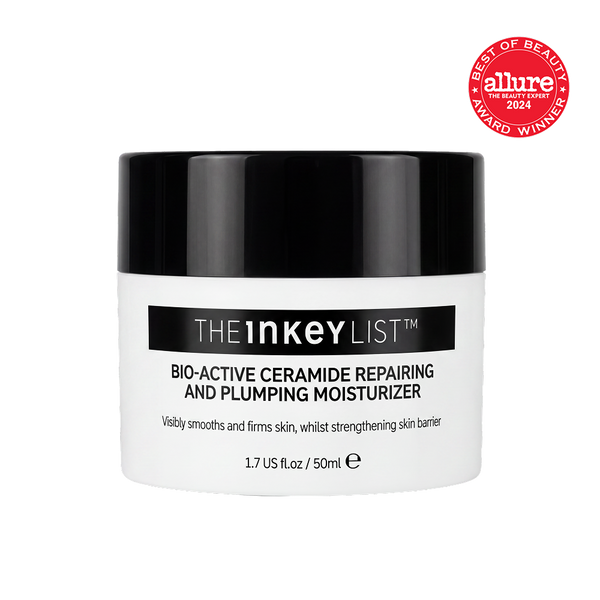
Our Bio-Active Ceramide Moisturizer helps support the skin barrier and leaves skin feeling comfortable and cushioned. If your barrier feels compromised, our damaged skin barrier collection is a good place to start.
5. Better Hydration and Plumpness
Skin that holds water looks plumper, and plumper skin makes fine lines look softer. This is the most straightforward area to support topically, and it is where your post-session product choice pays off fastest.
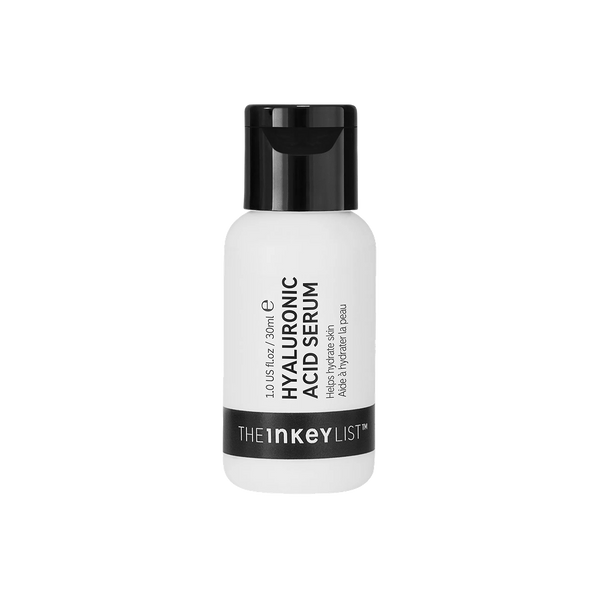
Our Hyaluronic Acid Serum draws moisture into the surface layers of skin for an immediately plumper, more hydrated look. Learn more via our hyaluronic acid guide, or explore the dehydrated skin collection.
Benefits only count if the device is actually used correctly, which is where most home users go wrong.
Is Red Light Therapy Safe, and How to Use It at Home
The American Academy of Dermatology states that red light therapy appears safe in the short term when devices are used correctly and according to their instructions, and that unlike ultraviolet light, red light has not been found to carry the same cancer risk. That is a genuinely reassuring baseline and it is why these devices have been cleared for home use at all.
The honest counterweight comes from Harvard Health, which notes that long-term safety data for consumer devices remains limited, largely because at-home devices are relatively new and most studies run for weeks or months rather than years. Short-term safety is reasonably well established. Ten-year safety is simply not something anyone can speak to yet, and any brand claiming otherwise is guessing.
The Risks Worth Knowing
- Eye damage without proper protection. The most serious risk, and the most avoidable. Light directed at or near the eyes without shielding is not something to improvise with.
- Skin irritation in sensitive individuals. Temporary redness, warmth or tightness can occur, particularly in reactive skin.
- Interaction with photosensitizing medications. Certain medications increase light sensitivity, which changes the risk calculation entirely.
- Overuse. More is not better with light dosing. Longer and more frequent sessions do not accelerate results and can work against you.
Sensible Precautions
- Always wear the eye protection supplied with your device, every single session, without exceptions for “just a quick one.”
- Start with shorter sessions and build up rather than beginning at the maximum.
- Consult a dermatologist before starting, particularly if you have an existing skin condition.
- Avoid use if you are pregnant or taking photosensitizing medication, unless you have been cleared by a healthcare professional.
If your skin is sensitive or reactive, patch test any new product you plan to pair with your device before applying it to your whole face. Our guide on why you should patch test walks through how to do it properly.
How to Use Red Light Therapy at Home
Red light therapy at home is mostly a discipline problem rather than a technique problem. Seven steps cover it.
- Choose a quality device with verified wavelengths. Look for a manufacturer that publishes its wavelength and output specifications rather than only its marketing claims.
- Start at five to ten minutes per session. Begin conservatively and increase only if your skin tolerates it well and the manufacturer’s instructions allow it.
- Be consistent at three to five sessions per week. Regularity over weeks matters far more than the length of any individual session.
- Protect your eyes every single time. Use the eye protection supplied with the device, without exception.
- Apply to clean, product-free skin. Cleanse first and leave your skin bare, so nothing on the surface sits between the light and your skin.
- Be patient across four to twelve weeks. This is the realistic window in which cumulative change is assessed, and judging results earlier will only frustrate you.
- Wear sunscreen the following morning. Daily broad-spectrum SPF protects the visible progress you are working for. If you want the fundamentals, read what is SPF.
If you already run a structured weekly routine, a device slots in without much friction. Our guide to skin cycling is a useful framework for deciding which nights to pair a session with actives and which nights to keep simple.
What you apply immediately after a session matters as much as the session itself.
What to Put On Your Skin After Red Light Therapy
Here is the principle behind post-session skincare, and it is refreshingly simple. You cleansed before your session and used the mask on bare skin, so afterward your face is clean, warm and completely product-free. Nothing on the surface is competing with whatever you apply next. That makes the ten minutes after a session one of the more useful windows in your entire routine.
The order we recommend is straightforward: hydrate, treat, seal. If you have been searching for a red light therapy serum to slot into that middle step, this is the section that answers it.
Hydrate
Start with water-based hydration on slightly damp skin. Apply Hyaluronic Acid Serum while your face is still a little damp, which gives it moisture to draw on and leaves skin looking plumper and feeling more comfortable.
If your skin tends to feel sensitive or reactive after a session, Ectoin Hydro-Barrier Serum is the gentler choice at this step, delivering hydration while helping support the skin barrier.
Treat
This is the step where a red light therapy serum earns its place, and it is where we would point you to our most advanced glow boosting formula.
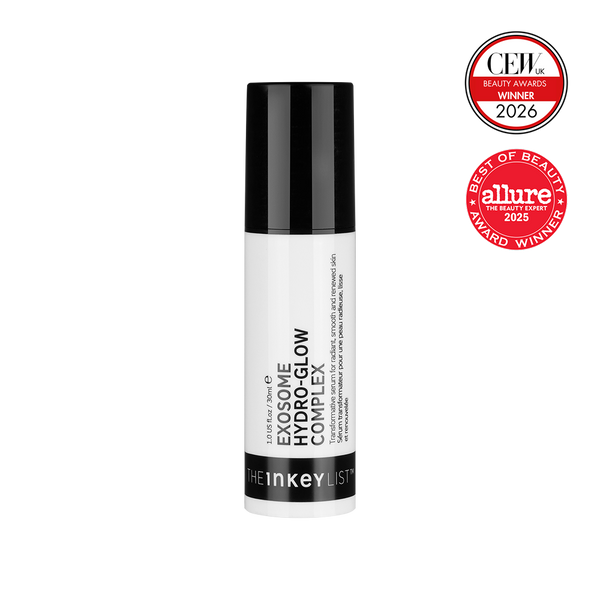
Exosome Hydro-Glow Complex, a CEW UK Beauty Awards Winner 2026, is built for exactly this moment in a routine. It offers 6-in-1 skin rejuvenation: clinically proven to visibly improve radiance, hydration, tone, firmness, elasticity, and texture. It is also proven to deliver up to 12-hours of hydration,** which is what you want from the product you leave on overnight. In clinical testing, 100% saw more glowing skin, clinically proven.
We are not going to turn this section into an exosome explainer, because we have written better ones elsewhere. If you want the ingredient science, read what are exosomes or the longer exosomes explained.
Prefer a different route at the same step? PDRN Serum is the alternative treat-step option. Our guides to what is PDRNand PDRN vs exosomes will help you choose between them.
Seal
Finish by locking everything in. Bio-Active Ceramide Moisturizer helps support the skin barrier and keeps the hydration you just applied where it belongs. Browse the full ceramides collection if you want to compare textures.
What to Skip Straight After a Session
If your skin runs sensitive, hold off on strong acids or retinol immediately after a session and use them on your non-device nights instead. There is no prize for stacking everything into one evening. Our guide to retinol and sensitive skincovers how to sequence actives without overloading your skin, and the glow revolution is worth a read if you are building a routine around radiance.
Of course, not everyone wants to buy a device at all.
Skincare Alternatives to Red Light Therapy
Let us be honest about the framing here. Topical skincare is not identical to a light device, and we are not going to pretend the two are the same thing. What we can say is that there is a group of well-studied, affordable ingredients that target many of the same visible concerns people buy masks for, and they do it without a device-sized outlay.
Retinoids. The most studied category in skincare for the look of fine lines and uneven texture. Begin with Starter Retinol Serum and progress to Advanced Retinal Serum once your skin is comfortable. Our retinol pillar covers the basics, what not to mix with retinol covers the pitfalls, and natural alternatives to retinol covers the gentler options.
Vitamin C. For brightness and the look of an uneven tone, 15% Vitamin C & EGF Serum is our most advanced option. Start with the vitamin C pillar if you are new to it.
Niacinamide. Niacinamide Serum visibly reduces redness, improves the look of texture and supports barrier function. More detail in our niacinamide pillar.
Peptides. Peptide Moisturizer helps support natural collagen production while hydrating and improving how skin looks and feels. Explore the peptides collection for the full range.
Exosomes. Our most advanced glow category. Exosome Hydro-Glow Complex delivers clinic worthy rejuvenated skin in 14 days.* If you are weighing it up, read 5 exosome skincare myths debunked and vitamin C vs niacinamide vs exosomes to see how the ingredients compare.
You will also find the Exosome Hydro-Glow Complex in our award winners collection, alongside the rest of our recognized formulas.
A few questions come up again and again, so let us answer them directly.
Conclusion: The Bottom Line
Red light therapy masks show genuine promise, particularly for the look of fine lines, texture and redness, and the research behind them is credible enough to take seriously. What they are not is a shortcut. At-home results build gradually across weeks, and consistency will always matter more than which device you bought.
The bigger point is this: what you apply after a session, and every other day of the week, is what compounds into visible change. A device can support your skin. A routine builds it. And if a mask is not in your budget right now, that is genuinely fine. Proven ingredients used consistently deliver predictable results without a device-sized investment, which is the whole reason we make them. If you want to see how it all fits together, start with the complete skincare guide.
Not sure where to begin? Take our skincare quiz for a routine personalized to your skin in two minutes, or browse the full skincare collection. You can also ask an INKEY advisor if you would rather talk it through.
*4-week clinical study of 26 people
**Clinical study of 31 people
***In-vitro testing of Cica Exosomes showed a 55% reduction in pro-inflammatory markers and a 63% increase in markers associated with skin renewal after 8 hours.
Always consult with a dermatologist before starting any new skincare treatment, especially if you have sensitive skin or existing skin conditions.
Frequently Asked Questions
Got a question?
Our askINKEY team are a friendly bunch of skincare experts with deep product knowledge and zero judgement. Whether you're an ingredient obsessive or just starting out, we'll make it make sense. No question too big. No question too small. We Give A Care, Every Day.


