

Is Salicylic Acid a BHA?
Salicylic acid is classified as a BHA, but chemists have argued the point for decades. Here is the honest answer, and why it matters for acne-prone skin.
Author
askINKEY skincare advisor
Published
15 August, 2026
Time to read
10 minutes
Yes. Salicylic acid is classified as a beta hydroxy acid, and when a skincare product says “BHA” on the label, salicylic acid is almost always the ingredient inside. That is the direct answer to the question “is salicylic acid a BHA”, and for practical purposes it is the only answer you need.
There is a second layer, though, and it is worth two minutes of your time. Chemists have argued for decades that salicylic acid does not strictly fit the textbook definition of a beta hydroxy acid. That disagreement is real, it is documented in the dermatological literature, and it has never been fully settled. It also happens to explain, more clearly than anything else, why salicylic acid is so good at what it does.
This article covers what BHA stands for and where the “beta” comes from, why some chemists say salicylic acid is technically something else, why oil solubility is the part that actually matters for your skin, how BHA sits alongside AHA and PHA at a high level, what 2% salicylic acid realistically delivers, who it suits, and how to use it without overdoing it. For the wider picture of what salicylic acid is and how it works, our full ingredient hub goes broader. If you already know you want it, our Beta Hydroxy Acid (BHA) Serum ($14) is where most people start.
The short version
- Salicylic acid is classified as a BHA by regulators, the cosmetics industry and every product label you will encounter.
- Chemists argue it is technically an aromatic phenolic acid, because of how its molecule is built.
- The practical takeaway is oil solubility. Salicylic acid dissolves in oil, which is why it can work inside the pore.
The full answer has two layers, the practical one and the technical one. The practical one comes first.
Yes, Salicylic Acid Is the BHA You Will Meet
In skincare, in cosmetic regulation and in everyday product labeling, salicylic acid is a beta hydroxy acid. There is no ambiguity in how the category is used commercially. If you pick up a product marketed as a BHA exfoliant, turn it over, and read the ingredients, you will find salicylic acid.
The clearest confirmation available comes from the regulator. The US Food and Drug Administration lists salicylic acid under its beta hydroxy acids cosmetic ingredient listing, naming it as the beta hydroxy acid most commonly used in cosmetic products. When a federal agency files an ingredient under a category heading, that category is settled for every practical purpose that affects you as a shopper.
Salicylic acid is classified as a beta hydroxy acid by the FDA and by the cosmetics industry as a whole. In skincare, “BHA” and “salicylic acid” mean the same thing.
The reason the two terms have effectively merged is simple. Salicylic acid is by far the most common and most studied BHA in cosmetic use. Where the AHA family has several well known members competing for shelf space, the BHA category has one dominant occupant. Over time the category name and the ingredient name collapsed into each other, which is why you will see people use “BHA” as a synonym for salicylic acid without anyone blinking.
A few sibling questions deserve answering right here. Is salicylic acid a BHA or an AHA? It is a BHA, not an AHA. The acid people most often confuse it with is glycolic acid, which is an alpha hydroxy acid and behaves quite differently on skin. And is salicylic acid an exfoliant? Yes. It is a chemical exfoliant, meaning it works by loosening the bonds between dead skin cells rather than physically scrubbing them away, which puts it in the same broad family as our other exfoliants even though its mechanism is distinctive.
If you want the ingredient explained end to end rather than just classified, our full guide to salicylic acid is the place to go. If you want to feel how it behaves, our BHA Serum ($14) delivers 2% salicylic acid in a leave on format, and our Salicylic Acid Cleanser delivers it as a rinse off step.
Before unpacking the argument against the classification, it helps to know exactly what the term BHA is describing in the first place.
What Does BHA Stand For in Skincare?
BHA stands for beta hydroxy acid. Three words, and each one is doing a specific job.
Start with “hydroxy acid”. A hydroxy acid is an acid molecule that also carries a hydroxyl group. A hydroxyl group is just an oxygen atom bonded to a hydrogen atom, written as OH, attached somewhere on the molecule. So a hydroxy acid has two functional parts: the acid part, which does the chemistry your skin responds to, and the hydroxyl part, which sits elsewhere on the structure. That is the whole concept. Nothing more complicated is hiding behind the phrase.
Now the “beta”. This is where the naming convention comes in, and it is far less intimidating than it sounds.
Where the Beta Actually Comes From
Chemists label the carbon atoms in a molecule relative to a reference point. When you are dealing with an acid, the reference point is the acid group itself. The first carbon along from the acid group is called the alpha carbon. The second carbon along is called the beta carbon. Third would be gamma, and so on down the Greek alphabet.
The classification then works exactly as you would expect. If the hydroxyl group sits on the first carbon along, you have an alpha hydroxy acid, an AHA. If it sits on the second carbon along, you have a beta hydroxy acid, a BHA. The classification of hydroxy acids in the dermatological literature rests on precisely this positional logic.
In plain English: the only difference between an AHA and a BHA is which carbon atom the hydroxyl group is attached to. First carbon, alpha. Second carbon, beta. That is it.
This is the part most people get wrong, so it is worth saying flatly. The alpha and beta naming system describes geography, not power. It tells you where one component sits on a molecule. It does not tell you that one family is stronger, harsher, more effective or more advanced than the other. A BHA is not automatically stronger than an AHA. They are different shapes that end up doing different jobs, and neither outranks the other.
To anchor the two categories with real examples:
AHAs, the alpha hydroxy acids
- Glycolic acid, the smallest and most widely used member of the family
- Lactic acid, larger and generally gentler
- Mandelic acid and malic acid, both less common in mainstream formulas
BHA, the beta hydroxy acid
- Salicylic acid. In cosmetic skincare, that is effectively the entire list.
That imbalance is exactly why “BHA” functions as shorthand for salicylic acid on packaging. There is no crowd of competing beta hydroxy acids on the shelf that the abbreviation might otherwise be pointing to.
So the naming rule is clear and the categories are clean. Which brings us to an awkward and genuinely interesting problem: salicylic acid does not actually follow the rule.
Why Chemists Say Salicylic Acid Is Not a True BHA
Here is the part that almost no one tells you, and the part we think you deserve to know.
If you apply the definition of a beta hydroxy acid strictly, as an organic chemist would, salicylic acid does not qualify. This is not a fringe position or an internet myth. It is a documented disagreement that has run through the dermatological literature for decades, and the regulator itself acknowledges it.
None of what follows is a reason to doubt the ingredient. It is a reason to understand it better. Stay with it, because the technicality that costs salicylic acid its classification turns out to be the exact reason it works.
What a True Beta Hydroxy Acid Looks Like
Picture the textbook version first. A classic beta hydroxy acid is built around a straight, flexible chain of carbon atoms, what chemists call an aliphatic chain. Think of it as a short length of rope with the acid group at one end. Count one carbon along from the acid group and you reach the alpha position. Count one more and you reach the beta position. On a true BHA, the hydroxyl group is attached right there, on that second carbon in the chain.
Beta hydroxybutanoic acid is the standard textbook example. Flexible chain, hydroxyl group sitting neatly on the beta carbon, definition satisfied. That is the molecular shape the term was coined to describe.
What Salicylic Acid Actually Is: 2-Hydroxybenzoic Acid
Salicylic acid is built differently, and the difference is not subtle.
Its proper chemical name is 2-hydroxybenzoic acid, and the “benzoic” part is the tell. Rather than a flexible chain, salicylic acid is built around a benzene ring, a flat, rigid, six carbon ring structure. Rings of this kind are described as aromatic, a technical term about the ring’s bonding structure rather than anything to do with fragrance.
On that ring, the hydroxyl group does not sit on a beta carbon, because a ring does not have a beta carbon in the chain sense the definition requires. Instead the hydroxyl group sits immediately next door to the acid group. Chemists call that neighboring position the ortho position, which is what the “2” in 2-hydroxybenzoic acid is telling you.
Because the hydroxyl group is attached to an aromatic ring rather than positioned along a flexible carbon chain, salicylic acid fails the strict structural test. On that basis, chemists argue it is more accurately described as an aromatic phenolic acid. A phenol is simply a hydroxyl group attached to a benzene ring, so the label describes the molecule precisely.
The disagreement is well documented. A comprehensive review of salicylic acid as a peeling agent records that Yu and Van Scott, two of the most significant figures in hydroxy acid research, argued salicylic acid is more correctly classified as a phenolic aromatic acid, while Kligman, another towering name in dermatology, classified it as a beta hydroxy acid. Both positions were argued by serious scientists. Neither side conclusively won.
Why the Industry and Regulators Still Classify It as a BHA
So why did the BHA label stick?
Because cosmetic classification does not work the way an organic chemistry exam works. Ingredients are grouped by how they behave on skin, how they are formulated, and how they are regulated, rather than purely by molecular geometry. Functionally, salicylic acid does what hydroxy acids do. It exfoliates chemically at low concentrations in leave on formulas, it is regulated alongside the other hydroxy acids, and it sits in the same conceptual category in the mind of anyone building a routine.
The FDA’s own position captures the tension neatly. Its beta hydroxy acids listing files salicylic acid under beta hydroxy acids while noting the chemists’ objection to that classification in the same breath. The regulator is effectively saying: we know the structural argument, and we are classifying it here anyway, because this is where it belongs functionally.
By regulation and industry convention, yes, salicylic acid is a BHA. By strict organic chemistry, not quite. Neither answer changes a single thing about how it performs on your skin.
That is the honest, complete position, and we would rather give it to you than pretend the question has a one word answer. Understanding the technicality does not weaken the case for salicylic acid. It sharpens it.
Because here is the twist that makes the whole detour worthwhile. The ring structure that costs salicylic acid its technical BHA status is the same structure that gives it its single most valuable property. This is where the chemistry stops being trivia and starts mattering.
Why Oil Solubility Is the Part That Matters for Your Skin
Everything above builds to this. The benzene ring that disqualifies salicylic acid on a technicality makes it lipophilic, which literally means oil loving. That one property is the reason salicylic acid occupies the position it does in skincare.
There is a second contributing factor, and it is elegant. Because the hydroxyl group sits directly next to the acid group in that ortho position, the two are close enough to form a hydrogen bond with each other rather than with surrounding water molecules. The molecule effectively bonds internally instead of reaching outward to water, which further reduces how readily it dissolves in water.
The numbers back this up. PubChem’s entry for salicylic acid records water solubility at only around 2.2 grams per liter at 25 degrees Celsius, while noting that it dissolves readily in oils and organic solvents. For a skincare ingredient, that lopsided profile is not a limitation. It is the entire competitive advantage.
How Salicylic Acid Gets Inside a Pore
Think about what a pore actually is. It is a channel lined and filled with sebum, which is oil. When a pore becomes congested, the blockage is a compacted mixture of that oil and dead skin cells that have not shed cleanly.
A water soluble ingredient arriving at the surface of that oily plug has a problem. Oil and water do not mix, so the ingredient largely stays where it is, working across the skin surface around the pore opening. An oil soluble ingredient has no such problem. Salicylic acid can pass through sebum, travel into the pore lining, and work on the blockage from the inside.
Once it is in there, it does two things worth naming properly. It is comedolytic, meaning it helps clear and prevent clogged pores, the comedones that show up as blackheads and whiteheads. It is also desmolytic, meaning it helps loosen the desmosomes, the protein structures that hold dead skin cells stuck together. Loosen those bonds and the accumulated debris can clear rather than compact. A review of over the counter acne treatments documents both mechanisms as central to how salicylic acid works.
What oil solubility actually means for your skin
- It reaches the blockage, not just the area around it. Surface exfoliation improves texture. Pore level exfoliation addresses the cause of congestion.
- It works with your skin’s oil rather than being repelled by it. Oilier skin is not an obstacle to salicylic acid. It is the terrain it was built for.
- It has a preventative effect, not just a corrective one. Keeping pore linings clear reduces how readily new congestion forms.
Why Water Soluble Acids Cannot Do the Same Job
Water soluble acids such as glycolic acid work primarily across the surface of the skin, where they are genuinely excellent for tone, brightness and rough texture. What they cannot do is travel through sebum into the pore in the way an oil soluble acid can. That is a difference in job description rather than a difference in quality. If you want the full head to head, how glycolic acid and salicylic acid compare covers it properly.
So the payoff sentence is this. Salicylic acid is the ingredient of choice for congestion, blackheads, acne and oily skinnot because it is stronger than the alternatives, but because it goes somewhere the alternatives cannot reach.
Oil solubility is the whole reason salicylic acid is the go to acid for pores.
That is exactly what our BHA Serum ($14) is formulated to deliver: 2% salicylic acid in a leave on format designed to get into the pore and stay working.
With salicylic acid’s place understood, it is worth seeing quickly where it sits alongside the other acid families.
BHA vs AHA vs PHA: Where Each One Works
Three abbreviations, three jobs. Here is the orientation, kept deliberately brief.
AHAs, alpha hydroxy acids. Water soluble acids including glycolic acid and lactic acid. They work mainly on the surface of the skin, lifting dull, dead cells to improve tone, brightness and texture. If your concern is radiance or uneven surface texture rather than congestion, this is the family to look at.
BHA, beta hydroxy acid, meaning salicylic acid. Oil soluble, so it can move through sebum and work inside the pore. This makes it the choice for congestion, blackheads, acne and oily or combination skin. It exfoliates the surface too, but the pore level action is what sets it apart.
PHAs, poly hydroxy acids. Larger molecules such as gluconolactone, which penetrate more slowly precisely because of their size. That slower, gentler action suits sensitive or reactive skin, or anyone who has found other acids too much. Our PHA ingredient page goes deeper.
The important thing to understand is that these are not ranked from weak to strong. It is tempting to read PHA as beginner, AHA as intermediate and BHA as advanced, but that ladder does not exist. They are three tools suited to three different jobs, and the right one depends entirely on what your skin is doing.
If you want to go further on any of them, our guide to using acids in your skincare routine covers how to fit them together, and the glycolic acid versus salicylic acid comparison settles the most common head to head.
Not That BHA: The Food Preservative Confusion
Quick clarification. Search for “BHA” outside a skincare context and you will run into butylated hydroxyanisole, a preservative used in some foods and packaging materials. It shares an abbreviation with beta hydroxy acid and absolutely nothing else. Different substance, different chemistry, different purpose, different industry entirely.
If you have seen the two discussed in the same breath and wondered whether there was a connection, there is not. In skincare, BHA always means beta hydroxy acid, and in practice it always means salicylic acid. That is the whole clarification.
With the terminology settled, the useful question becomes what the standard 2% concentration actually delivers.
What 2% Salicylic Acid Actually Does for Your Skin
Two percent is not an arbitrary number. It is the maximum concentration permitted in leave on cosmetic products in most markets, and it is the level used in the majority of the clinical work on the ingredient. When you see 2% on a label, you are looking at the ceiling, not a starting point, which is worth knowing before you go hunting for something stronger.
At that concentration, in a well formulated leave on product, here is what salicylic acid realistically does.
It helps clear and prevent clogged pores, working on existing congestion and reducing how readily new blockages form. It helps reduce the appearance of blackheads, which are simply congested pores that have oxidized at the surface. It smooths rough or bumpy texture, particularly the fine congestion across the forehead, nose and chin that never quite becomes a spot. It helps manage excess oil, so skin feels less slick through the day. And because salicylic acid is registered as an over the counter drug for this purpose in the US, it helps clear and reduce acne.
Now the honest limits, because they matter as much as the benefits. Salicylic acid will not resolve every kind of breakout. It excels at congestion led concerns, the blackheads, whiteheads and clogged pore texture that live in the upper layers of the pore. Deeper cystic spots, the painful ones that sit under the skin without a surface, are a different problem with different drivers, and they need different support. Hormonal patterns often need addressing at a level a topical exfoliant cannot reach. Anyone telling you a 2% BHA solves everything is overselling it.
For the full product level breakdown, our BHA Serum explained in full goes step by step through the formula. For blackheads specifically, how salicylic acid works on blackheads is the dedicated guide, and how to prevent blackheads long term covers the maintenance side. And our salicylic acid hub remains the parent guide to the ingredient overall.
Knowing what it does leads naturally to the more personal question of whether it is right for you.
Who Salicylic Acid Suits and Who Should Go Slowly
Salicylic acid is at its best on oily and combination skin, on visibly enlarged pores, on blackheads, on rough or bumpy texture, and on the general sense of congestion that makes skin feel thickened rather than clear. If your skin produces enough sebum to keep pores lined and occasionally blocked, you are the reason this ingredient exists.
Our BHA Serum is suitable for normal, oily and combination skin. If that describes you, you can approach it with confidence.
If your skin is dry, sensitive or easily irritated, you are not excluded, but your approach should be different. Build up slowly, use it less frequently, and give your skin time to tell you how it is coping. Twice a week is a perfectly legitimate long term frequency. There is no prize for daily use, and pushing past what your barrier tolerates will cost you more than it gains.
On pregnancy, the short answer is that our BHA Serum is formulated to be pregnancy and breastfeeding safe. For the fuller picture, is salicylic acid safe during pregnancy covers it properly, and speaking to your doctor is always sound practice.
A few formulation details worth knowing: the formula is Vegan Society certified, fragrance free, gluten free, non comedogenic and dermatologically tested. As with any new active, patch test first. Apply a small amount to a discreet area, wait 24 hours, and check how your skin responds before applying it more widely. Not because salicylic acid is risky, but because knowing how your own skin behaves is simply good practice.
If you are unsure what you are working with, our skin type guide is a useful starting point.
How to Use a BHA Without Overdoing It
Most disappointing experiences with salicylic acid come down to how it is used rather than whether it works. Here is the full picture.
Where It Sits in Your Routine
Layer thinnest to thickest, actives before occlusives. Our recommended order:
- Cleanse. Start with clean skin so nothing blocks the active.
- Hyaluronic Acid Serum. Hydration first gives the acid a comfortable base to work on.
- BHA Serum. The active step.
- Eye treatment. Applied after the serum has settled.
- Moisturizer. Seals in hydration and supports the barrier.
- A broad spectrum SPF in the morning, without exception.
A note on the formula itself: our BHA Serum sits at pH 4.5 to 5.3 and contains 2% salicylic acid alongside 1% low molecular weight hyaluronic acid and Zinc PCA. It is buffered with hydration rather than being acid alone, which is why it is designed to be tolerable as a regular step rather than an occasional treatment.
For the wider structure, our skincare routine guide covers how everything fits together.
How Often to Use It
Start with two to three times per week. Build toward daily use as your tolerance develops, and only if your skin is comfortable at each stage. If your skin is dry or sensitive, staying at two to three times weekly indefinitely is a perfectly good outcome rather than a failure to progress.
Frequency is where most people go wrong. Skin that is tight, stinging, flaking or unusually reactive is telling you to pull back, and that message is worth listening to immediately rather than after another week of pushing.
How Long Results Take
Being straight with you about timelines saves a lot of premature giving up:
- Two to four weeks: texture improvements. Skin feels smoother, and fine congestion starts to settle.
- Six to eight weeks: meaningful change in pores and blemishes. This is where most people notice a real difference.
- Eight to twelve weeks: stubborn congestion. Deep seated blackheads that have been there for years take the longest, and they do improve.
Skin cell turnover works on its own schedule, and no ingredient overrides it.
Pairing salicylic acid with other actives
- Niacinamide. Yes, they work well together. Apply your BHA first, wait 10 to 15 minutes, then apply niacinamide. Salicylic acid and niacinamide covers the pairing in full.
- Retinol. Do not layer them in the same routine. Alternate them on different evenings instead. Can you use salicylic acid and retinol together has the detail.
- Vitamin C. Not layered in the same routine. Alternate, or use one in the morning and one at night. Salicylic acid and vitamin C explains why.
- Other exfoliating acids. Do not layer. One chemical exfoliant per routine is enough.
Common Mistakes People Make With BHAs
Every one of these is fixable, and none of them means you have ruined anything.
- Using it too often, too soon. Enthusiasm outruns tolerance. Drop back to two to three times weekly and rebuild gradually.
- Stacking it with retinol, vitamin C or another acid in the same routine. Alternate across different days or different times of day and you get the benefit of both without the irritation.
- Skipping moisturizer because skin feels oily. Oily skin still needs hydration, and a dehydrated barrier often produces more oil, not less. Use an oil free formula if texture is the concern.
- Skipping SPF. Chemical exfoliation leaves fresher skin at the surface. A broad spectrum SPF every morning protects the progress you are making.
- Giving up at two weeks. The meaningful pore and blemish results land at six to eight weeks. Two weeks is barely the beginning.
- Applying it everywhere when a targeted approach would serve better. If congestion lives on your nose and chin, treating your dry cheeks with the same frequency creates a problem you did not have.
- Assuming more acid means faster results. It does not. It means a compromised barrier, and a compromised barrier looks worse than the congestion you started with.
If you have already gone too hard, what to do if you have over exfoliated walks through recovery. Skin is more resilient than it feels in the moment.
With the how to settled, here is which of our formulas fits which concern.
Our Salicylic Acid Range
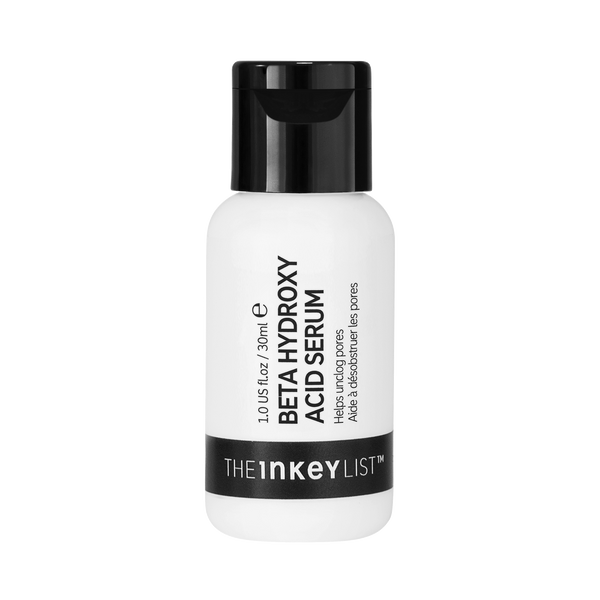
Beta Hydroxy Acid (BHA) Serum, 30ml, $14. The hero. 2% salicylic acid with 1% low molecular weight hyaluronic acid and Zinc PCA, so it exfoliates inside the pore while supporting hydration and helping manage oil. Start here if you have congestion, blackheads or visible pores. Available at /products/beta-hydroxy-acid-serum.
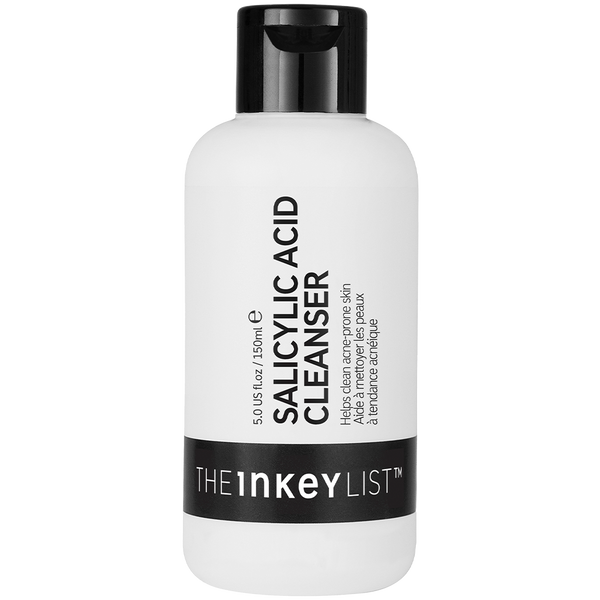
Salicylic Acid Cleanser, 150ml, $15. The daily cleansing step for oily and congested skin, delivering salicylic acid in a rinse off format. It can be used on the chest and back too, which matters if congestion is not limited to your face. Find it at /products/salicylic-acid-cleanser. Want both? Our Acne Treatment Cleanser and Serum Duo pairs them.
360 Acne Clearing Serum, $18. The multi stage option, formulated to target acne across different stages rather than a single point in the cycle. Available at /products/360-acne-clearing-serum.
Omega Water Cream, 50ml, $15. The oil free moisturizer pairing, so nobody skips hydration on the grounds that their skin already feels oily. Lightweight, comfortable, and designed for exactly this situation. See /products/omega-water-cream, or browse all our moisturizers.
10% Niacinamide Serum, $13. The oil control and redness partner. Remember the spacing: BHA first, wait 10 to 15 minutes, then niacinamide. Available at /products/niacinamide-serum.
Hydrocolloid Invisible Pimple Patches, pack of 22, $10. The targeted overnight option for individual spots while your routine handles the bigger picture. Find them at /products/hydrocolloid-invisible-pimple-patches.
If you would rather shop by concern, browse salicylic acid, blackheads, excess oil, acne and breakouts or acne scars. Our blackhead routine bundles the steps together. Not sure where to start? Our Acne Analyzer Pro will point you somewhere sensible, and our roundup of the best salicylic acid products for acne in 2026 compares the options. As always, our salicylic acid hub holds the full ingredient picture.
The Honest Answer, Settled
So, is salicylic acid a BHA? Yes, by every regulatory and industry standard that governs the products you can actually buy. Technically not quite, if you apply the strict organic chemistry definition, because its hydroxyl group sits on an aromatic benzene ring in the ortho position rather than on the beta carbon of a flexible chain. Both statements are true at the same time, and neither changes anything about how the ingredient performs.
What matters is the property that came along with that structure. Salicylic acid is oil soluble. It travels through sebum and works inside the pore, which is precisely why it is the ingredient for congestion, blackheads, acne and oily skin. Not stronger. Better placed.
That is the real value of understanding the chemistry. Skincare gets considerably easier when you know what you are putting on your skin and why it behaves the way it does. Our salicylic acid hub is there whenever you want to go deeper.
If congestion, blackheads or oily skin are what brought you here, our Beta Hydroxy Acid (BHA) Serum ($14) is the place to start: 2% salicylic acid, buffered with hyaluronic acid and Zinc PCA. Not sure it is the right fit? Our Acne Analyzer Pro will point you toward the right formula in a couple of minutes, or browse the full salicylic acid range and choose for yourself. Knowing your ingredients is the whole point.
Frequently Asked Questions
Got a question?
Our askINKEY team are a friendly bunch of skincare experts with deep product knowledge and zero judgement. Whether you're an ingredient obsessive or just starting out, we'll make it make sense. No question too big. No question too small. We Give A Care, Every Day.


