

The Best Moisturizer for Sensitive Skin: How to Choose One That Will Not Irritate
Sensitive skin and sensitized skin are not the same thing, and they need different moisturizers. Here's how to tell which you have and what to buy.
Author
askINKEY skincare advisor
Published
06 September, 2026
Time to read
15 minutes
Skin that stings after cleansing, flushes without warning or reacts to products that work perfectly well for everyone else is far more common than most people realize. Your moisturizer is the step with the most leverage over that, because it either supports your skin barrier or quietly undermines it.
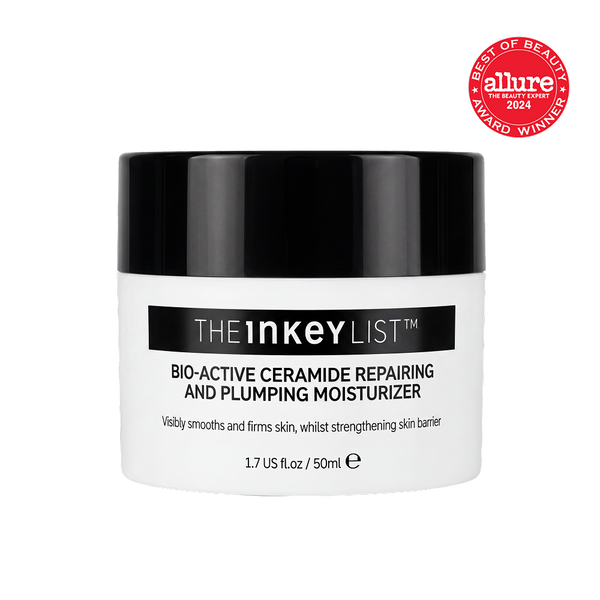
If you want the direct answer first, the best moisturizer for sensitive skin in our range is our Bio-Active Ceramide Moisturizer, $22 for 50ml. It is fragrance-free, alcohol-free, tested and proven suitable for sensitive skin, and clinically proven to repair and strengthen the skin barrier from first use **. Prefer to browse before committing? You can see all of our moisturizers in one place, and our parent guide on how to choose the right moisturiser carries the complete side-by-side comparison of every formula we make.
This article covers six things:
- Sensitive skin versus sensitized skin, and how to work out which one you are dealing with
- Why a weakened barrier is usually the reason skin reacts in the first place
- What to look for and what to watch out for on an ingredients label
- The formula and the clinical evidence behind our Bio-Active Ceramide Moisturizer
- The best face moisturizer for sensitive skin by sub-type, including oily, acne-prone and aging skin
- How to patch test and introduce a new moisturizer without setting your skin off
One caveat worth stating up front: sensitive skin is not one condition. It behaves differently depending on whether your skin also runs dry, oily, acne-prone or is starting to show first signs of aging, which is why sub-types get a dedicated section. If you are not certain what your skin type is yet, What’s Your Skin Type? will settle it in two minutes. Also worth knowing: every INKEY moisturizer is fragrance-free, vegan and safe to use during pregnancy and breastfeeding.
Choosing well begins with a distinction that almost nobody makes, because “sensitive” is really two situations wearing the same label.
Sensitive Skin or Sensitized Skin: The Difference That Changes What You Buy
Most advice about a moisturizer for sensitive skin treats sensitivity as a permanent, fixed trait. In practice there are two separate scenarios, and identifying yours changes what you should buy, how fast you should expect results and how much of your existing routine needs to go. This is the most useful five minutes in the article.
Sensitive Skin, Usually Something You Are Born With
True sensitive skin is a long-standing tendency to react. It is consistent over time rather than sudden, and it frequently accompanies conditions such as eczema or rosacea. If this is you, the story is familiar: products sting more than they should, every new purchase is a gamble, and cold wind or hot water registers on your face within seconds.
It is also widespread. A systematic review and meta-analysis of self-declared sensitive skin found that a substantial share of adults across multiple populations report some degree of sensitivity, and a separate review on the prevalence of sensitive skin in Frontiers in Medicine reported broadly consistent findings. If you have spent years assuming your skin is uniquely difficult, the research says otherwise.
This type is not something you cure. It is something you accommodate, and the right formula makes accommodating it considerably easier.
Sensitized Skin, Usually Something That Happened to You
Sensitized skin is the other scenario, and the important word is acquired. Skin that used to be unremarkable turns reactive because something pushed it there. The usual suspects:
- Over-exfoliating with acids, scrubs or both at once
- Stacking too many actives, especially adding a new one every few weeks
- Cleansing that leaves skin tight and squeaky, which signals stripping rather than clean
- Cold weather outdoors and forced-air heating indoors, running for months
- Heavily fragranced leave-on products applied daily
Here is the part rarely said out loud: sensitized skin usually settles once the trigger is removed and the barrier gets something supportive to work with. It is a temporary state, not a permanent reclassification. A significant number of people who describe themselves as having sensitive skin are actually describing six months of sensitized skin caused by a routine that outgrew their barrier.
How to Tell Which One You Have
No test required. Four questions will do it.
Has your skin always behaved this way, or did the reactivity begin at a specific point? Lifelong points to sensitive. Recent onset points to sensitized.
Can you trace that onset to something concrete, like a new acid, a new retinol, a new cleanser or a winter of dry indoor heat? A clear culprit is a strong signal.
Does your skin calm down when you strip the routine back to cleanse and moisturize for two weeks? If yes, you have been sensitizing it.
And do you react to almost everything, or to particular identifiable products? Broad reactivity leans sensitive, while narrow and traceable reactivity leans sensitized.
Expect the answer to be both for many people. Naturally sensitive skin that has also been sensitized on top is extremely common, and it explains why reactivity gets worse over a period rather than appearing out of nowhere.
Either way, the moisturizer priorities are identical: support the barrier, avoid known irritants, keep the routine short. If you want the underlying mechanism of why compromised skin loses hydration, plus a structured plan for calming things down, our guide on how to hydrate sensitive skin without causing irritation is built specifically for that. This article stays on identification and selection.
Both scenarios share one root issue, which is why ceramides come up in every serious conversation about reactive skin.
Why a Weak Skin Barrier Makes Skin React
The clearest way to picture your skin barrier is brick and mortar. Skin cells are the bricks. The lipid mixture packed between them is the mortar. Ceramides make up a large portion of that mortar, alongside cholesterol and fatty acids.
When the mortar is intact, the wall does two jobs simultaneously: it holds water in and keeps irritants out. When the mortar thins, both jobs fail at once. Water escapes more readily, a process called transepidermal water loss, and irritants get in more easily. That combination is exactly what reactive skin feels like from the inside. Tight, dry, quick to sting, quick to flush. If you want the detail on the water-loss side specifically, we cover it in what is TEWL, transepidermal water loss.
This is where ceramides stop being a buzzword and start being the load-bearing argument. Research has documented ceramide deficiency in atopic dermatitis, and a wider qualitative review of ceramide-containing formulations supports their role in water retention and barrier function. If the mortar is missing a key component, replacing that component is the logical move. That is the entire case for a barrier repair moisturizer, and it is why a ceramide moisturizer is the standard recommendation for reactive skin rather than a passing trend.
Two quick additions. Ceramide levels also decline with age, which contributes to skin becoming drier and more reactive over time, though the aging angle is a separate subject. And ceramides are not interchangeable with hydrators. This confuses a lot of people, so to be direct: hyaluronic acid pulls water into the skin, while ceramides rebuild the structure that keeps it there. They work together, they do not replace each other. We break that down in hyaluronic acid vs ceramides.
The goal of a barrier repair moisturizer is not to calm a reaction after it starts. It is to remove the reason the reaction keeps happening.
If this is describing your skin, our ceramides collection and our damaged skin barrier edit are the two shortcuts.
Once you know the barrier is the target, the back of the box becomes much easier to read.
What to Look For, and What to Avoid, on the Label
This is the section worth saving. The aim is not to learn our formulas but to walk away with a checklist you can apply to any product on any shelf, ours included. A gentle moisturizer is identifiable from its ingredients list if you know the rules.
Ingredients Worth Looking For
Ceramides. The direct replacement for what a compromised barrier lacks. They are exceptionally well tolerated because they replicate lipids your skin already produces, which means your skin has no reason to treat them as foreign. One nuance matters here: not all ceramides behave the same way. Chain length and molecular structure affect how far into the skin an ingredient can realistically work, which is why some ceramide formulas stay purely on the surface while others do more. We cover this in bio-active ceramides vs regular ceramides, and for the ingredient-level detail on the specific type we use, see what is Ceramide NP.
Glycerin. A humectant that pulls water into the upper layers of skin. It is one of the most reliably tolerated ingredients in all of skincare, with decades of use behind it, and it is very rarely the cause of a reaction. Seeing it high on a list is a good sign, not filler.
Shea butter. An emollient that softens, comforts and helps seal moisture in, which is precisely what tight and flaky skin needs. There is a persistent belief that butters clog pores. At the level formulated in our Bio-Active Ceramide Moisturizer, the finished product is non-comedogenic and clinically proven not to clog pores. Dose and formulation matter more than an ingredient’s reputation.
Colloidal oatmeal. Well established for soothing the look of redness and dryness, and one of the gentlest comfort ingredients available anywhere. It is why our Oat Cleansing Balm is a smart first step for reactive skin, since cleansing is where most irritation gets introduced without anyone noticing.
Hyaluronic acid. Excellent for surface hydration and plumpness, with an honest limitation: it hydrates, it does not repair. On a compromised barrier, the water it attracts has nothing holding it in place. It performs best alongside barrier ingredients rather than instead of them, which is the whole argument in hyaluronic acid vs ceramides.
Ectoin. Hydrates while helping strengthen the barrier, making it a useful partner for reactive skin. If you want to explore it, our Ectoin Hydro-Barrier Serum is the place to start.
How to Actually Read an Ingredients List
Every cosmetic product carries an INCI list, short for International Nomenclature of Cosmetic Ingredients. It is a legal requirement, it uses standardized names so the same ingredient is called the same thing worldwide, and it follows one rule most shoppers never learn.
Ingredients appear in descending order of concentration, but only down to 1%. Below that threshold, a brand can list the remainder in any order it likes. That single fact reframes the entire label.
The practical application: if a brand is advertising an ingredient on the front of the package and you find it fourth from the bottom of the INCI list, it is almost certainly present in a token amount. That does not automatically make the product bad, since some ingredients are effective at low percentages, but it does mean the front of the box is describing the marketing rather than the formula. This applies to every brand, and it is worth checking on ours too.
One more correction to carry with you. Unscented and fragrance-free are not the same thing. Fragrance-free means no fragrance was added. Unscented can mean a masking fragrance was added specifically to cover the base’s natural smell. If you have reacted to something labeled unscented, that is very likely the explanation.
What to Approach With Caution
None of the following is dangerous, and nobody should be afraid of their own bathroom cabinet. These are simply the ingredients most likely to cause problems for a moisturizer for irritated skin, and knowing them lets you choose deliberately.
Added fragrance and essential oils. Fragrance is one of the most frequently identified triggers in contact allergy, and a review of fragrance contact allergy focusing on patch testing lays out why it is monitored so carefully. The detail that surprises most readers is that essential oils count as fragrance. Natural does not mean gentle, and some of the most reactive ingredients in cosmetics come from plants. That said, plenty of people tolerate fragrance without any issue at all. This is a reason, not a rule. But if your skin is currently reactive, choosing a fragrance free moisturizer removes one of the biggest variables in the equation, which is why it is the first filter we would apply.
Drying alcohols high in the list. Denatured alcohol and similar solvents can leave an already-compromised barrier feeling tighter. Crucially, these are not the same as fatty alcohols. Cetearyl alcohol, cetyl alcohol and stearyl alcohol are emollients, they behave nothing like solvent alcohols and they are entirely fine on sensitive skin. Avoiding every ingredient with “alcohol” in its name is one of the most common self-inflicted mistakes in skincare, and it eliminates a lot of genuinely comforting products for no good reason.
Strong actives stacked together. Multiple exfoliating acids, a retinol and a high-strength vitamin C all running in the same routine is a reliable path to sensitized skin. Sequencing deserves its own treatment, so rather than half-cover it here, what not to mix with retinol handles it properly.
Physical scrubs with rough particles. On skin that is already reacting, mechanical abrasion adds injury to a barrier that is asking for a break.
The honest closing note: no ingredients list can guarantee a reaction, and none can guarantee you will avoid one. Formulation, concentration and your own individual skin all play a part. That uncertainty is exactly why patch testing exists, which we get to shortly. In the meantime, if redness or dryness is your primary concern, our redness and dry skin collections are already filtered for it.
Having set the standard, it is only fair to show how our own formula measures up against it.
Our Bio-Active Ceramide Moisturizer: The Formula and the Evidence
We just spent 700 words defining what a good moisturizer for sensitive skin should look like. Here is how our Bio-Active Ceramide Moisturizer, $22 for 50ml, performs against that definition, including where the evidence has limits.
What Is In It
Bio-Active Ceramide NP. This is the differentiator, and it comes down to structure. Standard ceramides mostly replenish the outermost layer of skin. Bio-Active Ceramide NP has a shorter chain structure, allowing it to reach beyond that surface layer to where the barrier is actually being rebuilt. Independent research on a Ceramide NP C15 emollient in sensitive skin found reduced water loss versus a vehicle control, which is third-party support for the ingredient category rather than a claim about our specific bottle. We explain the structural difference in bio-active ceramides vs regular ceramides.
Gransil Blur X-11 at 5%. A blurring technology that instantly softens the appearance of fine lines, which is what gives the finish its smoothness under makeup.
Glycerin draws water into the skin and shea butter nourishes and locks that moisture in. Between them, both the humectant and emollient sides of the formula are handled.
Equally important is what was deliberately left out: no fragrance and no alcohol. Both omissions were intentional, for the reasons set out above.
The Evidence
- Clinically proven to repair and strengthen the skin barrier from first use **
- Clinically proven to deliver 24-hour hydration **
- Up to 4x greater visible fine line and wrinkle reduction than standard ceramide formulations *
- 100% saw a clinical improvement in 6 signs of aging in 28 days **
- 91% agreed it did not pill when applied ***
- 88% agreed it created a smooth base for makeup ***
- 4.7 stars from over 2,000 reviews
- Tested and proven suitable for sensitive skin, fragrance-free, alcohol-free, non-comedogenic, dermatologically tested, vegan, Leaping Bunny certified cruelty-free, safe during pregnancy and breastfeeding
*12-week independent clinical study of 30 people comparing Ceramide NP at 0.2% vs a placebo formulation. **4-week clinical study of 20 people. ***4-week consumer trial of 70 people.
Two of those figures deserve more credit than they usually get. The 91% who agreed it did not pill and the 88% who agreed it created a smooth base for makeup come from a consumer trial rather than a clinical study, and it would be easy to skim straight past them. Do not. Pilling and poor makeup compatibility are the two loudest complaints about richer barrier creams, and they are the reason people quit otherwise excellent products. A barrier moisturizer you abandon in week two because it balls up under foundation is not repairing anything.
The Honest Note
Independent reviews of ceramide-containing formulations support improvements in hydration and barrier function, and the evidence is strongest for how compromised skin looks and feels rather than for anything more dramatic than that.
Results vary between individuals. Our clinical studies were conducted on relatively small groups, which is standard for cosmetic testing and which we would rather state plainly than dress up. And no moisturizer is a cure for a skin condition. If you have diagnosed eczema, rosacea or dermatitis, a good barrier moisturizer can make your skin more comfortable and support whatever else you are doing, but it is not a treatment and we will not describe it as one.
We say this because it is accurate, not because we are hedging our bets. Being straight about what a product can and cannot do is the only reason the rest of the claims on this page are worth believing.
Who It Is For, and Who Should Choose Differently
It is the strongest pick for sensitive and dry skin, for sensitive and barrier-compromised skin, and for sensitive skin beginning to show first signs of aging.
It is non-comedogenic and clinically proven not to clog pores, so oily sensitive skin can use it without concern. If your skin runs oily, though, a lighter texture may simply feel better day to day, and the sub-type section covers that. To see how this formula sits against our other moisturizers in a proper side-by-side, how to choose the right moisturiser holds the full comparison.
How to Use It
Morning and evening. A blueberry-sized amount covers the face, neck and décolletage, applied after your serums. The texture is rich and velvety but absorbs well, so it should not feel heavy or greasy once it settles. For the same barrier support around the eye area, our Bio-Active Ceramide Eye Cream ($16) is the natural companion.
Sensitive skin arrives in several forms, and the right pick shifts with each one.
Choosing by Sensitive Skin Sub-Type
Sensitivity rarely shows up alone. It usually pairs with a second concern, and that second concern should drive your final decision.
Sensitive and Dry
Our Bio-Active Ceramide Moisturizer ($22), and it is not a close call. It offers the richest barrier support in the range and is clinically proven to deliver 24-hour hydration **, which is exactly what tight, flaky, uncomfortable skin needs. If you have been hunting for the best moisturizer for dry sensitive skin, ceramides plus glycerin plus shea butter in a fragrance-free base is the specification you were describing.
Sensitive and Oily or Acne-Prone
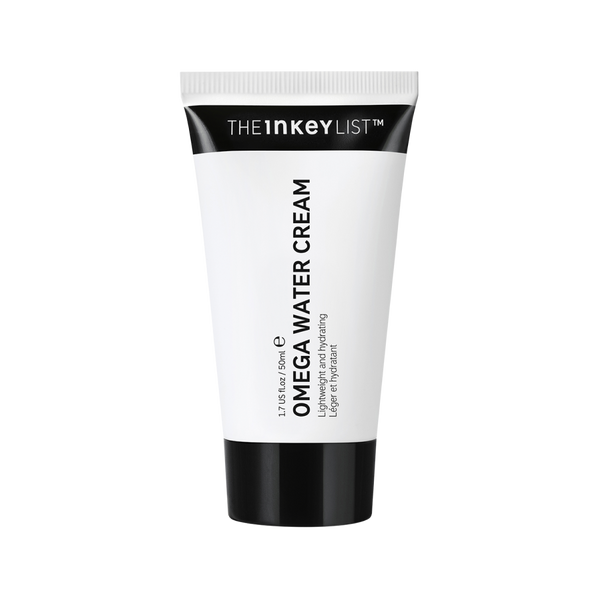
Our Omega Water Cream ($15). Oil-free, non-comedogenic and lightweight, with 5% Niacinamide and an omega fatty acid complex delivering barrier support without any heaviness. The most useful thing to say here: moisturizing is not the enemy of clear skin. Skipping moisturizer when you are prone to breakouts is a common instinct and it rarely helps. The texture is light and absorbs quickly, which is usually the deciding factor. If you want a read on what is actually happening with your breakouts, Acne Analyzer Pro will give you a personalized assessment, and our 10 most common skin concerns hub covers the wider picture.
Sensitive With First Signs of Aging
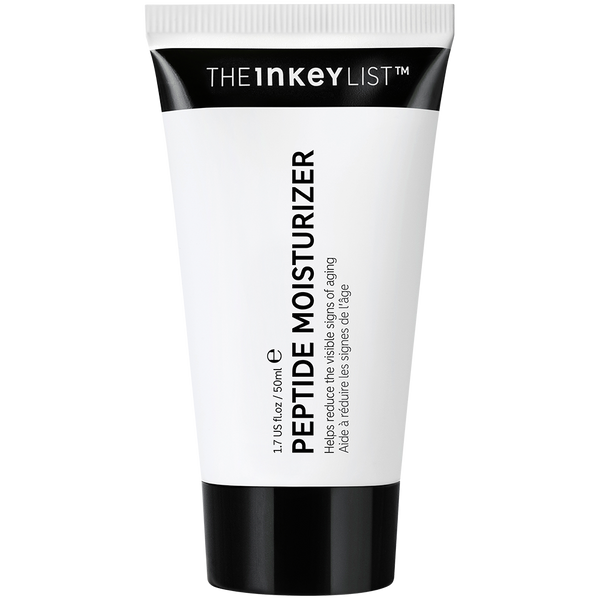
Our Peptide Moisturizer ($18). Lighter in texture than the Bio-Active Ceramide and focused on fine lines, tone and radiance rather than rebuilding. The decision line is simple: peptides signal firmness, ceramides rebuild the barrier. If your skin is reactive first and aging second, start with ceramides. If it is comfortable but you want to work on texture and tone, peptides make more sense.
Sensitive on a Budget
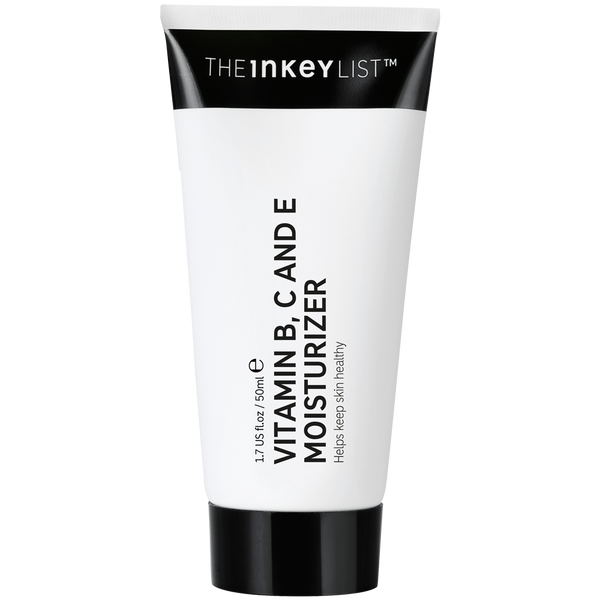
Our Vitamin B, C and E Moisturizer ($14). Simple, lightweight daily hydration in a fragrance-free base. It suits teenagers, it layers over anything, and it does not compete with active serums underneath it. If you have been searching for the best drugstore moisturizer for sensitive skin, this is the price point without the compromise. Effective skincare should never require a large budget, and a straightforward moisturizer you use every day will always outperform an expensive one you apply cautiously twice a week.
Sensitive Skin and Shaving
Shaving is a mechanical exfoliant. That is literal, not figurative. Running a blade across the face removes part of the barrier along with the hair, and it is one of the most overlooked causes of sensitized skin, especially with a dull blade or a foaming product that leaves skin feeling tight afterward. Our Oat Cleansing Balm ($17) is gentle enough to double as a calming shave balm, which is a real use rather than a marketing stretch. The barrier does not care about gender and neither do the criteria in this article, but for a full routine built around shaving, our men’s skincare routine guide covers it.
Still Not Sure
Two routes. How to choose the right moisturiser contains the full four-way comparison of our moisturizers with the complete decision framework. Or take our Skincare Quiz for a personalized answer in a couple of minutes.
Whichever product you choose, how you introduce it matters as much as what is inside it.
How to Patch Test and Introduce a New Moisturizer Safely
This is the step nearly everyone skips, and it is the single biggest factor separating a good first experience from a bad one. If your skin is reactive, patch testing is not excessive caution. It is the cheapest insurance policy available.
How to Patch Test Properly
Our full guide on why do I need to do a patch test covers every scenario, but the core method is short:
- Pick a discreet area of skin, such as the inner forearm or just behind the ear.
- Apply a small amount of the product to that spot.
- Repeat twice daily for five to seven days.
- Watch for redness, itching, stinging or small bumps.
- If nothing appears across the full window, you are clear to use it on your face.
Timing is where most people go wrong. Irritant reactions tend to appear fast, sometimes within minutes. Allergic reactions can take several days to develop, because they rely on an immune response that needs time to build. This is why a single overnight test is not a real test. It catches the fast reactions and misses the slow ones completely.
One Product at a Time
Introduce one new product, then give it at least two weeks before adding another.
The reason is straightforward. If you start three products on Monday and your skin reacts on Thursday, you have learned nothing usable. You now have three suspects and no way to identify the culprit, and the usual outcome is that all three get thrown out, including the two that were fine.
Starting with once-daily evening use before moving to twice daily also helps. It halves the exposure while your skin adjusts to something unfamiliar, and it costs you nothing but a few days of patience.
Telling Adjustment Apart From a Genuine Reaction
Not every sensation is a red flag. Mild, brief warmth that fades within a minute or two of application can be completely normal, particularly on skin that is currently dry or somewhat compromised.
What is not normal: persistent stinging, burning, spreading redness, swelling or itching. Those are signals to rinse the product off and stop. The distinction is duration and direction. Something that fades is adjustment. Something that builds or spreads is a reaction.
If you experience a persistent or severe reaction, or you suspect an underlying skin condition such as eczema, rosacea or contact dermatitis, speak to a doctor or a board-certified dermatologist. Skincare does not replace medical advice, and a proper diagnosis will spare you a lot of expensive guesswork.
How Long to Give It
Comfort shows up faster than anything else. Reduced tightness and a calmer feeling can appear within days. For everything else, give any moisturizer roughly four weeks of consistent twice-daily use before judging it. Skin renews on its own schedule, and no moisturizer transforms it overnight. If you are unsure at any point whether what you are seeing is a reaction or an adjustment, you can chat to askINKEY and get an answer.
A moisturizer performs at its best when the steps around it are just as gentle.
A Simple Supporting Routine
These are the partners to your moisturizer, not a barrier recovery protocol. The difference matters. If your skin is currently in rough shape and you want a structured plan for calming it down, how to hydrate sensitive skin without causing irritation sets out the full morning and evening routine in order. What follows is simply the shortest sensible routine to build around a moisturizer.
Short is the entire point. Fewer steps is a feature, not a compromise. Every extra product is another variable, another chance of a reaction and another thing to blame when something goes wrong. Reactive skin almost always does better with four well-chosen products than with eleven.
Cleanse. Our Oat Cleansing Balm, $17 for 150ml. Colloidal oatmeal keeps it comfortable on reactive skin, and it removes makeup and daily grime without that tight, stripped feeling that kicks off so many sensitivity problems in the first place.
Hydrate, optional. On damp skin, either our Hyaluronic Acid Serum for straightforward surface hydration, or our Ectoin Hydro-Barrier Serum ($17) if you want hydration with added barrier support. One or the other, not both. This step is genuinely optional and skipping it is not a failure.
Moisturize. Whichever product you landed on in the sub-type section above.
Optional eyes. Our Caffeine Eye Cream ($14) if puffiness or dark circles are on your list.
On order, the rule is thinnest to thickest. Serums before creams, moisturizer second to last, and daily broad-spectrum sun protection as the final morning step. If you want more hydration without buying more products, the moisture sandwich method is a technique rather than a purchase, which is usually the better trade. And if you are putting several of these together at once, build your own routine will assemble it for you.
That covers the routine. What remains are the specific questions.
Conclusion: The Right Moisturizer Is the One That Does Not Fight Your Skin
Reactive skin almost always traces back to a barrier that needs support. Sensitive and sensitized are two different situations with two different origins, but they converge on the same solution, and a fragrance-free ceramide moisturizer is the sensible starting point for both.
To restate the picks: our Bio-Active Ceramide Moisturizer ($22) for sensitive and dry or barrier-compromised skin, our Omega Water Cream ($15) for sensitive and oily or acne-prone, our Peptide Moisturizer ($18) for sensitive skin with first signs of aging, and our Vitamin B, C and E Moisturizer ($14) for simple daily hydration that stays out of the way of everything else.
Whatever you choose, patch test it, introduce it on its own and give it four weeks. The best moisturizer for sensitive skin is almost never the one with the longest ingredients list or the biggest claim on the front of the box. It is the one your skin tolerates every single day without complaint, and consistency with a shorter routine will do more for reactive skin than adding ever will.
What to Do Next
- Shop the hero: our Bio-Active Ceramide Moisturizer, $22 for 50ml.
- Compare the full range: how to choose the right moisturiser.
- Get a personalized routine: take our Skincare Quiz.
- Ask a question: chat to askINKEY.
Clear guidance. Proven ingredients. Real results. Because at The INKEY List, We Give A Care.
Frequently Asked Questions
Got a question?
Our askINKEY team are a friendly bunch of skincare experts with deep product knowledge and zero judgement. Whether you're an ingredient obsessive or just starting out, we'll make it make sense. No question too big. No question too small. We Give A Care, Every Day.


