



Strawberry Legs: What Causes Them and How to Get Rid of Them
Those tiny dark dots on your legs after shaving aren't dirt — and they aren't your fault. Here's what strawberry legs actually are, and what genuinely helps.
Author
askINKEY skincare advisor
Published
06 August, 2026
Time to read
8 minutes
You shave your legs, and within a day or so they look dotted with tiny dark specks, a bit like the seeds sitting in the surface of a strawberry. Strawberry legs is the everyday name for exactly that: the look of darkened, visible hair follicles on the legs. It is not a medical diagnosis, and it is not a sign that you have done anything wrong.
Here is the part worth saying straight away. This is not a hygiene problem. You did not cause it by not washing properly, and no amount of scrubbing in the shower is going to change it. Strawberry legs are extremely common, and they show up across every skin tone and every skin type.
This guide covers what strawberry legs actually are, what causes them, how to treat them with the right kind of exfoliation, how to shave in a way that does not trigger them, and how long real results genuinely take. One honest marker before we start: there is no overnight fix for this. There is, however, a simple and affordable routine that works if you stick with it.
Let’s start with what is actually happening under the surface.
What Are Strawberry Legs?
Strawberry legs describes the appearance of small dark dots spread across the legs, usually most obvious in the day or two after shaving. Each dot sits inside a hair follicle, which is why the pattern looks so regular and so speckled.
The mechanism is simpler than you might expect. Each of those dots is an open follicle holding a plug of oil, dead skin cells and general debris. Dermatologists have a name for this structure. It is an open comedone, which is the same thing as a blackhead, just occurring on the body rather than on the face. DermNet’s dermatology reference on comedonesdescribes open comedones as blackheads whose dark color comes from surface pigment rather than from dirt.
That brings us to the single most useful thing to understand about strawberry legs, and the reason so much common advice about them is wrong.
Those dots are dark because the plug oxidizes when it meets air. It is oxidized oil, dead skin and pigment. It is not trapped dirt.
Think of a cut apple turning brown on the counter. The same basic principle applies here. When hair removal exposes the opening of the follicle, the oil inside meets oxygen and darkens. Cleveland Clinic quotes dermatologist Dr. Matthew Janik describing precisely this: the oil combines with oxygen, turns darker than usual, and produces small black dots across the legs.
Once you know that, a lot of things click into place. It explains why scrubbing harder does not fix strawberry legs, because you cannot scrub a color change out of the inside of a follicle. It explains why this is not a cleanliness issue in any sense. And it explains why the answer involves clearing and resurfacing rather than attacking.
Hair removal makes the dots more visible for two separate reasons. First, it exposes the follicle opening so the plug inside can oxidize. Second, a freshly cut dark hair sitting just below the surface reads to the eye as a dark dot in its own right. Those two effects stack, which is why legs so often look most speckled right after a shave.
Strawberry legs affect all skin tones and all skin types. Some people simply notice them more than others. If you have larger or more visible pores, coarser or darker body hair, or drier skin overall, the contrast between the dots and the surrounding skin tends to be higher, so the effect is easier to see.
They are cosmetic, and they are harmless. One honest caveat is worth flagging. If the spots become painful, itchy, swollen or genuinely inflamed, that points toward folliculitis rather than simple congestion, and it is worth showing to a healthcare professional rather than treating at home.
So that is what the dots are. The next question is why they form in the first place.
What Causes Strawberry Legs?
Strawberry legs rarely come from a single source. Usually two or three things are happening at once, and recognizing which ones apply to you makes the fix far more targeted.
Shaving is the biggest single trigger. It is worth being specific about why, because “shaving causes it” is not actionable on its own. A dull or old blade tugs at hair rather than slicing through it cleanly, and that tugging irritates the follicle opening. Shaving without a lubricating layer creates friction, so the blade scrapes across skin instead of gliding over it. Shaving against the direction of growth gives a closer cut but raises the odds of hairs curling back into the follicle as ingrowns. A blunt blade also leaves the follicle opening irritated, and irritation can leave a darker mark behind once things settle down.
Clogged follicles are the underlying condition. Oil, dead skin cells, body lotion residue and sweat all collect in the follicle over time. While the follicle stays closed over, you see very little. Once hair removal exposes that opening, the plug oxidizes and darkens. It is the same congestion process that happens on the face, just playing out on thicker body skin where the follicles are larger and the hair is coarser.
Dry skin and slower cell turnover make everything more visible. Skin renews itself on roughly a 28 day cycle, shedding dead cells and replacing them from below. When that shedding is not happening efficiently, dead cells accumulate around the follicle opening and each pore starts to look more defined and more shadowed. Dry skin also dulls the surrounding surface, which raises the contrast of the dots against everything else.
Some people simply have more prominent follicles. This is worth stating plainly because it gets framed as a flaw far too often. Pore size and hair coarseness vary enormously between individuals, and larger follicles with darker hair are naturally more visible. Nothing has gone wrong. There is more to see, that is all.
Repeated irritation can leave lingering darkness. Shaving irritation, friction from tight clothing and picking at ingrown hairs can all leave discoloration hanging around the follicle after the original irritation has calmed. This is why the effective approach involves calming and resurfacing rather than aggressive treatment. If you are noticing general darkening and uneven tone alongside the dots themselves, that lingering post-irritation pigment is often part of what you are looking at, and it responds to patience rather than pressure.
Folliculitis can look similar but behaves differently. Folliculitis is inflammation of the hair follicle, and Cleveland Clinic notes that it often follows shaving, waxing or heavy sweating. The distinguishing feature is that it tends to itch or feel irritated rather than sitting quietly as a flat dot. This is the one scenario where a professional opinion genuinely beats a skincare routine.
By this point most people can identify at least one cause on that list as their own. Often it is shaving plus dryness, which is a very manageable combination.
Several of these causes overlap with other bumpy skin concerns, which is where a lot of confusion starts. So before we get to treatment, let’s make sure you are treating the right thing.
Strawberry Legs or Something Else? How to Tell the Difference
Three different concerns get grouped together constantly, and they respond to slightly different approaches. Here is how to tell them apart quickly.
Strawberry legs are flat dark dots sitting in the follicle. The skin between the dots usually feels fairly smooth when you run a hand over it. They show up most on the lower legs and thighs, and they are most obvious in the day or two after shaving. The cause is oxidized plugs sitting in open follicles.
Dots you see versus bumps you feel
There is a second concern that gets confused with strawberry legs constantly, and the difference comes down to texture. Keratosis pilaris presents as small, rough, raised bumps with a texture people often compare to sandpaper or chicken skin. The bumps tend to be skin colored, red or brown rather than reading as dark dots. They cluster on the backs of the upper arms, the thighs and the buttocks, often symmetrically, and they frequently get worse in winter. There is a genetic component. The plug here is keratin, a protein, rather than oxidized oil.
The quickest giveaway is texture. Rough raised bumps are something you can feel. Strawberry legs are something you mostly just see. If the bumpy texture sounds closer to your experience, our full guide to treating keratosis pilaris covers that concern properly and is the better place to start.
Body breakouts behave differently again. These are raised, sometimes inflamed or tender spots that come and go over time, and they turn up most commonly on the chest, back and shoulders. They follow a cycle rather than sitting as static dots. If that is closer to your experience, our guide to breakouts on the back and body is the better starting point, and what causes back acne in females goes deeper into the specific triggers.
It is completely possible to have more than one of these at the same time, and plenty of people do. The useful thing they share is congestion at the follicle, which is why gentle chemical exfoliation shows up as a common thread in managing all three.
Now that you know what you are dealing with, here is what actually treats it.
How to Get Rid of Strawberry Legs
Start with the single biggest behavioral correction, because it undoes most of what people instinctively try first: chemical exfoliation works for strawberry legs, and physical scrubbing largely does not.
The reasoning is worth understanding rather than just accepting. Harsh scrubs, stiff brushes and gritty exfoliants work by friction, and friction on skin that is already irritated from shaving tends to make the appearance worse rather than better. More irritation means more of that post-irritation darkening we covered earlier. There is also a straightforward physical limitation: scrubbing acts on the surface, and the plug causing the dot sits down inside the follicle where no scrub can reach. Cleveland Clinic makes the same point, noting that chemical exfoliants can treat strawberry legs without the irritation that scrubbing causes.
Chemical exfoliation works differently. Instead of abrading the surface, acids dissolve the bonds holding dead cells in place, so those cells release and shed rather than piling up. Two acids matter most here, and they do genuinely different jobs.
Glycolic acid works on the surface. Salicylic acid works inside the follicle. Glycolic is an AHA, and the smallest AHA molecule, which is why it penetrates efficiently and resurfaces so effectively. It loosens the dead cells accumulating around the follicle opening, smoothing texture over time and helping soften the look of discoloration. Salicylic acid is a BHA, and crucially it is oil soluble, which means it can travel into an oily pore and help clear the plug sitting inside it. One handles the surface, the other handles the inside. Together they cover both halves of the problem.
Format matters as much as ingredients. Acids need contact time to work. Anything you rinse off within seconds of applying it cannot deliver much, which is why a leave-on product outperforms a wash for this particular concern.
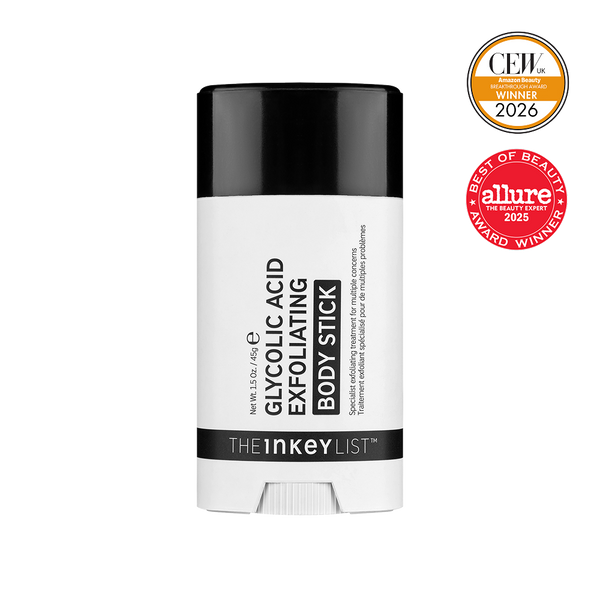
That combination is exactly what the Glycolic Acid Exfoliating Body Stick was built around. It is $20.00 for 45g, and it delivers 7% Glycolic Acid alongside 0.5% Salicylic Acid. It also contains 10% Shea Butter, which is not a throwaway detail. The shea butter cushions and comforts skin as the acids work, so the exfoliation is not stripping. That balance is what makes a leave-on acid workable on body skin that has just been shaved. It is a twist up stick applied directly to clean, dry skin, with no rinsing, and it works AM or PM. It holds an Allure Best of Beauty award and currently sits at 4.3 stars from 620 reviews.
On results, here is what the testing actually showed. It visibly reduces ingrown hairs in 7 days, and visibly reduces body breakouts in 7 days. Over a longer window it visibly reduces underarm and bikini line discoloration in 28 days. On texture, the change comes faster, with visibly improved dry, rough and flaky skin after the first use.
Usage matters more than most people assume, so here it is precisely. Start 2 to 3 times weekly on the areas you want to target, and increase only as your skin tolerates it. There is no prize for going faster. Acids reward consistency, and pushing frequency early is the most common way people end up irritated and give up.
Two timing details are easy to miss and genuinely worth respecting. Wait 8 hours after any hair removal before applying it, so freshly shaved skin has time to settle. And if you are treating underarms or the bikini line, wait 10 to 15 minutes after applying before you use deodorant.
Finally, patch test before first use, particularly if your skin runs sensitive. It takes a day and it tells you what you need to know.
That covers what to use. Here is the order to use it in.
Your Simple Strawberry Legs Routine
Three steps, two products, no complicated regimen. Consistency matters far more than complexity here, and a routine you actually repeat will always beat an elaborate one you abandon in week two.
-
Exfoliate the areas you want to target. Apply the Body Stick to clean, dry skin. Not damp, dry, because water dilutes the product and changes how it sits. Leave it on and do not rinse. Start 2 to 3 times weekly and increase only as your skin tolerates it. AM or PM both work, so fit it wherever it will actually happen. Remember the 8 hour wait after hair removal, and the 10 to 15 minute wait before deodorant if you are treating underarms.
-
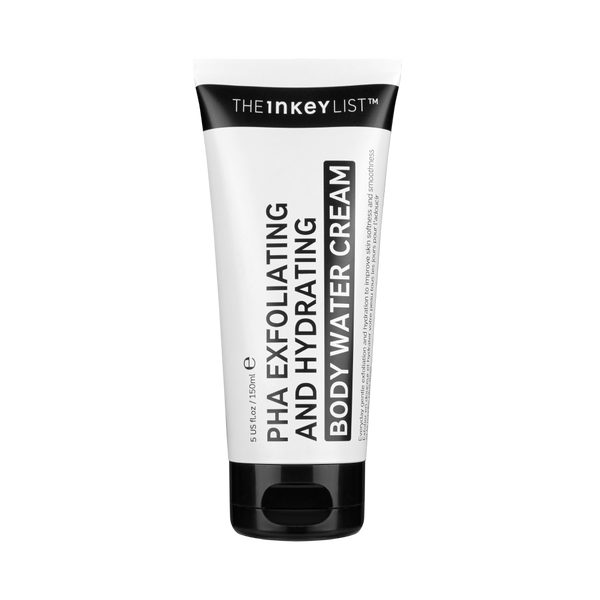
Hydrate everywhere daily. The PHA Body Water Cream is $15.00 for 150ml and delivers 3% PHA (Gluconolactone) alongside Jojoba and Rice Bran. PHAs are the gentlest acid family. Their molecules are larger, so they work more slowly and more superficially than an AHA, and that is precisely what makes them suitable for daily use and for sensitive skin. If you want the deeper formulation story, we broke down how PHAs work in detail. In testing, 97% said it was gentle enough for daily use, and it holds 4.5 stars from 271 reviews.
-
Protect treated skin from the sun. Glycolic acid increases photosensitivity. Any area you have treated that is going to see daylight needs sun protection, and if you are working on your legs through summer, this is not the optional step. Our guide to SPF covers the basics of why this matters.
One pairing rule to get right. These two products cover different jobs across different areas. Think of the Body Stick as your targeted treatment for the specific spots you want to work on, and the PHA Body Water Cream as your everyday all-over care for the rest of your body. Use the Body Stick where you are targeting, and the PHA cream across your other areas for general maintenance and hydration. They are complementary, not layered.
Finally, keep an eye on your barrier. Signs that exfoliation has gone too far include stinging, tightness, unusual redness or flaking. If any of that shows up, the answer is to reduce frequency and lean into hydration, not to push through it. Our guide to repairing a damaged skin barrier walks through what to do if you have overdone it.
Treatment handles what is already there. Preventing the next round is a separate skill, and it mostly comes down to how you remove hair.
How to Shave Without Causing Strawberry Legs
If shaving is your main trigger, technique changes deliver results faster than any product will. Here are the adjustments that matter most, roughly in order of impact.
-
Use a sharp, fresh blade. This is the single highest impact change most people can make. Dull blades drag, tug and irritate instead of cutting cleanly.
-
Replace blades regularly. A blade that has gone blunt or started to rust belongs in the trash, not in your shower. Storing razors somewhere dry rather than leaving them in the shower extends their usable life considerably.
-
Soften the hair first. Give your legs a few minutes under warm water before you start. Softer hair cuts more cleanly and needs less pressure.
-
Never dry shave. Always use a lubricating product so the blade glides rather than scrapes. This is non negotiable if you are prone to the dark dot effect.
-
Shave with the grain if you get ingrowns. Shaving in the direction of hair growth rather than against it gives you a slightly less close shave and far fewer ingrown hairs. For most people that trade is worth making.
-
Do not press hard. Let the blade do the work with light, short passes. Pressure causes irritation, not closeness.
-
Rinse the blade frequently. Buildup between the blades stops them cutting cleanly and drags at the hair.
-
Exfoliate before you shave, not immediately after. Freshly shaved skin is more reactive, and acids applied on top of it can sting.
-
Wait 8 hours after hair removal before applying the Body Stick. This gives skin time to settle so the acids land on calm skin rather than irritated skin.
-
Moisturize afterward. Hydrated skin supports the barrier, looks smoother and tolerates future shaves better.
Does waxing, laser or epilating help with strawberry legs?
This is where a lot of content online overpromises, so here is the honest version.
Waxing and epilating remove hair from the root rather than cutting it at the surface. For some people that makes the dark dot effect less noticeable between sessions, simply because there is no dark stubble sitting just below the skin adding to the visual. Cleveland Clinic notes that an epilator tends to cause less injury to skin than waxing does. The balanced view is that both methods can also cause their own irritation and their own ingrown hairs, particularly on sensitive skin. They solve one part of the picture and can occasionally add another.
Laser hair removal reduces hair growth over a course of sessions, and less hair in the follicle can mean less visible congestion for some people. It is worth being careful with how that gets framed. Laser is not a cure for strawberry legs, results are not universal, and Cleveland Clinic points out that so called permanent options are not always permanent, with some hair growing back and repeat sessions often needed. Suitability also varies depending on your hair and skin tone, and possible side effects include changes in skin color. That makes it a conversation for a qualified practitioner who can assess you directly, rather than something to decide from an article.
Here is the conclusion that ties all of it together. No hair removal method is a guaranteed permanent fix, because the dark dots are about what sits inside the follicle, not only about the hair itself. Remove the hair entirely and you still have follicles producing oil and shedding skin cells. Whichever method you choose, regular gentle exfoliation and consistent hydration remain the core of keeping legs smooth.
With prevention covered, the obvious next question is how long any of this takes to show up in the mirror.
How Long It Takes, and the Mistakes That Slow You Down
Realistic expectations are the difference between a routine that works and a routine you quit on day four. Here is the honest timeline, anchored to what has actually been tested.
Immediately. Skin can look and feel less dry, rough and flaky after the very first use.*
Around 7 days. Ingrown hairs visibly reduced, and body breakouts visibly reduced. This is usually the first point at which you notice a real difference in the dotted appearance, largely because fewer ingrowns means fewer dark points.
Around 4 weeks. This is where changes in texture and tone become more obvious. That timing is not arbitrary. It lines up with the roughly 28 day cycle on which skin renews itself, generating new cells at the base and shedding old ones from the surface. Give a full turnover cycle to complete and you are seeing genuinely newer skin rather than a temporary surface effect.
Up to 28 days. Visibly reduced discoloration on areas such as underarms and the bikini line.*
Results vary from person to person, and consistency over weeks will always beat intensity over days. One more honest note: strawberry legs can return if you stop. Hair keeps growing and follicles keep producing oil, so this is maintenance rather than a one time cure. That is not a discouraging fact, it just reframes the goal. You are managing something, not eradicating it.
A few common missteps slow people down. None of these are things to feel bad about, and all of them are easy to correct.
- Over-exfoliating. More is not faster. Pushing frequency leads to irritation, and irritation makes discoloration worse rather than better.
- Reaching for harsh scrubs or stiff brushes. Friction on already irritated skin compounds the problem instead of solving it.
- Dry shaving, or shaving with a blunt blade. The two fastest routes back to square one.
- Skipping moisturizer. Hydrated skin looks smoother, and it tolerates exfoliation considerably better.
- Skipping sun protection on treated skin. Glycolic acid increases photosensitivity, and unprotected sun exposure can deepen existing marks and uneven tone.
- Expecting overnight results and quitting at day four. The 7 day and 28 day markers exist for a reason.
- Picking at bumps or ingrown hairs. This is the fastest route to lasting dark marks, and the hardest one to undo.
- Applying acids immediately after shaving. Wait the 8 hours. It genuinely matters.
Most people who feel like nothing is working are doing one or two things on that list. Fixing them usually costs nothing.
The Bottom Line on Strawberry Legs
Strawberry legs are common, harmless and completely unrelated to hygiene or how much effort you put into washing. They are oxidized plugs in open follicles, made more visible by hair removal, and they turn up on every skin tone and every skin type.
The answer is not complicated. Swap harsh physical scrubbing for gentle chemical exfoliation, hydrate consistently, sharpen up your shaving habits, and protect treated skin from the sun. Give it a full skin cycle before you judge the results, and remember that this is management rather than a permanent cure. Consistency is what delivers here, not intensity.
It also does not need to be expensive. A complete routine for this concern comes to two products at $20.00 and $15.00. Effective body care should be accessible, clearly explained and honest about what it can do.
Clear guidance, proven ingredients, real results. Because at The INKEY List, we give a care.
Where to Start
If you want to put this into practice, the Glycolic Acid Exfoliating Body Stick at $20.00 is your targeted treatment step, combining 7% Glycolic Acid and 0.5% Salicylic Acid with 10% Shea Butter to keep things comfortable. The PHA Body Water Cream at $15.00 handles daily all-over hydration across the rest of your body, with 3% PHA gentle enough that 97% of users said it suited everyday use.
Not sure where to begin, or dealing with more than one concern at once? Our personalized skincare quiz builds a routine around your skin specifically, so you are not guessing.
*Based on a 4-week consumer study of 100 people.
**Based on a 4-week clinical study of 21 people.
Frequently Asked Questions
Got a question?
Our askINKEY team are a friendly bunch of skincare experts with deep product knowledge and zero judgement. Whether you're an ingredient obsessive or just starting out, we'll make it make sense. No question too big. No question too small. We Give A Care, Every Day.


