



Exfoliating Body Wash: What to Look For and How to Choose
What to look for in an exfoliating body wash, from stated AHA percentages and acid pairings to pH, coverage and how often you should actually use one.
Author
askINKEY skincare advisor
Published
12 September, 2026
Time to read
12 minutes
Exfoliating body washes look almost identical on a shelf. Similar bottles, similar front-label language, similar promises of smoother skin. The formulas behind those labels differ substantially: which acid is used, whether the strength is stated at all, how long the product stays on skin before it rinses away, and how often it is meant to be used. Those variables determine whether an AHA body wash actually does something for your skin or simply cleanses it with a claim attached.
This is a buyer’s selection guide. It covers:
- The acid used and its stated concentration
- Acid pairings and whether the blend has a real formulation logic
- How a product is applied, and whether it reaches the areas you want to treat
- The base formula, surfactants, fragrance and pH
- How often the product is designed to be used
- How to match a product to your specific concern
- Who should be careful, and when an acid product is the wrong answer
To set the boundary clearly: this article is about how to choose, not how to exfoliate. For technique, body area detail and the scrub versus acid question in full, read how to exfoliate body skin.
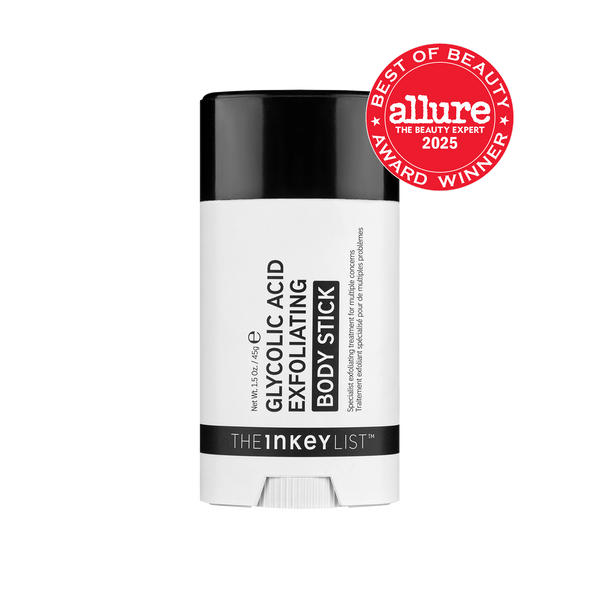
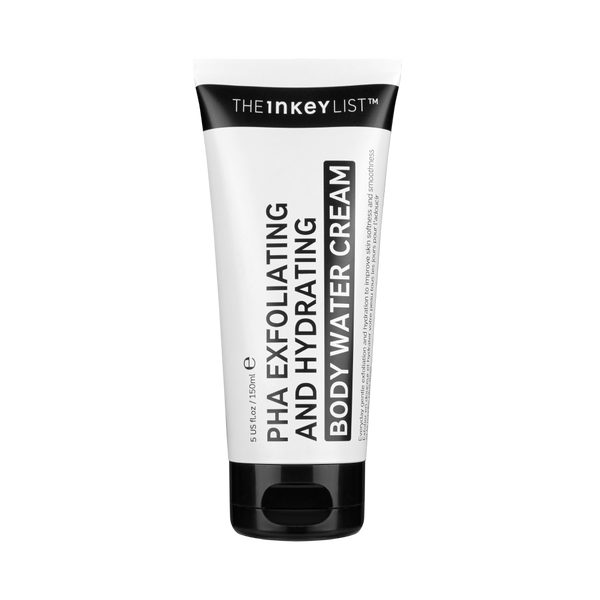
For context as you read, INKEY’s current body exfoliation lineup is our Glycolic Acid Exfoliating Body Stick ($20), a targeted leave-on with 7% glycolic acid and 0.5% salicylic acid, and the PHA Body Water Cream ($15), a 2-in-1 that moisturizes while exfoliating gently.
What an Exfoliating Body Wash Actually Does
An exfoliating body wash is a body cleanser that also contains exfoliating acids. It performs two jobs in a single step: it removes dirt, sweat, oil and product buildup, and it loosens the bonds holding dead cells to the skin’s surface so they shed more easily.
The defining structural fact about the format is that it rinses off. It sits on your skin for seconds, not hours. Keep hold of that, because it drives nearly every criterion below.
On the two routes to exfoliation, briefly: physical exfoliants such as scrubs work by friction, buffing surface cells away. Chemical exfoliants such as AHAs dissolve the bonds between those cells so they lift away without scrubbing. Physical and chemical body exfoliation is covered in depth on its own page, and glycolic acid has a dedicated ingredient page, so we will not duplicate either here.
Realistic outcomes: smoother-feeling skin, reduced rough texture, and better preparation for whatever you apply next. Peer-reviewed research has shown that alpha hydroxy acids act on the stratum corneum, the outermost layer of skin, affecting how it functions and sheds. That is a real effect, and it is a surface-level one. Body skin is also thicker than facial skin, which is exactly why body formulas are constructed differently, typically at higher concentrations and in sturdier bases.
Because a wash rinses away within seconds, that short window changes what you should be looking for on the label.
Rinse-Off vs Leave-On: Why the Format Changes What You Should Look For
Contact time is the central trade-off in body exfoliation, and understanding it is what lets you judge any product fairly.
Rinse-off, in practice:
- On skin for seconds before being washed away
- Needs a meaningful, clearly stated concentration to accomplish anything in that window
- Covers large areas quickly: back, chest, legs, arms
- More forgiving for anyone new to body acids, since exposure is brief
- Slots into a shower routine you already have
Leave-on, in practice:
- Stays on skin and keeps working after you apply it
- Suits higher strengths on smaller, targeted areas
- Slower to apply evenly across an entire body
- Needs more care with frequency, because exposure is sustained
The buying consequence is direct. A low or unstated acid percentage in a rinse-off wash has almost no time to earn its place, while the same percentage in a leave-on product has hours. That asymmetry is why an unquantified “exfoliating complex” in a wash is a weaker proposition than the packaging suggests.
We will make the honest point here without apology: if you want sustained exfoliation on the areas that need it most, a leave-on treatment applied after showering does a different and often more targeted job than a wash can. Our 7% glycolic acid body stick ($20) works exactly this way, pairing 7% glycolic acid with 0.5% salicylic acid, a strength that only makes sense because it is placed on specific areas rather than everywhere. The PHA Body Water Cream ($15) represents a third approach, a leave-on 2-in-1 with 3% PHA that hydrates while exfoliating gently, and the science behind PHA Body Water Cream explains why PHAs behave differently from AHAs.
None of these formats replaces the others. Judge each on what its format can realistically deliver, then build a routine from the combination that fits your skin.
Which brings us to the first and most important label check.
What to Look For 1: The Acid and the Concentration
Glycolic acid is the benchmark for body exfoliation, for structural reasons. It is the smallest AHA molecule, it is one of the most studied cosmetic acids in use, and it performs well on the thicker skin of the body, where rough texture and bumps are most common.
The highest-value thing you can take from this article is how to read a label:
- A stated percentage. “AHA body wash”, “fruit acid complex” or “exfoliating actives” with no number tells you nothing about strength.
- The acid named individually. A number attached to a named acid is a specification. A number attached to a blend is not.
- A format matched to the strength. A stated 5% in a rinse-off wash and a stated 7% in a leave-on treatment are doing very different work.
- Ingredient list position. Useful corroboration when a percentage is given, and your only signal when it is not.
If a product will not tell you how much acid is in it, you cannot evaluate it. Treat a stated percentage as the minimum standard, not a bonus feature.
It is also worth dismantling a common assumption: more acids listed does not mean a stronger or better product. An unquantified blend of four or five acids can easily be weaker in practice than one well-dosed acid at a known percentage. Long acid lists look impressive. They do not necessarily do more.
As a worked example of the principle, our Body Stick states 7% glycolic acid and 0.5% salicylic acid plainly. You know precisely what you are buying before it arrives.
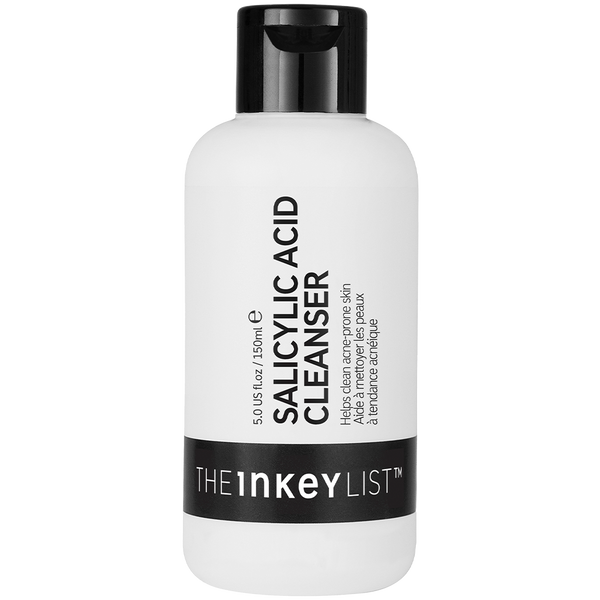
A note on salicylic acid for comparison. Salicylic is oil-soluble, so it can get into pores, which makes it better suited to congestion, clogged pores and body acne. Glycolic works on surface texture and tone. Our Salicylic Acid Cleanser($15) with 2% salicylic acid can be used on the chest and back where breakouts occur, which is a different job from what an acid body wash is built for. Glycolic acid vs salicylic acid covers the comparison properly, and what glycolic acid does covers the molecule itself.
Concentration is not just marketing detail, either. AHA concentration and labeling are treated as consumer-relevant in the FDA guidance for industry on labeling cosmetics containing alpha hydroxy acids. If regulators consider the number worth addressing, it is worth your attention too.
Once you know the acid and the amount, the next question is what it has been paired with.
What to Look For 2: Acid Pairings and Why the Combination Matters
Pairing acids is a deliberate formulation decision. The useful skill is telling a deliberate pairing from a decorative one.
Lactic acid is the humectant AHA, meaning it exfoliates while also drawing water into skin and helping hold it there. That dual action offsets the drying potential of a stronger exfoliating acid working alongside it, and it is supported by research into lactic and lactobionic acids as moisturizing compounds. So glycolic plus lactic is a logical pairing: glycolic handles surface texture thanks to its small molecule size, lactic contributes exfoliation while supporting hydration and comfort.
Glycolic plus salicylic is a different but equally logical pairing, and it is the one in our Body Stick. Glycolic works on surface texture across the top layer, while salicylic is oil-soluble and gets into pores. That combination suits skin dealing with rough bumps and body acne at the same time, which is a common pairing of concerns on the backs of the arms, the back and the chest. You can see glycolic and salicylic acid together working on that logic.
When assessing any blend, ask:
- What is each individual acid contributing here?
- Is a percentage attached to each acid, or only to the blend?
- Does the combination target one coherent concern, or read like a list?
- If one acid is potentially drying, is anything offsetting it?
If you cannot answer those from the label or the product page, the blend may be there for the ingredient list rather than for your skin.
For reactive skin, there is a gentler route. PHA molecules are larger than AHAs, so they penetrate more slowly and tend to be better tolerated. Our best exfoliator for sensitive skin guide covers that decision in full.
Formula matters. So does how the product physically gets onto your skin.
What to Look For 3: How It Is Applied, Coverage and Hard-to-Reach Areas
Body exfoliation only works where the product actually reaches. It sounds obvious, and it is still the criterion buyers weigh least.
Think about which areas people most want to treat: the back, the shoulders, the backs of the upper arms. Now think about which areas are hardest to reach evenly by hand. Same list. A well-formulated product that never reaches the middle of your back will not do anything for the middle of your back.
How the application options compare:
- Bare hands. Free and always available, but the least even coverage, and genuinely difficult for the mid-back and shoulders.
- A cloth or mitt. Extends reach and spreads product, but adds friction on top of acids, which is not always desirable. Needs regular washing.
- A built-in applicator. Spreads product more evenly and removes the need for a separate tool. Worth noting honestly that some people prefer dispensing into their hands for more control over how much product they use. Either approach works, and the formula performs the same.
- A stick format. Gives precise, targeted placement without rubbing product in by hand, and is the most controlled option for specific patches.
The criterion itself is neutral across formats: check that you can realistically apply your chosen product to the areas you want to treat, several times a week, without it becoming a chore. Consistency matters more than intensity, and the most common reason people abandon a body routine is friction rather than disappointment.
Positioned honestly, our targeted stick applicator is excellent for precise areas such as the backs of the arms and thighs, applied directly to clean, dry skin after showering. It is not designed to cover your entire body, and we would not claim otherwise. For full-body coverage, the PHA Body Water Cream spreads easily across large areas while moisturizing, which makes the two natural partners rather than alternatives.
Shower order is simple. Cleanse, exfoliate, rinse thoroughly, then apply your leave-on treatment and moisturizer to clean skin. For full technique, body exfoliation technique is the owning guide, and awkward spots such as glycolic acid for armpits have dedicated guidance.
Coverage determines where the acid lands. The base determines how your skin feels afterward.
What to Look For 4: The Base Formula, Surfactants, Fragrance and pH
The non-active portion of a formula matters as much as the acid, particularly across a whole-body application area used several times a week.
Surfactants. These are the cleansing agents that create lather and lift away oil and dirt, and they range from mild to harsh. Harsh surfactants strip the lipids that keep skin comfortable, and a stripping base combined with an exfoliating acid is the most common route to tightness and irritation. The acid usually gets blamed. The base is frequently the actual cause.
Fragrance. A body product covers far more skin than a face product, which means considerably greater exposure. Fragrance is not an issue for everyone, but fragrance-free is the safer default for reactive skin, or for treating areas that are already irritated or freshly shaved.
pH. AHAs need an acidic environment to function, so an exfoliating wash sits at a lower pH than a plain cleanser. At the same time, a cleanser too far from skin’s natural pH can compromise the barrier, a relationship examined in peer-reviewed work on the relation of pH and skin cleansing. A well-made formula balances both. For the full explanation, see pH in your skincare routine.
Other signals worth checking. Vegan formulation is straightforward to verify on any product page. On pregnancy and breastfeeding, wash-off AHA formulas at these concentrations are generally considered lower-risk than leave-on treatments, because contact time is short, but guidance varies, so check with your doctor before using acids. Our guide on glycolic acid when pregnant covers the wider question.
The principle underneath all of this is barrier respect. The goal is smoother skin, not stripped skin. Tight and squeaky is a warning sign, not a sign of success.
The final criterion is not printed on the front of the bottle at all.
What to Look For 5: How Often It Is Designed to Be Used
“Use daily” on packaging is a usage instruction. It is not evidence of gentleness and it is not a quality signal. What matters is whether the stated frequency matches the strength of the formula and your skin’s tolerance.
For acid-based body exfoliation generally, two to three times per week is a sensible starting point for most people, because it gives skin recovery time between uses, and that recovery is what keeps results steady rather than tipping into irritation. Our Glycolic Acid Exfoliating Body Stick is designed for use a few times a week rather than every day, building up as tolerated.
A sensible build-up protocol:
- Start with once or twice a week for the first two weeks.
- Assess honestly over two to three weeks. Comfortable, or slightly tight?
- Increase to three times weekly only if there are no signs of sensitivity.
- Hold at whatever frequency your skin is comfortable with, even if that is below the maximum.
Signs you are overdoing it:
- Tightness after showering that does not settle
- Stinging on application
- Persistent redness rather than brief flushing
- Unusual dryness or flaking
- New sensitivity to products that never bothered you before
If those appear, scale back rather than pushing through. What to do if you have over exfoliated covers recovery, and how often to use glycolic acid goes deeper on frequency.
Body skin also varies by area. Legs and arms generally tolerate more than the chest, neck or inner arms, where skin is thinner and more reactive. There is no requirement to treat every area on the same schedule.
More frequent is not the same as more effective. Consistency at a sensible frequency beats intensity.
With the criteria set, apply them to whatever brought you here in the first place.
Matching an Exfoliating Body Wash to Your Concern
Different concerns weight the criteria differently. Here is which one matters most for each, with the full detail on the pages that own it.
Keratosis pilaris. AHAs including glycolic and lactic acid are commonly used to smooth the look of rough bumps on the arms and thighs, supported by clinical literature on AHAs in keratosis pilaris management and longer-term outcomes for glycolic acid specifically. If you are searching for a body wash for keratosis pilaris, consistency matters more than raw strength. Our keratosis pilaris guide covers the full approach.
Strawberry legs. Coverage across the legs and a gentle, non-stripping base matter most here, given how often the area is shaved. We cover this concern in full at strawberry legs.
Body acne on the back and chest. Salicylic acid is the more suitable acid for congestion and clogged pores, because it is oil-soluble and can get into the pore. Our Salicylic Acid Cleanser ($15) can be used on the chest and back for this reason. See back acne for concern-specific guidance.
Rough texture and dullness. A stated glycolic percentage is the priority criterion, since this is the concern glycolic is most directly suited to. Buy on the number and use it consistently.
Ingrown hairs. Regular gentle exfoliation helps keep the skin surface clear so hairs are less likely to become trapped, with coverage and frequency mattering more than strength. More at ingrown hairs.
Feet and thicker-skinned areas. These tolerate more frequent exfoliation than the rest of the body, and often need it. See glycolic acid for feet.
Before choosing anything, be clear about when an acid product is not the right answer.
Who Should Be Careful and What to Avoid
- Sensitive or reactive skin. Start at the lowest frequency, or choose a gentler PHA route. Our guide to gentler exfoliating options sets out the alternatives.
- Broken, cracked, sunburned or freshly shaved skin. Wait until skin has recovered. Acids on compromised skin sting and irritate without improving results.
- Do not stack multiple strong exfoliants on the same area on the same day. If you use an exfoliating wash, you generally do not also need a scrub on that same body part.
- Sun sensitivity. AHAs can increase skin’s sensitivity to the sun and the possibility of sunburn, a point addressed directly in the FDA guidance on labeling cosmetics containing alpha hydroxy acids. Cover exposed areas or apply sun protection to exposed skin, particularly legs, arms, chest and shoulders, and continue doing so for a period after use.
- Pregnancy and breastfeeding. Wash-off AHA formulas at these concentrations are generally considered lower-risk than leave-on products, but guidance varies, so check with your doctor before using acids. See using glycolic acid when pregnant.
- Face versus body. Body exfoliants are built for thicker skin and are not intended for facial use. Do not cross them over. If you arrived here looking for facial exfoliation, our further reading on glycolic acid for your facecovers that category separately.
- Patch test before first full use. Apply to a small area, wait, and check how your skin responds.
- Avoid contact with eyes, and discontinue use if irritation occurs.
Here is how these criteria come together into a routine you can actually build today.
Our Pick and How to Build a Complete Body Routine
Carry this checklist with you, whatever you end up buying:
- A stated acid percentage, attached to a named acid
- A pairing with a logic you can explain
- Coverage that reaches the areas you care about
- A base that cleans without stripping
- Honest frequency guidance rather than a default “use daily”
- A formula designed for body skin
Applied to our current US range, the routine is an exfoliating cleanse, then a targeted leave-on acid, then a moisturizer.
The three-step routine:
- Cleanse. Our Salicylic Acid Cleanser ($15) with 2% salicylic acid works on the chest, back and shoulders, where breakouts and congestion are most common and hardest to reach.
- Treat. Our Glycolic Acid Exfoliating Body Stick ($20) with 7% glycolic and 0.5% salicylic acid, applied to targeted areas after showering on clean, dry skin, a few times a week.
- Moisturize. Our PHA Body Water Cream ($15) with 3% PHA, a 2-in-1 that hydrates while offering gentle continued exfoliation. Apply while skin is still slightly damp.
Moisturizing after exfoliating is not optional. You have just accelerated surface cell turnover, and replacing water and lipids afterward is what keeps the result comfortable instead of tight.
If you would rather buy the routine bundled, the Exfoliating Body Duo is $33.25, was $35.00.
On timing, be realistic. Body skin is thicker than facial skin and turns over more slowly, so measure progress in consistent weeks rather than days. Four to six weeks of steady use tells you far more than four to six days.
Here are the short practical questions readers ask most.
The Short Version: What Actually Matters When Choosing
Choosing an exfoliating body wash comes down to five checks: a stated acid percentage instead of a vague blend, a pairing with a logic you can explain, coverage that reaches the areas you actually care about, a base formula that cleans without stripping, and a frequency that suits your skin rather than whatever the back of the bottle defaults to.
Keep the honest framing in mind too. Exfoliation is one step in a body routine, not the entire routine. Pair it with a targeted treatment where you need more, moisturize afterward, and measure progress in consistent weeks rather than days. Clear guidance, proven ingredients, real results.
If you want to see how our own formula measures up against those criteria, our Glycolic Acid Exfoliating Body Stick is $20, and you can browse the full body range alongside it. For technique rather than selection, read how to exfoliate body skin next.
Frequently Asked Questions
Got a question?
Our askINKEY team are a friendly bunch of skincare experts with deep product knowledge and zero judgement. Whether you're an ingredient obsessive or just starting out, we'll make it make sense. No question too big. No question too small. We Give A Care, Every Day.


