

Rice Toner Benefits: What a Milky Toner Actually Does
Everything you need to know about rice milk toners - what they do, who they suit, and how to slot one into your routine for softer, smoother, better-hydrated skin.
Author
askINKEY skincare advisor
Published
05 February, 2026
Time to read
12 minutes
For a long time, “toner” meant one very specific thing: a clear, sharp liquid you swiped on with a cotton pad, usually with a strong smell, usually leaving your skin feeling tight. That definition is out of date. Toners today cover an enormous range of textures and jobs, and a milky toner is one of the clearest examples of how far the category has moved.
A milky toner is a toner with an opaque, lightly emulsified texture that hydrates and conditions the skin rather than stripping or exfoliating it. That is the whole definition. It is not a category built on astringency, and despite the name, it has nothing to do with dairy.
This article is an ingredient explainer, not a sales page. We are going to cover what a milky toner actually is and how it differs from the clear kind, what rice does for skin and where the folklore ends and the formulation begins, what the Nourishing Rice Milk Hydrating Toner is genuinely designed to do, how a milky toner compares to an exfoliating one, exactly where it sits in a morning and evening routine, and who it suits. If you are still working out whether you need this step at all, it is worth understanding what a toner actually does before you commit to one.
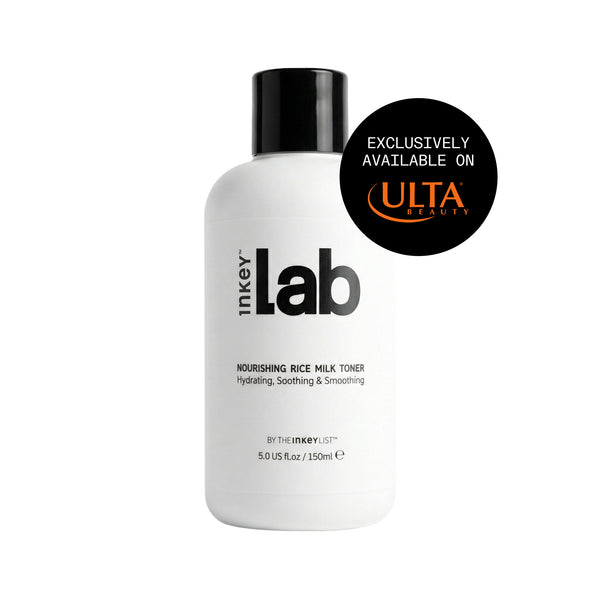
One piece of housekeeping first, because you deserve it up front rather than at the bottom of the page. The Nourishing Rice Milk Hydrating Toner will no longer be available on our website, but it is arriving on Ulta Beauty soon.
With that out of the way, let’s start where most people start: what does “milky” actually mean on a toner bottle?
What Is a Milky Toner?
A milky toner is a toner with a soft, opaque, lightly emulsified texture rather than a clear, water-thin liquid. Think of the difference between water and a very light lotion. The name describes how the product looks and feels, not what is in it.
That distinction matters more than it sounds, because texture in a toner is a signal of intent. Clear toners are usually thinner and faster-absorbing, and they are often built around exfoliating acids or quick surface hydration. They are designed to do their job and disappear. A milky toner carries hydrating and conditioning ingredients in a slightly richer base, which means it sits on the skin a moment longer before it sinks in.
Neither is better. They are different tools.
Why the texture actually matters to you
Here is the practical version. If your skin feels tight, squeaky or slightly uncomfortable in the minute after you cleanse, a clear, water-light toner often does not give you much to work with. It goes on, it evaporates, and you are back where you started waiting for your serum.
A milkier base behaves differently. It feels more cushioned going on, and because it holds hydrating ingredients in a slightly more substantial vehicle, it can function as a genuine hydration step rather than a purely preparatory one. That is the key shift. A milky toner is not just prepping your skin for the next product. For a lot of people, it is one of the products.
This also changes where it fits. A clear acid toner is a treatment step. A milky toner slots naturally into the hydratorsfamily, and depending on your skin and the season, it can either sit alongside your usual hydrating layer or stand in for it.
Who a milky toner tends to suit
Broadly, a milky toner makes sense for:
- Skin that feels tight after cleansing. This is the most common reason people reach for one, and the most reliable indicator that it will feel good on you.
- Anyone who wants hydration without weight. A milky texture reads as more substantial than water but far lighter than a cream.
- Anyone who has found daily acid toners to be too much. If a clear exfoliating toner every morning has left your skin feeling sensitized or over-worked, swapping the everyday step for something hydrating is a sensible correction.
- Anyone building a simple routine. A step that hydrates and preps at the same time earns its place on a crowded shelf.
The Korean skincare context
If you have searched for a Korean rice toner, you have run into this category already. Milky and rice-based toners have been an established part of Korean skincare routines for a long time, and the reason is structural rather than mystical: in that tradition, the toner step is treated as a hydration step, not a stripping one. Layering light, watery, hydrating textures is the norm rather than the exception.
Western skincare arrived at the same conclusion later, largely by realizing that stripping skin and then rehydrating it is an inefficient way to spend a routine. The milky toner is one of the most visible results of that convergence, which is why the K-beauty framing and the rice toner search terms travel together so consistently.
Two myths worth clearing up
Milky does not mean milk. There is no dairy in a milky toner, and the texture comes from the formulation, not from a milk ingredient. The Nourishing Rice Milk Hydrating Toner is vegan.
Milky does not mean pore-clogging. This is the more persistent one. People see an opaque texture and assume weight, and they assume weight means congestion. Texture and comedogenicity are separate properties. A product can look creamy and absorb cleanly, and a product can look watery and still not agree with your skin. Judge a formula by how it behaves on you, not by how it pours.
If you want to see how milky toners sit against the rest of the category, our full range of toners covers the different textures and jobs side by side. But before you pick a format, it is worth understanding the ingredient that gives this particular toner its name.
Rice Water for Skin: What Rice Actually Does
Rice has been part of skincare traditions across Asia for a very long time, and the version most people encounter online is the simplest one: rinse rice, keep the cloudy water, put it on your face. That practice is genuinely old and genuinely widespread. It is also not what is in a formulated rice toner, and pretending otherwise does readers a disservice.
The honest truth about DIY rice water
Homemade rice water is unstandardized. The concentration depends on your rice, your water, how long you soaked it and how much you rinsed first. It is unpreserved, which means a jar in your bathroom is a hospitable environment for bacteria within days. And it varies from batch to batch, so even if one batch suits your skin, the next one is a different product.
None of that makes the tradition wrong. It makes it unrepeatable.
A formulated rice ingredient is the opposite. It is refined, consistent, stable and used at a controlled level in a preserved formula with a known pH. You get the same thing in week six that you got on day one. That is the entire practical argument for a rice water toner over a bowl of cloudy water, and it is worth being straightforward about, because a great deal of the content in this space is not.
The hero botanicals in this formula
The Nourishing Rice Milk Hydrating Toner is built around two named hero botanicals.
Rice Ferment Filtrate (Saccharomyces/Oryza Sativa) is the rice-derived ingredient at the center of the formula. The “ferment” part is the interesting bit, and it is simpler than it sounds. Fermentation uses microorganisms to break an ingredient down into smaller, more usable components, which is the same basic process behind bread, yogurt and soy sauce. In skincare, fermentation is used as a processing method to change the composition of a botanical input before it goes into a formula. That is what the ingredient is. We are not going to attach a clinical outcome to it, because the honest position is that this is a well-established, widely used cosmetic ingredient rather than a proven treatment.
Alpine Willowherb (Epilobium Fleischeri) is the second named botanical, selected to support the soothing, comforting side of the formula. It is there for how the product feels on skin, and it contributes to the comfort profile that reviewers consistently mention.
The named actives
The formula is also built around two trademarked complexes: RiFirm™ and ETERWELL™ YOUTH. These are the proprietary active systems the toner is formulated around, and they appear on the ingredient list under those names.
We are deliberately not going to invent percentages, mechanisms or study outcomes for either of them, and you should be a little suspicious of anyone who does. Trademarked complexes are supplied to formulators as finished ingredient systems, and the meaningful information for you as a user is that they are in there, named, at the levels the formula was designed around. If you want to read the composition yourself, the full ingredient list sits on the Nourishing Rice Milk Hydrating Toner page, where you can also join the waitlist for the Ulta Beauty launch.
What we are not going to claim
An earlier version of this article carried study citations that did not properly support the claims attached to them. We have removed them and we are not substituting new ones.
That is a deliberate choice. There is a real difference between “this ingredient has a long history of cosmetic use and this formula is designed to hydrate, smooth and soothe” and “this ingredient has been clinically proven to do X.” The first is true. The second, for rice in a cosmetic toner, is not something we can stand behind, so we are not saying it.
This is also why we are careful with glow language. If you have arrived here from a search about rice water for glow, hydration genuinely does change how skin looks, because well-hydrated skin reflects light more evenly. That is a real and visible effect. It is not the same as a pigment-correcting treatment, and if uneven tone is your actual concern, our dull skin hub is the more relevant place to start.
So that is the ingredient story. Now for what this specific formula is built to do.
What the Nourishing Rice Milk Hydrating Toner Is Designed to Do
Three verbs: hydrate, smooth and soothe. That is the design intent, in the product’s own terms, and it is a usefully narrow brief. Let’s take them one at a time.
Hydrate
This is the claim with the most substance behind it, so it is worth spending time on.
The INCI list opens Aqua, Vitis Vinifera (Grape) Seed Oil, Glycerin, Butylene Glycol. Ingredient lists are ordered by concentration, which means glycerin sitting in fourth position tells you something concrete: there is a meaningful amount of it in the formula.
Glycerin is a humectant, and a humectant does one job. It draws water into the upper layers of the skin and helps hold it there. It is one of the most studied, most widely used and least controversial hydrating ingredients in cosmetic formulation, and it is the reason this toner delivers hydration rather than just the sensation of it. If you want the longer version, we have written properly about what glycerin does for your skin, and if you are weighing it against the other big name in hydration, glycerin vs hyaluronic acid answers the obvious follow-up. Readers who want to go the other route can browse hyaluronic acid directly.
The short version: the humectant angle here is honest, and it is the primary reason this toner works.
Smooth
Smoothing, in this context, means how skin feels and how it behaves under other products. It does not mean resurfacing.
This is where the reviews are most consistent. People report skin feeling softer and looking smoother, and they report it working well as a base under serums and makeup. That second point is more practically useful than it sounds. A hydration layer that absorbs cleanly and leaves no residue gives everything applied afterward a more even surface to sit on, which is why “good base” comes up so often in the feedback.
Soothe
The soothing side comes from the overall formula, with the Alpine Willowherb contributing to the comfort profile. We are describing this in comfort terms rather than medical ones, because that is what it is: a formula designed to feel calm and comfortable on skin that feels tight or unhappy after cleansing. It is not a treatment for an inflammatory skin condition, and we are not going to frame it as one.
What it does not do
This toner does not exfoliate. There is no exfoliating acid step in it, and any framing that credits it with gentle exfoliation is wrong.
That is not a limitation, it is a design decision. Hydrating and exfoliating are different jobs and they are best done by different products, which is exactly what the next section is about. If exfoliation is what you are after, our PHA Toner and Glycolic Acid Toner are the products that contain acids.
This product has not been tested specifically on sensitive skin, and we always advise patch testing before using a new product.
We would rather tell you that than claim the formula suits everyone. “Suitable for all skin types, including sensitive skin” is a phrase that gets attached to a lot of products it should not be, and it was on an earlier version of this page. It is not accurate here, so it is gone.
The remaining specifics
A few verified details, in one place. The toner comes in a 100ml bottle and was co-created with the INKEY Lab community, our group of real users who feed into product development. It currently holds a rating of 4.7 out of 5 from 41 reviews.
The pH sits between 5 and 5.5. In plain terms, that is within the range healthy skin naturally prefers, which is a large part of why the formula feels comfortable rather than tight going on. A toner sitting far outside that range is where the old stinging, stripping reputation of the category came from.
The formula is vegan, and it is safe to use during pregnancy and while breastfeeding. The texture is lightweight and silky, and it absorbs without leaving residue behind.
You can join the waitlist for the Nourishing Rice Milk Hydrating Toner ahead of the Ulta Beauty launch.
Now, the comparison almost everyone makes next.
Milky Toner vs Exfoliating Toner: Which One Do You Need?
These two products share a shelf, a category name and a bottle shape, and they do fundamentally different things. Getting this wrong is one of the most common reasons a routine underperforms.
A milky toner is a hydration and comfort step. An exfoliating toner is a resurfacing step. They are not interchangeable and swapping one for the other will not get you the other’s results.
What an exfoliating toner does
Exfoliating toners contain acids, most commonly a PHA or an AHA such as glycolic acid, that work on the surface of the skin to loosen the bonds between dead cells and encourage turnover. Over time, that shows up as smoother texture, improved clarity and a more even-looking surface.
They are active products doing active work, which is why frequency matters and why more is not better. If you want the detail on which acid suits which skin, our comparison of the PHA Toner vs Glycolic Acid Toner breaks down the difference between the gentler and the more assertive option properly.
What a milk toner does instead
A milk toner adds water and conditioning ingredients to the skin, supports comfort, and leaves the surface feeling soft. It is not changing cell turnover. It is not resurfacing anything. It is making your skin more hydrated and more comfortable than it was a minute ago, and it is doing it in a texture that layers easily.
To state the correction plainly, because the previous version of this article got it wrong: the Nourishing Rice Milk Hydrating Toner does not contain exfoliating acids. Our PHA Toner and Glycolic Acid Toner do.
Can you use both?
Yes, and plenty of people do. The rule is simple: same routine, different layers, and not necessarily the same night.
A realistic approach looks like an exfoliating toner on selected evenings, two or three a week depending on how your skin responds, with a milky toner as the everyday hydration step the rest of the time. On acid nights, the exfoliating toner goes on first, and the hydrating layers follow.
What you should not do is treat them as one interchangeable step and use whichever is nearest. That is how people end up over-exfoliated in one week and under-hydrated the next.
How to pick, honestly
Work backward from the actual complaint.
- If your skin feels tight, dry, dull or uncomfortable, especially right after cleansing, start with hydration. That is the problem in front of you, and no amount of exfoliation will solve it. Exfoliating dehydrated skin usually makes it feel worse.
- If your concern is texture, congestion or clarity, an acid toner is the more relevant tool, and a hydrating toner is a supporting player rather than the answer.
- If it is genuinely both, sequence them across the week rather than stacking them nightly.
We are not going to pretend the rice milk toner is the right answer for everyone reading this, because it is not. If you want to compare formats yourself, the full toners range is there, and if you are unsure how multiple toner types fit into a wider routine, The Complete Skincare Guide maps the whole structure out.
Once you know which type you need, the next question is where it goes.
How to Use a Rice Milk Toner in Your Routine
The core instruction is short: use it morning and evening, after cleansing, after or in place of your preferred hydrator. Apply with clean hands or a cotton pad. The cotton pad is entirely optional.
The application technique that actually matters
Press, do not wipe. Dispense a small amount into your palms and press it into the skin rather than dragging it across with a cotton pad. Wiping was a habit built for old astringent toners, where part of the point was removing residue. With a hydrating toner, wiping just leaves product on the pad instead of on your face.
Apply to slightly damp skin. This is the single most effective tip in this article. Humectants like glycerin work by holding on to water, so applying while your skin is still faintly damp from cleansing gives them more water to work with. Do not towel dry aggressively and then apply to bone-dry skin. Pat, then go.
Give it a moment. It absorbs quickly and cleanly, but a few seconds before you layer the next product makes a noticeable difference to how everything sits.
Your morning routine, in order
- Cleanse. Start with the Hydrating Cream to Milk Cleanser for a gentle first step that does not leave skin feeling stripped.
- Nourishing Rice Milk Hydrating Toner. Press into slightly damp skin. This is a toner, and it goes on before your serums, not instead of your cleanser.
- Exosome Hydro-Glow Complex. Our INKEY Tip on the product page specifically recommends following this toner with the Exosome Hydro-Glow Complex, and it is a genuinely good pairing for anyone chasing a hydrated, healthy-looking finish.
- Serum or treatment. Whatever your routine calls for.
- Moisturizer. The Bio-Active Ceramide Moisturizer is a solid default here, and if you want a different texture, the full moisturizers range has lighter and richer options.
- SPF. Every morning, without exception. What is SPF? covers what the number actually means.
Your evening routine, in order
- Cleanse. Double cleanse if you have worn makeup or sunscreen.
- Nourishing Rice Milk Hydrating Toner. Same technique, damp skin, pressed in.
- Treatment or serum. This is where a retinol or a targeted active goes, if you use one.
- Exosome Hydro-Glow Complex, if it is part of your evening routine.
- Moisturizer. The Bio-Active Ceramide Moisturizer to seal everything in.
What it works with
This is the question we get asked most, and the answer is reassuringly simple. The Nourishing Rice Milk Hydrating Toner can be used in the same routine as AHAs, BHAs, retinols or vitamin C.
There is no waiting period to observe, no alternate-night schedule to plan around and no conflict to manage. It is a hydrating step, and hydrating steps generally play well with actives. In fact, if you use retinol or acids regularly, a comfortable hydration layer in the same routine is usually a good idea rather than a complication.
It also works well as a base under makeup, which comes up repeatedly in reviews. A clean-absorbing hydration layer gives foundation a smoother surface to sit on, provided you give it those few seconds to sink in first.
With the how settled, let’s talk honestly about the who.
Who a Milky Rice Toner Suits, and an Honest Note on Texture
The clearest signal that a milky rice toner is right for you is the feeling in the sixty seconds after you cleanse. If your skin feels tight, papery or uncomfortable in that window, this is the category to look at.
Beyond that, it tends to suit dry or dehydrated-feeling skin, skin that looks dull and flat rather than luminous, and anyone who wants a hydration step that layers cleanly under serums and makeup without adding weight.
Oily and blemish-prone skin, briefly
Worth saying clearly: oily skin can be dehydrated too. Dehydration is a lack of water, oiliness is a surplus of oil, and they coexist constantly. Skin that is producing plenty of oil while still feeling tight is a very common pattern, and treating it with more stripping products usually makes it worse.
Hydration is not the same as adding oil. A lightweight humectant layer is often exactly what oily, dehydrated skin needs. We have written about why oily skin gets dehydrated too and, for the specific concern about humectants and congestion, is glycerin good for oily and acne-prone skin? answers it directly. If you are not sure dehydration is your issue at all, how to tell if your skin is dehydrated lists the signs people usually miss.
What reviewers actually say
The toner holds 4.7 out of 5 from 41 reviews, and the positive themes are consistent: hydrating, soothing, gentle, lightweight, non-greasy, absorbs well, a good base under other products. Improvements in smoothness and glow come up repeatedly.
And the honest counterpoint
Not everyone loves it, and we are not going to pretend otherwise.
A minority of reviewers report an initial tackiness on application, and some find the texture heavier than they expected from a toner. A few report breakouts.
Here is the practical response to each. Tackiness is usually a product-quantity issue. Humectant-rich formulas can feel briefly sticky when over-applied, and the fix is to use less and to apply to damp rather than dry skin, which helps it spread and absorb. Give it a beat before layering. Heavier than expected is often an expectation mismatch rather than a formulation problem, because if your reference point is a water-thin clear toner, a milky texture will feel substantial by comparison. That is the category working as intended, but texture preference is genuinely personal and no amount of explanation changes how something feels on your face. Breakouts are the hardest to generalize about, because they are individual. Most reviewers report no issues, but some do, and that is real feedback worth knowing before you commit.
This product has not been tested specifically on sensitive skin, and we always advise patch testing before using a new product.
Patch testing is not a legal formality. Apply a small amount to a discreet area, wait 24 hours, and see what happens. It costs you a day and it is the only reliable way to find out how your skin responds to a specific formula.
For the record on the questions people look for at this stage: the formula is vegan, and it is safe to use during pregnancy and while breastfeeding. If you are still working out which concern you are actually treating, our dehydrated skin and dry skin hubs are the right starting points, and 10 Most Common Skin Concerns is a useful map if you are earlier in the process.
Now for the questions that come up most.
The Bottom Line on Milky Rice Toners
A milky toner is a hydration step defined by its texture, not by any dairy content and not by any exfoliating function. Rice in skincare is a formulated, standardized story rather than a DIY one, and a stable, preserved, controlled-level rice ingredient will always be more reliable than a jar of rinse water on your bathroom shelf. The Nourishing Rice Milk Hydrating Toner is designed to hydrate, smooth and soothe. It is not designed to exfoliate, and it has not been tested specifically on sensitive skin, which is why we recommend patch testing.
The larger point is this. The most useful thing you can do for your routine is know what each step is actually for, patch test before you commit, and build around the concern you genuinely have rather than the ingredient that happens to be trending. A hydrating toner will not fix texture. An acid toner will not fix tightness. Matching the tool to the problem is most of the work.
On availability: the toner is leaving our website and heading to Ulta Beauty soon, and the waitlist is how you will hear about it first.
Skincare has become unnecessarily complicated, and most of that complication comes from not knowing what any given bottle is really doing. Understanding one step properly is worth more than adding three you cannot explain. If you are ready to put the whole thing together, The Complete Skincare Guide walks through the full order of operations, and if a flat, tired-looking complexion is what brought you here, our dull skin hub is the right next stop.
The Nourishing Rice Milk Hydrating Toner is coming soon to Ulta Beauty. Join the waitlist to be first to know when it drops, and in the meantime you can browse hydrators to find the step that fits your routine right now.
Because at The INKEY List, We Give A Care.
Frequently Asked Questions
Got a question?
Our askINKEY team are a friendly bunch of skincare experts with deep product knowledge and zero judgement. Whether you're an ingredient obsessive or just starting out, we'll make it make sense. No question too big. No question too small. We Give A Care, Every Day.


