


Crow’s Feet: What Causes Them and How to Soften Them
Crow's feet are the fine lines that fan out from the outer corners of your eyes. Here is what causes them, which ingredients genuinely help, and what results to realistically expect from a skincare routine.
Author
askINKEY skincare advisor
Published
25 August, 2026
Time to read
17 minutes
Crow’s feet are the fine lines that fan out from the outer corners of your eyes. This guide covers what they are, why they form, which ingredients have real published evidence behind them, what a practical daily routine looks like, and what results you can realistically expect. Here is the honest part, stated up front rather than buried at the bottom: skincare can soften how crow’s feet look, but it cannot stop the muscle movement that creates them. Anything that promises otherwise is selling you something.
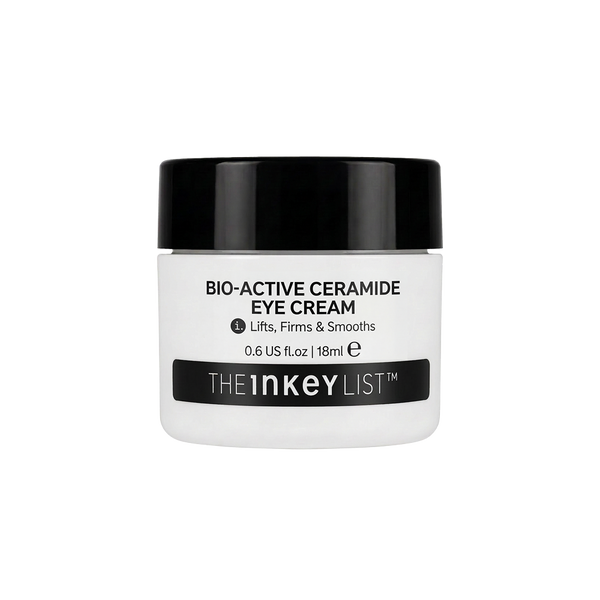
If you want to skip ahead to the product side, our Bio-Active Ceramide Eye Cream is the formula we developed specifically for this area, and you can browse the wider range of eye treatments if you have more than one concern. But we would rather you understood the why first. Knowing what crows feet actually are makes it far easier to spot which products are worth your money and which are just good marketing.
What Are Crow’s Feet? The Lines at Your Outer Eye
Crow’s feet are the fine lines that radiate outward from the outer corner of the eye, spreading toward the temple in a fan or a splay. You may have heard them called laughter lines or character lines, which is a kinder framing and, frankly, a more accurate one. In clinical settings they are known as lateral canthal rhytids, where “lateral canthus” simply means the outer corner where your upper and lower lids meet, and “rhytid” is the medical word for a wrinkle. Same lines, three different names, depending on who is doing the describing.
So why here, and why so early? Two reasons, and they compound each other.
The first is structural. The skin around the eye is the thinnest on the face. It has fewer oil glands than the skin on your cheeks or forehead, which means it holds onto moisture less effectively and its barrier is more easily disrupted. Thinner skin also has less structural scaffolding underneath it, so it shows change sooner than thicker, more resilient areas. When people say the eye area is delicate, this is what they mean in practical terms.
The second reason is movement. Circling each eye is a ring of muscle called the orbicularis oculi. Its job is to close the eye, and it does that job every time you blink, smile, laugh, squint, wince or concentrate hard at a screen. Each contraction pulls the surrounding skin inward and folds it. When you are young, that fold releases and the skin springs straight back, because collagen and elastin are plentiful and doing their jobs efficiently. The line disappears the moment your expression does.
Dynamic versus static lines, in plain English
This distinction is the single most useful concept in this entire article, because it determines what you can realistically expect from any product you buy.
- Dynamic lines appear only when you make an expression. Smile, and they fan out. Relax your face, and they vanish completely. These are pure muscle movement folding pliable skin.
- Static lines stay visible when your face is at rest. You are not smiling, you are not squinting, and the line is still there in the mirror. These are lines that have become etched into the skin’s structure.
The progression from one to the other happens gradually, over years, and it is not caused by any single event. Repeated folding creates a crease pattern. At the same time, collagen and elastin production slows with age, so the skin recovers from each fold a little less completely than it did the year before. Eventually the fold stops fully releasing. The dynamic line becomes a static line.
Here is where we need to be straightforward with you. Dynamic lines respond noticeably better to skincare than static ones. If your crow’s feet only show up when you smile, a well-formulated routine with the right actives has a genuine and visible job to do, because you are working with skin that still has good recoil and mostly needs hydration, barrier support and firmness support. If your lines are visible at rest, topical skincare can still improve how they look, softening them, hydrating the skin around them and reducing the shadow they cast. It will not erase them. We would rather set that expectation in the first section than let you discover it at week eight.
Neither type is a problem to be fixed, incidentally. They are a record of a face that has been used. But if you want to soften how they look, it helps enormously to know which type you are actually working with.
Now that the terminology is clear, let us look at the four forces that create these lines in the first place.
What Causes Crow’s Feet? The Four Main Drivers
Crow’s feet are not caused by one thing. They are the result of four factors working together over a long period, and understanding which of them you can influence is what separates a useful routine from an expensive one. Only one of these four is substantially within your control, which is worth knowing before you spend anything.
Repeated muscle movement and everyday expression
Every smile contracts the orbicularis oculi. So does every laugh, every squint into the sun, every scrunch of concentration at a laptop screen, and every blink. Estimates for how often the average person blinks vary, but it is somewhere in the range of tens of thousands of times per day. Add deliberate expressions on top of that, and the skin at your outer eye corner is being folded and released a genuinely enormous number of times across a lifetime.
This is the mechanism behind the common search “wrinkles around eyes when smiling,” and the question underneath it is usually some version of “is this normal?”
Yes. Completely. This is normal facial function, not damage, not neglect, and not a sign you have done your skincare wrong. A face that moves is a face that creases. The people who develop crow’s feet earliest are frequently the most expressive, which is a slightly unfair trade but a real one. Nothing in this article is intended to suggest you should smile less, and any advice that heads in that direction is bad advice.
What matters is that the folding is repetitive and always happens in the same place. Fold a sheet of paper once and it recovers. Fold it in the same spot a thousand times and the crease stays. Skin is far more resilient than paper, and it actively repairs itself, but the principle of repeated stress in a fixed location is the same.
UV exposure and photoaging
If muscle movement sets the pattern, ultraviolet light is what makes the pattern permanent faster. This is the largest modifiable factor in the entire list, which is why it gets the most attention here and an entire subsection later on.
UV radiation triggers the production of enzymes called matrix metalloproteinases, or MMPs. These enzymes break down collagen in the dermis. The relationship between ultraviolet light and premature skin aging is one of the more thoroughly documented mechanisms in dermatology: repeated UV exposure drives MMP activity, MMP activity degrades the collagen network, and degraded collagen means skin that recovers less well from every fold.
Over years, this accumulated damage to the skin’s elastic tissue produces what dermatologists call solar elastosis. In plain terms, the elastic fibers that should snap skin back into place become disorganized and clumped, and the skin takes on a thickened, less resilient, leathery quality. It is a slow, silent process, and it is happening on cloudy days too.
The eye area gets a compounding penalty. Bright light makes you squint, and squinting is an intense contraction of exactly the muscle that creates crow’s feet. So on a sunny day you are getting more UV exposure and more muscle contraction in precisely the same spot at precisely the same time. This is why sun protection is a wrinkle strategy, not just a skin cancer strategy.
Collagen and elastin decline
Collagen provides structure and firmness. Elastin provides recoil, the ability to return to shape. Both decline steadily with age, and both are further degraded by UV exposure, which is why the two causes above are not really independent of each other.
The practical consequence is straightforward. Skin with abundant, well-organized collagen and elastin bounces back from a fold almost instantly. Skin with less of both bounces back more slowly and less completely. The fold lingers a fraction longer each year. Multiply that across decades and you get the transition from dynamic to static that we described in the previous section.
The science behind facial aging also describes changes below the skin, including redistribution of facial fat and changes in the underlying bone structure, which alter how the whole eye region is supported. Skincare works on the skin. It does not change bone or deep fat pads, and it is worth being clear-eyed about that boundary. If you want to go deeper on the structural side, we have written a full explainer on collagen and your skin.
Genetics, skin type and lifestyle
Genetics influence how thick your skin is, how strong its structural framework is, how much natural pigment it contains, and how early lines start to appear. If you have wondered whether crows feet are genetic, the answer is partly yes. Two people with identical routines and identical sun exposure can end up with visibly different results in their forties, and a meaningful share of that difference is inherited.
That is not a reason to give up, because the inherited component sets your starting position rather than your destination. The modifiable factors still move the needle considerably.
A few of those, stated factually rather than as a lecture:
- Smoking is associated with accelerated skin aging, through both reduced blood flow to the skin and increased MMP activity. The repeated pursing and squinting associated with smoking adds a mechanical component too.
- Sleep position matters at the margins. Consistently sleeping with one side of your face compressed into a pillow creates mechanical creasing that is not driven by expression. Some people notice asymmetry between their two sides for exactly this reason.
- Hydration status affects how lines read on the surface. Dehydrated skin looks crepier and lines look deeper, which is a genuine effect but a reversible one, and quite different from structural change.
None of this is meant to be alarming. It is meant to be useful. You cannot choose your collagen genetics or undo twenty summers, but you can control your sun exposure from today onward, and that is the single highest-leverage thing on this list.
With the causes established, the next question most people have is whether any of this is normal, and when it is supposed to start.
Are Crow’s Feet Normal, and When Do They Start?
Yes, crow’s feet are normal. They are one of the earliest visible signs of aging on the entire face, and that is a consequence of geography and mechanics rather than anything you did or failed to do. The thinnest skin on your face sits directly on top of the most frequently contracted muscle on your face. Lines were always going to show up there first.
On timing, the honest answer involves a lot of variation, but there are patterns worth knowing.
Dynamic lines, the ones that appear only when you smile, commonly become noticeable from the mid to late twenties. Many people first spot them in a photo rather than a mirror, because you rarely watch yourself smile at full intensity. Static lines, the ones visible when your face is completely at rest, more commonly appear from the thirties onward.
Those ranges are averages, and the spread around them is wide. Someone with fair, thin skin who grew up spending summers outdoors without sun protection may see static lines in their late twenties. Someone with thicker, more pigmented skin who has been diligent about sun protection may not see them until their forties. Genetics and cumulative UV exposure explain most of the gap between those two people. If you are looking for guidance on timing your routine rather than your lines, we have a separate piece on when to start using anti-aging products.
Are crow’s feet reversible?
This deserves a direct answer rather than a hedge.
Dynamic lines respond well to a good routine, because the skin still has strong recoil and the main opportunities are hydration, barrier support and supporting the look of firmness. You can genuinely change how they look.
Static lines can be improved in appearance. Better-hydrated, better-supported skin reflects light more evenly, which reduces the shadow a line casts, and shadow is a large part of what makes a line visible in the first place. What topical skincare cannot do is erase an established static line, because that line reflects real structural change in the dermis. Softened, yes. Removed, no.
This is also why prevention is such a strong argument. Protecting the collagen you currently have is considerably easier and more effective than trying to improve the appearance of lines that have already set. If you are in your twenties and reading this because you spotted something in a photo, daily sun protection is worth more to you than any serum on the market.
Which line is which: crow’s feet, under-eye lines and dehydration lines
Three different things get confused constantly, so here is the quick separation:
- Crow’s feet sit at the outer corner and fan toward the temple. They are driven primarily by expression.
- Under-eye lines sit beneath the eye, on the lower lid and the area below it. They relate more to thin skin and structural change than to expression, and we cover them fully in our guide to under-eye wrinkles.
- Dehydration lines are shallow, appear relatively quickly and can improve within days once hydration is restored. Our guide to dehydration lines vs wrinkles walks through how to tell them apart.
This article stays on the outer corner from here. If your concern is really about shadowing or morning swelling rather than lines, dark circles and puffiness is a different problem with different solutions.
So that is what they are and why they happen. The more useful question is what actually works, and that means looking at the ingredient evidence honestly, including where it is thinner than the marketing suggests.
Which Ingredients Actually Help Soften Crow’s Feet
This is the section that matters most, so we are going to rank ingredients by the strength of published evidence rather than by how good they sound on a label. That means being open about where the evidence is genuinely strong, where it is supportive, and where it is weaker than the category’s popularity would imply.
Retinoids: the strongest published evidence
Retinoids are the most robustly evidenced topical category for improving the appearance of wrinkles. Decades of published research support their role in supporting skin renewal and the look of firmness over time. If you were allowed to use exactly one active for the appearance of lines and nothing else, this would be the evidence-led choice.
A few practical notes for the eye area specifically:
- Use a formula designed for the eye area or a gentle, low-strength serum applied carefully. The skin here is thinner and more reactive than the rest of the face.
- Start low and slow. Two nights a week, building up as tolerated, is a better strategy than nightly application that ends in irritation and abandonment.
- PM only. Retinoids are best used at night as part of an evening routine.
- Retinoids are not suitable during pregnancy or breastfeeding. If that applies to you, skip this category entirely and lead with peptides instead.
If you are new to the category, our pillar page on what is retinol covers the fundamentals without the hype.
What the evidence says: strongest published support of any topical category for the appearance of wrinkles, with the tradeoff being a higher chance of irritation and a hard exclusion during pregnancy and breastfeeding.
Peptides: supportive evidence, and notably well tolerated
Peptides are short chains of amino acids that act as signal molecules in the skin, supporting the look of firmness. They are considerably gentler than retinoids, can be used both morning and evening, and carry none of the pregnancy restrictions, which makes them the practical first choice for a lot of people.
The evidence here is meaningful and specific to this area. There is a 3-D imaging trial on periorbital wrinkles using a split-face design, meaning each participant’s own untreated side served as the comparison, with results measured by 3-D imaging rather than by subjective assessment alone. Periorbital means the area around the eye. That is not a general claim about peptides on the face, it is evidence in the exact region this article is about.
This matters for what comes next, because the Tetrapeptide Complex in our eye cream is a peptide system, and it is the component most relevant to the appearance of lines and firmness. For a broader look at the category, see what are peptides, and if you are weighing your options, peptides vs retinol compares them directly. We have also written about Matrixyl 3000, which is the peptide we use most often across the range.
What the evidence says: supportive published evidence including trial data specifically on the eye area, with excellent tolerability and no pregnancy restriction.
Ceramides: strong for barrier and hydration, weaker for wrinkle depth
Here is where we are going to be more honest than most brands are willing to be about an ingredient they sell.
Ceramides have strong, well-established evidence for supporting the skin barrier and improving hydration. That is not in dispute. But a review of popular eye cream ingredients makes clear that the published evidence for ceramides reducing wrinkle depth is weaker than it is for retinoids and peptides. We are not going to pretend otherwise, and you should be skeptical of any brand that does.
So why do we still use them, and why do they still matter here?
Because barrier function and appearance are connected. A compromised barrier loses water more quickly. Skin that is losing water looks duller, crepier and more textured, and lines within that skin look deeper and cast more shadow. Restore the barrier and you improve water retention. Better-hydrated skin sits smoother and reflects light more evenly, which means the same line reads as softer and less shadowed.
That is a real, visible benefit, and it is an appearance benefit rather than a structural one. Around the eye it is arguably more valuable than elsewhere, because this is the area with the fewest oil glands and the most fragile barrier to begin with. Ceramides also make stronger actives more tolerable in this region, which has practical consequences for whether you stick with a routine.
You can read more in what are ceramides and, for the specific form we use, what is Ceramide NP.
What the evidence says: strong for barrier support and hydration, weaker for wrinkle depth. Valuable as a supporting act around the eye, not as the headline act.
Vitamin C
Vitamin C provides antioxidant support against daily environmental stress, including the free radical activity generated by UV exposure. It also has well-documented brightening benefits for overall tone.
That brightening effect matters more around the eye than people expect. Lines are visible partly because of the shadow they cast, and a brighter, more even eye area changes how those shadows read. This is an optical improvement rather than a structural one, but optical improvements are what you actually see in the mirror.
What the evidence says: good support as a daytime antioxidant, with a real secondary benefit from brightening that changes how lines appear.
Hydration: hyaluronic acid and glycerin
Humectants like hyaluronic acid and glycerin draw water into the upper layers of the skin, producing an immediate plumping effect that softens the look of fine lines. It is fast, it is noticeable, and it works.
The honest caveat: this is a temporary appearance benefit, not a structural change. Plumped skin has fewer visible fine lines because the surface is fuller and smoother, but the effect depends on maintaining hydration. Stop, and the lines return to their previous appearance. That does not make hydration pointless. It makes it a daily maintenance step rather than a treatment, and it is the fastest visible win available in this entire list.
What the evidence says: reliable and immediate for the appearance of fine lines, entirely dependent on consistency.
With the ingredient evidence set out, here is how we combined the two most relevant categories for this specific area.
Bio-Active Ceramide Eye Cream: Built for This Area
Our Bio-Active Ceramide Eye Cream pairs a Tetrapeptide Complex with Bio-Active Ceramide NP, and given everything in the previous section, the order of those two ingredients in your thinking should match the order of the evidence.
Lead with the peptide. The Tetrapeptide Complex, built around Tetrapeptide-111, is the component most relevant to the appearance of lines and firmness around the eye. That is consistent with the published evidence on peptides and periorbital wrinkles discussed above, and it is why this is a peptide product supported by ceramides rather than the other way around.
The Bio-Active Ceramide NP does the barrier and hydration work. As established, that is where ceramide evidence is strongest, and around the eye it is genuinely useful: better barrier function means better water retention, and better-hydrated skin reflects light more evenly so lines read as softer. If you want to understand what makes the bio-active form different, we cover it in Bio-Active Ceramides vs regular ceramides.
What the clinical testing showed
These are our verified claims, with their study conditions attached. We have kept the asterisks in place because the conditions are part of the claim, not fine print to be hidden.
- Up to 4x wrinkle reduction*
- 89% saw fine lines smoothed and blurred instantly*****
- Clinically proven to lift eyelids by 29% in 4 weeks**
- Proven to lift eyelids by 51% (in 12 weeks)***
- 94% agreed eye area looked visibly firmer and more sculpted**** (12 weeks)
One important point of accuracy, because this gets misrepresented constantly in the category. The 29% and 51% figures are measurements of eyelid lift. They describe firming and lifting of the eye area. They are not measurements of crow’s feet reduction, and we will not present them as such. If you see a brand converting a lift measurement into a wrinkle-reduction percentage, that is a red flag about everything else on the label.
\12-week independent clinical study of 30 people, Ceramide NP at 0.2% vs placebo. **Clinically tested on 32 participants over 28 days. ***32 participants over 12 weeks. ****32 participants over 12 weeks. *****Tested on 32 participants.*
Who it suits
The formulation decisions here were made with the eye area in mind:
- Fragrance-free, which removes a common source of irritation in a region where irritation is both more likely and more uncomfortable.
- Alcohol-free.
- Ophthalmologist approved and suitable for sensitive eyes.
- Free from retinol, which means it is suitable for people who cannot or do not want to use retinoids, including during pregnancy and breastfeeding.
That last point is worth dwelling on. The strongest-evidenced ingredient category is off the table for a significant number of people, whether because of pregnancy, breastfeeding, sensitivity or simple intolerance. A peptide-led formula with barrier support is a genuinely evidence-backed route for exactly those people, not a consolation prize.
In the USA, Bio-Active Ceramide Eye Cream is $16.00 for 18ml. That is the only price you will see in this article, and it is here to make a point rather than a pitch: clinically tested skincare formulated for a specific area should not require a luxury budget. Accessible and evidence-backed are not opposites.
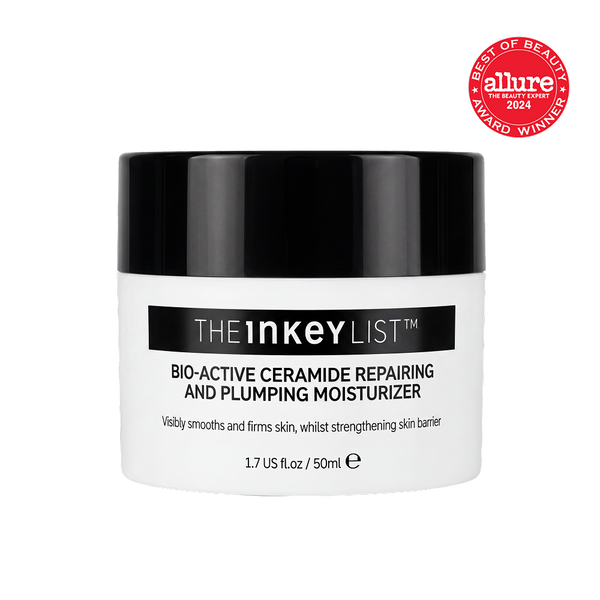
If you like the ingredient combination and want it across your whole face, the Bio-Active Ceramide Moisturizer applies the same barrier logic more broadly, and you can compare options across our moisturizers.
One clarification on our other eye product
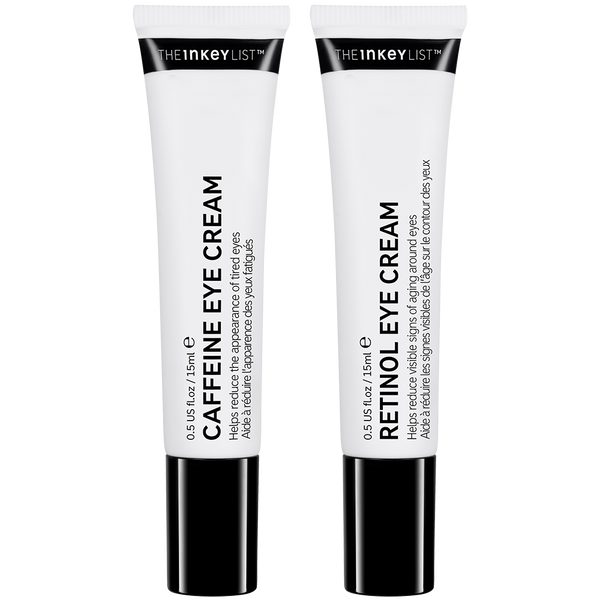
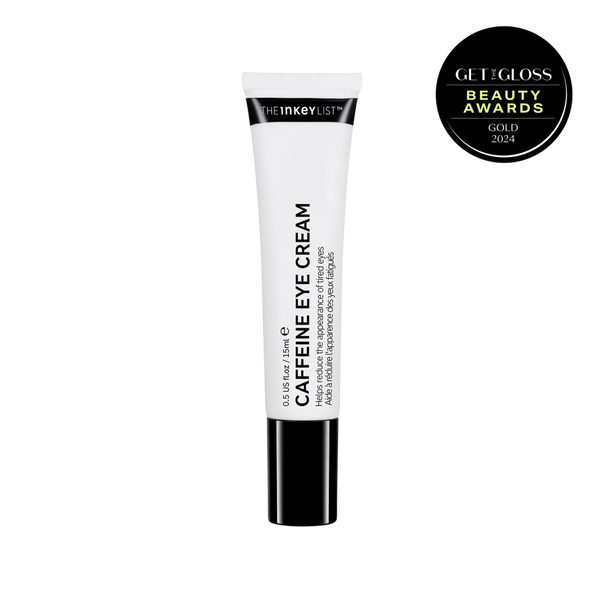
Our Caffeine Eye Cream does a different job. It is formulated for dark circles and puffiness, not for crow’s feet, and we would rather tell you that than let you buy the wrong thing. If you have both concerns, apply Caffeine Eye Cream first and follow with Bio-Active Ceramide Eye Cream on top.
Knowing which product to use is only half of it. The other half is where it sits in your routine, and how you apply it.
Your AM and PM Routine for Crow’s Feet
A good product applied inconsistently will lose to an average product applied every day. Here is a routine that is realistic enough to actually maintain.
The morning routine
- Cleanse gently. Nothing stripping. If your skin feels tight afterward, the cleanser is too harsh for this purpose.
- Apply a hydrating serum to damp skin. Humectants work better with water available to draw on, so a Hyaluronic Acid Serum applied to slightly damp skin outperforms the same serum on bone-dry skin. If brightening is also a goal, a 15% Vitamin C + EGF Serum is a reasonable morning addition.
- Apply eye cream. After your serum, before your moisturizer.
- Moisturize.
- Finish with a broad-spectrum SPF. Every day, including cloudy ones.
On application technique, which matters more here than anywhere else on the face:
- Use roughly a pea-sized amount for both eyes. More is not better and can migrate into the eye.
- Use your ring finger. It applies the least pressure of any finger, which is exactly what you want on the thinnest skin on your face.
- Pat, do not rub. Never drag or pull.
- Work along the orbital bone, moving from the inner corner outward toward the outer corner, which is precisely where crow’s feet form.
- Avoid the eyelid itself and stay well clear of the waterline.
We go into more detail in how to apply eye cream the right way, including the common mistakes that undermine an otherwise good routine.
On SPF: this is advice, not a product recommendation, because we do not sell an SPF product in the USA. Choose a broad-spectrum formula you genuinely like the feel of, because the one you enjoy wearing is the one you will actually wear. If you want to understand the labeling, what is SPF explains it properly.
The evening routine
- Cleanse, removing sunscreen, makeup and the day’s buildup thoroughly but without scrubbing.
- Treatment step, if you use one.
- Eye cream.
- Moisturizer.
If retinol is part of your evening, apply it first and follow with your eye cream. The ceramides help buffer the potential dryness that retinoids can cause around the delicate eye area, which in practice means you are more likely to tolerate the retinol and stick with it. Start with two nights a week. Our Starter Retinol Serum is formulated for exactly this kind of cautious beginning, and retinol for beginners covers how to build up without wrecking your barrier.
If you are pregnant or breastfeeding, skip the retinol entirely and let peptides do the work. Our guide to pregnancy-safe skincare covers the wider swaps.
For the full picture beyond the eye area, see our best anti-aging skincare routine and the complete skincare routine guide, or browse our anti-aging range.
How to soften crow’s feet without injectables
This is the question a lot of readers are quietly here for, so here is a straight answer.
Injectables and in-clinic treatments work by temporarily reducing muscle movement. If the muscle contracts less, the skin folds less, and dynamic lines soften accordingly. That is the mechanism, and it is a fundamentally different one from anything a cream can do.
Topical skincare does not reduce muscle movement, and it cannot claim to. We are not going to imply that a peptide complex competes with a mechanism it does not share. Any brand suggesting a cream is an alternative to an injectable is describing something that is not happening.
What consistent skincare genuinely does is support the condition of the skin itself: its hydration, its barrier function, and the appearance of its firmness. Since a visible line is a combination of an actual crease and the shadow it casts, improving the skin’s condition and light reflection changes how prominent that line looks. That is a real, observable result. It is just a different result.
So the realistic expectation for a skincare-only approach is softer-looking, better-hydrated skin around the eyes, with less shadowing and a smoother surface. Not erasure. If that sounds modest, consider that it is achievable, repeatable, affordable, and carries no downtime.
The most effective non-injectable strategy is unglamorous and consists of three things: rigorous daily sun protection, evidence-backed actives applied consistently, and patience. Which brings us to how long any of this actually takes.
How to Prevent Crow’s Feet and When to Expect Results
Prevention is where the highest-value advice lives, because protecting collagen is dramatically easier than trying to improve the look of lines once they have set.
Daily sun protection comes first
Daily broad-spectrum SPF is the single most effective preventive step available to you. Not a serum, not an eye cream, not a supplement. Sunscreen. This follows directly from the causes: UV is the biggest modifiable driver of collagen breakdown, and everything else in your routine is working against that current if you skip it.
The evidence is specific rather than general. Research on daily photoprotection and photoaging over roughly 52 weeks found improvement in crow’s feet specifically, alongside improvements in other measures of photoaging. That is a notable finding, because it suggests consistent daily protection is not purely defensive. Reducing the ongoing UV load appears to give skin room to improve. The broader literature on sunscreens and photoaging supports the same conclusion.
The operative word is daily. UVA passes through window glass and is present on overcast days, so seasonal or sunny-day-only application leaves most of the exposure unaddressed.
Sunglasses, framed honestly
Sunglasses help, and it is worth being precise about how.
UV400 or wraparound frames reduce UV exposure to the eye area and the surrounding skin, which is why WHO guidance on protecting against skin cancer recommends them. They also reduce squinting in bright light, and squinting is a hard contraction of the exact muscle that creates crow’s feet.
Both of those effects are logically connected to the causes we have described. But here is the honest limitation: there is no trial proving that sunglasses prevent wrinkle formation. The reasoning is sound and the recommendation is sensible, but the direct evidence does not exist, and we are not going to present a plausible inference as a proven result.
Supporting habits
Stated factually, without alarmism:
- Not smoking is associated with better long-term skin outcomes, for both vascular and enzymatic reasons.
- Sleep position can contribute mechanical creasing. Sleeping on your back removes that factor, though it is a hard habit to change and a minor one relative to sun exposure.
- Keeping skin well hydrated, internally and topically, maintains the surface conditions under which lines read as softer.
What to expect and when
Unrealistic timelines are the main reason people abandon routines that were working. Here is a realistic breakdown:
- Immediately to within days: hydration and light-diffusing effects. Skin looks plumper and lines look softer because the surface is smoother and more even. This is where our claim that 89% saw fine lines smoothed and blurred instantly***** sits, and it is an optical benefit, delivered fast.
- Roughly two to four weeks: improved barrier function and more consistently hydrated skin. Less tightness, less crepiness, better makeup wear if you wear it, and lines that look less pronounced on an average day rather than just on a good one.
- Eight to twelve weeks: the appearance of firmness and improvement in how lines look, from peptides or retinoids. This is the slow work, and it requires consistency across the full period. Our 12-week clinical results sit in this window for a reason.
\****Tested on 32 participants.*
Two caveats, repeated deliberately because they matter. Dynamic lines improve more visibly than static ones. And consistency matters far more than any single product, which means a modest routine you follow daily will beat an elaborate one you follow sporadically. For a broader view on timelines, see how long does skincare take to work.
That covers the strategy. Here are the questions that come up most often.
The Honest Bottom Line on Crow’s Feet
Crow’s feet are a normal result of expression, UV exposure and time. They show up at the outer corner of the eye because that is where the thinnest skin on your face sits directly over the most frequently used muscle on your face, and no routine changes that basic arrangement.
What genuinely helps is not complicated. Daily broad-spectrum sun protection does the most work, because UV is the largest modifiable driver of collagen breakdown. Evidence-backed actives come next, with retinoids and peptides leading on published evidence, supported by barrier repair and hydration that change how light falls across the skin. Then consistency, which quietly outperforms every individual product decision you will make.
And the honest note we started with, restated at the end. The goal is softer-looking, healthier, better-supported skin around your eyes. It is not the removal of every line, and it is certainly not the end of your expressions. A face that has laughed a lot is not a problem to be solved.
If you want a routine matched to your skin rather than a generic one, take our skin quiz and we will build it around your actual concerns. Or go straight to Bio-Active Ceramide Eye Cream, and explore our eye treatments if you have more than one thing on your list.
Because at The INKEY List, We Give A Care.