

Retinol vs Bakuchiol: Which Anti-Aging Ingredient Is Right for Your Skin?
A clear, science-backed comparison of bakuchiol and retinol - what each ingredient does, how they differ, and which one suits your skin.
Author
askINKEY skincare advisor
Published
13 December, 2025
Time to read
16 minutes
Retinol has been a cornerstone of evidence-based skincare for decades. Backed by more clinical research than almost any other topical ingredient, it remains one of the most effective tools available for reducing fine lines, improving skin texture, and addressing hyperpigmentation. Bakuchiol, on the other hand, has emerged as a compelling, plant-derived alternative - one that delivers comparable anti-aging results through an entirely different biological mechanism, with a significantly gentler profile. If you are trying to decide between bakuchiol vs retinol, or wondering whether you need to choose at all, this guide covers everything you need to make a confident, informed decision. We will define both ingredients, break down the clinical research, help you match the right option to your skin type and concerns, walk through how to build your routine, and point you toward the right INKEY products to get started.
Bakuchiol: The Plant-Derived Retinol Alternative Explained
Bakuchiol is not retinol. That distinction matters, and it is worth stating clearly from the outset, because the two are frequently conflated in skincare marketing. Bakuchiol is a meroterpene - a naturally occurring plant compound extracted from the seeds and leaves of Psoralea corylifolia, commonly known as the babchi plant. Native to India, the babchi plant has been used for centuries in both Ayurvedic and Traditional Chinese medicine, where it was prized for its anti-inflammatory and skin-healing properties. What modern science has since uncovered is that bakuchiol possesses a remarkably specific mechanism of action that produces results very similar to those of vitamin A derivatives - but through a completely different pathway.
Here is where the science gets important. Retinol and other retinoids work by binding to retinoic acid receptors (RARs) inside skin cells - essentially switching on genetic programs that accelerate cell turnover and boost collagen production. Bakuchiol does not do this. It does not bind to RARs at all. Instead, it activates the MAPK/ERK signaling pathway, upregulating the genes responsible for producing collagen types I, III, and IV. At the same time, it inhibits an enzyme called matrix metalloproteinase-12 (MMP-12), which is responsible for breaking down collagen and elastin in the skin. The net result - firmer skin, reduced fine lines, more even tone, and improved texture - mirrors what you would expect from retinol, even though the molecular route to get there is entirely different.
This functional similarity via a different mechanism is what makes bakuchiol so genuinely interesting from a dermatological standpoint. It is not simply a marketing alternative to retinol. It has a legitimate, measurable effect on the biology of skin aging.
One of the most practical advantages of bakuchiol’s different mechanism is its tolerability. Because it does not bind to retinoid receptors and does not significantly accelerate cell turnover in the same way retinol does, it does not carry the same risk of photosensitivity, barrier disruption, or the dryness and peeling that retinol beginners often experience. This means bakuchiol can be used both morning and evening without increasing your skin’s sensitivity to UV exposure - a meaningful flexibility that retinol simply does not offer.
Bakuchiol is also widely considered compatible with pregnancy and nursing. Unlike retinoids, which are not recommended during pregnancy due to concerns about reproductive toxicity, bakuchiol has no known connection to those risks - largely because of its fundamentally different mechanism. That said, dedicated clinical pregnancy safety data remains limited, so anyone who is pregnant or nursing should always consult their healthcare provider before adding any active ingredient to their routine. For more on this, read our detailed guide on is bakuchiol safe during pregnancy?
A question that comes up often is: “Is bakuchiol a retinol?” The short answer is no. Bakuchiol is a retinol alternative - an ingredient that produces similar visible skin improvements through a different biological route. They are not the same class of molecule, they do not share a mechanism, and they are not interchangeable at a chemical level. What they share is a functional outcome. Understanding this distinction helps set the right expectations and makes it easier to decide which one - or whether both - belongs in your routine. If you want to explore more options in this space, our blog on natural alternatives to retinol covers the broader landscape, and for those navigating hormonal skin changes, is bakuchiol good for menopausal skin? offers useful additional context.
With bakuchiol’s identity and mechanism clearly established, it is time to give retinol the same rigorous treatment - because understanding both ingredients in depth is the only real basis for making the right choice.
Retinol: Decades of Research, Real Results, and What to Expect
Retinol is a form of vitamin A. It belongs to the retinoid family, a group of vitamin A derivatives that range in strength from over-the-counter retinol to prescription-strength tretinoin (retinoic acid). Retinol is the most widely available and most well-studied member of this family in the consumer skincare market, and its track record is substantial. Decades of peer-reviewed clinical research have consistently demonstrated its ability to reduce fine lines and wrinkles, improve skin texture and tone, accelerate cell turnover, stimulate collagen production, and address hyperpigmentation. It is, by any objective measure, one of the most clinically validated topical anti-aging ingredients that exists.
When you apply retinol to your skin, it does not work in its original form. It undergoes a two-step conversion process: retinol is first converted to retinaldehyde, and then to retinoic acid - the active form that actually binds to retinoic acid receptors (RARs) in skin cells. Once bound, retinoic acid triggers a cascade of gene expression changes that speed up cellular turnover, stimulate the production of new collagen, and inhibit the enzymes that break collagen down. The result, over consistent use of 8 to 12 weeks, is measurably smoother, firmer, and more evenly toned skin.
Beyond its anti-aging credentials, retinol is also recognized as an effective tool for acne-prone skin. It helps regulate sebum production and prevents dead skin cells from clogging pores - making it a multi-tasking ingredient for anyone dealing with both breakouts and early signs of aging simultaneously.
Retinol is one of the most clinically studied anti-aging ingredients available. The key is finding the right formulation and starting smart.
The trade-off with retinol is well-documented and worth being honest about. During the initial adjustment period - sometimes referred to as the “retinol uglies” - some people experience temporary dryness, flaking, redness, and stinging as their skin acclimates to the increased rate of cell turnover. This is not a sign that retinol is damaging your skin. It is a sign that the ingredient is biologically active. The severity of this adjustment phase varies considerably from person to person, and it is largely manageable with the right approach: starting slowly, using a low concentration, and supporting the skin barrier with hydrating and barrier-repairing products alongside it.
Retinol also increases photosensitivity. This is why it is generally recommended for evening use only - applying it before bed allows it to work overnight while minimizing UV exposure risk. A broad-spectrum SPF applied every morning is essential when retinol is part of your routine. It is also worth noting that retinol is not appropriate during pregnancy, which is one of the key circumstances where bakuchiol becomes the clear preferred option.
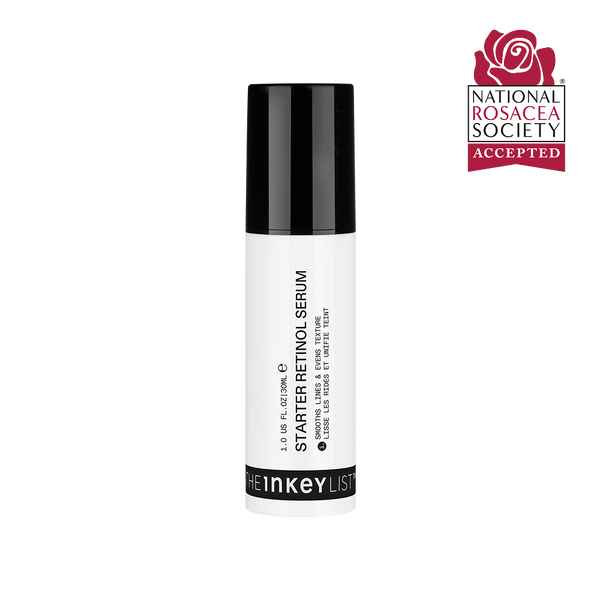
The formulation of retinol matters enormously. Not all retinol products are created equal, and the concentration, delivery system, and supporting ingredients have a significant impact on both tolerability and results. INKEY’s Retinol Serum is formulated with 1% Retinyl Acetate (a slow-release form of retinol) plus 0.5% Granactive Retinoid, supported by Squalane to soothe the skin and reduce the likelihood of irritation. This slow-release approach delivers meaningful results without the harsh adjustment period that higher-concentration or fast-release retinol products can cause. For anyone new to the ingredient, our guide to retinol for beginners is the ideal starting point - and if sensitivity is a concern, retinol and sensitive skin addresses exactly how to navigate that. For those curious about how retinol compares to stronger vitamin A derivatives, retinol vs retinal is worth a read.
Now that both ingredients have been clearly defined on their own terms, it is time to look at what the clinical research actually shows when they are placed side by side.
The Science: What Clinical Research Actually Shows
The bakuchiol vs retinol conversation does not need to be anecdotal. There is solid clinical evidence to anchor it, and one study in particular has become the foundational reference point for this comparison.
In 2019, Dhaliwal and colleagues published a prospective, randomized, double-blind clinical trial in the British Journal of Dermatology - one of the most respected peer-reviewed dermatology journals in the world. The study enrolled 44 participants and ran for 12 weeks. One group applied a 0.5% bakuchiol cream twice daily. The other applied a 0.5% retinol cream once daily. Both groups were assessed for changes in wrinkle surface area, pigmentation, elasticity, firmness, and overall photoaging.
The results were striking. Both groups showed significant, measurable reductions in wrinkle surface area and hyperpigmentation at the end of 12 weeks. Critically, there was no statistically significant difference in efficacy between the bakuchiol group and the retinol group. In other words, bakuchiol performed comparably to retinol in the areas that matter most to people seeking anti-aging results.
Where the two diverged was in tolerability. The retinol group reported significantly more facial skin scaling and stinging compared to the bakuchiol group. Bakuchiol users experienced meaningful anti-aging benefits with a considerably better side effect profile.
It is important to be transparent about the study’s limitations, because intellectual honesty is part of how we approach the evidence. A sample size of 44 participants is relatively small for a clinical trial. A single 12-week study, however well designed, does not represent the totality of scientific understanding on either ingredient. Retinol has a far longer and broader evidence base built over decades of research - including large-scale, long-term studies and extensive real-world use. Bakuchiol, by comparison, is newer to clinical scrutiny. As Harvard Health notes in its assessment of the ingredient, the early results are promising but more extensive research is still needed. That is a fair characterization - and one worth keeping in mind when weighing the two.
What the science does tell us clearly is this: bakuchiol delivers real, measurable results. It is not a placebo, not a trend ingredient, and not a compromise. It is a functionally effective anti-aging ingredient with a different mechanism, a gentler profile, and clinical evidence to support its use. And for many people, that combination of efficacy and tolerability is exactly what their skin needs.
Bakuchiol at a glance:
- Source: Plant-derived from the babchi plant (Psoralea corylifolia)
- Mechanism: MAPK/ERK signaling pathway, collagen gene upregulation, MMP-12 inhibition
- Efficacy (Dhaliwal 2019): Significant reduction in wrinkles and pigmentation over 12 weeks
- Tolerability: Well tolerated; significantly less scaling and stinging than retinol in the study
- Photosensitivity: No increased photosensitivity; suitable for AM and PM use
- Pregnancy compatibility: Generally considered compatible; always consult your healthcare provider
- Purging risk: Low - does not significantly accelerate cell turnover
- Can be combined with retinol: Yes
Retinol at a glance:
- Source: Vitamin A derivative
- Mechanism: Converts to retinoic acid, binds retinoic acid receptors (RARs)
- Efficacy (Dhaliwal 2019): Significant reduction in wrinkles and pigmentation over 12 weeks
- Tolerability: More scaling and stinging reported during adjustment period
- Photosensitivity: Yes - PM use recommended; SPF essential in AM
- Pregnancy compatibility: Not recommended
- Purging risk: Moderate - adjustment period is common, especially at higher concentrations
- Can be combined with bakuchiol: Yes
Understanding how these two ingredients compare on paper is useful. But the more useful question - the one that actually determines what goes on your face - is which one is right for your specific skin.
Choosing the Right Ingredient for Your Skin Type and Concerns
The bakuchiol vs retinol question is not one that has a single universal answer. It depends on your skin type, your tolerance for active ingredients, your life circumstances, and what you are trying to achieve. Here is a clear-eyed breakdown of when each ingredient makes the most sense.
If your skin is sensitive, dry, or reactive: Bakuchiol is likely the stronger starting point. Its lack of photosensitivity, absence of significant cell-turnover acceleration, and gentler overall profile make it far less likely to trigger the redness, flaking, or barrier disruption that sensitive skin types often experience with retinol. This does not mean retinol is off the table permanently - but starting with bakuchiol allows you to build confidence with anti-aging actives before progressing. For those with rosacea-prone skin in particular, the guide on using retinol with rosacea-prone skin is essential reading before making any decisions. Similarly, retinol and sensitive skin offers practical guidance on how to approach retinol if you do eventually choose to introduce it.
If you are pregnant or nursing: Bakuchiol is the recommended choice. Retinoids - including over-the-counter retinol - are not recommended during pregnancy. Bakuchiol does not bind to retinoid receptors and has no known reproductive toxicity, making it the sensible option for maintaining an active anti-aging routine during this period. Always confirm with your healthcare provider before introducing any active ingredient. More detail is available in our blog on is bakuchiol safe during pregnancy? and our broader guide to pregnancy-safe skincare.
If you are new to anti-aging actives: Either ingredient can work as a starting point, but bakuchiol’s gentler profile makes it a lower-risk introduction. It delivers meaningful results without the adjustment period that often discourages first-time retinol users from sticking with their routine. That said, if you are using a well-formulated, slow-release retinol like INKEY’s, beginning at a low frequency (two to three nights per week) is absolutely a viable approach for beginners. The key is consistency over intensity.
If your skin is resilient and already tolerating actives well: Retinol becomes a highly compelling choice. Its longer evidence base, proven results across a wider range of skin concerns, and multi-tasking ability - addressing fine lines, texture, tone, and acne in a single ingredient - make it an excellent cornerstone of a PM anti-aging routine. If you want a comprehensive comparison with other options in the anti-aging space, peptides vs retinol is worth reading alongside this guide.
If you are targeting early to moderate fine lines and uneven tone: Both ingredients perform comparably per the Dhaliwal 2019 data. This is the scenario where your preference for morning and evening use flexibility, sensitivity level, and pregnancy status become the deciding factors rather than efficacy. Bakuchiol’s ability to be used in the AM without photosensitivity concerns is a genuine lifestyle advantage here - especially for anyone building a morning active routine alongside ingredients like niacinamide or vitamin C.
If you are addressing deeper, more established wrinkles: Retinol may have an edge, not necessarily because the Dhaliwal study demonstrated a significant difference in this area, but because retinol’s broader and longer-running evidence base gives it more documented efficacy across a wider range of aging presentations. Individual results always vary, and neither ingredient is a guaranteed solution - but retinol’s decades of research behind it represent a meaningful depth of evidence. For hyperpigmentation specifically, both ingredients have demonstrated efficacy; our hyperpigmentation pillar page explores the full toolkit available.
For those who want to use both: This is not only possible but potentially advantageous. Bakuchiol has a documented stabilizing effect on retinol and may help reduce the irritation potential when the two are combined. Using them together - either layered in the same PM routine or alternated on different evenings - is an approach supported by the ingredient science. This dual-ingredient approach is addressed in detail in the FAQ section below.
A note on purging: a common concern when introducing any new anti-aging active is whether it will cause a breakout. Purging - the temporary surfacing of congestion caused by accelerated cell turnover - is specifically associated with ingredients that significantly increase skin cell turnover rate, such as retinol, AHAs, and BHAs. Because bakuchiol does not work through the same cell-turnover acceleration mechanism, it is unlikely to cause purging. Some individuals may experience mild initial adjustment when introducing any new product, but this is different from purging both in mechanism and duration.
Once you know which direction your skin is pointing, the next practical question is how to actually incorporate the ingredient into your daily routine.
Building Your Anti-Aging Routine With Bakuchiol or Retinol
An effective skincare routine is not just about choosing the right active ingredient - it is about how you use it, what you pair it with, and how consistently you maintain that approach over time. Results from either bakuchiol or retinol take 8 to 12 weeks of consistent use to become visible. The best routine is the one you can actually maintain.
If you are using bakuchiol:
Bakuchiol’s flexibility is one of its key advantages. Because it does not increase photosensitivity, it can be used both morning and evening without additional UV risk.
AM Routine:
- Gentle cleanser
- Hyaluronic Acid Serum (applied to damp skin for maximum hydration)
- Bakuchiol Serum (applied before moisturizer)
- Moisturizer
- A broad-spectrum SPF (essential regardless of which active you are using)
PM Routine:
- Gentle cleanser
- Hyaluronic Acid Serum
- Bakuchiol Serum
- Moisturizer
Apply bakuchiol to clean, slightly damp skin before your moisturizer. Start with once daily and build to twice daily based on how your skin responds. The ingredient is gentle enough that most skin types can tolerate twice-daily use without issue.
If you are using retinol:
Retinol is reserved for the PM routine due to its photosensitivity. A strong morning routine that includes hydration, barrier support, and SPF is essential to protect skin that is actively being renewed overnight.
AM Routine:
- Gentle cleanser
- Hyaluronic Acid Serum (applied to damp skin)
- Niacinamide Serum (optional - particularly useful for oily or combination skin)
- Moisturizer
- A broad-spectrum SPF
PM Routine:
- Gentle cleanser
- Hyaluronic Acid Serum (applied to damp skin)
- Retinol Serum
- Moisturizer
For beginners, start with retinol two to three nights per week and gradually build toward nightly use as your skin adapts. Use a pea-sized amount - less is genuinely more with retinol. Follow immediately with a moisturizer to support the barrier and reduce potential dryness. The moisture sandwich method - applying a hydrating serum before retinol and a moisturizer after - is an effective technique for minimizing the initial adjustment period. It is also important to be aware of what not to layer with retinol; our guide on what not to mix with retinol covers this in detail.
If you are combining bakuchiol and retinol:
PM Routine:
- Gentle cleanser
- Hyaluronic Acid Serum (applied to damp skin)
- Retinol Serum (applied first, closest to clean skin)
- Bakuchiol Serum (layered over retinol)
- Moisturizer
Alternatively, use retinol on some evenings and bakuchiol on others - alternating them reduces the total retinol load on your skin while maintaining consistent anti-aging support. Bakuchiol’s stabilizing effect on retinol makes it a genuinely synergistic pairing, not just a compromise.
General principles that apply regardless of which ingredient you choose:
- Introduce one new active at a time so you can identify how your skin responds.
- Always patch test a new product before full-face application.
- Consistent use over time is what drives results - frequency matters less than persistence.
- If your skin barrier becomes compromised during retinol use, step back in frequency and prioritize barrier repair. Our damaged skin barrier guide explains how to approach this. For background on the role of hydration in any active routine, the hyaluronic acid pillar page is a useful resource.
For a broader anti-aging routine framework, our best anti-aging skincare routine guide covers the full picture.
With your routine structure mapped out, here is a look at the specific INKEY products that support each approach.
INKEY Products to Support Your Anti-Aging Routine
The science is clear. The routine structure makes sense. Now the question is simply: what do you reach for? Here are the INKEY products that support a bakuchiol-informed or retinol-led anti-aging routine, with honest descriptions of what each one does and why it belongs in the lineup.
For retinol users:
Retinol Serum - $15
Formulated with 1% Retinyl Acetate (a slow-release form of retinol) and 0.5% Granactive Retinoid, supported by Squalane. This combination delivers effective anti-aging results while significantly reducing the irritation risk associated with conventional retinol formulations. The slow-release system means retinol is delivered to the skin gradually over time, rather than all at once - which is what makes this product particularly well-suited to beginners. PM use. Apply to clean skin before moisturizer.
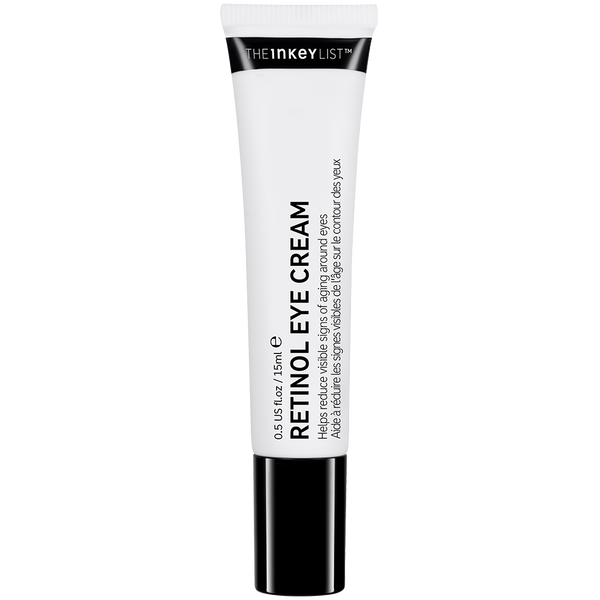
Retinol Eye Cream - $15
Formulated with 3% Vitalease - a slow-release retinol complex - alongside Glycerin and Shea Butter, this eye cream specifically targets fine lines and wrinkles around the delicate eye area, where the skin is thinner and more vulnerable to irritation. It is designed to deliver visible results without the sensitivity issues that standard retinol can cause in this area. PM use.
For sensitive skin and a bakuchiol-first approach:
Because INKEY does not currently offer a standalone bakuchiol serum, the most effective strategy for those who want bakuchiol-like gentleness with proven anti-aging results is to build a routine around INKEY’s supporting ingredients. These work together to firm, hydrate, and defend the skin barrier - delivering meaningful anti-aging benefits with a low irritation profile.
Supporting products for all skin types and routines:
Hyaluronic Acid Serum - $13 (30ml)
2% Pure Hyaluronic Acid at three molecular weights, delivering hydration at the surface, mid, and deeper layers of the skin. This is the essential hydration step before any active ingredient - whether retinol, niacinamide, or anything else. Apply to damp skin immediately after cleansing for maximum absorption. Understanding how this ingredient works at a deeper level is covered on our hyaluronic acid pillar page.
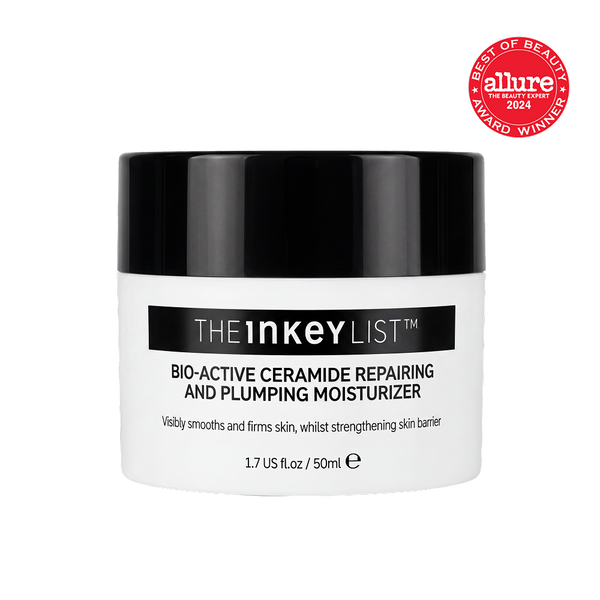
Bio-Active Ceramide Moisturizer - $22
Clinically proven to reduce six signs of aging in 28 days. Formulated with Bioactive Ceramide NP and 5% Gransil Blur, this moisturizer strengthens and repairs the skin barrier while visibly reducing the appearance of fine lines and wrinkles. It is an ideal choice for anyone experiencing dryness or barrier disruption - whether from retinol use or from environmental stressors. For more on how ceramides support skin health, visit the ceramides pillar page.
Peptide Moisturizer - $18
A lightweight, fast-absorbing moisturizer formulated with 2% Royal Epigen P5 and 1% Hydrating Peptide Solution. Suitable for all skin types, morning and evening. It layers cleanly over serums and under SPF in the AM, and sits comfortably as the final step after actives in the PM. A strong companion moisturizer for any retinol or anti-aging routine. Learn more about how peptides work on the peptides pillar page.
Niacinamide Serum - $10
10% Niacinamide with 1% Hyaluronic Acid. Particularly useful for oily or combination skin types in the AM routine, niacinamide helps regulate sebum, minimize the appearance of pores, and improve uneven skin tone. It pairs well alongside anti-aging actives without competing. For deeper reading, the niacinamide pillar page is the reference point.
For those interested in how vitamin C fits into a daytime anti-aging routine alongside any of these products, our vitamin C pillar page covers the brightening and antioxidant role it plays.
If you are curious how other advanced anti-aging ingredients compare - beyond the bakuchiol vs retinol conversation - our blog on PDRN vs retinol explores the next wave of ingredient innovation.
The Bottom Line: Clarity Over Complexity
Both bakuchiol and retinol are effective, evidence-backed anti-aging ingredients. That is not a hedge - it is the conclusion the clinical research supports. They work through different biological pathways, they have different tolerability profiles, and they suit different skin types and life circumstances. But on the core outcomes that most people are looking for - fewer visible fine lines, more even skin tone, firmer and smoother texture - both ingredients deliver.
Retinol is the right choice if your skin is resilient, you are building a PM-focused anti-aging routine, and you want the most extensively researched ingredient in the category. Start at a low frequency, use a well-formulated slow-release product, protect your skin barrier, and be consistent. Results will follow.
Bakuchiol is the smarter starting point if you have sensitive, dry, or reactive skin; if you are pregnant or nursing; if you are new to anti-aging actives; or if you want the flexibility to use an active ingredient both morning and evening without photosensitivity concerns. It is not a consolation prize for people who cannot tolerate retinol. It is a genuinely effective ingredient in its own right.
And if your skin tolerates retinol well, using bakuchiol alongside it is not a compromise - it is a strategic combination that the ingredient science supports.
The best anti-aging routine is not the most complicated one. It is the one built on ingredients that work, layered correctly, and used consistently. Clear guidance. Proven ingredients. Real results.
Ready to start?
- Shop the Retinol Serum - for a clinically effective, beginner-friendly entry into retinol.
- New to retinol? Read our complete guide to retinol for beginners before you begin.
- Still building your routine? Explore our best anti-aging skincare routine guide for the full picture.
- Want to go deeper on either ingredient? Visit the retinol and bakuchiol pillar pages for everything you need to know.
Frequently Asked Questions
Got a question?
Our askINKEY team are a friendly bunch of skincare experts with deep product knowledge and zero judgement. Whether you're an ingredient obsessive or just starting out, we'll make it make sense. No question too big. No question too small. We Give A Care, Every Day.


