



Azelaic Acid for Sensitive Skin: How to Build Tolerance Without the Sting
Sensitive or sensitized? How to tell the difference, add azelaic acid slowly and build tolerance without the sting.
Author
askINKEY skincare advisor
Published
18 September, 2026
Time to read
14 minutes
Azelaic acid for sensitive skin is one of the gentler entry points into active skincare, and how you introduce it matters considerably more than the percentage on the label. Reactive skin rarely runs into trouble with azelaic acid because the ingredient is too aggressive. It runs into trouble because the routine escalated too quickly.
This guide covers how to distinguish genuinely sensitive skin from temporarily sensitized skin, how to patch test before you start, a week-by-week introduction schedule, where the serum belongs in your routine, three ways to buffer it, how to tell normal adjustment from a real reason to stop, realistic timelines when you are applying it less frequently, and pregnancy.
What this guide covers:
- Identifying which kind of sensitive skin you have
- Why azelaic acid tends to suit reactive skin
- A slow, structured introduction schedule
- Buffering techniques and routine placement
- Reading your skin’s response and knowing when to stop
We are not re-explaining the ingredient from the ground up here. If you want the fundamentals, what azelaic acid is and how it works covers the science in depth. The starting point is figuring out which kind of sensitive skin you are actually dealing with, because that determines everything that follows.
Sensitive Skin or Sensitized Skin? Why the Difference Changes Your Whole Approach
People use these terms interchangeably, and they describe genuinely different situations. Sorting this out first is the difference between a routine that holds and one that falls apart in week two.
Genuinely sensitive skin is a long-term trait. It behaves consistently, and it has done so for years.
- It has reacted easily for as long as you can remember, not just lately
- It frequently runs in the family
- It flushes with heat, spice, alcohol, exercise and abrupt temperature shifts
- Fragrance has always been an issue, not a recent development
- The pattern is stable and predictable rather than sudden
Sensitized skin is a temporary state. Something you are doing, or something around you, has pushed your barrier past what it can currently handle.
- It showed up relatively suddenly, over weeks rather than years
- It usually follows over-exfoliating, stacking too many actives, or harsh cleansing
- Cold weather, indoor heating, hard water and over-washing all contribute
- It improves once the trigger is removed
- Products that were fine for months have started stinging
From the outside the symptoms look nearly identical, which is exactly why so many people put themselves in the wrong category. Tightness after cleansing. Stinging from products that never used to sting. Redness that lingers. Flaking, or a rough, slightly crepey feel. Makeup refusing to sit right. Serums that seem to sit on the surface instead of absorbing.
Here is why the distinction is practical rather than academic. If your skin is sensitized, introducing a new active right now is the wrong move. Give it a barrier-repair window of roughly two to four weeks first. Pare the routine back to a gentle cleanse, something supportive, and a moisturizer. Our Ectoin Hydro-Barrier Serum ($17) is designed for exactly this stretch, where the goal is settling things down rather than pushing forward. Once your skin stops reacting to products it previously tolerated, you are ready to start.
If your skin is genuinely sensitive, there is no reason to wait indefinitely. Waiting does not change a trait. What you need is a slow, structured introduction, which is the remainder of this article. Azelaic acid is generally well tolerated, and DermNet’s overview of azelaic acid reflects that broadly favorable profile as an independent dermatology reference.
Most people who assume they are permanently sensitive turn out to be sensitized. That is good news, because sensitized skin is reversible.
The practical difference: sensitized skin needs a repair period before you begin. Sensitive skin needs a slower start, not a delayed one.
With that settled, it is worth understanding why azelaic acid in particular tends to suit reactive skin.
Why Azelaic Acid Is Usually Well Tolerated by Reactive Skin
The word “acid” does a lot of unearned damage here. Azelaic acid is a dicarboxylic acid, which places it in a different category from the AHAs and BHAs most people picture when they hear the word.
That distinction matters because it does not work mainly by shedding the surface of your skin. Its primary activities are anti-inflammatory and tone-related, which is why it has built a reputation for calming rather than stripping. Our full guide to azelaic acid covers the mechanisms properly if you want the deeper science.
There is another reassuring fact that rarely gets airtime.
Azelaic acid is not associated with photosensitivity, which removes one of the most common barriers to using an active when your skin reacts easily.
That property makes it unusually easy to live with. You are not managing an ingredient that leaves your skin more vulnerable to daylight while you are already working on redness.
On tolerability, we would rather give you the accurate picture than a comfortable one. Published tolerability data on the ingredient reports transient stinging or burning in roughly 5 to 10% of users, typically settling within the first few weeks. A peer-reviewed review of azelaic acid’s mechanisms and clinical applications lays out the broader profile. That figure describes the ingredient generally, not our serum specifically.
This deserves precision. The majority of published azelaic acid research studies prescription-strength 15% and 20% formulas, in clinical populations, under medical supervision. That research tells you meaningful things about how the ingredient behaves. It does not tell you what any individual cosmetic product will do.
A 10% cosmetic concentration makes sense as an entry point for reactive skin for one simple reason: it leaves you room to build. Starting lower means the adjustment period, if you get one, tends to be milder and shorter. This is about a gradual on-ramp, not about one strength outperforming another.
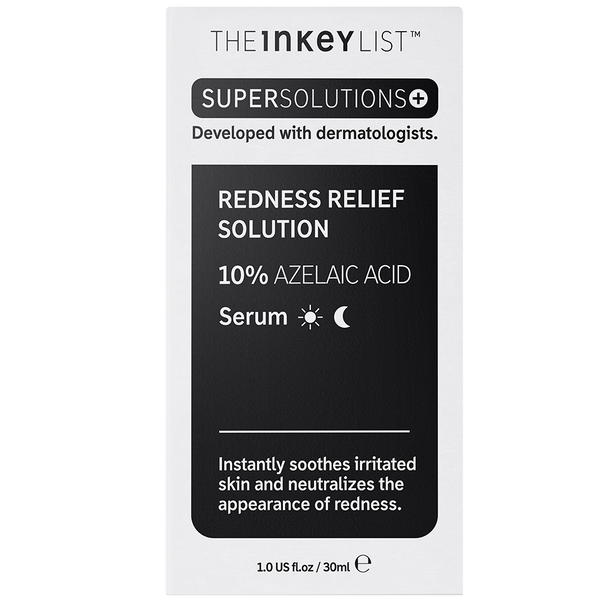
Our 10% Azelaic Acid Serum for Redness Relief ($20) is clinically proven to minimize redness in 4 days*, and it is suitable for sensitive and rosacea-prone skin. It is formulated with 0.3% allantoin to soothe, and it carries a light green tint from natural Gardenia extracts that visually neutralizes redness on contact.
Keep expectations anchored where the evidence sits: redness, uneven tone, texture and overall comfort. If visible redness is your central concern rather than the ingredient itself, the redness collection is a broader place to start.
Tolerability on paper is one thing. How you actually begin is another.
Patch Test First, Then Build Frequency Slowly
Before azelaic acid goes anywhere near your face, patch test it. For reactive skin this is not a formality, because irritation from actives is usually cumulative rather than immediate. Skin that felt completely fine after a single application can be tight and stinging by the fourth, which is why one overnight test tells you less than you would hope.
We are not going to compress the method into a few lines here, because we have a full guide to it. How to patch test skincare covers where to apply it, how long to wait, the repeated application method for reactive skin, and how to read what you are seeing. If your skin is sensitive, use the thorough version described there rather than the quick one. Come back once you are clear.
The azelaic-specific note worth adding: a brief tingle on application is common with this ingredient and is not in itself a reason to stop. What matters is whether it fades within a few minutes or persists.
Once the patch test is clear, build frequency in stages rather than jumping straight to daily use:
- Week 1: Two nights, non-consecutive. A pea-sized amount for the whole face, applied to dry skin after cleansing.
- Week 2: Three nights, non-consecutive, assuming week 1 was comfortable throughout.
- Week 3: Alternate nights.
- Week 4 onward: Build toward nightly only if your skin stays genuinely comfortable, and hold wherever it feels good.
That last clause carries the most weight, so let us be direct about it.
There is no prize for reaching daily use. Plenty of sensitive skin does best at three or four nights a week, indefinitely. That is a legitimate destination, not an unfinished journey. A routine you run comfortably for a year will deliver far more than one you abandon after two weeks because you pushed for nightly application too early.
Two application details matter more than people expect. Use a pea-sized amount for the entire face, not per zone. More product does not speed anything up, it just raises the chance of stinging and the likelihood of pilling under whatever goes on top.
Apply to dry skin rather than damp skin while you are building tolerance. Damp skin increases penetration, which sounds like an advantage and behaves like a liability while you are still locating your threshold. Once you are established and comfortable, this matters much less.
You have moved too quickly if any of the following apply. Your skin feels tight in the mornings, not just after application. Flaking is increasing week over week instead of settling. Other products in your routine that were previously unremarkable have started to sting. Redness is worse the day after use than on the day itself.
If that is what is happening, you do not need to reset to zero. Step back one level. If you were on alternate nights, return to two nights a week. Hold there for two full weeks rather than one, because that extra week is what lets the barrier genuinely catch up. Then rebuild from that point, one night at a time. Research on azelaic acid topical formulationsnotes that local irritation tends to peak early and then settle, which is precisely the pattern a slower build is designed to work with.
If you are not certain this ingredient belongs in your routine at all, take our skincare quiz and let it make the call for you.
With frequency handled, the next variables are placement and buffering.
Where Azelaic Acid Sits in Your Routine and How to Buffer It
The baseline rule is simple: after cleansing and hydrating, before moisturizer. For the complete answer on morning versus night and where it falls relative to everything else, when to use azelaic acid in your routine covers that question properly.
Buffering means deliberately reducing contact intensity so your skin can tolerate the active while it adapts. Three approaches, suited to different people:
- Moisturizer first, then azelaic acid on top. Apply your moisturizer, wait a minute or two, then apply the serum over it. The moisturizer slows delivery and softens application. This is the simplest option and the one most people should try first.
- Mix it into your moisturizer. Combine a pea-sized amount of serum with a similar amount of moisturizer in your palm, then apply them together. This dilutes contact evenly across the face. Useful if application itself is the uncomfortable part rather than the hours afterward.
- Short-contact application. Apply the serum, leave it on, then rinse it off. Begin at 10 minutes. If that is comfortable for a full week, extend to 20 minutes the next week, then 30. Once 30 minutes has felt fine for a week or two, try leaving it on overnight on a single night while keeping the rinse for your other nights. If that overnight application goes well, convert a second night, and continue from there. You can stop rinsing altogether once leaving it on produces nothing beyond a brief tingle that fades within a few minutes.
That third option is the one worth knowing about, because it is specific to leave-on actives like this one and it gives you a way in when the other two are still too much.
Be honest with yourself about the trade-off. Buffering can slightly slow how quickly you see change, because you are reducing exposure. That is a real cost. It is also almost always worth paying, because a routine you tolerate consistently will outperform an aggressive one you have to quit.
The steps surrounding the serum matter as much as the serum itself. Start with a cleanse that does not strip. Our Oat Cleansing Balm ($17) melts makeup and sunscreen without leaving skin tight, which is the quality that counts here. For drier reactive skin, our Milk Cleanser ($20, 240ml) is the gentler route.
Underneath the azelaic acid, a hydrating or barrier-supporting layer gives your skin something to work with. Our Hydro-Surge Dewy Face Mist ($14) is an easy way to add that step without adding weight. Over the top, a proper moisturizer closes the routine. Our Bio-Active Ceramide Moisturizer ($22) is clinically proven to repair and strengthen the skin barrier from first use, which is exactly what you want alongside a new active. If your skin runs combination or oilier, our Omega Water Cream ($15) is the lighter option that still holds moisture in.
Niacinamide pairs well with azelaic acid and supports the barrier while it works. Azelaic acid and niacinamide togethercovers the pairing in full.
On sunscreen: azelaic acid is not associated with photosensitivity, so daily SPF is not a corrective measure here. It is simply that any routine targeting redness and uneven tone performs better underneath daily protection, because sun exposure undoes tone progress faster than most actives can build it. Your usual daily sunscreen, applied every morning, is the step that protects the work you are putting in.
Routine set. What you need next is the ability to interpret what your skin does over the following weeks.
Normal Adjustment or a Genuine Stop Signal? Reading Your Skin’s Response
This is where most people either quit too early or push on far too long. Both errors come from the same gap: not knowing which signals mean “keep going” and which mean “stop”.
What is common, expected and not cause for concern:
- A mild tingle or warmth on application that fades within a few minutes
- Slight dryness during the first couple of weeks
- A little flaking, particularly around the nose and chin
- A brief stretch where skin feels marginally more reactive before it settles
- Symptoms that peak early and then steadily diminish week over week
What is not expected and means stop:
- Stinging that persists well beyond application, rather than fading within minutes
- Worsening redness that does not settle between uses
- Swelling, itching, or a rash
- Weeping, broken or raw-feeling skin
- Skin that feels progressively worse week over week rather than better
That final point is the most reliable single test available to you. Adjustment improves over time. Irritation deteriorates. If you are four weeks in and each week has been harder than the last, that is not your skin adapting.
If you have overdone it, stop the active completely, simplify to a gentle cleanser and moisturizer for one to two weeks, and reintroduce at a lower frequency with buffering from day one. Our guide on how to patch test skincare walks through barrier recovery and safe reintroduction in more detail.
Now the principle that underpins all of this, and the one most worth absorbing: discomfort is not evidence that something is working. Stinging is not a marker of efficacy. Flaking is not proof of renewal. This belief is everywhere, and it causes a great deal of avoidable damage, because it converts a warning signal into a reason to keep going. Your skin is not reporting progress when it hurts. It is reporting strain.
Purging is a separate question with a separate answer, and does azelaic acid cause purging handles it in full.
If a reaction is severe, or if it does not settle after you stop, see a doctor or a dermatologist. That is not boilerplate, it is the correct next step. And if you are simply unsure what you are looking at, ask our team. Describing it to someone who has seen it a thousand times is usually faster than another week of guessing.
Once you are confident your skin is responding normally, the question becomes how long to continue before judging results.
How Long Azelaic Acid Takes to Work on Sensitive Skin
The honest ingredient-level answer: visible improvement is commonly reported around the four-week mark, with fuller effect by eight to twelve weeks of consistent use. That reflects the general research on the ingredient, and it assumes regular, near-daily application.
Which brings us to the part that applies specifically to you. If you have settled at three nights a week rather than seven, you are getting roughly half the exposure that standard timeline assumes. Your results will take longer, and they should. Plan on the back end of that eight to twelve week window, or somewhat beyond it, before you reach any verdict. Extending your timeline by a few weeks is what it costs to have a routine your skin will actually tolerate, and it is a fair trade.
This is not a sign that it is failing. It is arithmetic.
Separately, and on its own terms: our serum is clinically proven to minimize redness in 4 days*. That is a product-specific claim from an independent clinical study, and it stands apart from the general ingredient research above.
Changes tend to arrive in a predictable sequence:
- Comfort first. Skin feels less reactive and less easily provoked. Usually the earliest shift, and easy to overlook because it is an absence rather than a presence.
- Visible redness next. Flushing calms and background redness softens.
- Tone and texture last. Evenness and smoothness take longest, and they are the changes that most reward patience.
Because the change is gradual, it is genuinely hard to perceive day to day. Take a photo once a week, in the same light, at the same time of day, with no makeup. Comparing week one against week eight will show you something the mirror cannot.
If you are ready to commit to a consistent stretch, our 10% Azelaic Acid Serum for Redness Relief is the product to build the routine around. For concerns beyond redness and tone, the acne and breakouts collection covers wider ground.
That leaves one question that stops a lot of people before they ever begin.
Azelaic Acid and Pregnancy
Azelaic acid is generally regarded as one of the preferred options during pregnancy, which is why it comes up so frequently when other actives are set aside.
The context is simple. Several common actives are typically avoided during pregnancy, which narrows the available options substantially. Azelaic acid is usually among those that remain. The American Academy of Dermatology’s guidance on treatment during pregnancy lays out the broader picture.
Our serum is listed as pregnancy and breastfeeding safe on its product page, alongside being fragrance-free and vegan certified.
If you are pregnant or breastfeeding, check with your doctor or midwife before starting any new active. That holds regardless of how an ingredient is generally regarded, because general guidance is not the same as advice about your pregnancy. This article is educational and is not medical advice.
The Takeaway: Start Slow, Stay Consistent
For sensitive skin, how you introduce azelaic acid matters more than how much of it you use. Nearly every bad experience with this ingredient traces back to pace rather than potency.
Four things worth holding onto:
- Identify which skin you have. Sensitized skin needs two to four weeks of repair before any new active. Genuinely sensitive skin needs a slower start, not a postponed one.
- Patch test properly before you begin, using the repeated application method if your skin is reactive.
- Build frequency in stages, and buffer with moisturizer or short contact if application is uncomfortable.
- Judge results at four to twelve weeks, longer if you are applying it a few nights a week, and take a weekly photo so you can actually see the difference.
Settling permanently at a lower frequency is not a compromise. It is a routine that fits your skin, which is the only kind that lasts. Azelaic acid for sensitive skin rewards patience far more reliably than it rewards ambition.
When you are ready, our 10% Azelaic Acid Serum for Redness Relief ($20) is suitable for sensitive and rosacea-prone skin and is clinically proven to minimize redness in 4 days*. If you would rather figure out your starting point first, take our skincare quiz for a personalized routine, or ask our team and describe what your skin is doing. No question too small.
*DISCLAIMER: Independent clinical study of 22 people.
Frequently Asked Questions
Got a question?
Our askINKEY team are a friendly bunch of skincare experts with deep product knowledge and zero judgement. Whether you're an ingredient obsessive or just starting out, we'll make it make sense. No question too big. No question too small. We Give A Care, Every Day.


