



Do Peptides Really Work? What the Evidence Shows
Yes, but not the way the marketing suggests. We review what independent research actually measured, and how long peptides really take to work.
Author
askINKEY skincare advisor
Published
04 September, 2026
Time to read
18 minutes
Peptides are one of the most heavily marketed ingredient categories in skincare, and the phrase “with peptides” on a label tells you almost nothing by itself. It does not tell you which peptide, how much of it, or whether the formula around it was built to do anything at all. So do peptides really work? This article answers that using published, third-party research rather than brand claims.
Here is what we cover: what the independent studies actually measured, why so many peptide products underdeliver, how long peptides realistically take to work, what peptides cannot do at any price, whether they are worth it for your skin type, and how to spot a product that earns its place. The short version is that the answer is yes with conditions, not a clean yes or no. Everything below explains those conditions.
Already know what you are looking for?
Shop our peptide collection if you are ready to browse, or read our complete guide to peptides if you want the full definitional explainer instead of this evidence review.
The Short Answer: Yes, But With Conditions
Yes, peptides work, but the effects measured in independent trials are real and modest rather than dramatic.What you get depends on which peptide, at what concentration, in what formulation, used consistently over weeks rather than days. That is the honest answer, and it holds whether you are reading a brand website or a peer-reviewed journal.
Four conditions decide whether a peptide product does anything for you, and the rest of this article works through each one:
- The specific peptide. Different peptides do different jobs and carry very different amounts of evidence.
- The concentration. A trace is not a dose.
- The formulation. The base a peptide sits in changes how it behaves on skin.
- Your expectations. Judging a twelve week ingredient at two weeks guarantees disappointment.
The most useful recent source here is a systematic review and meta-analysis of oral and topical peptides for skin aging, which pooled 19 randomized controlled trials across 1,341 adults. Its conclusion reads nothing like marketing copy. It found improvements that were statistically significant but modest, plus a frank acknowledgment of real gaps in the evidence.
The honest summary:
- Hydration is the strongest and most consistent finding across the pooled trials.
- Wrinkles improved by a statistically significant but small margin.
- Elasticity did not reach statistical significance at all.
So do peptides actually work? Yes, as a supporting, long-game ingredient that contributes steadily over months. Not as a hero that transforms skin in two weeks. Before those numbers make sense, here is a quick refresher on what a peptide is supposed to be doing.
What Peptides Actually Do In Skin (The Short Version)
Peptides are short chains of amino acids. In skin, they act as messengers, signaling cells to carry out processes they already know how to perform.
The jobs they are typically formulated to do:
- Signal support for collagen and elastin, encouraging the skin’s existing production rather than supplying anything directly.
- Reinforce the moisture barrier, which is where the most reliable peptides benefits show up.
- Carry trace minerals such as copper, which act as cofactors in skin repair.
- Soften the look of expression lines by influencing how skin behaves at the surface.
One distinction matters more than any other for this article: peptides do not add collagen to your skin. They signal. A topical peptide is a message, not a delivery of raw material. That single fact separates a realistic expectation from a disappointed one.
It is also why blanket verdicts fail. “Peptide” is a category, not an ingredient, the same way “vitamin” is a category. Saying peptides work, or that peptides are a scam, is about as informative as saying vitamins work.
INKEY Tip: The INCI list on the back tells you far more than the marketing name on the front. That is where the actual peptide is named.
For the full breakdown of peptide types, benefits, how to use them, ingredient pairings and side effects, read our complete guide to what peptides are. If you want the deep dive on our most used peptide, we have one on what Matrixyl 3000 is and how it works, and another on what EGF is in skincare.
Now the part that matters. Have independent researchers measured peptides actually doing any of this?
What The Independent Research Actually Shows
Start with the fact most articles on this subject skip. The systematic review and meta-analysis that pooled 19 randomized controlled trials across 1,341 participants included only 2 trials on topical peptides. The other 17 studied oral peptides, largely collagen supplements.
Only 2 of the 19 pooled trials looked at topical peptides. The topical evidence base is thinner than the marketing volume would suggest.
That is worth saying out loud, even though we sell topical peptides. The category talks with more confidence than its published topical evidence currently supports, and you deserve to know that before you decide what to buy.
What the pooled numbers found
Hydration: the most robust result. Pooled mean difference of 5.79, with a p-value below 0.01. This was the clearest and most statistically confident finding in the whole analysis. If you use a peptide product and your skin feels better hydrated and looks plumper, that is the effect with the strongest independent support behind it.
Wrinkles: significant, but small. Pooled mean difference of 0.27, p = 0.04. Researchers are confident the effect is real. They are not claiming it is dramatic.
Elasticity: no significant effect. Pooled mean difference of 0.09, p = 0.15. In plain terms, the analysis could not separate the result from chance. We would rather tell you that than quietly skip it.
Brightness and roughness improved too. Brightness at 2.40 with p below 0.01. Roughness at -8.47, sitting right on the edge of significance at p = 0.05.
What “statistically significant” actually means
It means researchers are confident the effect is real rather than a fluke of the sample. It says nothing about size. A result can be statistically significant and still be too subtle to notice in the mirror. Those are two separate questions, and marketing copy blurs them constantly.
The caveats attached to those numbers
Two things temper the pooled findings. The first is heterogeneity, the statistical term for the studies varying enormously. Different peptides, different doses, different delivery routes, different measurement tools. Heterogeneity across these trials was extremely high, which is exactly why a pooled average should be read as a rough signal rather than a verdict on any single ingredient.
The second is the oral and topical imbalance. The review’s authors were candid that the wrinkle benefit was largely driven by the oral studies, while topical formulations showed a weaker effect within this particular analysis. With 17 of 19 trials being oral, the pooled figures are substantially a picture of supplements, not serums.
Where the topical evidence actually lives
That is the case for reading the meta-analysis carefully rather than as a verdict on face creams. Individual, well-studied topical peptides have their own supporting trials.
- A controlled study by Robinson and colleagues found topical palmitoyl pentapeptide improved photoaged facial skin against vehicle control.
- KTTKS, the peptide fragment behind Matrixyl, has a body of review literature examining its topical use.
- The bioactive tetrapeptide GEKG has been shown to support extracellular matrix formation, a direct measurement of peptide activity on skin structure.
- Copper tripeptide penetration has been measured directly, layer by layer through human skin.
So the fair conclusion has two parts. The category average is modest and the pooled topical evidence is thin. But the best-studied individual peptides have considerably better evidence than the category average suggests, including on peptides for wrinkles specifically.
Which loops back to the four conditions. The specific peptide matters far more than the word “peptides” on a box.If the research is reasonably positive on balance, the obvious question is why so many people try a peptide product and feel nothing happened.
Why Some Peptide Products Disappoint
Most of the time, “peptides did not work for me” really means “that product was not built to work.” Five things explain almost all of it.
1. Vague labeling. “With peptides” is not a claim about quantity, type or activity. A formula can contain a trace of one peptide and print that phrase in large type on the front. There is no threshold to clear. The fix is the ingredient list, which exists as a legal requirement precisely so ingredients can be identified. Learning to read it is the single most useful consumer skill in skincare.
2. Concentration. A named peptide complex at a stated percentage is a fundamentally different proposition from an unnamed peptide at an undisclosed trace level. Both are legally “with peptides.” Only one gives you something to evaluate.
3. Formulation and delivery. The same peptide in two different bases will not perform identically. Supporting ingredients, pH and the vehicle all shape whether a peptide stays stable and where it ends up. This is the least visible variable and one of the most important.
4. Molecular size and penetration. This one deserves accuracy rather than slogans. The 500 Dalton rule, proposed by Bos and Meinardi in 2000, holds that molecules above roughly 500 Daltons struggle to cross the stratum corneum. Online, it gets quoted as proof peptides cannot work.
That is a misreading. It is a heuristic, not a hard cutoff. Lipophilicity, charge, molecular shape and formulation all shift the picture. More to the point, it describes a formulation challenge, and formulators design around it deliberately.
This is exactly why many cosmetic peptides are palmitoylated, meaning a fatty acid chain is attached to the peptide. That modification exists to improve how the molecule moves into skin. Permeation studies have detected palmitoylated peptides in the stratum corneum, epidermis and dermis where the unmodified peptide was not detected. The review literature on topically applied GHK is candid about both the difficulties and the strategies used to solve them, and the layer-by-layer measurement of copper tripeptide shows penetration is partial and graded rather than a simple yes or no. The meta-analysis authors make the same point, noting topical peptide penetration may be enhanced by lipid conjugation.
The sensible conclusion: penetration is a design problem, and clinical outcomes are measured on real skin regardless of which theoretical model you prefer.
5. Expectation mismatch. Plenty of people assess a peptide product at two weeks against an outcome the trials measured at eight to twelve. That is a measurement error, not a product failure.
How to read a peptide label in 10 seconds
One. Is the peptide actually named, or just described as “peptides”?
Two. Is a percentage stated anywhere?
Three. Where does it sit in the ingredient list, near the top or trailing behind the fragrance?
Since so much disappointment comes from judging results too early, the next question is what a realistic timeline looks like.
How Long For Peptides To Work For Skin?
Most people notice improvements in hydration and surface smoothness within one to two weeks. Changes to fine lines and firmness typically need eight to twelve weeks of consistent daily use. Those are two different outcomes on two different clocks, and confusing them is the number one reason people quit early. So how long do peptides take to work? It depends entirely on which result you are waiting for.
Week 0 to 2: hydration and surface feel. Skin looks smoother and plumper because it is holding more water. This is genuine, and it is the outcome with the strongest evidence behind it. It is also a hydration effect rather than a structural one, so read it as a good early sign rather than proof that something deeper has shifted.
Week 2 to 4: texture and tone. Skin starts to look more even. Nothing dramatic happens, which makes this the most common point of premature abandonment. People decide the product failed at exactly the moment it has not yet had time to do the slow work.
Week 4 to 8: firmness and fine lines begin to register. Many published trials take their primary measurements around this window. If you are going to see a change in lines, this is usually the earliest it becomes visible.
Week 8 to 12: the meaningful structural window. Most peptide randomized controlled trials run between four and twelve weeks, so this is genuinely the horizon the science has been measured over.
Most peptide trials run between four and twelve weeks. Judging a product at two weeks means judging it before the study would have.
Why the timeline works this way. Skin renewal and collagen turnover are slow biological processes, and a signaling ingredient can only work at the pace the underlying biology allows. A peptide is a message asking your skin to do something it already does. You are waiting on your own cells, not on the product.
Two practical notes. First, consistency beats intensity. Using a peptide product daily for twelve weeks will outperform using a stronger one sporadically, every single time. Second, different outcomes move at different speeds: hydration is fast, tone is medium, firmness is slow.
One honest interpretation point. That quick early improvement is often dehydration lines softening rather than wrinkles changing. They look similar and behave completely differently, and our guide to dehydration lines versus wrinklesexplains how to tell them apart. Knowing which one you are looking at tells you a lot about what your product is really doing.
Setting a realistic timeline raises the obvious follow-up: what will peptides never deliver, no matter how patient you are?
What Peptides Cannot Do
Knowing the ceiling is what makes an ingredient useful. Five limits worth being clear about.
Peptides will not replicate injectables. Topical peptides do not do what an in-office procedure does. On the question of whether peptides tighten skin, the honest answer is that they can improve the appearance of firmness gradually over weeks, but they do not tighten skin the way a clinical treatment does. If you are asking what the best peptide for skin tightening is, the more useful reframe is which peptide has evidence for supporting firmness over time, because anyone promising a lifting result comparable to a procedure is overselling.
Peptides will not replace retinoids. They work through different mechanisms and are complements, not substitutes. There is a randomized controlled trial comparing a niacinamide and peptide regimen against 0.02% tretinoin that gets cited as evidence peptides match retinoids. The caveat matters: the comparison was against a low 0.02% concentration. The fair read is “competitive with a low-strength prescription retinoid on some measures,” not “as good as retinoids.” We have covered peptides versus retinol properly elsewhere.
Topical peptides are not oral collagen supplements. Worth stating plainly, because as covered above, the meta-analysis was dominated by oral studies. Different route, different mechanism, different evidence base. Do not transfer findings from a collagen drink onto a face serum. Our guide to collagen for skin covers that distinction in full.
Peptides will not deliver an overnight fix. Anything that changes your skin in 24 hours is a hydration or optical effect. That is not a criticism, optical effects are pleasant and real, but they are not collagen support. Some formulas deliberately include instant tightening or light-diffusing agents alongside peptides. When they do, the instant result comes from those agents, not from the peptide.
Peptides will not outperform sun protection. Daily sun protection remains the highest-impact anti-aging habit available, and no peptide changes that ranking. Wearing sunscreen every day does more for how your skin ages than any active you can layer on top of it.
Knowing what an ingredient cannot do is what makes it genuinely useful. Expectations set correctly turn a modest effect into a satisfying one.
With the limits clear, you can fairly assess whether peptides are worth it for your own skin.
Are Peptides Worth It For Your Skin Type?
Sensitive skin. Peptides are among the better tolerated actives, because they are not exfoliating or resurfacing and they do not thin the barrier. Sensitivity usually traces back to the rest of the formula rather than the peptide. Patch test anyway.
Dry skin. A strong fit. Hydration is the most robustly evidenced outcome in the published research, so this is the use case best supported by independent data. Barrier-supporting peptides are especially relevant here.
Oily and combination skin. Peptides are not inherently rich or occlusive, so there is no reason to skip them. Texture and format matter far more than the peptide itself. Pick a lighter serum or gel base and the ingredient behaves exactly the same.
Younger skin. Are peptides bad for young skin? No, they are not harmful. But honestly, a young person with no firmness concerns will get considerably more from daily sunscreen and a solid basic routine than from a peptide product. We would rather say that than sell you something you do not need yet. Our guide on when to start using anti-aging products has the fuller answer.
Mature skin. The clearest use case, since the processes peptides support are exactly the ones that slow with age. Keep expectations tied to the modest effect sizes established earlier and you will be well served.
Irritation-prone skin. Are peptides irritating to skin? Generally the risk is low. No purging phase, no photosensitivity, which makes them easier to introduce than most actives. Patch test regardless.
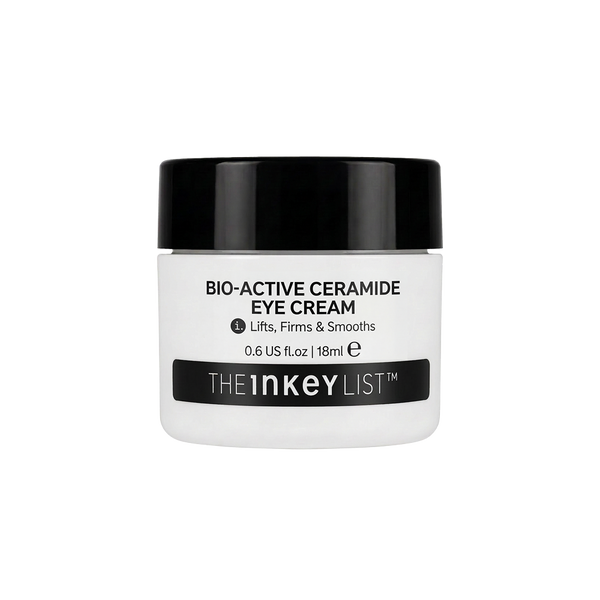
The eye area. The skin around the eyes is thinner and shows expression lines earlier, which is why peptide products are often formulated specifically for it rather than being a face formula in a smaller jar. That is a formulation decision, not a marketing one, and it is the thinking behind our Bio-Active Ceramide Eye Cream ($16). For application detail, how to apply eye cream the right way covers it.
Two quick notes. Peptides are generally considered suitable during pregnancy, and our guide to pregnancy-safe skincare has the detail. And if you are wondering about layering them with ceramides, ceramides vs peptides: do you need both answers that directly.
So, are peptides good for skin, and are peptides worth it? Worth it as a consistent, long-term supporting step. Not worth it as a quick fix, and not worth it as a replacement for the fundamentals. If you are unsure which of the above applies to you, what’s your skin type is a sensible starting point.
Not sure where to begin? Our skincare quiz builds a personalized routine around your skin, your concerns and what you already use.
If peptides are worth it for you, the last question is how to tell a product that will deliver from one that will not.
How To Choose A Peptide Product That Delivers
The due diligence checklist
Five questions that separate a formulated product from a marketing exercise:
- Is the peptide or peptide complex named? Not “peptides.” A name.
- Is a percentage stated? If not, you cannot evaluate the dose.
- Do the supporting ingredients make sense? Humectants and barrier support alongside a peptide suggest the formula was designed as a whole.
- Does the brand say what the peptide is for, specifically? A generalized anti-aging claim is not a specification.
- Are claims tied to a stated study, with a duration and participant number? “Clinically proven” without those two details is a phrase, not evidence.
That checklist is useful whether or not you ever buy from us. Here is how our own range answers it.
Our peptide products
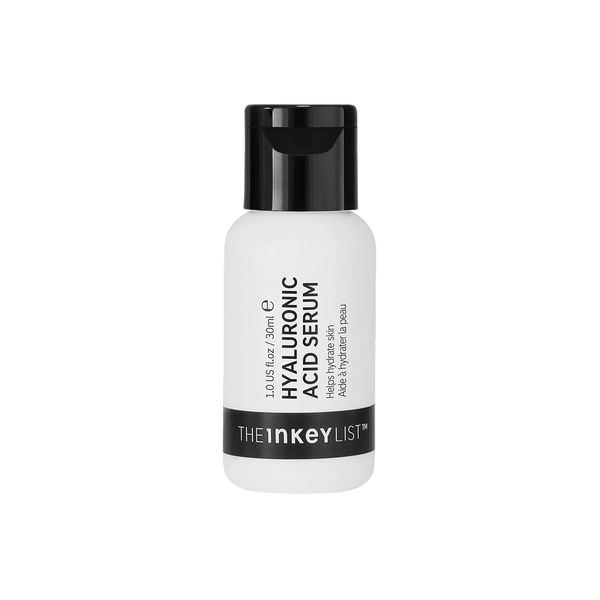
Hyaluronic Acid Serum ($13). Contains Matrixyl 3000, a signal peptide complex of Palmitoyl Tripeptide-1 and Palmitoyl Tetrapeptide-7, alongside hyaluronic acid.
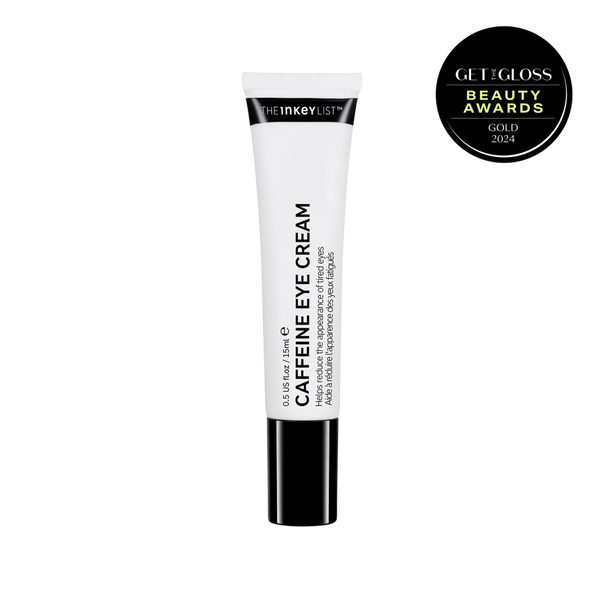
Caffeine Eye Cream ($14). Matrixyl 3000 in a formula built for the thinner skin around the eyes, targeting the look of dark circles and puffiness.
Bio-Active Ceramide Eye Cream ($16). A 4% Tetrapeptide Complex (Tetrapeptide-111) with 0.2% Bio-Active Ceramide NP and 0.5% Liftilience, targeting the appearance of fine lines and firmness around the eye contour. Clinically proven to lift eyelids by 29% in 4 weeks and to improve skin firmness and elasticity, with 89% seeing fine lines smoothed and blurred instantly*. The instant lifting effect comes from Liftilience rather than the peptide, which is a neat illustration of the earlier point about optical versus structural change. This product is also the clearest example of this article’s central argument, because it uses a completely different peptide from the Matrixyl 3000 in our other formulas, chosen for a different job.
A note on our two eye products: they are not interchangeable and you do not need both. Choose the Caffeine Eye Cream for dark circles and puffiness. Choose the Bio-Active Ceramide Eye Cream for fine lines and firmness around the eye contour.
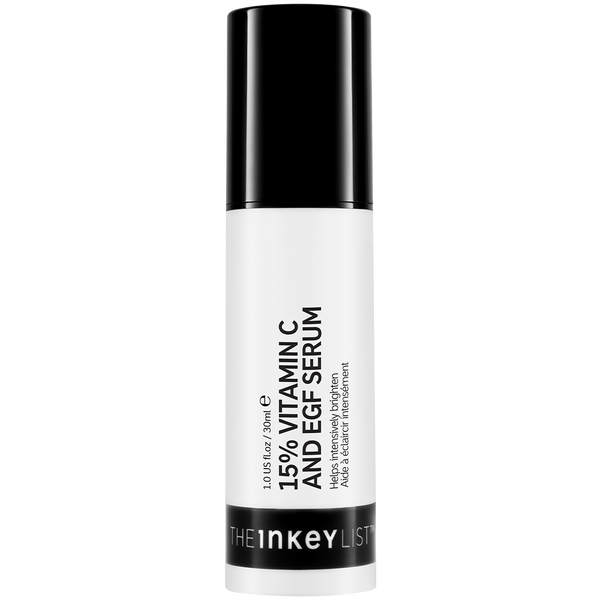
15% Vitamin C + EGF Serum ($20). 1% Epitensive EGF, a plant-derived peptide, paired with a stable form of vitamin C.
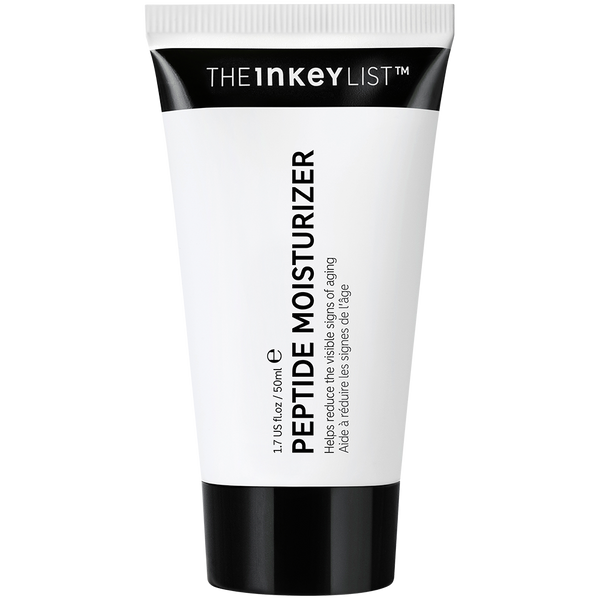
Peptide Moisturizer ($18). 2% Royal Epigen P5 and 1% Diffuporine (Acetyl Hexapeptide-37).
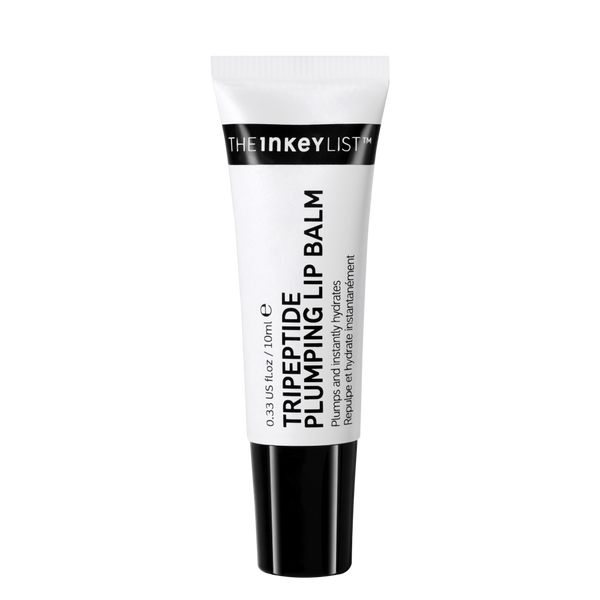
Tripeptide Plumping Lip Balm ($14). 6% Tripeptide Complex, clinically proven to plump lips by up to 40% in 4 weeks. This is our single strongest peptide claim in the range. If that is your concern, how to plump your lips without fillers is worth a read.
Exosome Hydro-Glow Complex ($24). Contains 1% Kollaren, a smart peptide, and helps support natural collagen production. Clinic worthy rejuvenated skin in 14 days*.
Bio-Active Ceramide Moisturizer ($22). Worth knowing about for barrier support alongside peptide use.
Footnotes: Clinically tested on 32 participants over 28 days. **Tested on 32 participants. 4-week clinical study of 26 people.
Routine principles
- Consistency beats intensity. Daily use for twelve weeks beats occasional use of something stronger.
- Do not constantly swap products. You cannot evaluate a peptide you have used for ten days.
- Peptides layer easily with most actives, which is one of their genuine practical advantages.
- Patch test anything new.
- Protect your results with daily sun protection.
INKEY Tip: Set a twelve week horizon before you judge a peptide product. Take a photo on day one in consistent lighting. Memory is a poor instrument for measuring slow change.
For full product detail, ingredient pairings and complete routines, our complete guide to peptides and our skincare routine guide cover both properly. You can also shop Anti-Aging if you want to browse the wider category.
The Verdict: Real, Modest, Worth It On The Right Terms
So, do peptides really work? Yes, with conditions. The independent research shows effects that are genuine and consistent for hydration, significant but small for wrinkles, and unproven for elasticity in the most recent pooled analysis. That is a useful ingredient, described accurately.
Four things decide what you get: the specific peptide, the concentration, the formulation, and your expectations. Give it one to two weeks for hydration and eight to twelve for anything structural, because that is the window the trials themselves ran over. And keep the limits in view. Peptides are a strong supporting ingredient, not a substitute for retinoids, sunscreen or clinical treatment.
We would rather you bought a peptide product understanding all of that than bought one expecting a miracle. Clarity is a better foundation for good skin than hype.
Ready to start? Shop peptides to browse the range, take our skincare quiz for a personalized starting point, or read the complete peptide guide if you want the full ingredient breakdown first.
Frequently Asked Questions
Got a question?
Our askINKEY team are a friendly bunch of skincare experts with deep product knowledge and zero judgement. Whether you're an ingredient obsessive or just starting out, we'll make it make sense. No question too big. No question too small. We Give A Care, Every Day.


