


Dry Skin Under Your Eyes: Why Ceramides Matter Most Here
Tight, papery skin under your eyes isn't a routine problem. It's an anatomy problem, and ceramides are the most direct fix.
Author
askINKEY skincare advisor
Published
25 August, 2026
Time to read
13 minutes
Under eye dryness is one of the most common skin complaints there is, and one of the most misunderstood. If you have dry skin under eyes that feels tight after cleansing, looks papery in certain light, or makes concealer cling and crease no matter how carefully you apply it, that is not a sign you are doing your routine wrong. The skin around your eyes dries out faster than the rest of your face because of how it is built, not because of anything you did to it.
This article explains what under-eye dryness actually is, why this specific patch of skin is so much more prone to it, what ceramides do about it, what everyday habits might be making it worse, and how to build a routine around a hydrating eye cream that actually holds up over time. It is a common issue, it is manageable, and it usually responds to barrier support rather than to buying more products. It also does not always announce itself with obvious flaking, which is where most people miss it.
What Dry Skin Under Your Eyes Actually Looks and Feels Like
Under eye dryness rarely shows up the way people expect it to. Most of us picture visible flaking, the kind you can see from across a room. In reality, the earliest and most common signals are subtler than that, and they are far easier to mistake for something else entirely: a bad concealer, a long day, not enough sleep.
Here is what dry skin under eyes actually tends to look and feel like in practice:
- Tightness, especially right after cleansing. That drawn, slightly stretched sensation that eases once you apply product, then quietly returns.
- A rough or papery texture. Run a clean fingertip lightly across the area and it does not feel smooth. It catches slightly.
- Visible flaking. Small, fine flakes that often only become obvious once makeup is on top of them.
- Concealer that clings, patches or creases. It sits in fine lines within an hour, separates into uneven patches, or emphasizes texture instead of covering it.
- A dull, crepey look. The skin loses its usual light-reflecting smoothness and starts to look finely wrinkled when you smile.
- Stinging or tingling from products that never used to sting. A serum you have used happily for months suddenly makes the area prickle.
That last one surprises people most, and it is one of the more reliable signals that the issue is barrier-related rather than cosmetic.
There is a reason dryness becomes visible here long before it would anywhere else on your face. This area is in near-constant motion. Every blink, every squint, every smile folds and unfolds the skin below your lower lash line. When skin is well-hydrated and its barrier is intact, it handles that movement without complaint. When it is dry, that same movement pushes the texture forward and makes it visible. The dryness on your cheek can sit there for days without you noticing. The dryness under your eye announces itself the moment you smile at someone.
Under-eye dryness can be seasonal, situational or year-round. Some people only get it in deep winter or after a long stretch in air conditioning. Others live with it permanently. It also rarely arrives alone: it tends to show up alongside whatever else is going on in the eye area rather than as an isolated problem.
One quick point worth naming, because it causes a lot of confusion. Rough, dry skin scatters light unevenly instead of reflecting it cleanly, which can make the under-eye area read as darker or more shadowed than it really is. If darkness rather than dryness is your main concern, our guide on how to get rid of dark circles under eyes will serve you better than this one. Same goes for morning swelling, which is a different mechanism altogether and is covered in why are my eyes puffy in the morning.
If you recognized yourself in most of that list, the obvious next question is the one almost everybody asks: why does this keep happening here specifically, when the rest of my face is perfectly comfortable?
Why the Eye Area Dries Out Faster Than the Rest of Your Face
Almost every article on this subject gives you the same one-line answer: the skin around your eyes is thinner. That is true, but on its own it explains very little. Thinner skin alone would not produce the tightness, the flaking and the concealer problems that send people looking for a hydrating eye cream in the first place.
The real answer has four parts, and it is the combination that matters.
The skin here is genuinely thinner, by a significant margin
Eyelid and periorbital skin measures roughly 0.4 to 0.6 mm. Skin on other areas of the face sits somewhere around 1.0 to 1.9 mm. Exact figures vary depending on how and where the measurement is taken, so it is more honest to think of it as a range than as one fixed number, but the practical summary holds: the skin around your eyes is around four times thinner than the skin on the rest of your face. The American Academy of Dermatology independently notes that eyelid skin is thinner than skin elsewhere on the body, which is exactly why the eyelids are such a common site for irritation.
Which means: there is simply less tissue between the outside world and the living layers underneath. Less buffer, less structural reserve, and less capacity to absorb whatever the day throws at it.
It produces a fraction of the oil the rest of your face does
This is the fact that changes how you think about the eye area, and it is the one almost nobody mentions.
Research mapping surface lipids across the face found the upper eyelid sitting at roughly 10 µg/cm². For comparison, the nose came in at around 130 µg/cm², and the cheek at roughly 50 to 70 µg/cm².
The skin around your eyes carries around a tenth of the surface oil found on your nose. It is not just thinner. It is running on a fraction of the natural protection the rest of your face takes for granted.
Which means: your skin’s own oil is a genuine functional barrier. It slows the rate at which water evaporates from the surface. Where there is very little of it, water leaves faster and the skin dries out sooner, under exactly the same conditions that leave the rest of your face perfectly comfortable.
An important clarification, because this gets misreported constantly. The eye area does not have “no oil glands”. The eyelid contains specialized glands, including meibomian and Zeis glands, but those serve the tear film and the lash line rather than lubricating the skin surface. The accurate framing is that the skin itself has far fewer oil glands, and far less surface oil, than the areas around it.
It never stops moving
The average adult blinks around 15 to 20 times a minute. Across a waking day, that adds up to tens of thousands of movements. Add squinting at screens, smiling, frowning and reacting to bright light, and the skin around your eyes folds and releases more often than skin anywhere else on your body.
Which means: this is thin, low-oil skin being mechanically flexed constantly. Any loss of suppleness gets translated straight into visible creasing, because the movement never pauses long enough for the area to settle.
It takes more handling than anywhere else on your face
Think about what this area actually goes through in a normal week. Makeup removal, often with waterproof mascara that resists coming off. Rubbing when you are tired, or when your eyes itch during allergy season. Cleansing twice daily. Towel drying. Reapplying concealer over the top of skin that is already dry.
Which means: more friction, applied to thinner skin, with less oil to cushion it. If you want the technique that reduces this friction meaningfully, we break it down properly in how to apply eye cream the right way.
Put the four together and the picture is clear. The eye area starts with a smaller reserve, loses water faster than the skin around it, and gets physically disturbed more often. That is why the exact same weather, the same cleanser and the same routine can leave your cheeks entirely comfortable while your under-eyes feel tight by mid-morning.
None of that is a personal failing. It is anatomy. And once you understand it, the solution stops being about adding more products and starts being about replacing what this area does not produce much of on its own.
What Ceramides Do, In Plain English
The easiest way to picture your skin barrier is as a brick wall. Your skin cells are the bricks. The lipids that sit between them are the mortar holding everything together. Ceramides make up a major part of that mortar.
When the mortar is well-supplied, the wall does its job: water stays in, irritants stay out, and the surface feels comfortable and looks smooth. When the mortar thins out, gaps open up. Water escapes more easily, irritants get in more easily, and the skin starts to feel tight and look rough.
That is the whole mechanism, and it explains why barrier-focused skincare tends to produce results that feel different from a simple hit of hydration. Water on the surface evaporates. A barrier that holds water keeps working.
Ceramide levels naturally decline over time, and they drop further with over-cleansing, cold weather and long stretches in heated or air-conditioned indoor air. That is normal, and it is straightforwardly addressable.
If you want the full ingredient-level breakdown, we have covered it properly elsewhere: what is Ceramide NP explains the specific ceramide INKEY uses and how it works, while bio-active ceramides vs regular ceramides gets into what makes a bio-active form different at a structural level. Both go deeper than this article needs to.
Which brings us to the question that actually matters here. If ceramides support the barrier everywhere on your face, why do they matter more around your eyes?
Why Ceramide Loss Shows Up Around the Eyes First
Here is the argument that ties the anatomy and the ceramide science together, and it is the reason under-eye dryness behaves so differently from dryness anywhere else.
The eye area begins with a smaller lipid reserve and far less surface oil than the skin surrounding it. So when barrier depletion happens, and it happens to everyone, the same absolute amount of loss represents a much larger proportion of what was there to begin with. Lose a given quantity of barrier lipids from your cheek and you still have a substantial reserve doing its job. Lose the same quantity from the skin under your eyes and you have taken a meaningful bite out of a much smaller supply.
The loss is not bigger here. It just costs more.
Then the amplifier kicks in. Thinner skin, over constant movement, means that barrier disruption does not stay invisible for long. On the cheek, thicker skin and a healthy layer of surface oil buffer the effect, so mild dryness can sit there unnoticed for days. Around the eyes there is no such buffer. Disruption reads almost immediately as tightness, as texture, as flaking, and as concealer that will not sit right.
This also explains something that confuses a lot of people: why the eye area suddenly feels reactive when it is dry. A weakened barrier is less even. Actives, and even water, penetrate unevenly across a surface that is no longer uniformly sealed. That is why a serum you have used comfortably for months can start to sting around the eyes without warning. It is not that the product changed. The surface it is landing on did.
The practical conclusion is straightforward. This area often needs dedicated barrier support rather than just more of whatever you use on the rest of your face. Not because face products are bad, but because a low-lipid, high-movement, thin-skinned area has a different starting point and a different set of demands. A well-formulated ceramide eye creamis designed around exactly those demands, which is why it tends to be the most direct answer to under-eye dryness rather than one option among many.
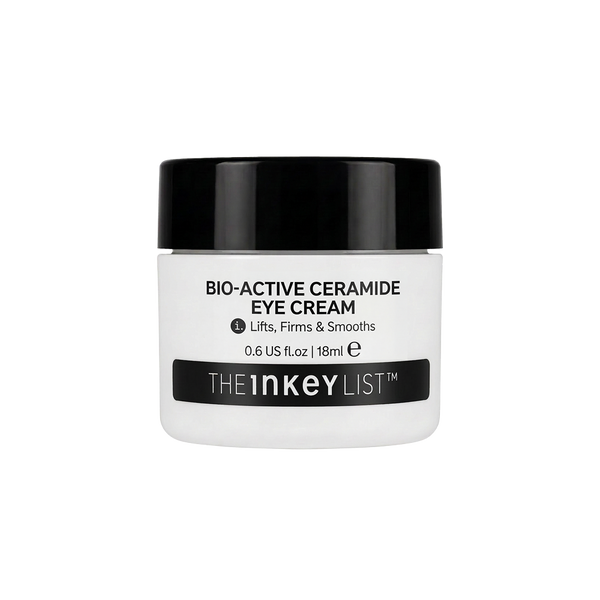
That is the thinking behind the Bio-Active Ceramide Eye Cream. We will come to how to use it and what the clinical data says in a moment, but the logic is worth stating on its own first: give this area the barrier lipids it does not produce much of naturally, and you address the cause rather than managing the symptom.
Of course, ceramide depletion is not the only reason skin under your eyes gets rough and tight. Before you change anything, it is worth working out what is actually driving it in your case.
Dryness, Dehydration and What Else Could Be Causing It
Quick clarification first, because the terms get used interchangeably and they are not the same thing. Dryness is a lack of oil and lipids. Dehydration is a lack of water, and it can happen to any skin type including oily. Fine lines are a third conversation entirely. If your real question is about creasing rather than flaking, dehydration lines vs wrinkles sorts out which is which, and how to treat under-eye wrinkles covers the treatment side properly.
With that settled, here are the everyday causes of under-eye dryness that actually turn up most often, each with a fix attached.
Over-cleansing and stripping foaming cleansers
Hot water combined with strong surfactants removes surface lipids efficiently. That is what they are designed to do. The problem is that the eye area cannot easily replace what gets taken, because it produces so little oil of its own.
The fix: cleanse with lukewarm water and choose something gentler. The Milk Cleanser removes the day without stripping, which makes it a sensible swap if your skin feels tight the moment you finish washing.
Actives migrating into the orbital area
Retinol, exfoliating acids and vitamin C applied close to the orbital bone rarely stay where you put them. Products creep upward and outward as your face moves through the day, and warmth from the skin helps them spread. You may be applying nothing to your eye area and still be treating it every night.
The fix: keep actives a clear finger’s width away from the orbital bone rather than right up to the lash line, and apply your eye cream first as a buffer if you are using something strong nearby.
Air conditioning through summer, forced-air heating through winter
Indoor climate control is quietly one of the biggest drivers of under-eye dryness in the US, largely because most of us spend so much of the year inside it. Heavy air conditioning pulls moisture out of the air through summer. Forced-air heating does the same thing through winter. Then add the sheer range of conditions across the country: dry heat in the Southwest, hard winters through the Midwest and Northeast, and big humidity swings across the South.
The fix: a humidifier in the room where you sleep makes a genuine difference, and so does moving your eye cream to twice daily during the months when the heating or the AC is running constantly.
Hot showers and long baths
Comfortable, and not kind to a low-lipid area. Prolonged hot water compromises surface lipids across the whole body, and the eye area feels it first.
The fix: you do not need to give up hot showers. Just keep your face out of the direct stream and apply your routine while the skin is still slightly damp.
Makeup removal friction
Repeated rubbing is one of the most avoidable causes on this list. Waterproof formulas and dry cotton pads are the usual culprits, because they require pressure and time to work.
The fix: dissolve rather than scrub. The Oat Cleansing Balm melts makeup, including stubborn eye makeup, so it lifts away with minimal friction rather than needing to be worked off.
Seasonal transitions
Moving repeatedly between an air-conditioned office and hot outdoor air, or a heated apartment and freezing air outside, asks your skin to keep readjusting. The transition periods are often harder on the eye area than the peak of either season.
The fix: anticipate it. Adding a barrier-focused step a few weeks before the season turns is far easier than repairing dryness once it has set in.
Screen time and reduced blinking
Concentrating on a screen reduces blink rate noticeably. That affects the tear film more than the skin directly, but it also tends to bring squinting, eye rubbing and general fatigue with it, all of which loop back to the friction point earlier.
The fix: the standard advice to look away periodically genuinely helps, and being conscious of not rubbing when your eyes feel tired matters more than most people assume.
None of these are things to feel bad about. Most are unavoidable features of ordinary life, and every one of them is manageable with a small adjustment rather than an overhaul. Once you have identified your likely trigger, the routine is what does the actual work.
How to Build a Routine for Dry Under-Eye Skin
A routine for under-eye dryness needs to do three things: stop making it worse, draw water into the skin, and then hold that water there. That last part is where a hydrating eye cream built around ceramides earns its place, because holding water is precisely what a well-supplied barrier does.
The hero: Bio-Active Ceramide Eye Cream
The Bio-Active Ceramide Eye Cream is $16.00 for 18ml, and currently rated 4.6 from 284 reviews.
The Bio-Active Ceramides actively strengthen the skin barrier and support moisture retention, making it particularly effective for dry or crepey skin around the eye area.
That is the whole logic chain, and it is worth being precise about it: ceramides restore the barrier, a restored barrier holds water, and better-hydrated skin looks smoother and feels more comfortable. No step in that sequence requires exaggeration.
Two ingredients do the heavy lifting.
Bio-Active Ceramide NP is a clinically active ceramide that goes beyond the skin’s surface, strengthening the barrier and supporting deeper skin renewal to visibly firm, smooth and protect the delicate eye area. Tetrapeptide Complexsmooths the look of fine lines and visibly lifts and firms the eye contour.
On the clinical side, 89% saw fine lines smoothed and blurred instantly [1], and 94% agreed the eye area looked visibly firmer and more sculpted [2].
For a dry, sensitive area, the suitability credentials matter as much as the actives. It is fragrance-free, alcohol-free, ophthalmologist approved, dermatologically tested, suitable for sensitive eyes, suitable during pregnancy and breastfeeding, vegan and Leaping Bunny approved.
How to apply it properly
Use it AM and PM, after serum and before moisturizer. Take a pea-sized amount, use your ring finger, and pat it gently around the orbital bone working from the inner to the outer corner. Never rub or drag. Do not apply it to the eyelid or anywhere near the waterline. Give it 30 to 60 seconds to settle before concealer goes on top, which alone solves a surprising amount of creasing. For the full technique, including how much pressure is right, see how to apply eye cream the right way.
The full routine, step by step
-
Cleanse gently. Lukewarm water, no stripping foaming formulas around the eyes. This single change resolves the problem for a surprising number of people before they change anything else.
-
Apply a hydrating serum to damp skin. The Hyaluronic Acid Serum uses 2% pure hyaluronic acid at three molecular weights to draw water into different depths of the skin. If your priority is barrier repair specifically, the Ectoin Hydro-Barrier Serum is the stronger pick, combining 2% Ectoin, 2.5% Hyaluronic Acid and a 1% Barrier Blend of three ceramides.
-
Pat in your eye cream. The hero, applied exactly as described above.
-
Seal with moisturizer. The Bio-Active Ceramide Moisturizer is $22.00 and rated 4.7 from 1,862 reviews, and it extends the same barrier logic across the rest of your face. If you are dry around the eyes but oilier elsewhere, which is an extremely common combination, the Omega Water Cream with its 0.2% Ceramide Complex gives you barrier support in a much lighter texture.
-
Finish with a broad-spectrum sunscreen every morning. Non-negotiable, and easy to forget around the eyes specifically.
The relationship between steps two and three is the part worth internalizing, because it is the clearest way to think about layering. The serum draws water in. The ceramide step helps hold it there. Hyaluronic acid without something to seal behind it will pull in water that then evaporates, which is why hydrating serums alone sometimes leave dry skin feeling no better. Draws in, seals in. That is the whole principle.
If you would rather pick up the routine in one go, the Bio-Active Ceramide Eye Cream Duo is $30.40, and the Bio-Active Ceramide Trio is $52.25.
One honest note on expectations. A hydrating eye cream will not resolve months of accumulated dryness in a weekend. What tends to happen is that comfort improves first, often within days, and visible texture follows over a longer stretch of consistent use. That order is normal and it is worth knowing in advance so you do not give up at the point it is starting to work.
INKEY makes more than one eye cream, though, and the ceramide formula is not automatically the right answer for everyone. It depends entirely on what is bothering you.
Which INKEY Eye Cream Is Right for You, Plus the Mistakes to Avoid
Buying the wrong eye cream is one of the more common reasons people conclude that eye creams do not work. They usually do. They are just formulated around specific concerns, and the concerns are genuinely different.
Bio-Active Ceramide Eye Cream, $16.00
Rated 4.6 from 284 reviews, 18ml. This is the pick for dryness, barrier support, crepiness, fine lines and firmness. Use it AM and PM. If you arrived at this article because your under-eyes feel tight and your concealer will not sit properly, this is the one built for you.
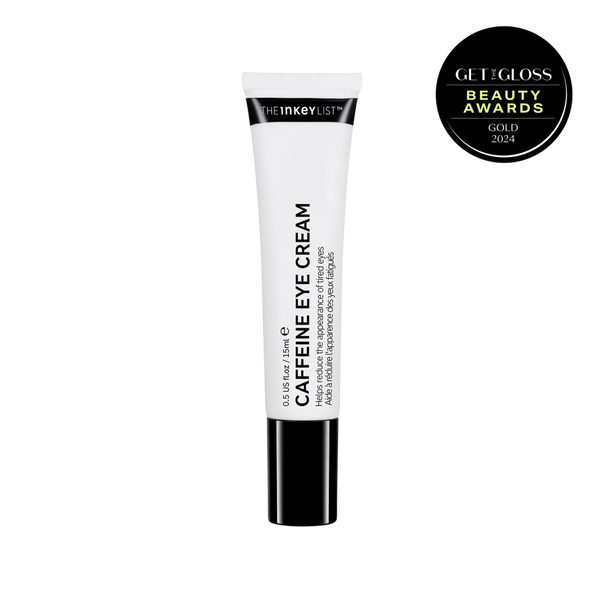
Caffeine Eye Cream, $14.00
For puffiness and dark circles rather than dryness. If morning swelling or shadowing is your actual primary concern, this is the more sensible starting point and it costs less. Being straight about that is more useful than steering everyone toward the same product. If you want both, the layering order is Caffeine Eye Cream first, then Bio-Active Ceramide Eye Cream over the top. And on the question everyone eventually asks, we settled it in should you keep your caffeine eye cream in the fridge.
Retinol Eye Cream
For wrinkles and texture, PM only. Worth being upfront here: retinol can be drying, particularly in an area that already has very little oil. If you are currently dealing with under-eye dryness, get the barrier comfortable first and introduce retinol afterwards. Starting retinol on an already-compromised barrier is the fastest route to deciding your skin cannot tolerate it, when the timing was the real issue.
If your concern is structural rather than surface-level, two other guides will serve you better than any of the above: how to get rid of bags under eyes and under eye hollows and tear troughs. And if you want an extra hydration step on top of your routine, we assessed the evidence in do under eye patches actually work.
The mistakes that keep under-eye dryness going
Dragging and rubbing instead of patting. Pulling product across thin skin creates friction where you least want it, and it does nothing to help absorption. Pat with the ring finger, which naturally applies the lightest pressure.
Applying too close to the waterline or onto the eyelid. Product migrates as it warms, so applying right up to the lash line means it ends up in your eyes. Stay on the orbital bone and let it travel a little on its own.
Over-exfoliating, or letting acids and retinol migrate. Exfoliating a dry, thin area chases smoothness and produces the opposite. Keep strong actives well clear of the orbital bone and give the area a break if it is already flaking.
Skipping the area entirely because everything irritates it. Understandable, but it leaves the barrier unsupported, and an unsupported barrier stays reactive. A fragrance-free, alcohol-free formula tested for sensitive eyes is designed precisely for this situation.
Using foaming or stripping cleansers around the eyes. Repeatedly removing the small amount of surface lipid this area has makes everything else you do less effective.
Expecting overnight results and quitting after four days. Barrier repair is cumulative. Comfort tends to arrive first, appearance follows. Give any routine a proper run before judging it.
Most under-eye dryness responds well to exactly these adjustments. Occasionally, though, it is a signal that needs a different kind of attention.
When Under-Eye Dryness Needs More Than Skincare
Some symptoms are worth a professional opinion rather than another product. If flaking persists despite a gentle, barrier-focused routine, or if you have persistent itching, redness or swelling, cracked or weeping skin, or a reaction that appeared suddenly after introducing something new, see a board-certified dermatologist or your healthcare provider. The likely explanations are common and very treatable: eyelid eczema, atopic dermatitis or contact dermatitis. The eyelids are in fact one of the most frequent sites for contact dermatitis, precisely because the skin there is so thin, which ties directly back to the anatomy we covered earlier. The American Academy of Dermatology also has useful guidance on eczema and eye problems. Skincare supports your barrier. It does not diagnose or treat a medical skin condition, and it is worth being clear about that distinction.
Conclusion
The skin around your eyes is thinner than the skin anywhere else on your face, produces a fraction of the oil, and moves tens of thousands of times a day. It loses moisture faster and shows it sooner. That is anatomy, not a personal failing, and it is the reason under eye dryness is so persistent for so many people who are otherwise doing everything right.
The answer is not more products. It is supporting the barrier with something formulated for this area, reducing friction wherever you can, and staying consistent long enough for it to work. Ceramides are the most direct way to give this area the thing it does not produce much of on its own.
Set your expectations honestly. Comfort improves before appearance does. A routine you actually keep will always beat a longer one you abandon in a fortnight.
You do not need more skincare. You need clarity you can trust, and a routine that makes sense for the skin you actually have.
Ready to Look After the Area That Needs It Most
Start with the Bio-Active Ceramide Eye Cream, $16.00 for 18ml, patted around the orbital bone morning and night. If you want the full barrier routine in one, the Bio-Active Ceramide Trio is $52.25.
Because at The INKEY List, We Give A Care. Clear guidance. Proven ingredients. Real results.
[1] Tested on 32 participants
[2] 32 participants over 12 weeks
Frequently Asked Questions
Got a question?
Our askINKEY team are a friendly bunch of skincare experts with deep product knowledge and zero judgement. Whether you're an ingredient obsessive or just starting out, we'll make it make sense. No question too big. No question too small. We Give A Care, Every Day.


