



How to Get Rid of Jowls Without Surgery: An Honest Guide to What Actually Works
Jowls are structural, so no cream reverses them. Here is what non-surgical options, face yoga, and skincare can honestly do for your jawline.
Author
askINKEY skincare advisor
Published
11 September, 2026
Time to read
20 minutes
If you are searching for how to get rid of jowls, here is the honest starting point: jowls are a structural change, and no cream reverses structural change. They form because bone, fat, ligaments and skin all shift with age. That is happening underneath the surface, well below where any topical product can reach.
What skincare can do is improve the quality, firmness and appearance of the skin along your jaw and neck. That is a real, measurable benefit. It is just not the same thing as removing a jowl, and we are not going to pretend it is.
This guide covers:
- What jowls actually are, and how they differ from crepey skin or neck lines
- What causes them, from bone density to fat pad descent
- Whether you can get rid of jowls without surgery, answered plainly
- How the non-surgical options genuinely rank, including the ones we do not sell
- What skincare realistically contributes, ingredient by ingredient
- A daily routine for your jaw and neck that you can actually follow
We will never tell you a product removes jowls. We will tell you exactly what it does, what the evidence says, and where the limits are.
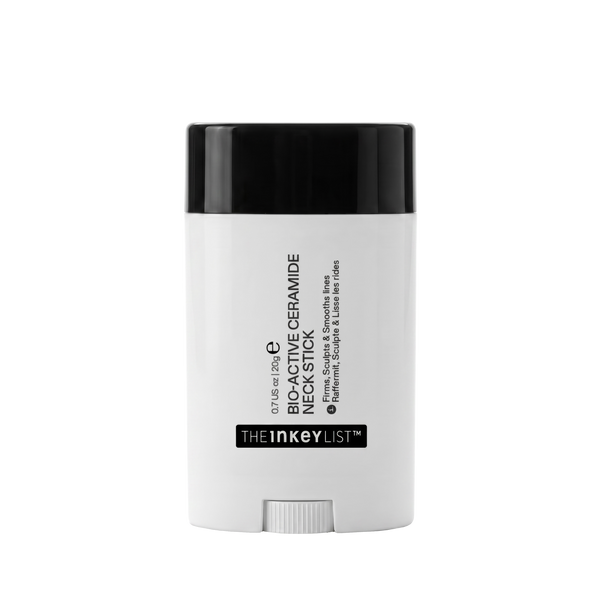
If you want to start somewhere practical, our Bio-Active Ceramide Neck Stick is the one product we make with jawline-specific clinical data behind it. You can also browse the full anti-aging collection, take the skin quiz for a personalized routine, or read our 10 Most Common Skin Concerns guide if you are still working out what you are looking at in the mirror.
Let us start with a proper definition, because a lot of people use the word jowls for three or four different things.
What Are Jowls, Exactly?
Jowls are the soft tissue that gathers along and just below the jawline as the face loses structural support. Skin, fat and connective tissue drift downward, softening the clean line between the jaw and the neck. The result is a fuller, less defined lower face, most visible on either side of the chin.
That is the short version. The longer version matters, because jowls get confused with two other concerns that need completely different approaches.
Jowls vs a sagging jawline vs crepey skin
These are three separate things, and telling them apart changes what you should actually do about them.
- Jowls are a volume and support issue. Tissue has descended and the underlying scaffolding has changed. The skin itself may be in perfectly good condition.
- Crepey skin is a skin quality issue. The surface looks thin, finely wrinkled and papery, a bit like tissue paper. This one genuinely does respond to topical care, and we cover it in depth in What Causes Crepey Skin?
- Neck lines are horizontal creases across the front of the neck, driven by movement, posture and skin quality rather than descent. We handle those separately in How to Get Rid of Neck Lines
A sagging jawline sits somewhere between the first and the second. It describes the loss of a crisp mandibular border without necessarily forming a distinct pocket of tissue below it. Most people notice a softening jawline several years before they would describe what they see as jowls.
It is worth saying clearly: jowls are normal. They are not a medical problem, not a sign that you did something wrong, and not something that requires fixing. They are one of the most predictable outcomes of a face aging, and the anatomy behind them is well documented. Researchers reassessing the surgical anatomy of the jowl and the mandibular ligament describe the jowl as a consequence of how the soft tissue of the lower face is tethered and supported, which is precisely why it forms in the same place on so many different faces.
Most people start to notice them from their forties onward, though the variation is enormous. Bone structure plays a role, as does genetics, sun exposure history, weight fluctuation and how much volume you carry in the lower face to begin with. Some people see early changes in their mid-thirties. Others reach sixty with a jawline that has barely shifted.
How to tell if what you are seeing is jowls
There is a simple mirror check that costs nothing.
Look straight ahead in a mirror at eye level, in reasonably even light. Note what you see along the jaw. Then tilt your head back and look again.
If the appearance softens or disappears when you tilt back, you are looking at descent. Gravity is temporarily doing what a surgeon would do permanently, which is repositioning tissue upward. That tells you the concern is structural.
If the texture stays the same regardless of angle, and the skin looks finely lined or papery in both positions, you are looking at a skin quality issue instead. That is crepey skin, and the outlook there is considerably more encouraging for topical care.
Most people over forty have some combination of both. Knowing the ratio is useful, because it tells you how much of what you are seeing sits within reach of a skincare routine and how much does not.
So what is actually driving the descent? Four things, and only one of them is skin.
What Actually Causes Jowls
Jowls are caused by four simultaneous changes in the lower face. The jawbone loses density and volume, reducing the scaffolding underneath. The fat compartments of the cheeks and midface both deflate and descend. The retaining ligaments that tether skin to deeper tissue loosen. And dermal collagen and elastin decline, so skin recoils less well. Together these move tissue downward and blur the jawline.
Notice what is missing from that list. Nothing about cleansing badly, nothing about not moisturizing enough, nothing you failed to do. Three of the four drivers are anatomical. Only the fourth involves the skin at all.
Here is each one in plain English.
Bone: the scaffolding changes shape
This is the cause almost nobody expects, and it is arguably the most significant.
The facial skeleton is not fixed. It remodels throughout life, and with age it loses density and changes shape. Research into facial bone density and the effects of aging has documented measurable reduction in the mandible and midface over time. The angle of the jaw becomes more obtuse, the mandible loses height and projection, and the bony landmarks that once held everything taut recede slightly.
Think of it like a tent. The canvas has not necessarily grown, but the poles have shortened. The same amount of fabric now has less to stretch over, so it drapes and folds where it used to sit tight.
This is why two people with identical skin quality can have completely different jawlines at the same age. Strong bone projection holds soft tissue in place for far longer.
Fat pads: volume moves downward
Facial fat is not one continuous layer. It sits in distinct compartments, separated by connective tissue, each behaving somewhat independently.
With age, these compartments do two things at once. Some deflate, losing volume outright. Others descend, sliding downward from the midface toward the jaw. A unified review of facial contours and volume correction describes this interplay between deflation and descent as central to how the aging face changes shape.
The practical consequence is that volume leaves the upper cheek and arrives at the jawline, where it was never meant to be. The face reads as heavier at the bottom and hollower at the top. That redistribution is exactly why some people find their face looks fuller along the jaw even as they lose weight elsewhere.
If that pattern sounds familiar, it is the same mechanism behind under-eye hollowing. We cover the parallel in Sunken Eyes and Tear Troughs, and the comparison is genuinely instructive, because tear troughs are also driven by volume loss and descent rather than skin quality. Nobody expects an eye cream to refill a tear trough. The same logic applies at the jaw.
Retaining ligaments: the anchors loosen
Running between your facial skin and the deeper structures beneath are fibrous bands called retaining ligaments. They act as anchor points, holding soft tissue in position.
The mandibular ligament is the one that matters here. It tethers tissue along the jawline, and it holds firm while the tissue around it descends. That contrast is what creates the visible notch, with tissue gathering in front of the anchor point and the jaw appearing to break its line.
As these ligaments weaken and lengthen over decades, the tissue they hold has more room to migrate. This is a mechanical change in connective tissue, and it is completely beyond the reach of anything you apply topically.
Collagen and elastin: skin recoils less
Now we reach the skin itself.
Collagen provides structure and elastin provides snap-back. Both decline with age, and both are further degraded by UV exposure. Reviews of structural and functional changes in aged skin document thinning of the dermis, fragmentation of the collagen network and reduced elastic recoil.
The result is skin that accommodates descent rather than resisting it. It does not spring back the way it once did, so it drapes over whatever shape sits beneath.
This is the one driver where topical skincare has a genuine, evidence-backed role. If you want the full picture on the ingredient, we go deep in Collagen for Skin: What It Does and How to Support It.
What accelerates the whole process
Some of this is fixed. Some of it is not. Ranked roughly by how much difference they make:
- UV exposure. By a wide margin the largest modifiable factor. Cumulative sun damage degrades collagen and elastin faster than chronological aging alone. The jaw, neck and chest are also the areas people most consistently miss with sunscreen, which compounds the effect.
- Smoking. Directly damages collagen and elastin and restricts blood flow to the skin.
- Significant, repeated weight fluctuation. Repeated stretching and deflation gives skin less opportunity to accommodate. This is a neutral observation about skin mechanics, not a comment on anybody’s body.
- Genetics and bone structure. Not modifiable, but genuinely useful to understand. If your parents held a defined jawline into their sixties, your odds are better.
- Sleep position. Consistently sleeping on one side may contribute to asymmetry over decades. The evidence here is limited and this is a minor factor.
- Screen posture. Sustained downward head tilt creates repeated creasing at the neck. Minor for jowls specifically, more relevant for neck texture, which we cover in Neck Cream for Tech Neck and Crepey Skin.
Four of the five things that create a jowl sit beneath the skin, not in it. That single fact explains everything about what skincare can and cannot do here.
Which brings us to the question everyone actually came for.
Can You Actually Get Rid of Jowls Without Surgery? The Honest Answer
No. Nothing non-surgical fully gets rid of jowls. Because jowls are caused by changes to bone, fat and ligaments as well as skin, only surgery repositions the tissue that has descended. Non-surgical options can improve the appearance and firmness of the jawline to varying degrees, but they do not remove a jowl.
We would rather say that plainly than sell you around it.
If you searched how to remove jowls, or how to remove jowls without surgery, that is the accurate answer to the question you asked. Removal is a surgical concept. It means tissue is repositioned or excised, and no cream, device, exercise or injection does that.
No topical product lifts jowls. Anything marketed as a non-surgical facelift in a bottle is overpromising, and you should treat that claim as a reason for suspicion rather than confidence.
But “can they be removed” is not actually the most useful question. The more useful question is this: how much can the appearance of my jawline be improved, and by what?
That question has genuinely encouraging answers. Skin quality along the jaw and neck can be visibly improved. Firmness can be measurably better. Energy-based procedures can produce modest to moderate change. And the trajectory of how your skin ages from here is meaningfully within your influence, which is where prevention and daily care earn their place rather than borrowing credibility from claims they cannot support.
Set the expectation scale honestly. Non-surgical intervention delivers subtle to moderate improvement in appearance. Surgery delivers structural change. Those are different categories of outcome, and conflating them is how people end up disappointed after spending significant money.
Here is why we think this honesty is worth trusting. Almost every page ranking for jowls terms is published by somebody selling a procedure. A clinic writing about jowls has a commercial reason to describe non-surgical options in generous terms right up until the point where surgery becomes the recommendation. We sell skincare. We are telling you, on our own website, that skincare does not do the thing you searched for. We take the same approach in Are Acne Scars Permanent? The Honest Answer, and we would rather lose a sale than make a promise we cannot keep.
So if removal is off the table, what does the evidence actually support? Let us go through every option, ranked by what it delivers rather than by what we happen to sell.
Ranking the Non-Surgical Options for Jowls, Honestly
What follows is ranked by what the evidence supports, not by our commercial interest. Skincare sits partway down this list. We are telling you that up front, because a ranking that conveniently placed our own category at the top would not be worth reading.
Each option gets the same treatment: what it is, what it realistically does, and what it does not do.
Surgery: the benchmark, for context
A lower facelift or neck lift repositions descended tissue, tightens the underlying muscular layer and removes excess skin. It is the only intervention that directly addresses descent, and it produces results no other option approaches.
It is also a surgical procedure with recovery time, cost, and genuine risk. It is a medical decision that belongs in a conversation with a board-certified plastic surgeon, not one that a skincare brand should be steering you toward or away from.
We include it purely as the benchmark. When you read that a device delivers “up to 20 percent of a surgical result,” this is the denominator.
Verdict: the only option that addresses the structural cause. A serious medical decision, and entirely yours to make with a qualified surgeon.
Energy-based devices: radiofrequency and ultrasound
These are the most credible non-surgical options for jowls specifically.
Radiofrequency and focused ultrasound devices deliver controlled heat into the deeper layers of skin and, in some cases, the fibrous layer beneath. The heat causes immediate tissue contraction and triggers a wound-healing response over the following months, which gradually firms the treated area.
Realistically, expect modest to moderate improvement in the appearance of jawline definition, developing over three to six months, with results that require maintenance. Outcomes vary substantially depending on the individual, the device, and critically the operator. The same machine in different hands produces different results.
To answer the questions people actually type: yes, medical radiofrequency can improve the appearance of jowls. No, it does not remove them. And the devices professionals reach for in this area are typically monopolar radiofrequency systems and microfocused ultrasound platforms, sometimes combined with microneedling in a single device. The right one for you is a clinical judgment based on your skin, not something to select from an article.
Assessing any device category honestly is something we have done before. Our take in Red Light Therapy for Skin: Benefits, Uses and Skincare Alternatives follows the same principle: report what the evidence supports, and be clear where marketing has run ahead of it.
Verdict: the most effective non-surgical option, delivering real but moderate improvement in appearance. Operator skill matters as much as the machine.
Microneedling: skin quality, not repositioning
Microneedling uses fine needles to create controlled micro-injuries in the skin, prompting a repair response that improves texture and firmness over a series of sessions. Radiofrequency microneedling combines the two mechanisms and reaches deeper.
For jowls specifically, be clear about what you are buying. Microneedling works on skin quality. It improves texture, thickness and the appearance of firmness. It does not reposition descended tissue, does not change bone, and does not restore lost fat volume.
That said, better-quality skin over a descended structure genuinely looks better than poor-quality skin over the same structure. If your jawline concern is partly textural, the improvement can be worthwhile. If your concern is purely a distinct pocket of descended tissue, microneedling will underdeliver against your expectations.
Sessions are typically spaced four to six weeks apart, with a course of three to six. Results build gradually. Professional treatment with sterile equipment is meaningfully different from at-home rolling devices, both in depth and in safety.
Verdict: a legitimate skin quality treatment that improves how the jaw area looks. Not a contour treatment.
Injectables: fillers and the masseter Botox question
Dermal filler is sometimes used along the jaw and chin to restore projection and support, effectively rebuilding some of the scaffolding that bone loss and fat descent have taken away. Placed well, it can meaningfully sharpen the appearance of the jawline. Placed poorly, it adds weight to an already heavy lower face and makes things worse. This is one of the areas where practitioner skill has the widest range of outcomes in all of aesthetics.
Botulinum toxin does not lift descended tissue. It relaxes muscle. Its role around the jawline is more specific and more nuanced than most people expect.
The masseter question comes up constantly, so here it is directly. The masseter is the chewing muscle at the angle of the jaw. Relaxing it reduces muscle bulk, which slims the lower face. Because that muscle contributes to the width and support of the lower face contour, some people find that as the bulk reduces, the overlying soft tissue has slightly less to sit against, and the appearance of jowling becomes more noticeable. Whether that happens depends on your anatomy, how much soft tissue laxity you already have, and the dose and placement used.
That is a conversation for a qualified medical provider who can assess your face in person. We are describing why the question exists, not advising you on what to do.
Verdict: fillers can improve jawline definition when expertly placed. Botox does not lift, and the masseter effect is real but highly individual.
Face yoga and facial exercises: the honest assessment
This is the most searched approach for jowls by a wide margin, so it deserves a straight answer rather than a dismissal or an endorsement.
The most frequently cited study is a 2018 paper on the association of facial exercise with the appearance of aging. Participants followed a structured 30-minute daily facial exercise program over 20 weeks. Blinded raters assessed photographs and estimated participants looked younger at the end than at the start, with upper and lower cheek fullness being the measures that improved.
Read that carefully, because the details matter. The study included 27 participants, of whom 16 completed it. There was no control group. The program required 30 minutes daily for eight weeks, then every other day. And the measured improvement was in cheek fullness, which is a different outcome from jawline descent.
A broader systematic review of conservative techniques for mechanical facial rejuvenation characterizes the wider evidence base the same way: small studies, short durations, largely uncontrolled, with modest and localized effects where any effect is found at all.
No published study demonstrates that facial exercise reverses structural descent along the jawline. The honest position is that the evidence is thin, promising in places, and nowhere near strong enough to support the claims made for it.
There is also a theoretical counterargument worth knowing. Repeated forceful muscle contraction and skin manipulation is the mechanism behind expression lines. Aggressive facial exercise may not be entirely neutral for skin that has already lost elasticity.
Here is what we think is genuinely useful. Gentle, consistent massage along the jaw and neck is safe, feels good, supports circulation and temporarily reduces fluid retention that can blur the jawline in the morning. It also builds routine consistency, which is the single strongest predictor of whether anyone sees results from anything. If a two-minute massage keeps you applying your products every day, it has earned its place.
What to avoid: aggressive pulling, dragging skin, or anything that leaves the area red and stretched. Skin that has lost elasticity does not need to be tugged.
Verdict: safe, pleasant and useful for consistency. The evidence does not support it as a treatment for structural descent, and anyone promising otherwise is going beyond what the research shows.
Topical skincare: where it honestly sits
Topical skincare works on skin quality, firmness and appearance. It does not work on bone, fat pads or ligaments. On the structural drivers of jowls, it does nothing.
So why is it on this list at all?
Three reasons, and they are practical rather than promotional. It is the only option on this list you do daily, which means cumulative effect over years rather than months. It costs a fraction of everything above it. And it has by far the strongest role in prevention, because daily sun protection and consistent use of well-evidenced actives genuinely influence how skin ages from here.
If you want to understand how to read the clinical claims you will encounter across every option in this list, including ours, we break down the terminology in What does dermatologically and clinically tested mean?
Verdict: the lowest-cost, highest-consistency option, with real benefits for skin quality and prevention and no effect on structure.
Having placed skincare accurately rather than flatteringly, here is what it genuinely contributes.
What Skincare Can Genuinely Do for the Jaw and Neck
To restate the boundary before we go any further: skincare improves the quality, firmness and appearance of the skin along the jaw and neck. It does not reposition tissue. Everything below sits inside that limit.
Within that limit, there is more to work with than most people realize, particularly because the jaw and neck are chronically underserved areas.
The skin here is different from facial skin in ways that matter. It is thinner, with a less robust barrier. It has fewer oil glands, so it dries out faster and shows dehydration more readily. It moves constantly, every time you speak, swallow or turn your head. It gets significant UV exposure and very little sun protection.
And then there is the behavioral problem: most people stop their skincare routine at the jawline. Decades of diligent facial care ending at an invisible border, with the neck receiving whatever happens to be left on the fingertips. If you change one thing after reading this article, extend everything you already do downward. It costs nothing.
Here is what actually earns a place in that extended routine.
Ceramides: barrier support that shows
Ceramides are lipids that occur naturally in your skin barrier. Think of the barrier as a brick wall, with skin cells as the bricks and ceramides as part of the mortar holding them together. When that mortar depletes, water escapes more easily and the skin becomes drier, more reactive and rougher in texture.
Replenishing ceramides topically supports the barrier, which improves hydration and smoothness. Well-hydrated, intact skin reflects light more evenly and appears firmer and smoother than dehydrated skin over the same structure. That is a genuine visible improvement, and it is also an honest one, because we are describing appearance rather than claiming structural change.
Ceramide NP is one of the specific forms found naturally in human skin, which is why it appears in our formulations. If you want the detail, we cover the category in What are Ceramides? and the specific form in What is Ceramide NP?
Peptides: short signals, realistic expectations
Peptides are short chains of amino acids. Amino acids are the building blocks of proteins, including collagen, and certain peptide sequences act as signals within the skin.
The category is genuinely interesting and also genuinely oversold. Different peptides do different things, evidence quality varies widely between them, and formulation matters enormously. Rather than compress that into a paragraph, we have given it a full article: Do Peptides Really Work? What the Evidence Shows. The ingredient pillar sits at What are Peptides? if you want the fundamentals first.
For this article, the relevant point is that our Bio-Active Ceramide Neck Stick pairs its ceramide content with 1% Gatuline In-Tense MB and 2% CO2llageneer, both selected for firmness and the appearance of skin tightness in this specific area.
Retinoids: the best-evidenced topical category
If you use one active ingredient for long-term skin quality, the evidence points to a retinoid.
The American Academy of Dermatology is clear that retinoids remain the most established topical option for the visible signs of aging. A network meta-analysis of topical interventions for photoaging reaches a similar conclusion when comparing across ingredient categories.
Retinoids improve skin quality over months. They do not lift descended tissue. Applied consistently to the neck and jaw, they target visible signs of collagen decline and help improve the look of skin firmness in the area.
Choosing one is a question of strength, not of quality.
Our Starter Retinol Serum ($15) is the right choice for most people reading this. It is built for retinol beginners, all skin types, sensitive skin and rosacea-prone skin, using 1% Granactive Pro+ encapsulated next-generation retinoid alongside 0.01% Retinal, 0.5% Amisol Trio and 0.2% SymRelief 100. It is clinically proven to smooth fine lines from 7 days, without irritation, based on a 4-week clinical study on 30 participants, and shown to be 2x more effective than standard retinol in a 4-week in vitro study. Its directions explicitly cover face and neck, which is exactly what this article is about.
Our Advanced 0.2% Retinal Serum ($22) is the step-up for people already confident with retinoids. Retinal sits one conversion step closer to retinoic acid than retinol does, which makes it more potent and carries a moderate risk of irritation. It is not the default recommendation.
If you are weighing the two, Retinol vs Retinal: Which Vitamin A is Right for You? walks through the decision properly, and What is Retinol? covers the fundamentals.
Whichever you choose, the rules are the same. PM only. Start with 2 to 3 nights a week and build tolerance gradually. Always follow with moisturizer, and always use broad-spectrum sunscreen the next morning. Neck skin is thinner and more reactive than facial skin, so go slower there than you would on your face.
Retinoids are not suitable during pregnancy or breastfeeding without consulting your doctor. This is a genuine and important difference from the Neck Stick described below, which is pregnancy and breastfeeding safe. Do not assume the two categories share the same guidance.
Vitamin C: antioxidant support and even tone
Vitamin C provides antioxidant support against environmental stress and helps improve the appearance of tone and evenness. On the jaw, neck and chest, where cumulative sun exposure often shows as uneven pigmentation and dullness, that even-tone benefit is genuinely noticeable.
Our 15% Vitamin C + EGF Serum ($20) works well as the morning antioxidant step, taken down over the jaw and neck rather than stopping at the chin.
Sunscreen: the highest-value step, without exception
UV exposure is the largest modifiable driver of the skin-quality component of jowls. Daily broad-spectrum sunscreen is the single most valuable long-term thing you can do for the appearance of your jawline and neck.
The jaw, neck and chest are the most commonly missed areas in the entire routine. People apply carefully to the face, then stop. Decades of that produces a visible line where protected skin meets unprotected skin.
It matters even more if you are using a retinoid, since retinoids can increase sun sensitivity. Apply broad-spectrum sunscreen every morning and take it down over the jaw, neck and chest. If you want to understand what the numbers on the bottle mean, What is SPF? explains it.
The product built for this area specifically
Our Bio-Active Ceramide Neck Stick ($17, 20g) is the one product we make that was formulated specifically for the neck and jawline. It combines 0.2% Bio-Active Ceramide NP, 1% Gatuline In-Tense MB and 2% CO2llageneer in a gua sha-inspired stick shape you glide along the jaw and neck.
Two of its substantiated claims are directly relevant here:
Clinically proven to improve tightness of the jawline (by 32% in 56 days).
Clinically tested on 28 participants over 8 weeks.
Clinically proven to improve the lifted appearance of the neck and jawline (by 26% in 8 weeks).
Clinically tested on 28 participants over 8 weeks.
Now the sentence that has to follow those numbers: these are measured improvements in the appearance and tightness of the jawline and neck. They are not structural repositioning. The product improves how the area looks and feels. It does not move descended tissue back where it came from, and no topical product does.
It is pregnancy and breastfeeding safe, vegan, fragrance-free and non-comedogenic, and it is used both morning and evening. If you are building out the wider routine, our Bio-Active Ceramide Moisturizer ($22) sits alongside it as the barrier-supporting final step.
Understanding the ingredients is one thing. Using them consistently in a sequence that works is another. Here is what that looks like day to day.
A Realistic Daily Routine for Your Jawline and Neck
Before the steps, the frame. This routine supports skin quality and the appearance of firmness along the jaw and neck. It is not a jowl removal protocol, because no such thing exists outside an operating room. What it does is give the skin in this area the same standard of care your face has been getting for years.
It takes about four minutes total across the day.
Morning
- Cleanse. Gentle, non-stripping, taken down over the jaw and neck.
- Antioxidant serum. Our 15% Vitamin C + EGF Serum ($20), applied to face and neck.
- Bio-Active Ceramide Neck Stick ($17). Glide along the jaw and neck using the technique below.
- Moisturizer. Our Bio-Active Ceramide Moisturizer ($22), again taken past the jawline.
- Broad-spectrum sunscreen. Face, jaw, neck and chest. Non-negotiable, every day, regardless of weather.
Evening
- Cleanse. Remove sunscreen and the day thoroughly.
- Retinoid, 2 to 3 nights a week to start. Our Starter Retinol Serum ($15) for most readers, or our Advanced 0.2% Retinal Serum ($22) if you are already confident with retinoids. PM only, and not during pregnancy or breastfeeding without medical advice.
- Bio-Active Ceramide Neck Stick. Same technique as the morning.
- Moisturizer. Always follow a retinoid with moisturizer, particularly on the neck.
On the nights you are not using a retinoid, simply skip step two. Build frequency slowly. Neck skin is thinner and more reactive than facial skin, so if your face tolerates four nights a week, your neck may only want two. Retinol for Beginners: How to Start Without Irritating Your Skin covers the ramp-up properly, and if you want to build the complete routine beyond the jaw and neck, Best Anti-Aging Skincare Routine is the full guide. For readers extending the Bio-Active range upward, our Bio-Active Ceramide Eye Cream ($16) completes the set.
How to apply the Neck Stick: the gua sha technique
If you arrived here searching face yoga or facial exercises, this is the practical, honest version of what you were looking for. It is a massage technique with a product that has clinical data behind it, rather than an exercise program with claims that outrun the evidence.
The stick is shaped for this. Apply after serums and before moisturizer.
- Start at the chin. Glide the stick outward and upward along the jawline, from the center of the chin toward the ear. Follow the bone. Repeat three to four times on each side.
- Move to the neck. Glide downward from just under the jaw toward the collarbone, working in long strokes across the full width of the neck.
- Finish across the chest. A few sweeps outward across the upper chest, which is the area most people forget entirely.
- Press, do not drag. Use gentle, even pressure. The stick should glide. If skin is being pulled or stretched, you are pressing too hard.
The whole sequence takes about one minute, twice daily. One stick lasts roughly two to three months with daily use.
The technique matters as much for adherence as for effect. A routine that feels good gets done. A routine that feels like a chore gets abandoned in week five.
Realistic timelines
Here is what to expect and when.
- Days 1 to 7. Hydration and immediate surface smoothness. Skin feels more comfortable and looks less dry. This is real but it is barrier improvement, not firming.
- Weeks 2 to 4. Texture continues to improve. If you are using a retinoid, fine lines may start to soften. Our Starter Retinol Serum is clinically proven to smooth fine lines from 7 days, without irritation, based on a 4-week clinical study on 30 participants.
- Weeks 8 and beyond. This is where the firmness and appearance measurements were taken in the Neck Stick testing, which is why 56 days and 8 weeks appear in the claims. Clinically tested on 28 participants over 8 weeks.
- Months 3 to 6 and onward. Retinoid benefits for skin quality continue to accumulate. This is a long game.
We cover the general question of how long to wait before judging any product in How Long Does Skincare Actually Take to Work?
The most common reason people see no results is that they stopped at six weeks, right before the point at which the clinical measurements were taken. Consistency beats intensity every single time. A modest routine done daily for a year outperforms an aggressive one abandoned in March.
Which raises a useful question for anyone reading this before they have noticed any change at all.
Prevention and the Habits That Actually Matter
Let us be honest about what prevention means. You cannot prevent your face from aging, and that is not a goal worth having. Faces change. What you can influence is how well your skin holds its quality, firmness and resilience over time, and how much of the visible change comes from avoidable damage rather than from simply living.
That distinction matters. A significant proportion of what people call aging in the lower face is cumulative UV damage, which is modifiable, sitting on top of chronological change, which is not.
Here are the habits that matter, ordered by actual impact rather than by how easy they are. Being straight with you that sunscreen matters more than your pillow is the whole point of this list.
- Daily broad-spectrum sunscreen over the jaw, neck and chest. This is not close. UV exposure is the largest modifiable driver of collagen and elastin degradation, and reviews of structural and functional changes in aged skin consistently identify photodamage as a primary contributor. The jaw, neck and chest receive substantial exposure and minimal protection. Every day, all year.
- Not smoking. Smoking has a direct, well-documented degrading effect on collagen and elastin, and restricts the blood supply that skin depends on. If you smoke, this is the second-highest-value change available to you.
- Extending your skincare routine past the jawline. The cheapest and easiest change on this list. You already own the products. Just keep going downward. Neck, jaw, chest.
- Avoiding repeated significant weight fluctuation where that is within your control. Skin accommodates gradual change far better than repeated cycles of stretching and deflation. This is a neutral point about skin mechanics and nothing more.
- Starting well-evidenced actives earlier rather than later. A retinoid used consistently from your thirties does more for long-term skin quality than one started at fifty-five. We look at the timing question honestly in When Should I Start Using Anti-Aging Products?
- Screen posture. Worth a thought, not worth anxiety. Sustained downward head tilt contributes more to neck texture than to jowls specifically, and we cover it properly in Neck Cream for Tech Neck and Crepey Skin.
- Sleep position. Last on the list deliberately. The evidence linking sleep position to facial aging is limited and largely observational. It is interesting, it may contribute to asymmetry over many decades, and it is not worth losing sleep over. Literally.
Notice there is no fear in that list. Nothing here is about panic-buying a product because your face is falling. It is about a small number of genuinely high-value habits, done consistently, over a long period. That is unglamorous advice, which is exactly why it works.
There is also a point at which topical care has done what it can, and it is worth knowing where that line sits.
When to See a Professional
If the appearance of your jawline is genuinely affecting your confidence, and consistent topical care has not given you what you were hoping for, seeing a qualified professional is a completely reasonable next step. We would rather say that plainly than pretend a $17 product is the answer to every version of this question.
Our suggestion on where to start: book with a board-certified dermatologist rather than going directly to a clinic that provides a specific treatment. A dermatologist can assess your skin and your anatomy and tell you what is actually driving the change, without the first conversation being with somebody who sells one particular procedure. The American Academy of Dermatology’s guide to selecting a dermatologist is a sensible place to begin.
Check board certification, and check it specifically. This matters most for injectables and energy-based devices, where the range of possible outcomes depends heavily on who is holding the equipment.
One clear medical note: any sudden change in facial appearance, or any asymmetry that develops quickly rather than gradually, should be assessed medically rather than treated cosmetically. Gradual, symmetrical change over years is ordinary. Rapid or one-sided change is a reason to see a doctor.
If you do book a consultation, these four questions will tell you more than any before-and-after gallery:
- What does a realistic improvement look like for my face specifically, not for the best-case patient?
- How long do the results last, and what is the maintenance schedule?
- What are the risks and the possible side effects, including the uncommon ones?
- What happens to my appearance if I stop maintaining this in two years?
A good practitioner will answer all four without hesitation. A hesitant answer to the fourth question in particular is worth paying attention to.
The Honest Bottom Line on Jowls
Jowls are structural. They come from bone that has remodeled, fat that has descended and deflated, ligaments that have loosened, and skin that has lost some of its recoil. No topical product reverses any of that, and anyone telling you otherwise is selling you something, usually at a price that reflects the size of the promise.
That is the uncomfortable part. Here is the genuinely encouraging part.
The quality, firmness and appearance of the skin along your jaw and neck can be meaningfully improved, and that improvement is measurable rather than imaginary. How your skin ages from this point forward is substantially within your influence, and the highest-value habit costs less than a coffee a week. Daily broad-spectrum sunscreen taken down over the jaw, neck and chest will do more for you over ten years than any single treatment will do in one.
Consistency outperforms intensity. Every time. The people who see change are not the ones with the most expensive routine, they are the ones still doing a modest routine in month nine.
We could have written a version of this article that told you a stick of skincare would give you your twenty-five-year-old jawline back. It would probably have converted better in the short term. We would rather tell you exactly what skincare cannot do, so that you can actually trust us when we tell you what it can. Because at INKEY, we give a care.
If you want to start, start with the area you have been ignoring. Our Bio-Active Ceramide Neck Stick ($17) was formulated specifically for the jaw and neck, and it is clinically proven to improve tightness of the jawline (by 32% in 56 days). Clinically tested on 28 participants over 8 weeks. It is pregnancy and breastfeeding safe, vegan, and takes about a minute a day.
Not sure where it fits in what you already use? Take the skin quiz for a routine built around your actual concerns, or browse the full anti-aging collection to see what else belongs below your jawline.
Frequently Asked Questions
Got a question?
Our askINKEY team are a friendly bunch of skincare experts with deep product knowledge and zero judgement. Whether you're an ingredient obsessive or just starting out, we'll make it make sense. No question too big. No question too small. We Give A Care, Every Day.


