

Niacinamide for Pores: Can It Really Minimize Enlarged Pores?
Niacinamide cannot shrink pores, but it can visibly minimize their appearance by helping regulate oil.
Author
askINKEY skincare advisor
Published
20 August, 2026
Time to read
13 minutes
Niacinamide does not shrink pores, but it can visibly refine them by helping regulate oil so pores appear less stretched.
This article covers what a pore actually is, what makes some pores look larger than others, what niacinamide can realistically do about pore appearance, and exactly how to use it. If you have ever searched for niacinamide for pores and come away with a dozen conflicting answers, this is the honest version.
Here is the position we are starting from, because everything else depends on it. Pore size is largely determined by genetics, oil production, skin elasticity and sun exposure. No ingredient, ours included, physically shrinks or closes a pore. What niacinamide can do, and what the research supports, is help manage oil so pores look smaller and skin looks smoother.
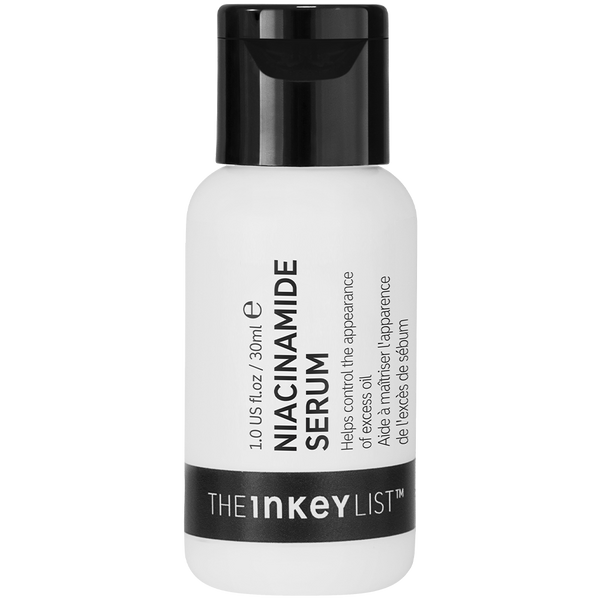
If niacinamide is new to you, start with our guide to what niacinamide is for the full ingredient breakdown. If you already know it works and want the product, our 10% Niacinamide Serum ($13.00) is the everyday starting point for most people. And because oil output is the single biggest driver of pore appearance, our oily skin guide is a useful companion read.
Below you will find percentages, realistic timelines, where the serum sits in your routine, and what results to actually expect. Let us start with what a pore is.
What Are Pores and Why Do Some Look Bigger?
A pore is the visible opening of a hair follicle at the surface of your skin. It is not a flaw and it is not a defect. Each one is a functional channel that carries sebum, your skin’s natural oil, from the sebaceous gland up to the surface where it keeps skin lubricated and helps maintain the barrier that protects you from the outside world.
Everyone has pores. You have roughly the same number today that you had a decade ago, and you will have the same number a decade from now. Pores are not something you gain, lose, acquire through bad habits or eliminate through good ones. That fixed count is the first thing worth internalizing, because it reframes the entire question. The goal was never fewer pores. The goal is pores that catch the light less obviously.
So if the number never changes, why do some pores look so much more prominent than others, and why do yours look different from your friend’s?
Three reasons a pore looks larger
- Oil volume. The more sebum moving through a duct, the more that duct is held open. A pore with a high flow rate is a pore that stays distended.
- Loss of firmness. The collagen and elastin surrounding each opening act like scaffolding. When that scaffolding weakens, the pore loses its crisp edge and can appear wider or take on a teardrop shape.
- Debris at the opening. When dead skin cells and oil collect at the mouth of a pore and oxidize, the opening darkens. A darker rim reads to the eye as a bigger pore, even when nothing structural has changed.
That third point is where a lot of confusion lives, so it is worth drawing a clean line. Pore visibility and pore congestion are related but they are not the same thing. A congested pore is one that is blocked. A visible pore may be completely clear and simply large enough, or distended enough, to see. This article is about visibility and size. If what you are dealing with is blockage, we have a dedicated deep dive on what causes clogged pores that covers the mechanics properly, and it is the better read for that specific concern.
Pore visibility is also not evenly distributed across your face. Look closely and you will notice pores are most obvious on the nose, the inner cheeks either side of the nose, and across the forehead. These are the areas dermatologists refer to as the T-zone, and they are not prominent by coincidence.
Why pores look bigger on your nose
Large pores on the nose are one of the most common skin concerns people bring to us, and there is a straightforward anatomical reason for it. The nose carries a significantly higher density of sebaceous glands than the rest of the face. More glands packed into a smaller area means more oil moving through more ducts, and ducts that carry more oil sit more open.
There is a second reason nose pores draw the eye. The nose is a raised, central, forward-facing feature that catches direct light from almost every angle. Texture that would be invisible on the side of your jaw is fully lit on the bridge of your nose. Anatomy and lighting are conspiring, and you are not imagining it.
One important clarification before you go any further, because it saves a lot of unnecessary scrubbing. Those tiny grey or beige dots covering the nose are very often sebaceous filaments, not blackheads. Sebaceous filaments are a normal, functional part of how a pore channels oil to the surface. They are meant to be there, they refill within days of being removed, and treating them like an infestation usually leaves skin irritated rather than clearer. We break the difference down in sebaceous filaments vs blackheads. If what you have genuinely are blackheads, how to get rid of blackheads on your nose is the right next click.
Dermatology resources are consistent on the underlying determinants here. DermNet’s overview of enlarged porespoints to genetics, sebum production, loss of skin elasticity and sun damage as the main factors that decide how visible your pores are. Notice what is missing from that list: nothing about how hard you scrub, and nothing about water temperature.
Now that you have an accurate mental model of what a pore is and why it becomes prominent, let us separate the causes you were born with from the ones you can actually do something about.
What Causes Large Pores? The Real Factors
Understanding the cause is what makes the rest of this article useful, because it tells you where effort pays off and where it is wasted. Five factors do most of the work.
Genetics. This is the single biggest determinant and there is no polite way around it. Pore size runs in families in the same way skin tone, oiliness and skin thickness do. If your parents have visible pores, there is a strong chance you will too, and no serum on any shelf changes your inherited baseline. Saying that plainly costs us nothing and saves you money.
Sebum output. This is the most important factor you can genuinely influence, and the evidence behind it is strong. In a study published in the British Journal of Dermatology, Roh and colleagues examined what actually predicts facial pore size and found that sebum output was the strongest predictor, ahead of male sex and age. The logic is mechanical rather than mysterious. A duct carrying a high, continuous volume of oil is a duct held open, and an open duct is a visible one.
Sebum output is the strongest single predictor of facial pore size (Roh et al., 2006). That one finding is why oil management, not scrubbing, is the center of any serious pore strategy.
Age and loss of elasticity. Collagen and elastin form the supportive structure around each pore opening. From your mid twenties onward, production of both gradually declines. As that support softens, pore openings lose their crisp definition and can stretch downward into an elongated, teardrop shape under the pull of gravity. This is why pore appearance can change over a decade even when your oil levels have stayed flat.
Sun exposure. UV radiation accelerates the breakdown of collagen in the skin. That is not a separate problem from the elasticity issue, it is the same problem with the volume turned up. Cumulative, unprotected sun exposure over years compounds the structural loosening that makes pores read as larger. This is also the one age-related factor you have real leverage over.
Hormonal fluctuation. Hormones drive sebaceous activity directly, which is why oiliness and pore prominence can shift across a monthly cycle, during puberty, during pregnancy and across other life stages. If your pores look noticeably different in certain weeks, your skin is not being erratic. It is responding predictably to a changing internal signal.
The factors you can actually influence
Here is the honest split, and it is the most useful list in this article.
Factors you cannot change:
- Your genetic baseline for pore size
- Your age and the natural pace of collagen decline
- Your sex, which influences sebaceous gland activity
- The natural distribution of oil glands across your face
Factors you can influence:
- How much oil sits in and stretches the pore duct
- How much further UV damage your collagen sustains from here
- How clear the pore opening stays, which changes how defined its edge looks
- How well supported your skin barrier is, which affects oil production in turn
That second list is not a consolation prize. It contains the strongest predictor of pore size on the entire chart, which means the manageable factor happens to be the most influential one. That is genuinely good news, and it is where a considered routine earns its place instead of just occupying shelf space.
If the sebum discussion sounds like a description of your own skin, why is my skin so oily unpacks the drivers in more detail, and our oily skin hub gathers the full picture in one place. Clinical reviews such as this overview of oily skin and its management reinforce the same principle: control the oil and you change how the skin reads. If you are not certain where your skin actually sits, our skin type guide is worth two minutes before you buy anything, because the right product for the wrong skin type is just an expensive mistake.
With the causes mapped, it is time to answer the question that brought most people here.
Can You Shrink Pores? The Honest Answer
No. You cannot physically shrink, close or remove a pore. Pores are not muscles. They have no mechanism for opening and closing, no valve, no aperture and no setting. Any product or technique promising to close them is describing something your skin is not built to do.
We know that is not the answer anyone hopes for, but delivering it straight is the point. Everything that follows only works if you trust the framing, and you cannot trust a brand that tells you what you want to hear.
Let us clear out the myths that persist despite all of this.
Myth vs reality
- Myth: Cold water closes your pores. Reality: Temperature does not change pore size. Cold can cause a brief, superficial tightening sensation across the skin, but the pore itself is unchanged and the effect fades within minutes.
- Myth: Steam opens your pores. Reality: Warmth softens the oil and debris sitting inside a pore, which makes that content easier to move. Useful, but that is a change to the contents, not to the opening.
- Myth: Scrubbing harder makes pores smaller. Reality: Aggressive physical exfoliation damages the skin barrier. Compromised skin frequently responds by producing more oil and looking more inflamed, which makes pores more visible rather than less.
- Myth: Pores are dirt that needs removing. Reality: Pores are functional structures. What you can address is the oil volume passing through them and the debris collecting at the opening.
The reframe that actually helps is this. The realistic, achievable and clinically supported goal is to reduce the appearance of pores. Less oil sitting in the duct means less distension. Less distension means the opening reads as smaller and the surface reads as smoother. You are not altering your anatomy, you are changing how light falls across it, and visually the result is what people are actually after.
This is also why the harsh route backfires so reliably. Over-cleansing, alcohol-heavy toners and daily gritty scrubs all strip the barrier. A stripped barrier is a dehydrated barrier, and dehydrated skin very commonly ramps up oil production to compensate. You end up with the same visible pores plus redness, sensitivity and tightness. It is the most common self-inflicted setback in pore care, and it is entirely avoidable.
Pore strips deserve a brief mention because they are the shortcut everyone tries. They remove surface plugs and the visual payoff feels dramatic, but they do nothing to the size of the opening and the material returns within days. We have covered whether pore strips are bad for your skin in full detail if you want the complete picture.
Why “pore minimizing” is the honest phrase
You will notice serious brands say “pore minimizing” rather than “pore shrinking”, and that wording is not accidental hedging. It is accuracy. When a product is described as pore minimizing, it means it minimizes the appearance of pores. It is telling you it changes how the pore reads to the eye rather than rebuilding your follicle architecture.
That distinction matters when you are choosing a pore minimizing serum. A formula built to visibly refine pores should be working on the manageable factors identified earlier, chiefly oil regulation and keeping the opening clear, while supporting the barrier rather than assaulting it. Anything advertising permanent structural change is either using loose language or asking you not to look too closely.
The goal was never smaller pores. The goal is smoother-looking skin that you still recognize as yours.
So which ingredient actually delivers on that realistic goal? This is where niacinamide enters, and specifically our 10% Niacinamide Serum, because the mechanism lines up precisely with the factor that matters most.
How Niacinamide Helps Minimize the Appearance of Pores
Niacinamide is a form of vitamin B3. It is water soluble, well tolerated by most skin types, and unusual among skincare actives in that it works on several skin functions at once rather than doing one narrow job. Our niacinamide pillar pagecovers the full range of what it does. Here we are focused on one specific application: pore appearance.
The mechanism is refreshingly simple, and it runs in three steps.
- Oil output is moderated. Niacinamide helps regulate how much sebum the skin produces, reducing the volume traveling up through each duct.
- The duct becomes less distended. With less oil passing through and pooling inside it, the pore is no longer being held open from within.
- The pore appears smaller. A less distended opening catches less shadow, holds a crisper edge and reads as visibly refined.
In one sentence: niacinamide helps your skin make less oil, less oil means a less stretched pore, and a less stretched pore looks smaller. That is the whole argument, and every claim in this article rests on it.
Does niacinamide help with pores? What the research shows
Yes. Clinical research supports niacinamide as an ingredient that visibly reduces pore appearance, and it does so by lowering sebum output rather than by altering pore structure. Three findings build that case, and each one addresses a different part of it.
The evidence, in brief:
- Draelos et al., 2006. Published in the Journal of Cosmetic and Laser Therapy, this study tested 2% niacinamide on facial sebum production and found a significant reduction in the sebum excretion rate at both two weeks and four weeks. This is the mechanism proof. The oil-regulating effect is measurable and it appears early.
- Chiu et al., 2007. A split-face trial, meaning each participant’s own face served as its own control, found that 4% niacinamide significantly reduced pore count at weeks eight and twelve. This is the outcome proof, and the split-face design makes it particularly persuasive because individual variation is removed from the equation.
- Parvar et al., 2023. A review in the Journal of Cosmetic Dermatology assessing treatment options for facial pores reported that niacinamide used alone reduced pore number by approximately 14.7% at eight weeks. This is the realistic expectation setter.
That last figure deserves an honest reading rather than a triumphant one. A 14.7% reduction in pore number over eight weeks is a meaningful, visible improvement. It is not a transformation, and no reputable source claims it is. What it represents is a genuine, measurable, gradual refinement from a single well-tolerated ingredient used consistently. Set your expectations there and you will be pleased. Set them at “gone” and no product on earth will satisfy you.
There is a second benefit that makes niacinamide especially well suited to this concern, and it is the reason it outperforms harsher approaches over time. Niacinamide supports the skin barrier as well as helping manage oil. It contributes to the skin’s production of ceramides and other lipids that keep the barrier intact and hydrated.
Why does that compound the result? Recall the failure loop from earlier: strip the barrier, trigger dehydration, provoke more oil, get more visible pores. Niacinamide breaks that loop from both directions at once. It reduces oil while reinforcing the barrier, so your skin has no reason to overcompensate. It works with your skin rather than against it, which is why it can be used every day without the tolerance ceiling that harsher actives run into.
Niacinamide is also associated with reduced visible redness and improved skin texture, both of which contribute to a smoother overall surface. Those are welcome side benefits rather than the headline here.
At this point you are probably wondering which strength you need and where it goes in your routine. Ready to shop the ingredient? Our full niacinamide range is here, and how and when to use niacinamide covers general application. For pores specifically, keep reading.
Which Niacinamide Percentage Is Best for Pores?
More is not automatically better. That is worth stating up front, because percentage escalation has become a marketing habit rather than a scientific one.
Look again at the studies. The sebum reduction was demonstrated at 2%. The pore count reduction was demonstrated at 4%. Neither of those is a high number. The clinical evidence for pore appearance sits comfortably at modest concentrations, and a higher figure on a bottle does not scale the result proportionally.
Our 10% Niacinamide Serum ($13.00) sits well above the concentrations used in those trials while remaining comfortable for daily use across most skin types. For the vast majority of people concerned with pore appearance and oil control, this is the right place to start and there is no need to go looking for anything stronger.
If your skin runs persistently oily with visible shine through the day, the answer is usually consistency and a supportive full routine rather than a bigger percentage. Our excess oil range is built around exactly that.
How to use niacinamide for pores
- Cleanse. Start with clean skin so the serum makes proper contact with the surface.
- Apply to slightly damp skin. Do not fully dry your face. A little residual moisture helps the serum spread evenly and absorb comfortably.
- Use two to three drops. Press and smooth across the whole face, paying attention to the T-zone where oil output is highest. More product does not mean more result.
- Follow with moisturizer. Serums go on before creams, always thinnest to thickest.
- Repeat morning and evening. Niacinamide is well tolerated enough for twice daily use for most people, and it layers comfortably under other products, including makeup.
That is the entire protocol. There is no cycling schedule, no buffering ritual and no rest days required. Simplicity is a feature.
How long does niacinamide take to work on pores?
Expect oil control to become noticeable within two to four weeks, and visible changes in pore appearance to take eight to twelve weeks. Those windows come directly from the research rather than from optimism.
Draelos and colleagues measured significantly reduced sebum excretion at two and four weeks, which matches what people typically report first: less midday shine, makeup holding better, skin feeling less slick by evening. That early signal is real and it tells you the ingredient is working.
The pore appearance changes arrive later because they depend on the cumulative effect of reduced oil on ducts that have been distended for years. Chiu’s pore count reductions landed at weeks eight and twelve. Parvar’s 14.7% figure was measured at eight weeks. The pattern is consistent across studies.
Give it a full eight weeks before you judge the results. Anything you assess at week three is measuring oil control, not pore appearance.
This is where the most common mistake happens. People buy a serum, use it for eleven days, decide it is not working, and move on to the next thing. Then they repeat that cycle four times a year and conclude that nothing works. One serum used consistently for two months will outperform five serums used sporadically, every single time. Consistency beats intensity, and it is not close.
A serum performs best inside a routine that supports it, so here is how to build one.
Building a Pore-Friendly Routine Around Niacinamide
Four steps. Cleanse, treat, moisturize, protect. Each one contributes something specific to how your pores look, and skipping any of them undermines the others. Our skincare routine guide covers structure in more depth, and the routine builder will assemble one for you if you would rather not do it manually.
Cleanse
You want a cleanser that manages oil without stripping the skin. That balance is the whole point, because over-cleansing is genuinely counterproductive. A compromised barrier drives more oil production, and more oil means more visible pores.
Our Salicylic Acid Cleanser works well here. Salicylic acid is oil soluble, meaning it can get into the pore lining to help clear the debris that darkens and defines the pore edge. Twice a day is plenty. Three or four times a day is how people end up with tight, irritated, oilier skin.
Treat
Niacinamide is the core step, applied to damp skin after cleansing.
If you are wondering whether to use salicylic acid or niacinamide, the answer is that they do different jobs and pair well. Niacinamide regulates oil and supports the barrier. Salicylic acid clears the inside of the pore. We have covered the combination properly in salicylic acid and niacinamide, the best duo for oily, acne prone skin, so head there rather than guessing.
Niacinamide also layers well with most other actives. Rather than repeat those combinations here, we have dedicated answers on niacinamide with retinol, niacinamide and vitamin C together and niacinamide and glycolic acid.
Moisturize
This is the step oily skin skips most often, and skipping it is a mistake. Dehydrated skin frequently compensates by producing more oil, which is the exact opposite of what you want. Oily and dehydrated are not opposites, they routinely occur together, as why oily skin gets dehydrated too explains.
Our Omega Water Cream ($15.00) is oil free, water based and contains 5% niacinamide, which means it stacks onto the same oil-regulating benefit rather than working around it. There is a Supersize 100ml version if it becomes a permanent fixture.
If your skin also feels dry in places or you are starting to notice early fine lines, our Bio-Active Ceramide Moisturizer is the richer option, and ceramides directly support the barrier that keeps oil production stable. Browse all our moisturizers to compare. Choosing formulas labeled non-comedogenic is a sensible habit for pore-conscious skin, and what non-comedogenic actually means explains why the label is more useful than it sounds.
Protect
Daily sun protection is not an optional add-on to pore care, it is part of the strategy. UV exposure degrades the collagen that holds the structure around each pore opening, and once that support loosens, pores lose definition and appear larger. Every day you protect your skin is a day you are not adding to that structural loss. Use a broad spectrum SPF every morning, all year, regardless of weather.
Your simplified routine:
AM: Cleanse, niacinamide serum, lightweight moisturizer, broad spectrum SPF.
PM: Cleanse, niacinamide serum, moisturizer.
That is it. Four products in the morning, three at night, and none of them exotic. If breakouts overlap with your pore concerns, our acne and breakouts collection is the place to look next, and our 360 Acne Skin Clearing Serum is built for exactly that overlap.
With the routine set, let us cover the supporting habits and the mistakes that quietly undo good work.
What Else Helps Pore Appearance, and What to Avoid
Niacinamide is the anchor, not the entire answer. A few additional things genuinely move the needle, and a few popular ones actively work against you.
What helps:
- Gentle chemical exfoliation. Keeping the pore opening clear changes how defined its edge appears. Chemical exfoliants dissolve the bonds between dead surface cells rather than sanding them off, which is why they are kinder than scrubs. Two to three times a week is sufficient.
- Retinoids, over the long term. Retinol supports skin firmness and cell turnover, which indirectly supports the structure around each pore. This is a months-and-years benefit rather than a weeks one. Introduce it slowly.
- Consistent hydration. Well-hydrated skin has less reason to overproduce oil. This is the same barrier logic that runs through the entire article.
- Daily sun protection. Worth repeating because it protects the collagen scaffolding that keeps pore edges defined.
- Patience and consistency. The least exciting item on the list and the one that determines whether any of the others work.
What to avoid:
- Aggressive physical scrubbing. Gritty scrubs used daily create micro-damage, provoke inflammation and lead to more oil, not less.
- Over-cleansing. More than twice a day strips the barrier and triggers rebound oil production.
- Squeezing and at-home extractions. See the caution below.
- Skipping moisturizer because you are oily. Covered above, and it remains the most common self-defeating habit in oily skin routines.
- Switching products every fortnight. You cannot evaluate an eight-week ingredient in fourteen days.
A specific caution on squeezing. Forcing material out of a pore with your fingers or a metal tool can stretch and damage the pore wall. Unlike oil-related distension, which improves when oil output falls, structural damage from repeated squeezing can be lasting. It is the one habit on this list capable of making pores permanently more visible. If extraction is genuinely needed, it belongs with a professional.
A word on makeup and pore-blurring primers, since they come up constantly. They work, and there is nothing wrong with using them. Silicone-based primers fill the surface of a pore so light bounces evenly across it, which visually softens the opening in seconds. Just be clear about what you are buying: that is a cosmetic optical effect that comes off with your cleanser at night. It is not a skincare result and it is not cumulative. Use both if you like, but do not confuse one for the other.
It also helps to zoom out. Pore appearance is one component of overall skin texture, alongside smoothness, tone evenness and surface refinement. Working on texture broadly tends to improve pore appearance as a byproduct, and how to improve skin texture maps the wider approach. Our improve texture range supports that goal.
Several related concerns share the same root cause. If blackheads are part of the picture, how to prevent blackheads long term and our blackheads guide are the relevant reads, with products in the blackheads collection. If you also notice small dark dots on your legs after shaving, that is a different but visually similar concern covered in strawberry skin. And if your pores look noticeably worse in warm weather, keeping shine under control in summer explains the seasonal shift. For anyone juggling several concerns at once, our complete skincare concerns guide is the sensible starting point.
Finally, if pore appearance is persistently distressing or accompanied by significant congestion, a dermatologist can offer in-clinic options that go beyond what topical skincare does. That is not a failure of your routine, it is simply a different tier of intervention, and it is a reasonable thing to explore.
The Honest Takeaway on Niacinamide for Pores
You cannot shrink a pore. You can absolutely change how visible it looks, and the distinction is not a technicality, it is the difference between chasing something impossible and achieving something real.
The mechanism is straightforward: niacinamide helps manage oil, less oil means a less distended duct, and a less distended duct reads as a smaller, smoother pore. The research supports it, the timelines are known, and the effect is gradual rather than dramatic. Expect early changes in shine within two to four weeks and visible refinement over eight to twelve. Consistency will do more for you than intensity ever will.
It is worth ending where we began. Pores are normal, functional and necessary. They deliver the oil that keeps your skin protected and comfortable. This was never about removing something that should not be there. It is about refining how your skin looks while it does its job.
The takeaway:
- Pore size is set by genetics, oil output, elasticity and sun exposure. You can influence oil and protect your collagen. You cannot change the rest.
- Niacinamide visibly refines pores by regulating oil, with clinical evidence showing roughly a 14.7% reduction in pore number at eight weeks.
- Give it eight weeks, use it daily, and protect your skin from UV. That combination outperforms every quick fix on the market.
Ready to start? Our 10% Niacinamide Serum ($13.00) is the place most people should begin, and you can browse the full niacinamide range if you want to compare formats. If you are not sure what your skin needs, take our skin type quiz or let the routine builder put something sensible together for you.
No hype, no promises we cannot keep. Just the ingredient, the evidence and eight weeks of consistency.
Frequently Asked Questions
Got a question?
Our askINKEY team are a friendly bunch of skincare experts with deep product knowledge and zero judgement. Whether you're an ingredient obsessive or just starting out, we'll make it make sense. No question too big. No question too small. We Give A Care, Every Day.


